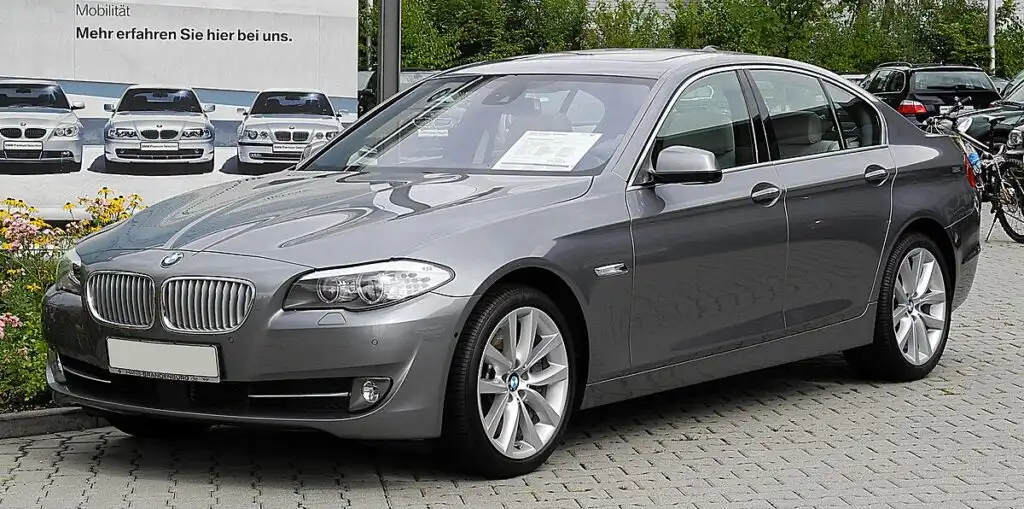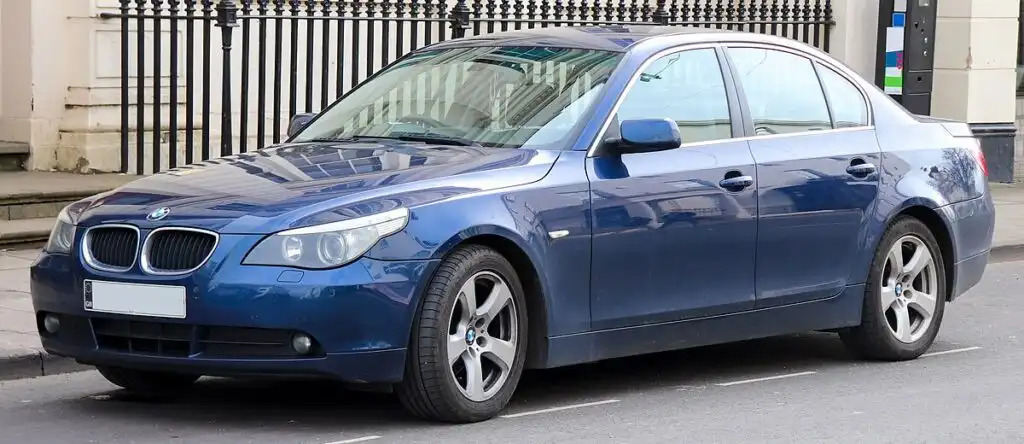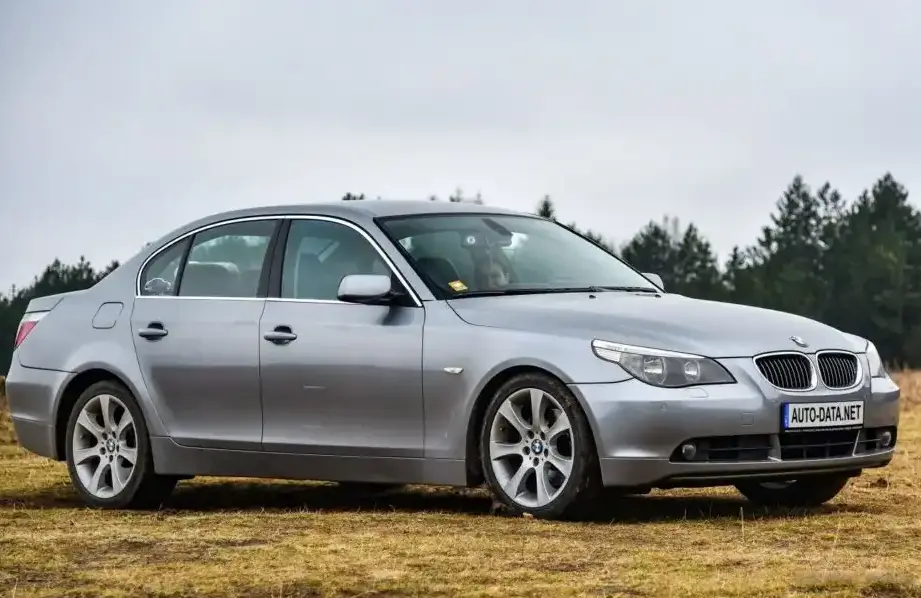
The BMW 5 Series (E60) 550i, produced from 2005 to 2007, represented the performance pinnacle of the E60 generation before the introduction of the facelifted (LCI) models. Positioned as the flagship non-M variant, the 550i aimed to deliver a blend of luxury, grand touring capability, and potent power. It served as a direct competitor to vehicles like the Mercedes-Benz E500 and Audi A6 4.2, appealing to buyers seeking a sophisticated and powerful executive sedan. The E60 550i was exclusively offered with a naturally aspirated V8 engine and, while a six-speed manual was available, the majority were equipped with BMW’s six-speed automatic transmission.
Technical Specifications
| Brand | BMW |
| Model | 5 Series |
| Generation | 5 Series (E60) |
| Type (Engine) | 550i (367 Hp) |
| Start of production | 2005 |
| End of production | 2007 |
| Powertrain Architecture | Internal Combustion engine |
| Body type | Sedan |
| Seats | 5 |
| Doors | 4 |
| Fuel consumption (economy) – urban | 16.4 l/100 km (14.3 US mpg, 17.2 UK mpg, 6.1 km/l) |
| Fuel consumption (economy) – extra urban | 8 l/100 km (29.4 US mpg, 35.3 UK mpg, 12.5 km/l) |
| Fuel Type | Petrol (Gasoline) |
| Acceleration 0 – 100 km/h | 5.5 sec |
| Acceleration 0 – 62 mph | 5.5 sec |
| Acceleration 0 – 60 mph | 5.2 sec |
| Maximum speed | 250 km/h (155.34 mph) |
| Weight-to-power ratio | 4.5 kg/Hp, 220.4 Hp/tonne |
| Weight-to-torque ratio | 3.4 kg/Nm, 294.3 Nm/tonne |
| Power | 367 Hp @ 6300 rpm |
| Power per litre | 76.5 Hp/l |
| Torque | 490 Nm @ 3400 rpm (361.41 lb.-ft. @ 3400 rpm) |
| Engine layout | Front, Longitudinal |
| Engine Model/Code | N62B48 |
| Engine displacement | 4799 cm3 (292.85 cu. in.) |
| Number of cylinders | 8 |
| Engine configuration | V-engine |
| Cylinder Bore | 93 mm (3.66 in.) |
| Piston Stroke | 88.3 mm (3.48 in.) |
| Compression ratio | 10.5:1 |
| Number of valves per cylinder | 4 |
| Fuel injection system | Multi-port manifold injection |
| Engine aspiration | Naturally aspirated engine |
| Valvetrain | DOHC |
| Engine oil capacity | 8 l (8.45 US qt, 7.04 UK qt) |
| Coolant | 13.8 l (14.58 US qt, 12.14 UK qt) |
| Kerb Weight | 1665 kg (3670.7 lbs.) |
| Max. weight | 2220 kg (4894.26 lbs.) |
| Max load | 555 kg (1223.57 lbs.) |
| Trunk (boot) space – maximum | 520 l (18.36 cu. ft.) |
| Fuel tank capacity | 70 l (18.49 US gal, 15.4 UK gal) |
| Length | 4841 mm (190.59 in.) |
| Width | 1846 mm (72.68 in.) |
| Height | 1468 mm (57.8 in.) |
| Wheelbase | 2888 mm (113.7 in.) |
| Front track | 1558 mm (61.34 in.) |
| Rear (Back) track | 1582 mm (62.28 in.) |
| Drivetrain Architecture | Rear wheel drive |
| Number of gears and type of gearbox | 6 gears, automatic transmission |
| Front suspension | Independent, type McPherson with coil spring and anti-roll bar |
| Rear suspension | Coil spring |
| Front brakes | Disc |
| Rear brakes | Disc |
| Assisting systems | ABS (Anti-lock braking system) |
| Tires size | 225/50 R17 |
| Wheel rims size | 17 |
Powertrain & Engine Architecture
The heart of the 550i is the N62B48, a 4.8-liter naturally aspirated V8 engine. This engine is a significant departure from the turbocharged inline-six engines that were becoming increasingly common in BMW’s lineup. The N62 featured an aluminum block and cylinder heads, double overhead camshafts (DOHC) with four valves per cylinder, and BMW’s variable valve timing (VANOS) system on both intake and exhaust camshafts. Fuel delivery was handled by a multi-port fuel injection system. The N62 was known for its smooth power delivery and distinctive V8 sound. The six-speed automatic transmission, designated as 6HP26, was a crucial component of the 550i’s driving experience. This transmission offered smooth shifts and adaptive shift programs, adjusting to the driver’s style. While a six-speed manual was available, it was a relatively rare option in the US market.
Driving Characteristics
The 550i delivered a markedly different driving experience compared to its six-cylinder siblings. The V8 provided substantial torque throughout the rev range, resulting in effortless acceleration. The 0-60 mph sprint took approximately 5.2 seconds, making it a genuinely quick sedan for its time. The automatic transmission, while smooth, could sometimes feel slightly hesitant during quick downshifts. Compared to the more nimble and fuel-efficient 530i, the 550i felt more substantial and focused on grand touring comfort. The higher weight of the V8 engine also impacted handling, making it less eager to change direction than the lighter models. However, the increased weight also contributed to a more stable and composed ride at highway speeds.
Equipment & Trim Levels
The 550i came standard with a generous array of features, reflecting its position as the range-topping model. Standard equipment included leather upholstery, power-adjustable front seats with memory function, a premium sound system, automatic climate control, and a sunroof. Optional extras included navigation, active suspension, sport seats, and various interior trim options. The interior design was characterized by BMW’s typically driver-focused layout, with clear instrumentation and intuitive controls. The 550i also benefited from BMW’s iDrive system, which controlled various vehicle functions through a central display screen.
Chassis & Braking
The E60 550i utilized a sophisticated chassis design featuring an independent McPherson strut front suspension and a multi-link rear suspension. This setup provided a good balance of ride comfort and handling precision. The braking system consisted of ventilated disc brakes on all four wheels, coupled with ABS (Anti-lock Braking System) and Dynamic Stability Control (DSC). The DSC system helped to maintain stability during cornering and emergency maneuvers. The 550i typically came equipped with 17-inch alloy wheels and performance tires, contributing to its grip and handling capabilities.
Market Reception & Comparison
The 550i was generally well-received by automotive critics, who praised its powerful engine, luxurious interior, and refined driving experience. However, some reviewers noted the relatively high fuel consumption and the occasional sluggishness of the automatic transmission. Compared to the 530i, the 550i offered significantly more performance but at a higher price point and with reduced fuel economy. The 545i, which preceded the 550i, was often seen as a better value proposition for those seeking a balance of performance and efficiency. The 550i appealed to buyers who prioritized power and luxury above all else.
Legacy
The N62 V8 engine, while generally reliable, is known to be susceptible to certain issues, including oil leaks and coolant hose failures. Regular maintenance, including timely oil changes and coolant flushes, is crucial for ensuring the longevity of this engine. The six-speed automatic transmission is also generally reliable, but it may require servicing at higher mileages. Today, the E60 550i represents an affordable entry point into the world of V8-powered BMW sedans. Well-maintained examples are sought after by enthusiasts who appreciate their performance and luxurious character. However, potential buyers should be aware of the potential maintenance costs associated with a higher-mileage, naturally aspirated V8 engine.