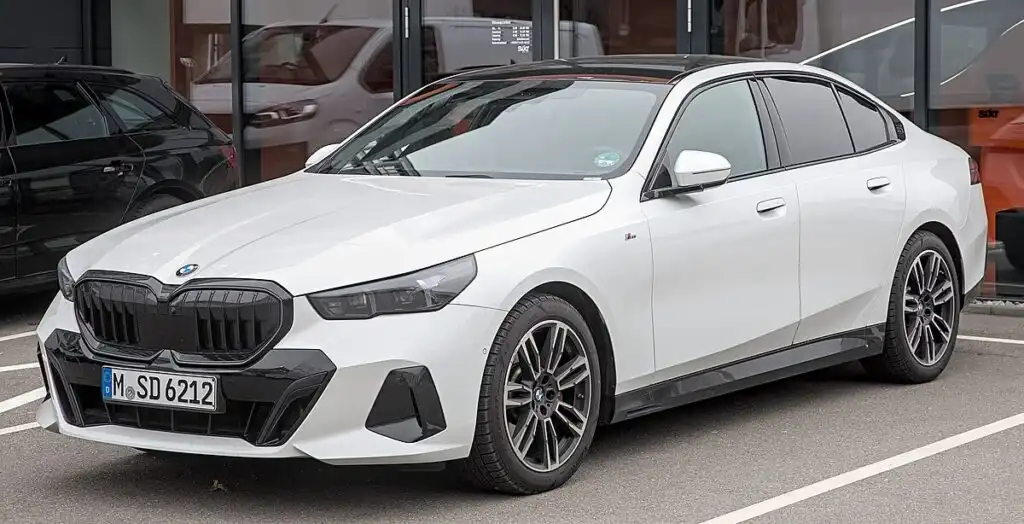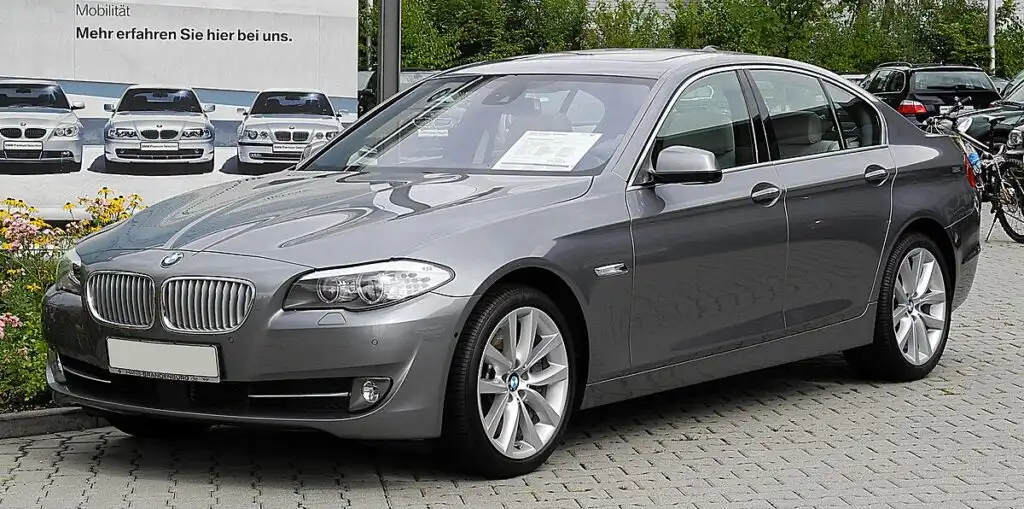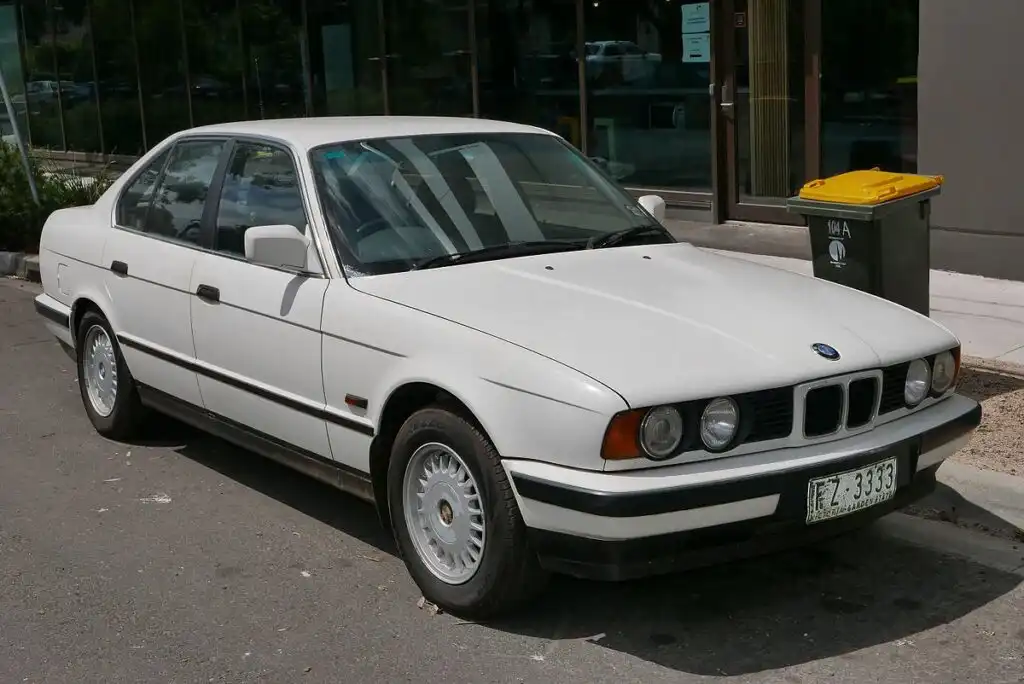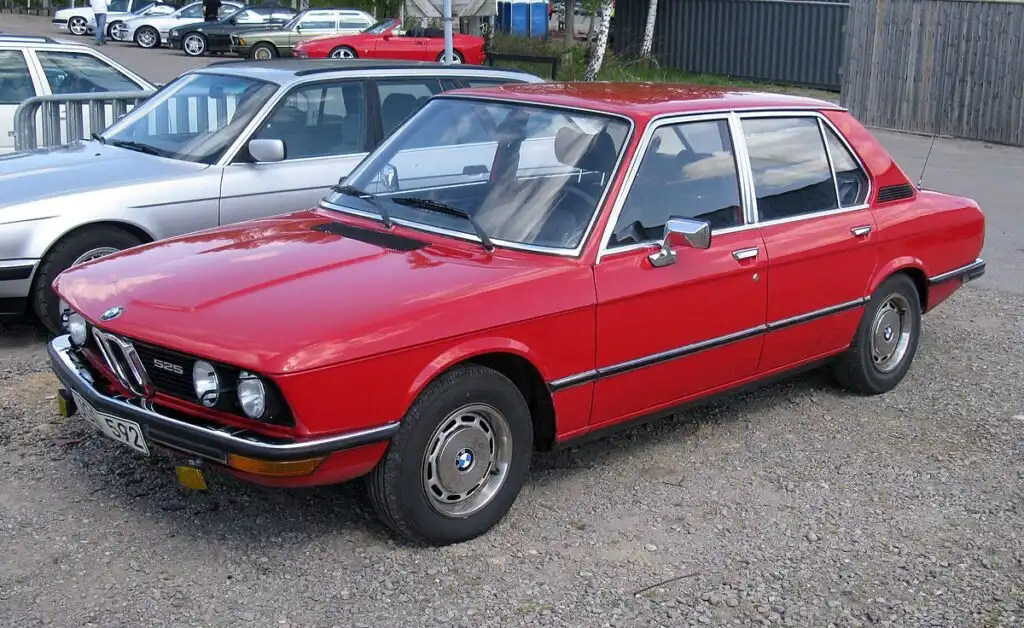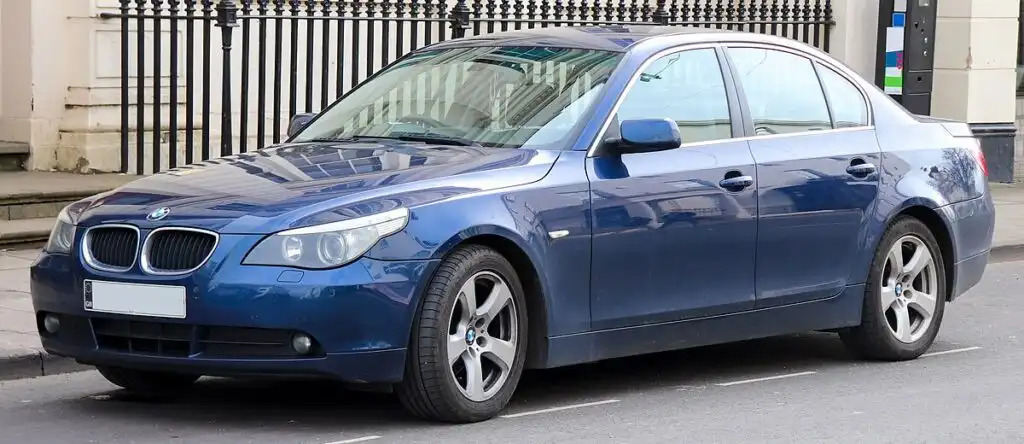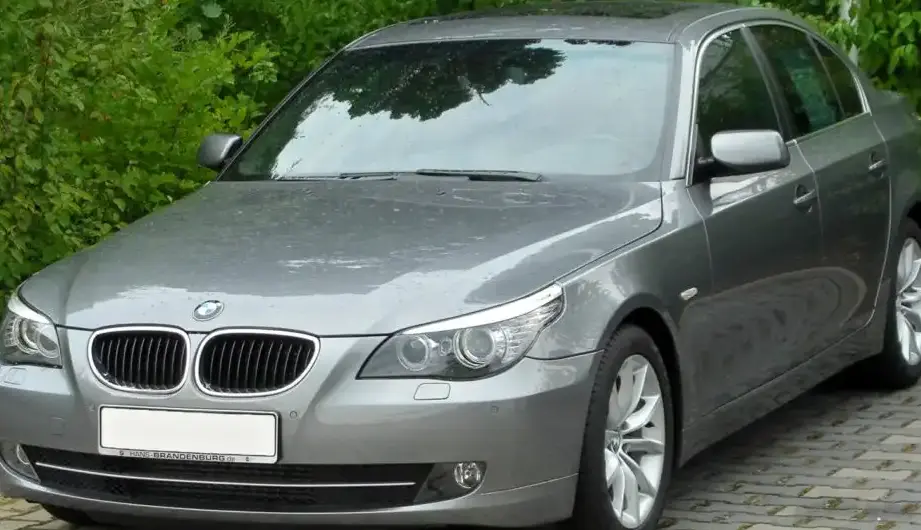
The BMW 5 Series (E60 LCI) 520d Special Edition, produced from 2009 to 2010, represented a specific configuration within the broader E60 facelift range. The E60 LCI (Life Cycle Impulse), introduced in 2007, brought updated styling and technology to BMW’s mid-size executive car. This particular variant, powered by the N47D20 engine producing 163 horsepower, was positioned as an efficient and relatively affordable entry point into the 5 Series lineup, particularly in European markets. It aimed to balance respectable performance with improved fuel economy, appealing to drivers prioritizing practicality and running costs. The “Special Edition” designation typically indicated a package of enhanced standard equipment or cosmetic upgrades over the base 520d.
Technical Specifications
| Brand | BMW |
| Model | 5 Series |
| Generation | 5 Series (E60 LCI, facelift 2007) |
| Type (Engine) | 520d Special Edition (163 Hp) |
| Start of production | 2009 |
| End of production | 2010 |
| Powertrain Architecture | Internal Combustion engine |
| Body type | Sedan |
| Seats | 5 |
| Doors | 4 |
| Fuel consumption (economy) – urban (NEDC) | 6.5 l/100 km (36.2 US mpg, 43.5 UK mpg, 15.4 km/l) |
| Fuel consumption (economy) – extra urban (NEDC) | 4.3 l/100 km (54.7 US mpg, 65.7 UK mpg, 23.3 km/l) |
| Fuel consumption (economy) – combined (NEDC) | 5.1 l/100 km (46.1 US mpg, 55.4 UK mpg, 19.6 km/l) |
| CO2 emissions (NEDC) | 136 g/km |
| Fuel Type | Diesel |
| Acceleration 0 – 100 km/h | 8.5 sec |
| Acceleration 0 – 62 mph | 8.5 sec |
| Acceleration 0 – 60 mph | 8.1 sec |
| Maximum speed | 227 km/h (141.05 mph) |
| Emission standard | Euro 5 |
| Weight-to-power ratio | 9.3 kg/Hp, 107.9 Hp/tonne |
| Weight-to-torque ratio | 4.3 kg/Nm, 231.8 Nm/tonne |
| Power | 163 Hp @ 4000 rpm |
| Power per litre | 81.7 Hp/l |
| Torque | 350 Nm @ 1750-2500 rpm (258.15 lb.-ft. @ 1750-2500 rpm) |
| Engine layout | Front, Longitudinal |
| Engine Model/Code | N47D20 |
| Engine displacement | 1995 cm3 (121.74 cu. in.) |
| Number of cylinders | 4 |
| Engine configuration | Inline |
| Cylinder Bore | 84 mm (3.31 in.) |
| Piston Stroke | 90 mm (3.54 in.) |
| Compression ratio | 16:1 |
| Number of valves per cylinder | 4 |
| Fuel injection system | Diesel Commonrail |
| Engine aspiration | Turbocharger, Intercooler |
| Valvetrain | DOHC |
| Engine oil capacity | 5.5 l (5.81 US qt | 4.84 UK qt) |
| Coolant | 8 l (8.45 US qt | 7.04 UK qt) |
| Kerb Weight | 1510 kg (3328.98 lbs.) |
| Max. weight | 2050 kg (4519.48 lbs.) |
| Max load | 540 kg (1190.5 lbs.) |
| Trunk (boot) space – minimum | 520 l (18.36 cu. ft.) |
| Fuel tank capacity | 70 l (18.49 US gal | 15.4 UK gal) |
| Max. roof load | 100 kg (220.46 lbs.) |
| Permitted trailer load with brakes (12%) | 1800 kg (3968.32 lbs.) |
| Permitted trailer load without brakes | 750 kg (1653.47 lbs.) |
| Permitted towbar download | 90 kg (198.42 lbs.) |
| Length | 4841 mm (190.59 in.) |
| Width | 1846 mm (72.68 in.) |
| Width including mirrors | 2030 mm (79.92 in.) |
| Height | 1468 mm (57.8 in.) |
| Wheelbase | 2888 mm (113.7 in.) |
| Front track | 1558 mm (61.34 in.) |
| Rear (Back) track | 1581 mm (62.24 in.) |
| Front overhang | 852 mm (33.54 in.) |
| Rear overhang | 1101 mm (43.35 in.) |
| Ride height (ground clearance) | 142 mm (5.59 in.) |
| Drag coefficient (Cd) | 0.28 |
| Minimum turning circle (turning diameter) | 11.4 m (37.4 ft.) |
| Drivetrain Architecture | The Internal combustion engine (ICE) drives the rear wheels of the vehicle. |
| Drive wheel | Rear wheel drive |
| Number of gears and type of gearbox | 6 gears, manual transmission |
| Front suspension | Spring Strut, Transverse stabilizer |
| Rear suspension | Independent multi-link spring suspension with stabilizer |
| Front brakes | Ventilated discs, 324×30 mm |
| Rear brakes | Ventilated discs, 320×20 mm |
| Assisting systems | ABS (Anti-lock braking system) |
| Steering type | Steering rack and pinion |
| Power steering | Hydraulic Steering |
| Tires size | 225/55 R16; 225/50 R17; 245/45 R17; 245/40 R18 |
| Wheel rims size | 7J x 16; 7.5J x 17; 8J x 17; 8J x 18 |
Powertrain & Engine Architecture
The heart of the 520d Special Edition was the N47D20, a 2.0-liter inline-four diesel engine. This engine was a key component of BMW’s EfficientDynamics strategy, focusing on fuel efficiency and reduced emissions. The N47 featured second-generation common rail direct injection, operating at pressures up to 1,800 bar, for precise fuel delivery and optimized combustion. A variable geometry turbocharger (VGT) with an intercooler boosted power output, providing 350 Nm (258 lb-ft) of torque between 1750 and 2500 rpm. The engine utilized a double overhead camshaft (DOHC) valvetrain with four valves per cylinder. The 6-speed manual transmission was standard, offering a balance between fuel economy and driver engagement. The engine was mounted longitudinally, driving the rear wheels, a traditional BMW configuration.
Driving Characteristics
The 163 hp output and 350 Nm of torque provided adequate, though not exhilarating, performance. Acceleration from 0 to 60 mph took approximately 8.1 seconds, and the car had a top speed of 141 mph. The engine’s peak torque, available from relatively low revs, made it feel responsive in everyday driving situations. However, compared to the more powerful 525d or 530d models, the 520d felt less capable during overtaking maneuvers or when carrying a full load. The manual transmission’s gear ratios were tuned for fuel efficiency, meaning the engine sometimes needed to be revved to access its full potential. The rear-wheel-drive configuration provided a balanced handling feel, typical of BMWs.
Equipment & Trim Levels
The “Special Edition” designation typically included upgrades over the standard 520d. These often included features like upgraded interior trim (leather upholstery was common), automatic climate control, a more advanced audio system, and alloy wheels. Standard equipment generally included power windows, power mirrors, central locking, and an anti-lock braking system (ABS). Optional extras could include a sunroof, navigation system, parking sensors, and heated seats. The interior design followed the E60’s iDrive system, providing control over various vehicle functions through a central display screen.
Chassis & Braking
The E60 5 Series utilized a MacPherson strut front suspension with a transverse stabilizer bar, and a multi-link independent rear suspension, also with a stabilizer bar. This setup provided a comfortable ride while maintaining good handling characteristics. Brakes were ventilated discs all around, with the front discs measuring 324x30mm and the rear discs 320x20mm. ABS was standard, ensuring effective braking performance in various conditions. The chassis was designed to provide a balance between rigidity and weight reduction, contributing to the car’s overall handling dynamics.
Market Reception & Comparison
The 520d Special Edition was generally well-received by critics as a sensible and economical choice within the 5 Series range. It offered a good balance of performance, fuel efficiency, and equipment. Compared to the more powerful 525d and 530d models, it was more affordable to purchase and run, but lacked their outright performance. The 520d’s fuel economy of around 46 mpg (combined) was a significant selling point, particularly in Europe where diesel fuel was often cheaper than gasoline. Reliability was generally good, although the N47 engine was later subject to some recalls related to timing chain issues.
Legacy
The N47D20 engine, despite later concerns about timing chain wear, proved to be a durable and efficient powerplant. The E60 520d Special Edition remains a relatively common sight on used car markets today. Its affordability, combined with BMW’s reputation for build quality and driving dynamics, makes it an attractive option for buyers seeking a comfortable and economical executive car. Maintenance costs are generally reasonable, although preventative maintenance, particularly regarding the timing chain, is crucial to ensure long-term reliability. The car represents a transitional period for BMW, showcasing its commitment to both performance and fuel efficiency.