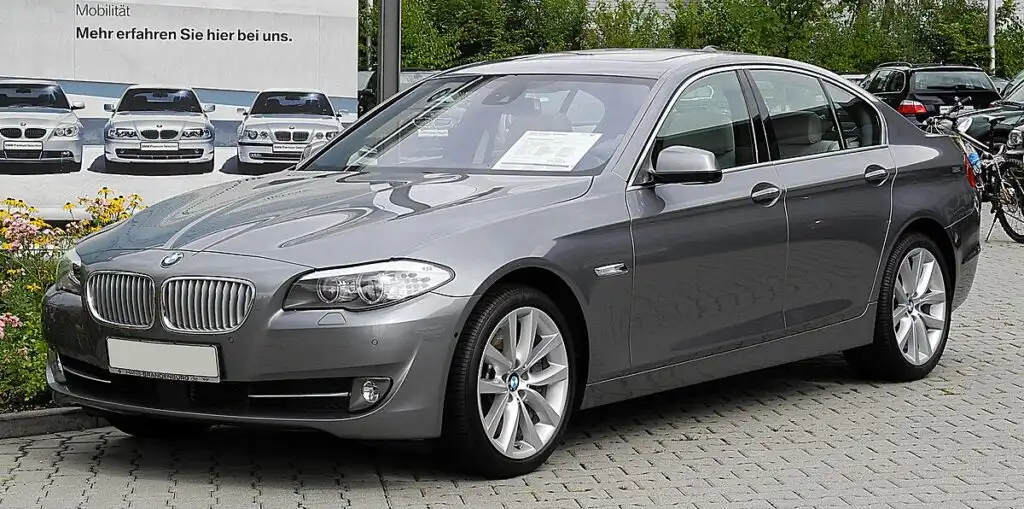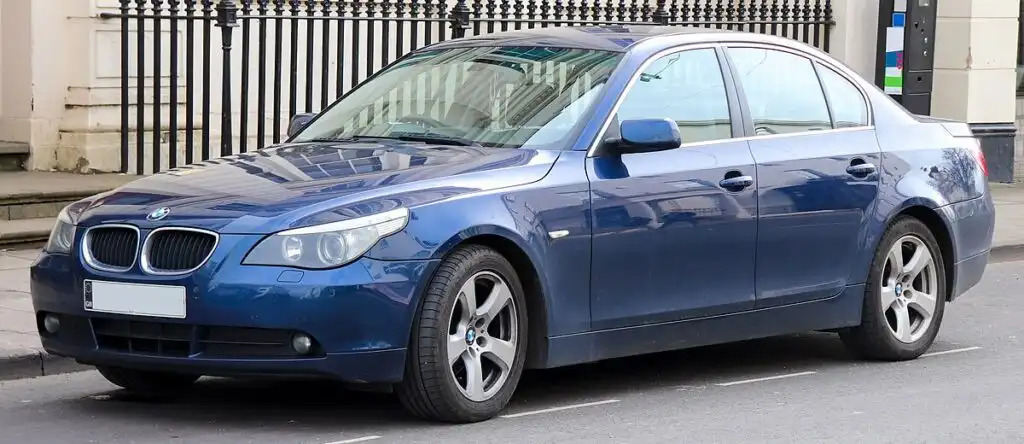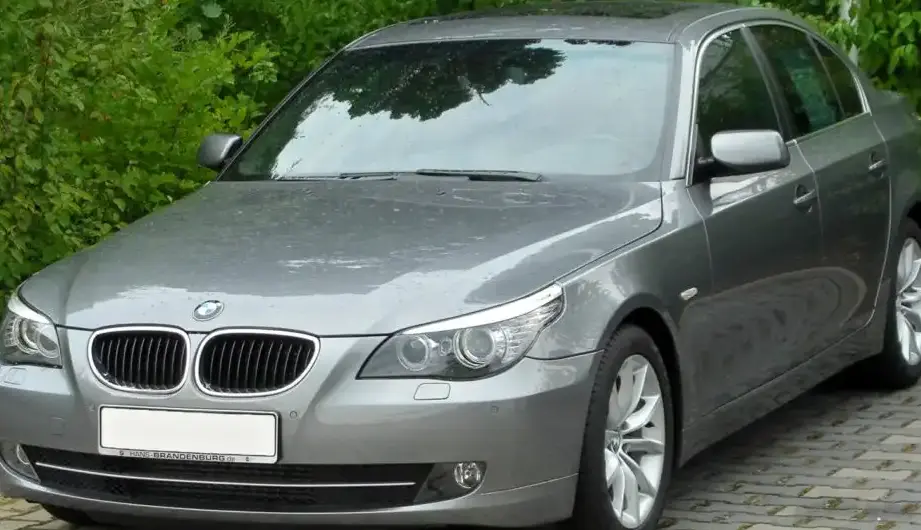
The BMW 520i, part of the E60 LCI (Life Cycle Impulse) facelift introduced in 2007, represented the entry point into the 5 Series range for many European and international markets. Production continued through 2010. This variant was positioned as a more fuel-efficient and accessible alternative to the higher-performance 530i and 535i models, offering a balance of BMW’s renowned driving dynamics and practicality. The E60 LCI brought significant cosmetic and technological updates to the 5 Series, including revised styling, updated engines, and improved interior features. The 520i, with its 2.0-liter engine, was a key component of this refreshed lineup, appealing to buyers prioritizing economy without sacrificing the BMW experience.
Technical Specifications
| Brand | BMW |
| Model | 5 Series |
| Generation | 5 Series (E60 LCI, facelift 2007) |
| Type (Engine) | 520i (170 Hp) |
| Start of production | 2007 |
| End of production | 2010 |
| Powertrain Architecture | Internal Combustion engine |
| Body type | Sedan |
| Seats | 5 |
| Doors | 4 |
| Fuel consumption (economy) – urban (NEDC) | 9.2 l/100 km (25.6 US mpg, 30.7 UK mpg, 10.9 km/l) |
| Fuel consumption (economy) – extra urban (NEDC) | 5.4 l/100 km (43.6 US mpg, 52.3 UK mpg, 18.5 km/l) |
| Fuel consumption (economy) – combined (NEDC) | 6.7 l/100 km (35.1 US mpg, 42.2 UK mpg, 14.9 km/l) |
| CO2 emissions (NEDC) | 162 g/km |
| Fuel Type | Petrol (Gasoline) |
| Acceleration 0 – 100 km/h | 8.7 sec |
| Acceleration 0 – 62 mph | 8.7 sec |
| Acceleration 0 – 60 mph | 8.3 sec |
| Maximum speed | 224 km/h (139.19 mph) |
| Emission standard | Euro 4 |
| Weight-to-power ratio | 8.6 kg/Hp, 116.4 Hp/tonne |
| Weight-to-torque ratio | 7 kg/Nm, 143.8 Nm/tonne |
| Power | 170 Hp @ 6700 rpm |
| Power per litre | 85.2 Hp/l |
| Torque | 210 Nm @ 4250 rpm (154.89 lb.-ft. @ 4250 rpm) |
| Engine layout | Front, Longitudinal |
| Engine Model/Code | N43B20A |
| Engine displacement | 1995 cm3 (121.74 cu. in.) |
| Number of cylinders | 4 |
| Engine configuration | Inline |
| Cylinder Bore | 84 mm (3.31 in.) |
| Piston Stroke | 90 mm (3.54 in.) |
| Compression ratio | 12:1 |
| Number of valves per cylinder | 4 |
| Fuel injection system | Direct injection |
| Engine aspiration | Naturally aspirated engine |
| Valvetrain | DOHC, Double-VANOS |
| Engine oil capacity | 4.25 l (4.49 US qt | 3.74 UK qt) |
| Coolant | 9.8 l (10.36 US qt | 8.62 UK qt) |
| Kerb Weight | 1460 kg (3218.75 lbs.) |
| Max. weight | 2000 kg (4409.25 lbs.) |
| Max load | 540 kg (1190.5 lbs.) |
| Trunk (boot) space – minimum | 520 l (18.36 cu. ft.) |
| Fuel tank capacity | 70 l (18.49 US gal | 15.4 UK gal) |
| Max. roof load | 100 kg (220.46 lbs.) |
| Permitted trailer load with brakes (8%) | 1800 kg (3968.32 lbs.) |
| Permitted trailer load with brakes (12%) | 1600 kg (3527.4 lbs.) |
| Permitted trailer load without brakes | 750 kg (1653.47 lbs.) |
| Length | 4841 mm (190.59 in.) |
| Width | 1846 mm (72.68 in.) |
| Width including mirrors | 2030 mm (79.92 in.) |
| Height | 1468 mm (57.8 in.) |
| Wheelbase | 2888 mm (113.7 in.) |
| Front track | 1558 mm (61.34 in.) |
| Rear (Back) track | 1581 mm (62.24 in.) |
| Front overhang | 852 mm (33.54 in.) |
| Rear overhang | 1101 mm (43.35 in.) |
| Ride height (ground clearance) | 142 mm (5.59 in.) |
| Drag coefficient (Cd) | 0.27 |
| Minimum turning circle (turning diameter) | 11.4 m (37.4 ft.) |
| Drivetrain Architecture | The Internal combustion engine (ICE) drives the rear wheels of the vehicle. |
| Drive wheel | Rear wheel drive |
| Number of gears and type of gearbox | 6 gears, manual transmission |
| Front suspension | Spring Strut |
| Rear suspension | Independent multi-link suspension |
| Front brakes | Ventilated discs |
| Rear brakes | Ventilated discs |
| Assisting systems | ABS (Anti-lock braking system) |
| Steering type | Steering rack and pinion |
| Power steering | Hydraulic Steering |
| Tires size | 225/55 R16 |
| Wheel rims size | 7J x 16 |
Powertrain & Engine Architecture
The heart of the 520i was the N43B20A, a 2.0-liter inline-four cylinder engine. This engine utilized direct fuel injection, a technology that improved fuel efficiency and power output compared to earlier port-injection systems. The N43 featured BMW’s Double-VANOS variable valve timing on both the intake and exhaust camshafts, optimizing engine performance across the rev range. The engine produced 170 horsepower at 6700 rpm and 210 Nm (154.89 lb-ft) of torque at 4250 rpm. The engine’s relatively high compression ratio of 12:1 contributed to its efficiency. The standard transmission was a six-speed manual, though a six-speed automatic transmission was also available, and quite popular. The automatic transmission was designed for smooth shifts and optimized fuel economy, but at the expense of some responsiveness compared to the manual.
Driving Characteristics
The 520i, particularly with the automatic transmission, offered a comfortable and refined driving experience. Acceleration from 0-60 mph took around 8.3 seconds, which was adequate for everyday driving but noticeably slower than the 530i or 535i. The automatic transmission’s gear ratios were tuned for fuel efficiency, meaning it didn’t always provide the most aggressive downshifts when quick acceleration was needed. The rear-wheel-drive configuration provided balanced handling, typical of BMWs, but the lower power output meant it wasn’t as engaging for enthusiastic drivers. Compared to the manual version, the automatic felt slightly more isolated, lacking the direct connection and control offered by the stick shift.
Equipment & Trim Levels
The 520i typically came standard with features like automatic climate control, power windows and mirrors, a multi-function steering wheel, and a basic audio system. Upholstery was usually cloth, though leather was available as an option. Optional extras included a premium sound system, navigation system, sunroof, and sport seats. The LCI facelift brought updated interior trim options and improved materials, enhancing the overall sense of quality. The 520i was often seen as a blank canvas for buyers to customize with their preferred options, allowing them to tailor the car to their specific needs and budget.
Chassis & Braking
The E60 5 Series utilized a MacPherson strut front suspension and a multi-link rear suspension, providing a comfortable ride and good handling characteristics. The 520i, being the entry-level model, typically featured smaller wheels and tires (225/55 R16) compared to the higher-spec variants. Braking was handled by ventilated disc brakes on all four wheels, providing adequate stopping power for the car’s weight and performance. ABS (Anti-lock Braking System) was standard. Stabilizer bars were fitted front and rear to reduce body roll during cornering.
Market Reception & Comparison
The 520i was generally well-received as a sensible and economical option within the 5 Series range. Critics praised its fuel efficiency and comfortable ride, but some noted its lack of outright performance compared to the more powerful models. Compared to the 530i, the 520i offered significantly better fuel economy but lacked the punch and responsiveness of the larger engine. The 520d (diesel variant) was a popular alternative, offering even better fuel economy and similar torque, but with a different driving character. The 520i appealed to buyers who prioritized practicality and running costs over outright performance.
Legacy
The N43B20A engine, while generally reliable, has been known to exhibit some issues with the piezoelectric fuel injectors and the thermostat housing. Regular maintenance and timely replacement of these components are crucial for long-term reliability. Today, the E60 520i represents an affordable entry point into BMW ownership. Well-maintained examples can still provide years of reliable service, offering a comfortable and refined driving experience. The car’s relatively simple mechanicals and readily available parts make it a popular choice for DIY mechanics and enthusiasts. However, potential buyers should be aware of the common issues associated with the N43 engine and factor in the cost of potential repairs.