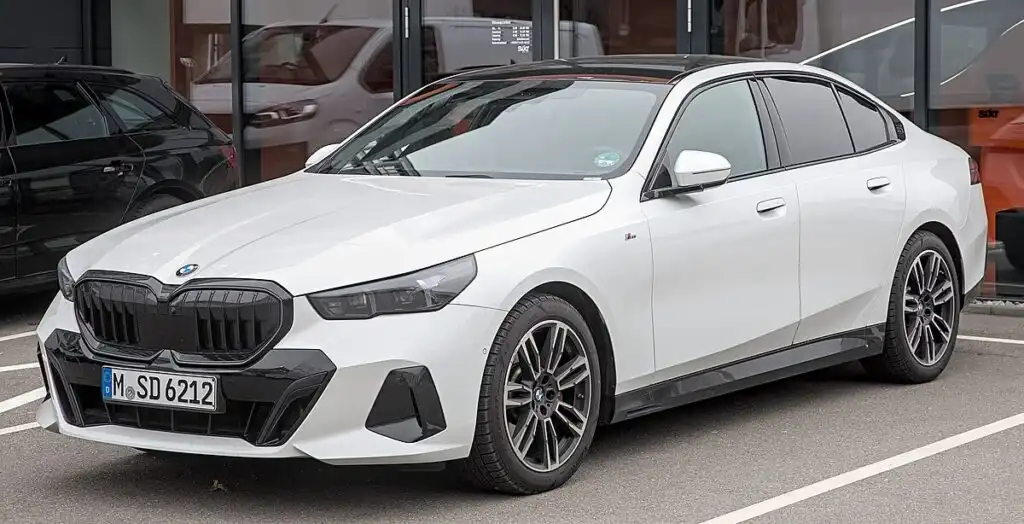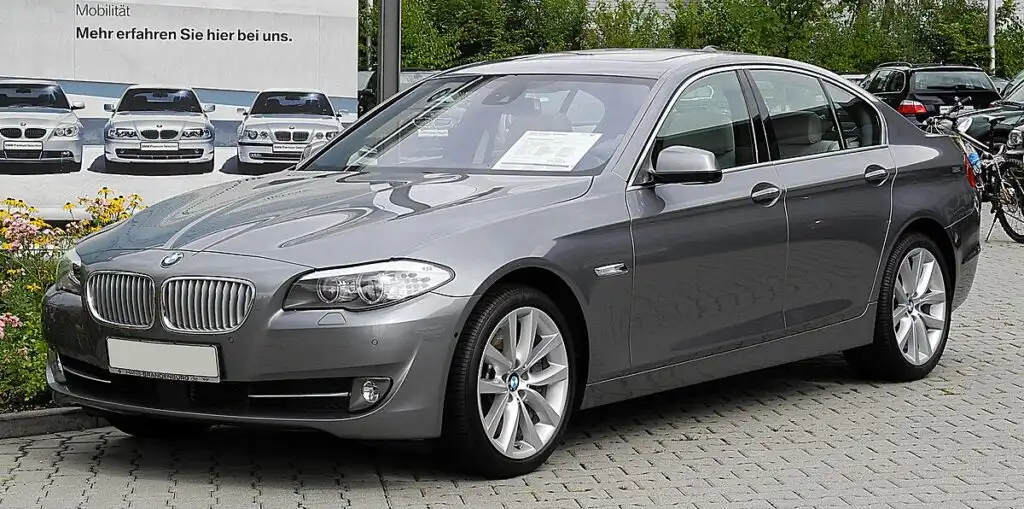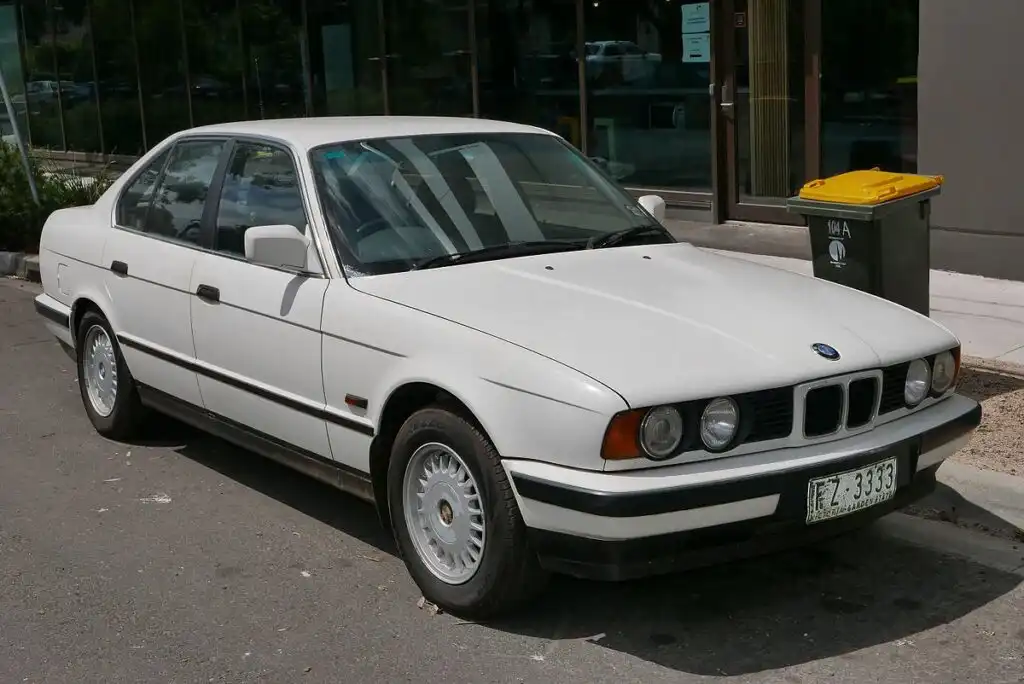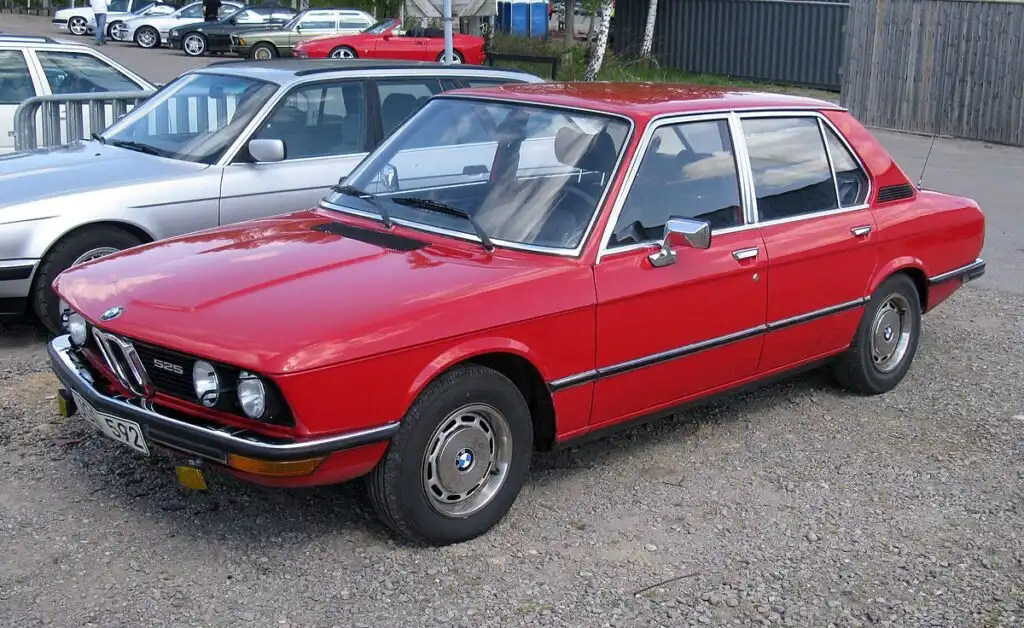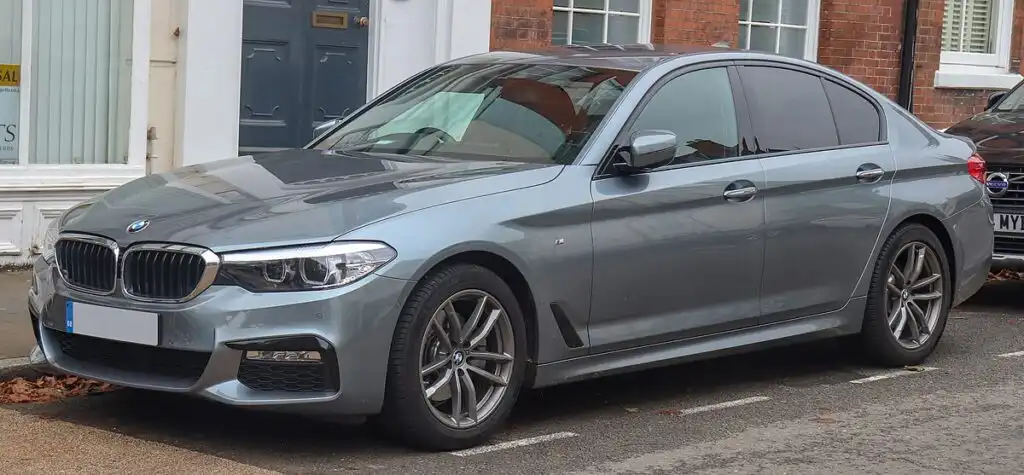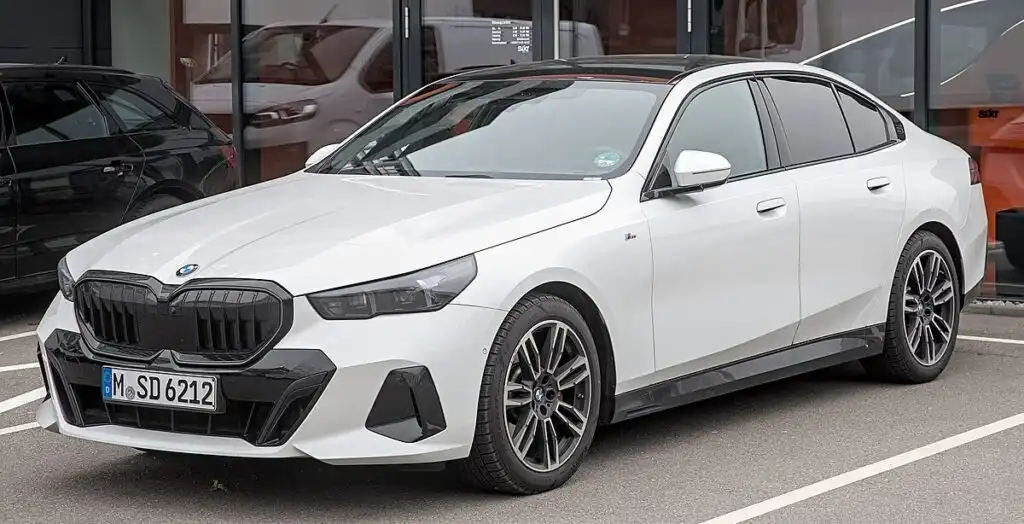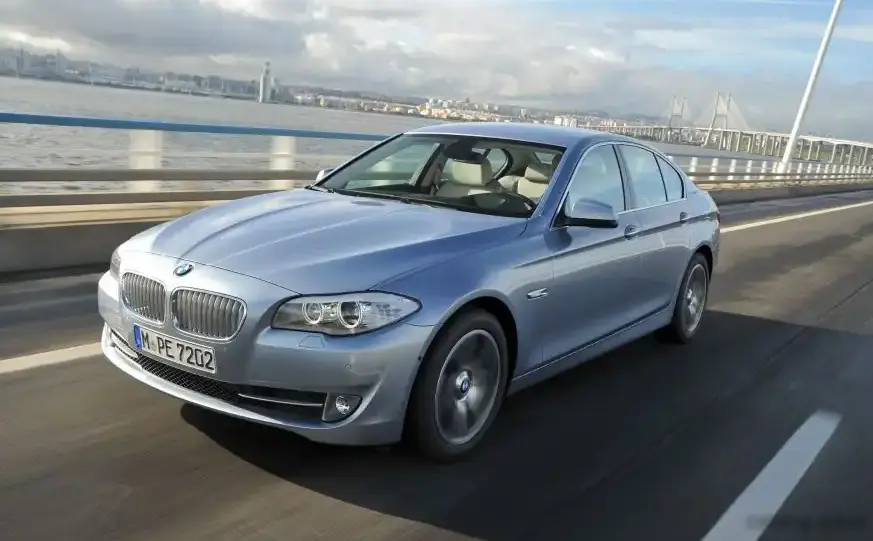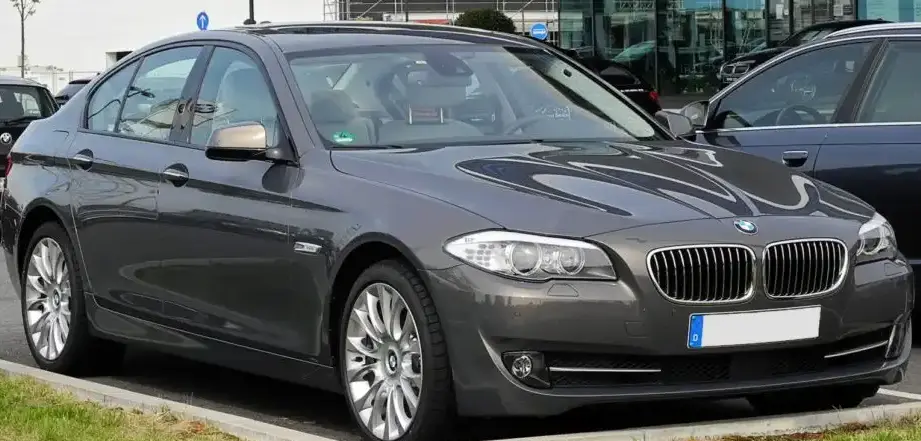
The BMW 5 Series Sedan (F10) 520d, producing 184 horsepower, was a key variant in BMW’s lineup from 2010 to 2013. Positioned as an entry-level offering within the F10 generation (2010-2017), it aimed to deliver the 5 Series experience – a blend of luxury, performance, and technology – to a broader customer base. This model represented BMW’s commitment to efficiency and diesel power, particularly in the European market where diesel engines held significant popularity. The 520d served as a stepping stone into the 5 Series range, offering a more accessible price point compared to its more powerful 525d, 530d, and 535d siblings.
Technical Specifications
| Brand | BMW |
| Model | 5 Series |
| Generation | 5 Series Sedan (F10) |
| Type (Engine) | 520d (184 Hp) |
| Start of production | 2010 |
| End of production | 2013 |
| Powertrain Architecture | Internal Combustion engine |
| Body type | Sedan |
| Seats | 5 |
| Doors | 4 |
| Fuel consumption (urban) | 5.9 l/100 km (39.9 US mpg, 47.9 UK mpg, 16.9 km/l) |
| Fuel consumption (extra urban) | 4.3 l/100 km (54.7 US mpg, 65.7 UK mpg, 23.3 km/l) |
| Fuel consumption (combined) | 4.9 l/100 km (48 US mpg, 57.6 UK mpg, 20.4 km/l) |
| CO2 emissions | 129 g/km |
| Fuel Type | Diesel |
| Acceleration 0 – 100 km/h | 8.1 sec |
| Acceleration 0 – 62 mph | 8.1 sec |
| Acceleration 0 – 60 mph | 7.7 sec |
| Maximum speed | 227 km/h (141.05 mph) |
| Emission standard | Euro 5 |
| Weight-to-power ratio | 8.8 kg/Hp, 113.6 Hp/tonne |
| Weight-to-torque ratio | 4.3 kg/Nm, 234.6 Nm/tonne |
| Power | 184 Hp @ 4000 rpm |
| Torque | 380 Nm @ 1750-2750 rpm (280.27 lb.-ft. @ 1750-2750 rpm) |
| Engine layout | Front, Longitudinal |
| Engine Model/Code | N47D20C |
| Engine displacement | 1995 cm3 (121.74 cu. in.) |
| Number of cylinders | 4 |
| Engine configuration | Inline |
| Cylinder Bore | 84 mm (3.31 in.) |
| Piston Stroke | 90 mm (3.54 in.) |
| Compression ratio | 16.5:1 |
| Number of valves per cylinder | 4 |
| Fuel injection system | Diesel Commonrail |
| Engine aspiration | Turbocharger, Intercooler |
| Engine oil capacity | 5.2 l (5.49 US qt | 4.58 UK qt) |
| Coolant | 7.2 l (7.61 US qt | 6.34 UK qt) |
| Kerb Weight | 1620 kg (3571.49 lbs.) |
| Max. weight | 2230 kg (4916.31 lbs.) |
| Max load | 610 kg (1344.82 lbs.) |
| Trunk (boot) space – minimum | 520 l (18.36 cu. ft.) |
| Fuel tank capacity | 70 l (18.49 US gal | 15.4 UK gal) |
| Length | 4899 mm (192.87 in.) |
| Width | 1860 mm (73.23 in.) |
| Height | 1464 mm (57.64 in.) |
| Wheelbase | 2968 mm (116.85 in.) |
| Front track | 1600 mm (62.99 in.) |
| Rear (Back) track | 1627 mm (64.06 in.) |
| Ride height (ground clearance) | 141 mm (5.55 in.) |
| Drag coefficient (Cd) | 0.28 |
| Minimum turning circle (turning diameter) | 11.95 m (39.21 ft.) |
| Drivetrain Architecture | Rear wheel drive |
| Drive wheel | Rear wheel drive |
| Number of gears and type of gearbox | 6 gears, manual transmission |
| Front suspension | Double wishbone |
| Rear suspension | Independent multi-link suspension |
| Front brakes | Ventilated discs |
| Rear brakes | Disc |
INTRODUCTION
The BMW 520d (F10) was introduced in 2010 as part of the sixth generation of the 5 Series. Built on the F10 platform, which also underpinned models like the 525d and 535i, the 520d aimed to provide a more fuel-efficient and affordable entry point into the executive sedan segment. It was primarily marketed in Europe and other regions where diesel fuel was prevalent, offering a compelling combination of BMW’s renowned driving dynamics and reduced running costs. The F10 5 Series represented a significant step forward in terms of technology and luxury compared to its E60 predecessor, and the 520d benefited from these advancements.
Powertrain & Engine Architecture
At the heart of the 520d was the N47D20C 2.0-liter inline-four cylinder diesel engine. This engine was a cornerstone of BMW’s EfficientDynamics strategy, focusing on maximizing fuel economy and minimizing emissions. The N47 featured a second-generation common rail direct injection system, operating at pressures up to 1800 bar, for precise fuel delivery and optimized combustion. A variable geometry turbocharger (VGT) with intercooling further enhanced performance and responsiveness. The engine produced 184 horsepower at 4000 rpm and a substantial 380 Nm (280 lb-ft) of torque between 1750 and 2750 rpm. The 520d was typically paired with a six-speed manual transmission, although an eight-speed automatic transmission was also available as an option. The automatic transmission offered smoother shifts and enhanced fuel efficiency, but at a slight cost to driver engagement.
Driving Characteristics
The 520d, while not the fastest variant in the F10 5 Series lineup, offered a surprisingly capable and refined driving experience. The 380 Nm of torque provided ample pulling power for everyday driving and overtaking maneuvers. Acceleration from 0 to 60 mph took around 7.7 to 8.1 seconds, depending on the transmission. The manual transmission offered a more connected feel, while the automatic provided seamless gear changes. Compared to the more powerful 525d and 530d, the 520d felt less urgent in its acceleration, but its lighter weight and efficient engine contributed to better fuel economy. The suspension, tuned for comfort and control, provided a smooth ride without sacrificing handling precision.
Equipment & Trim Levels
The 520d typically came standard with a generous array of features, including automatic climate control, power windows, power mirrors, a multi-function steering wheel, and a basic audio system. Higher trim levels, such as Luxury Line and Sport Line, added features like leather upholstery, upgraded audio systems, sport seats, and unique exterior styling elements. Optional extras included navigation systems, parking sensors, a sunroof, and advanced driver-assistance systems like lane departure warning and adaptive cruise control. Interior upholstery was typically cloth in base models, with leather options available. The dashboard layout was consistent across the F10 5 Series range, featuring a driver-focused design with intuitive controls.
Chassis & Braking
The F10 5 Series utilized a sophisticated chassis design, featuring a double wishbone front suspension and an independent multi-link rear suspension. This setup provided excellent ride quality and handling balance. The 520d typically came equipped with ventilated front disc brakes and solid rear disc brakes. Anti-lock braking system (ABS) and electronic stability control (ESC) were standard safety features. The steering system was a rack-and-pinion setup with electric power assistance, providing precise and responsive steering feel. The 520d’s relatively lower weight compared to its more powerful siblings contributed to its agile handling characteristics.
Market Reception & Comparison
The 520d was generally well-received by automotive critics, who praised its fuel efficiency, comfortable ride, and refined driving experience. It was seen as a sensible choice for buyers who prioritized economy and practicality without sacrificing the prestige and driving dynamics of the BMW brand. Compared to the 525d, the 520d offered lower running costs but less outright performance. The 520d’s fuel economy figures of around 48 US mpg combined were a significant selling point, particularly in Europe. Reliability was generally good, although some early N47 engines were prone to timing chain issues, which were addressed in later revisions.
Legacy
The BMW F10 520d has become a popular choice in the used car market, offering a compelling blend of luxury, performance, and affordability. The N47 engine, despite its early reliability concerns, has proven to be durable when properly maintained. The 520d’s fuel efficiency and relatively low maintenance costs make it an attractive option for buyers seeking a comfortable and reliable executive sedan. Today, well-maintained examples of the F10 520d continue to provide a rewarding driving experience and represent a good value proposition in the used car market.