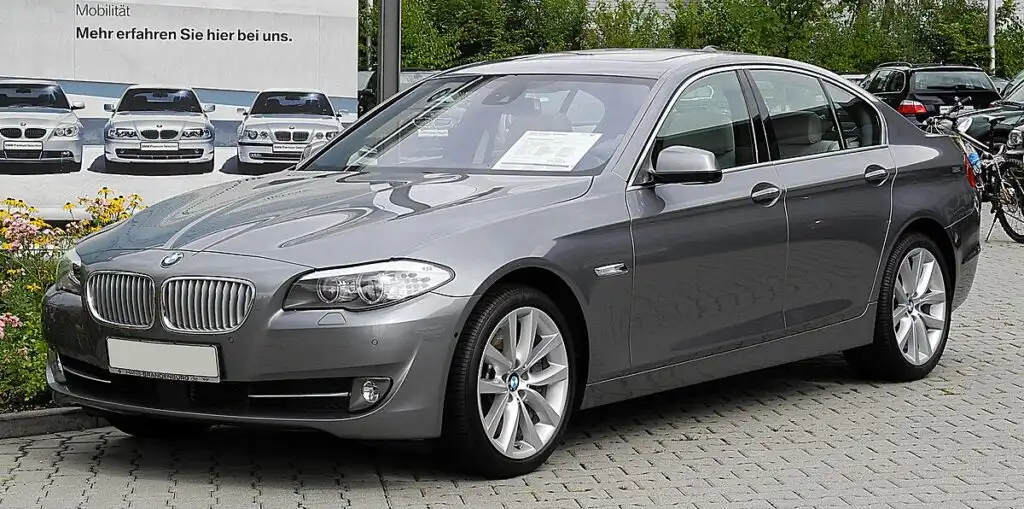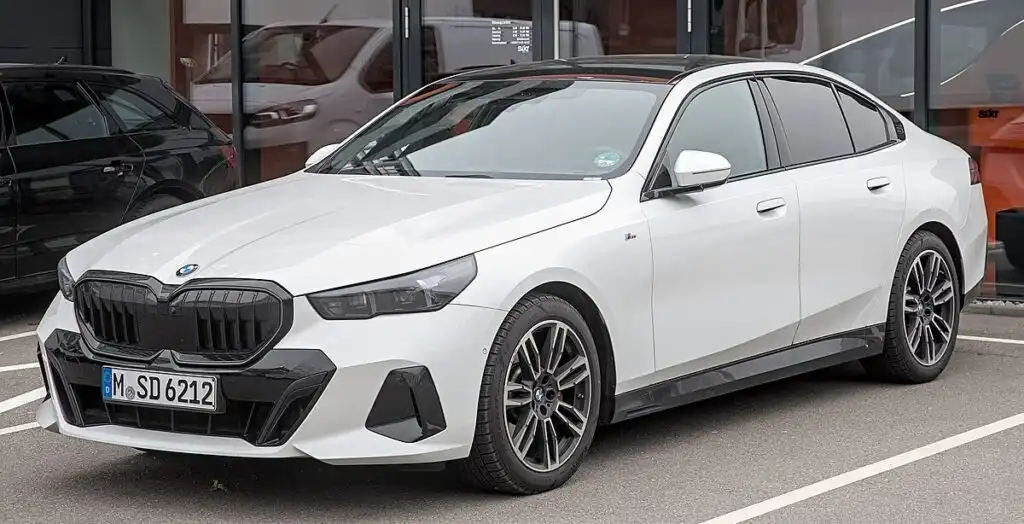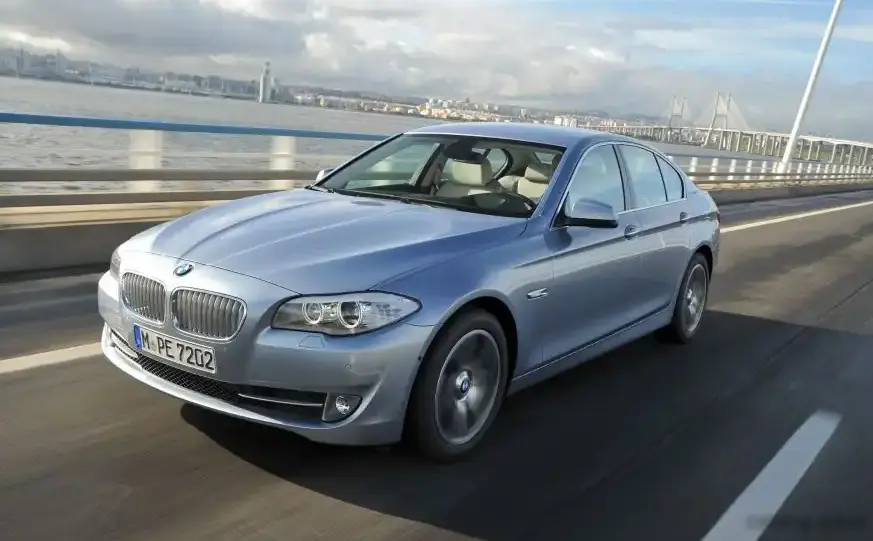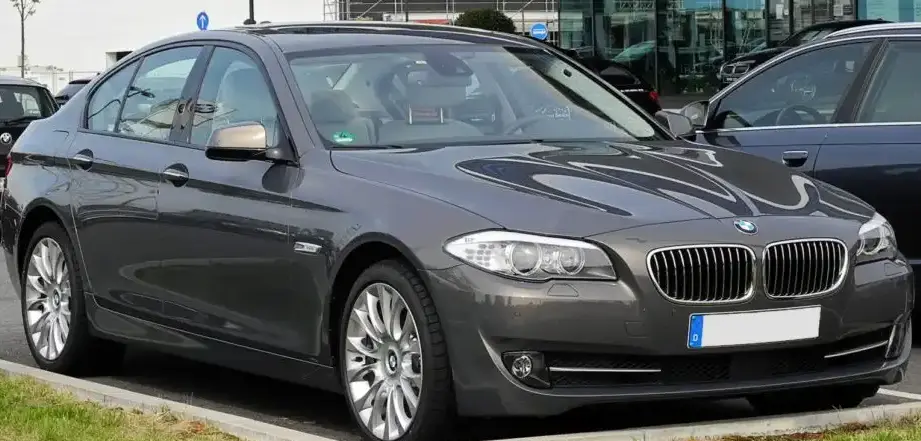
The BMW 5 Series F10 550i, produced from 2010 to 2013, represented a high-performance variant within the fifth generation of BMW’s flagship executive sedan. Positioned as a step up from the 535i and below the high-performance M5, the 550i aimed to deliver a blend of luxury, grand touring capability, and potent acceleration. It was primarily marketed towards buyers in North America, Europe, and Asia who desired a powerful and refined sedan without the overtly sporty focus of the M5. The F10 generation, overall, sought to balance BMW’s traditional driving dynamics with increased comfort and technology.
Technical Specifications
| Brand | BMW |
| Model | 5 Series |
| Generation | 5 Series Sedan (F10) |
| Type (Engine) | 550i V8 (407 Hp) Steptronic |
| Start of production | 2010 |
| End of production | 2013 |
| Powertrain Architecture | Internal Combustion engine |
| Body type | Sedan |
| Seats | 5 |
| Doors | 4 |
| Fuel consumption (economy) – urban | 15.4 l/100 km (15.3 US mpg, 18.3 UK mpg, 6.5 km/l) |
| Fuel consumption (economy) – extra urban | 7.5 l/100 km (31.4 US mpg, 37.7 UK mpg, 13.3 km/l) |
| Fuel consumption (economy) – combined | 10.4 l/100 km (22.6 US mpg, 27.2 UK mpg, 9.6 km/l) |
| CO2 emissions | 243 g/km |
| Fuel Type | Petrol (Gasoline) |
| Acceleration 0 – 100 km/h | 5 sec |
| Acceleration 0 – 62 mph | 5 sec |
| Acceleration 0 – 60 mph | 4.8 sec |
| Maximum speed | 250 km/h (155.34 mph) |
| Emission standard | Euro 5 |
| Weight-to-power ratio | 4.5 kg/Hp, 222.4 Hp/tonne |
| Weight-to-torque ratio | 3.1 kg/Nm, 327.9 Nm/tonne |
| Power | 407 Hp @ 5500-6400 rpm |
| Power per litre | 92.6 Hp/l |
| Torque | 600 Nm @ 1750-4500 rpm (442.54 lb.-ft. @ 1750-4500 rpm) |
| Engine layout | Front, Longitudinal |
| Engine Model/Code | N63B44A |
| Engine displacement | 4395 cm3 (268.2 cu. in.) |
| Number of cylinders | 8 |
| Engine configuration | V-engine |
| Cylinder Bore | 89 mm (3.5 in.) |
| Piston Stroke | 88.3 mm (3.48 in.) |
| Compression ratio | 10:1 |
| Number of valves per cylinder | 4 |
| Fuel injection system | Direct injection |
| Engine aspiration | Twin-power turbo, Intercooler |
| Engine oil capacity | 8.5 l (8.98 US qt | 7.48 UK qt) |
| Coolant | 11.4 l (12.05 US qt | 10.03 UK qt) |
| Kerb Weight | 1830 kg (4034.46 lbs.) |
| Max. weight | 2430 kg (5357.23 lbs.) |
| Max load | 600 kg (1322.77 lbs.) |
| Trunk (boot) space – minimum | 520 l (18.36 cu. ft.) |
| Fuel tank capacity | 70 l (18.49 US gal | 15.4 UK gal) |
| Max. roof load | 100 kg (220.46 lbs.) |
| Permitted trailer load with brakes (12%) | 2000 kg (4409.25 lbs.) |
| Permitted trailer load without brakes | 750 kg (1653.47 lbs.) |
| Permitted towbar download | 90 kg (198.42 lbs.) |
| Length | 4899 mm (192.87 in.) |
| Width | 1860 mm (73.23 in.) |
| Height | 1464 mm (57.64 in.) |
| Wheelbase | 2968 mm (116.85 in.) |
| Front track | 1600 mm (62.99 in.) |
| Rear (Back) track | 1627 mm (64.06 in.) |
| Ride height (ground clearance) | 141 mm (5.55 in.) |
| Drag coefficient (Cd) | 0.30 |
| Minimum turning circle (turning diameter) | 11.95 m (39.21 ft.) |
| Drivetrain Architecture | The Internal combustion engine (ICE) drives the rear wheels of the vehicle. |
| Drive wheel | Rear wheel drive |
| Number of gears and type of gearbox | 8 gears, automatic transmission Steptronic |
| Front suspension | Double wishbone |
| Rear suspension | Independent multi-link suspension |
| Front brakes | Ventilated discs |
| Rear brakes | Disc |
| Assisting systems | ABS (Anti-lock braking system) |
| Steering type | Steering rack and pinion |
| Power steering | Electric Steering |
| Tires size | 245/45 R18 96Y |
| Wheel rims size | 8J x 18 |
INTRODUCTION
The F10 550i was powered by the N63B44A 4.4-liter twin-turbocharged V8 engine, a significant departure from the naturally aspirated V8s of previous 5 Series generations. This engine, introduced in 2010, was a key component in BMW’s strategy to improve fuel efficiency while maintaining high performance. The “Steptronic” designation refers to BMW’s 8-speed automatic transmission, which was standard equipment. The 550i occupied a middle ground in the F10 lineup, offering more power and luxury than the 528i and 535i, but without the track-focused intent of the M5.
Powertrain & Engine Architecture
The N63B44A engine is a 32-valve, direct-injection V8 featuring two twin-scroll turbochargers. This configuration helped to minimize turbo lag and deliver a broad torque curve. The engine utilized Valvetronic technology, which allows for precise control of valve lift and timing, optimizing both power and efficiency. The 8-speed automatic transmission (8HP70) was a crucial element in the 550i’s performance and efficiency. It offered smooth and quick shifts, and its wide gear ratio spread allowed the engine to operate in its optimal power band more frequently. The transmission also featured steering wheel-mounted paddle shifters for manual control. Early versions of the N63 engine (2008-2010) were known for oil consumption issues, which were addressed in later revisions, including those found in the 2011-2013 550i models.
Driving Characteristics
The 550i delivered a distinctly grand touring experience. The twin-turbo V8 provided effortless acceleration, with 60 mph arriving in around 4.8 seconds. The 8-speed automatic transmission contributed to a smooth and refined driving experience, seamlessly shifting through the gears. While not as overtly sporty as the M5, the 550i offered ample power for spirited driving. The steering was precise and well-weighted, providing good feedback to the driver. The suspension, tuned for comfort, absorbed bumps and imperfections in the road effectively, making it a comfortable long-distance cruiser. Compared to the 535i (with its turbocharged inline-six), the 550i offered significantly more low-end torque and a more authoritative exhaust note. The 550i’s power delivery was more linear and predictable than the more peaky power delivery of the M5.
Equipment & Trim Levels
The 550i came standard with a comprehensive list of features, including leather upholstery, power-adjustable front seats with memory, a premium sound system, a navigation system, and a sunroof. Optional extras included adaptive cruise control, a head-up display, ventilated front seats, and a rear-seat entertainment system. Interior trim options ranged from wood veneers to aluminum accents. The standard dashboard configuration featured BMW’s iDrive infotainment system, which controlled various vehicle functions through a central display screen and a rotary controller. The 550i typically featured more luxurious interior appointments than the lower-trim 528i and 535i models.
Chassis & Braking
The F10 550i utilized a double-wishbone front suspension and an independent multi-link rear suspension. This setup provided a good balance of ride comfort and handling precision. The 550i was equipped with ventilated disc brakes at all four corners, providing ample stopping power. Anti-lock braking system (ABS) and dynamic stability control (DSC) were standard safety features. The 550i’s chassis was designed to handle the increased power and torque of the V8 engine. Compared to the 528i, the 550i often featured thicker stabilizer bars and stiffer springs to improve handling.
Market Reception & Comparison
Critics generally praised the F10 550i for its powerful engine, refined ride, and luxurious interior. However, some reviewers noted that the engine’s fuel economy was relatively poor for a V8. Compared to the 535i, the 550i offered a more substantial performance upgrade, but at a higher price point. The 550i’s fuel economy was comparable to other V8-powered luxury sedans of the time, such as the Mercedes-Benz S550 and the Audi A8 4.2. Reliability was generally good, although early N63 engines were prone to oil consumption issues. Later models (2011-2013) proved to be more reliable.
Legacy
The F10 550i remains a desirable used car, particularly for buyers who prioritize performance and luxury. The N63 engine, despite its early issues, has proven to be a durable and capable powerplant when properly maintained. The 550i’s combination of power, comfort, and technology continues to appeal to enthusiasts. While maintenance costs can be higher than those of the 528i or 535i due to the V8 engine and more complex systems, the 550i offers a unique driving experience that sets it apart from its siblings. The F10 550i represents a significant chapter in BMW’s history, showcasing the brand’s commitment to both performance and innovation.