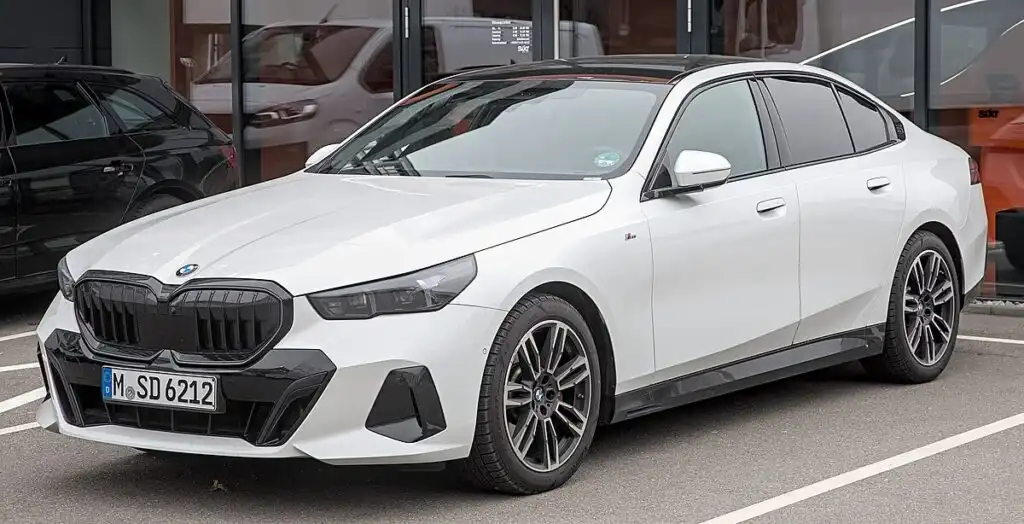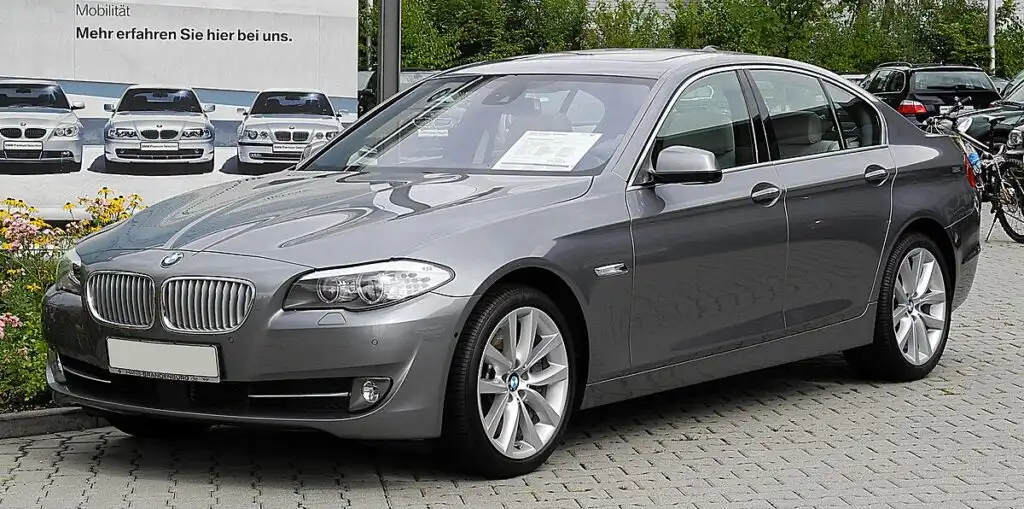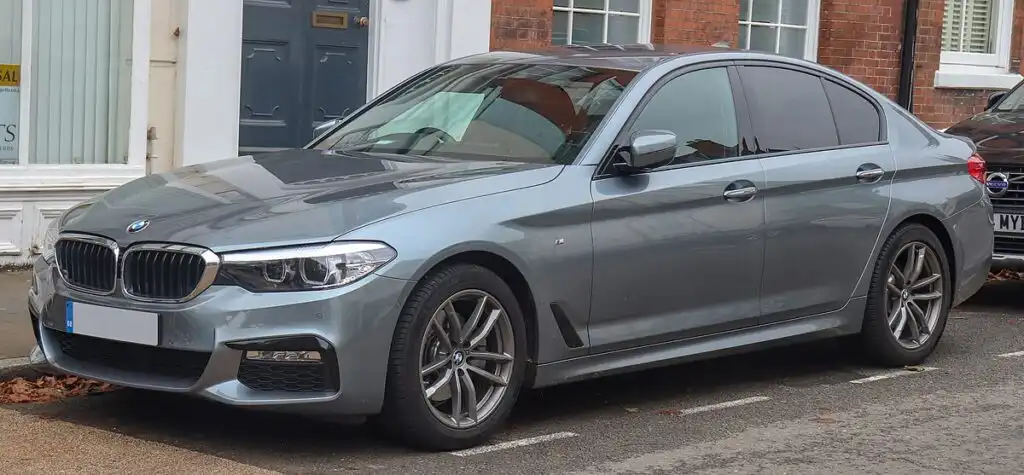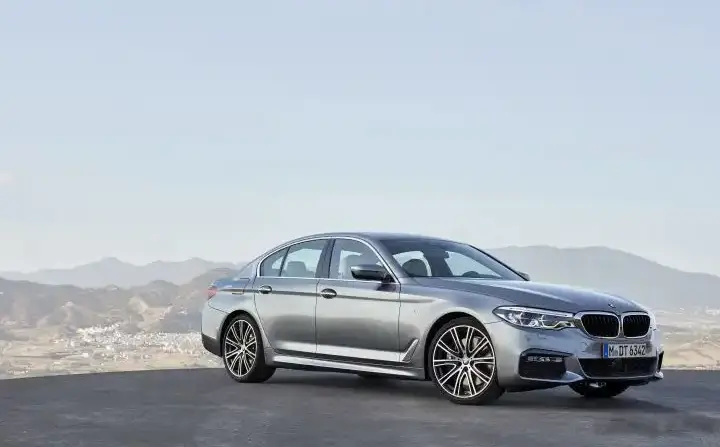
The BMW 5 Series G30 520d, produced from 2017 to 2020, represents a key entry point into the seventh generation of BMW’s flagship executive sedan. Positioned as a diesel-powered variant, the 520d aimed to balance fuel efficiency with respectable performance, appealing to buyers prioritizing economy and long-distance comfort. This model occupied the lower-mid range of the G30 lineup, sitting below the more powerful 530i and 540i gasoline variants, as well as the higher-output 530d. The G30 generation marked a significant evolution for the 5 Series, incorporating lightweight materials, advanced driver-assistance systems, and a more sophisticated interior.
Technical Specifications
| Brand | BMW |
| Model | 5 Series |
| Generation | 5 Series Sedan (G30) |
| Type (Engine) | 520d (190 Hp) |
| Start of production | 2017 |
| End of production | 2020 |
| Powertrain Architecture | Internal Combustion engine |
| Body type | Sedan |
| Seats | 5 |
| Doors | 4 |
| Fuel consumption (urban) | 4.9-5.2 l/100 km (48 – 45.2 US mpg, 57.6 – 54.3 UK mpg, 20.4 – 19.2 km/l) |
| Fuel consumption (extra urban) | 3.7-4.1 l/100 km (63.6 – 57.4 US mpg, 76.3 – 68.9 UK mpg, 27 – 24.4 km/l) |
| Fuel consumption (combined) | 4.2-4.5 l/100 km (56 – 52.3 US mpg, 67.3 – 62.8 UK mpg, 23.8 – 22.2 km/l) |
| CO2 emissions | 109-119 g/km |
| Fuel Type | Diesel |
| Acceleration 0 – 100 km/h | 7.7 sec |
| Acceleration 0 – 62 mph | 7.7 sec |
| Acceleration 0 – 60 mph | 7.3 sec |
| Maximum speed | 238 km/h (147.89 mph) |
| Emission standard | Euro 6 |
| Weight-to-power ratio | 8.1 kg/Hp, 123.4 Hp/tonne |
| Weight-to-torque ratio | 3.9 kg/Nm, 259.7 Nm/tonne |
| Power | 190 Hp @ 4000 rpm |
| Power per litre | 95.2 Hp/l |
| Torque | 400 Nm @ 1750-2500 rpm (295.02 lb.-ft. @ 1750-2500 rpm) |
| Engine layout | Front, Longitudinal |
| Engine Model/Code | B47D20B |
| Engine displacement | 1995 cm3 (121.74 cu. in.) |
| Number of cylinders | 4 |
| Engine configuration | Inline |
| Cylinder Bore | 84 mm (3.31 in.) |
| Piston Stroke | 90 mm (3.54 in.) |
| Compression ratio | 16.5:1 |
| Number of valves per cylinder | 4 |
| Fuel injection system | Diesel Commonrail |
| Engine aspiration | Twin-power turbo, Intercooler |
| Engine oil capacity | 5 l (5.28 US qt | 4.4 UK qt) |
| Coolant | 8.8 l (9.3 US qt | 7.74 UK qt) |
| Kerb Weight | 1540 kg (3395.12 lbs.) |
| Max. weight | 2230 kg (4916.31 lbs.) |
| Max load | 690 kg (1521.19 lbs.) |
| Trunk (boot) space – minimum | 530 l (18.72 cu. ft.) |
| Fuel tank capacity | 66 l (17.44 US gal | 14.52 UK gal) |
| Max. roof load | 100 kg (220.46 lbs.) |
| Permitted trailer load with brakes (12%) | 1800 kg (3968.32 lbs.) |
| Permitted trailer load without brakes | 750 kg (1653.47 lbs.) |
| Permitted towbar download | 90 kg (198.42 lbs.) |
| Length | 4936 mm (194.33 in.) |
| Width | 1868 mm (73.54 in.) |
| Width including mirrors | 2126 mm (83.7 in.) |
| Height | 1466 mm (57.72 in.) |
| Wheelbase | 2975 mm (117.13 in.) |
| Front track | 1605 mm (63.19 in.) |
| Rear (Back) track | 1630 mm (64.17 in.) |
| Front overhang | 862 mm (33.94 in.) |
| Rear overhang | 1099 mm (43.27 in.) |
| Ride height (ground clearance) | 144 mm (5.67 in.) |
| Drag coefficient (Cd) | 0.24 |
| Minimum turning circle (turning diameter) | 12.05 m (39.53 ft.) |
| Drivetrain Architecture | The Internal combustion engine (ICE) drives the rear wheels of the vehicle. |
| Drive wheel | Rear wheel drive |
| Number of gears and type of gearbox | 6 gears, manual transmission |
| Front suspension | Double wishbone |
| Rear suspension | Independent multi-link suspension |
| Front brakes | Ventilated discs |
| Rear brakes | Ventilated discs |
| Assisting systems | ABS (Anti-lock braking system) |
| Steering type | Steering rack and pinion |
| Power steering | Electric Steering |
| Tires size | 225/55 R17 97Y |
| Wheel rims size | 7.5J x 17 |
Powertrain & Engine Architecture
The 520d is powered by BMW’s B47D20B, a 2.0-liter inline-four diesel engine. This engine is a member of BMW’s modular engine family, known for its efficiency and refinement. The B47 utilizes a second-generation common rail direct injection system, delivering fuel at pressures up to 2,000 bar for optimized combustion. A single twin-scroll turbocharger with variable geometry turbine (VGT) technology provides boost, contributing to the engine’s 400 Nm (295 lb-ft) of torque available from 1750 to 2500 rpm. The engine also features an intercooler to reduce intake air temperature, further enhancing performance. The 520d typically came equipped with a six-speed manual transmission, although an eight-speed automatic transmission (ZF 8HP) was a popular option. The automatic transmission offered smoother shifts and improved fuel economy, but at the expense of some driver engagement.
Driving Characteristics
The 520d, particularly with the manual transmission, offered a balanced driving experience. While not overtly sporty, the engine provided sufficient power for everyday driving and comfortable highway cruising. The 0-60 mph acceleration time of around 7.3 seconds was respectable for a diesel-powered executive sedan. The automatic transmission versions prioritized comfort and ease of use, with smooth gear changes and a relaxed driving style. Compared to the more powerful 530i or 540i, the 520d felt less eager to accelerate, but its lower weight and efficient engine contributed to better fuel economy. The manual transmission allowed for more driver control, but the automatic offered a more refined and effortless experience.
Equipment & Trim Levels
The 520d typically came standard with features such as automatic climate control, power-adjustable front seats, a BMW iDrive infotainment system with a 10.25-inch touchscreen display, and a suite of safety features including ABS, stability control, and multiple airbags. Interior upholstery was typically cloth or leatherette, with leather being an optional upgrade. Common optional extras included a sunroof, navigation system, premium sound system, and advanced driver-assistance systems like adaptive cruise control and lane departure warning. Trim levels varied by market, but generally offered increasing levels of luxury and technology.
Chassis & Braking
The G30 5 Series utilized a lightweight chassis construction, incorporating high-strength steel and aluminum components. The 520d featured a double-wishbone front suspension and an independent multi-link rear suspension, providing a comfortable and controlled ride. The braking system consisted of ventilated disc brakes on all four wheels, offering ample stopping power. The standard suspension setup was tuned for comfort, but an optional adaptive suspension system was available, allowing drivers to adjust the damping characteristics to suit their preferences. Stabilizer bars were fitted front and rear to reduce body roll during cornering.
Market Reception & Comparison
The 520d was generally well-received by automotive critics as a practical and efficient option within the 5 Series lineup. It was praised for its fuel economy, comfortable ride, and refined interior. However, some critics noted that the engine lacked the outright performance of its gasoline counterparts. Compared to other diesel-powered executive sedans, such as the Audi A6 TDI and Mercedes-Benz E220d, the 520d offered a competitive blend of performance, efficiency, and luxury. Its fuel economy figures were consistently among the best in its class, making it an attractive option for high-mileage drivers.
Legacy
The B47 engine, found in the 520d, has proven to be a relatively reliable powertrain, although some early models experienced issues with timing chain tensioners. Regular maintenance, including oil changes and filter replacements, is crucial for ensuring long-term reliability. On the used car market, the G30 520d remains a popular choice due to its fuel efficiency, comfortable ride, and relatively affordable price point. Its reputation for reliability, combined with BMW’s strong brand image, continues to make it a desirable option for buyers seeking a well-rounded executive sedan.