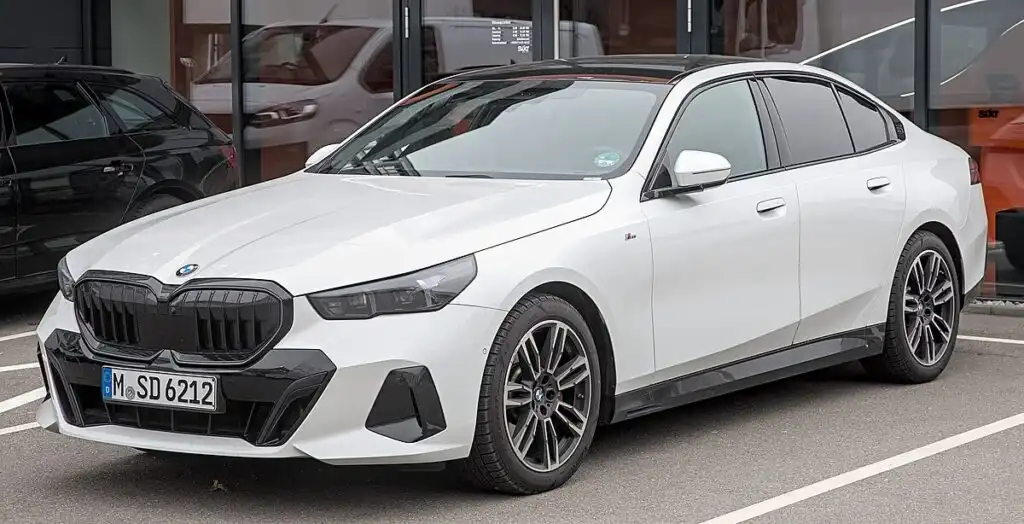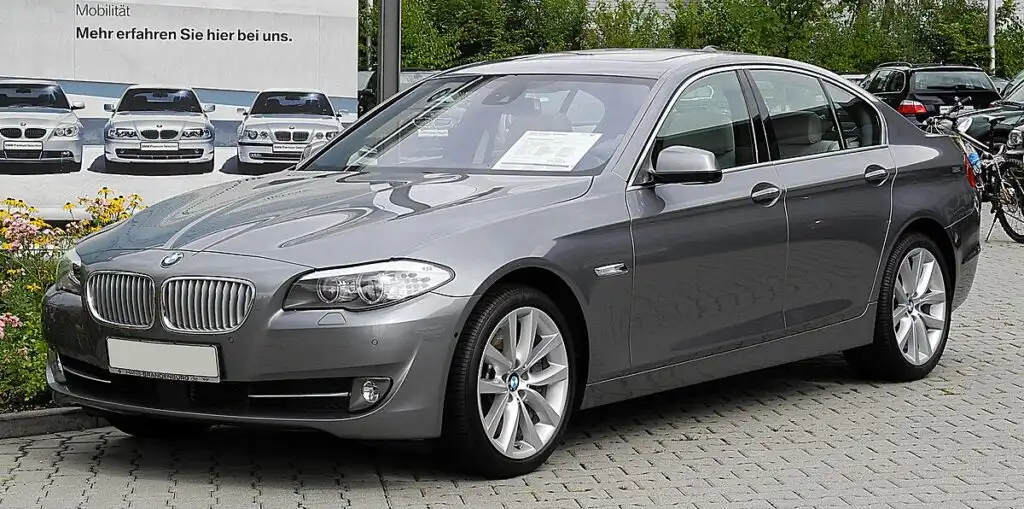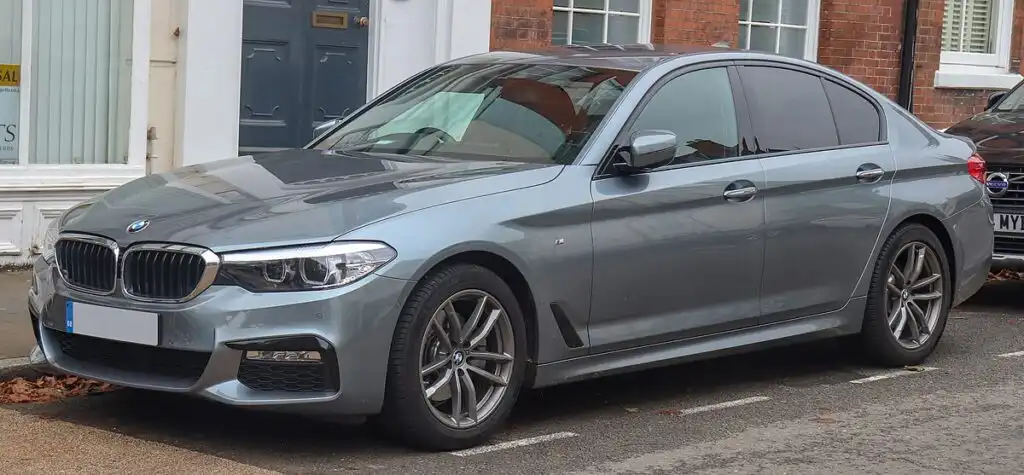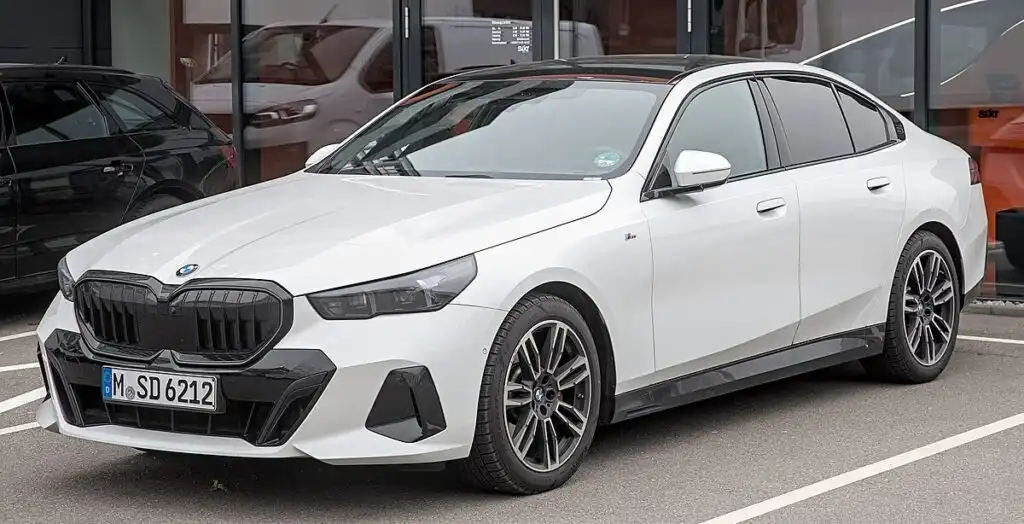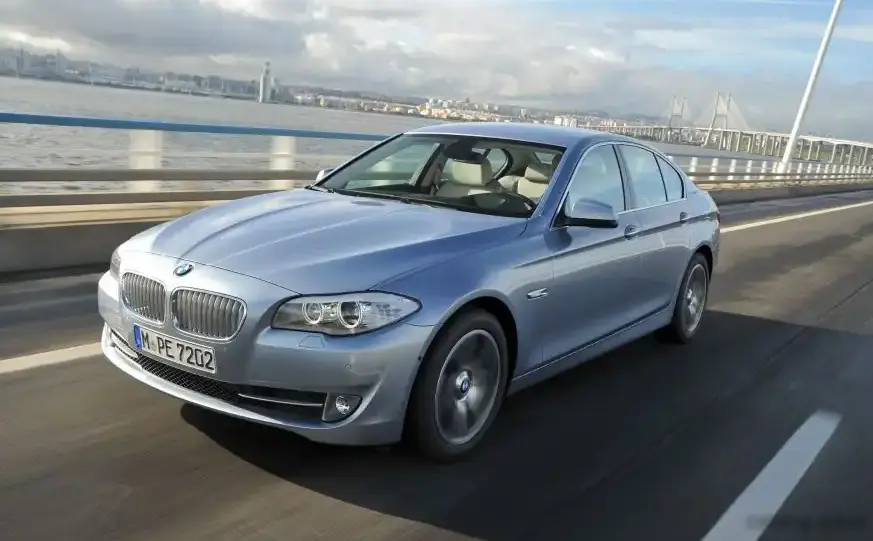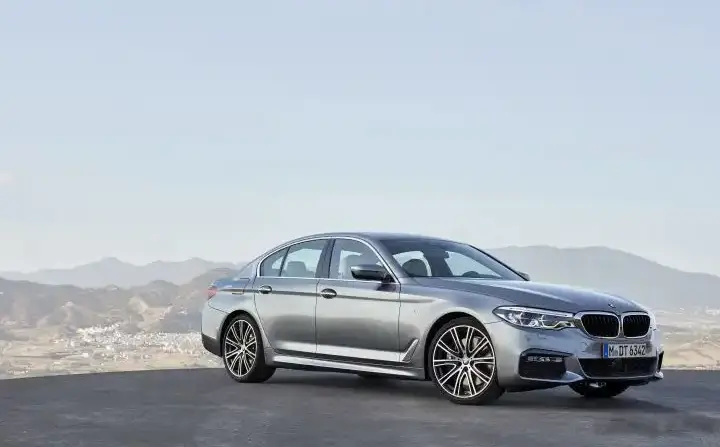
The BMW 530e iPerformance, produced from 2017 to 2019, represents BMW’s initial foray into plug-in hybrid technology within the G30 generation of the 5 Series sedan. Positioned as a mid-range offering within the 5 Series lineup, it aimed to provide a balance between performance, efficiency, and environmental responsibility. The 530e iPerformance was primarily marketed towards environmentally conscious consumers seeking a premium executive sedan experience with the added benefit of electric driving capability. It utilized BMW’s 360° ELECTRIC vision, integrating electric drive into a conventional luxury vehicle.
Technical Specifications
| Brand | BMW |
| Model | 5 Series |
| Generation | 5 Series Sedan (G30) |
| Type (Engine) | 530e iPerformance (252 Hp) Plug-in Hybrid Steptronic |
| Start of production | 2017 |
| End of production | 2019 |
| Powertrain Architecture | PHEV (Plug-in Hybrid Electric Vehicle) |
| Body type | Sedan |
| Seats | 5 |
| Doors | 4 |
| Fuel consumption (economy) – combined | 1.9-2.1 l/100 km (123.8 – 112 US mpg, 148.7 – 134.5 UK mpg, 52.6 – 47.6 km/l) |
| CO2 emissions | 44-49 g/km |
| Fuel Type | Petrol / electricity |
| Acceleration 0 – 100 km/h | 6.2 sec |
| Acceleration 0 – 62 mph | 6.2 sec |
| Acceleration 0 – 60 mph | 5.9 sec |
| Maximum speed | 235 km/h (146.02 mph) |
| Emission standard | Euro 6 |
| Weight-to-power ratio | 7 kg/Hp, 142.4 Hp/tonne |
| Weight-to-torque ratio | 4.2 kg/Nm, 237.3 Nm/tonne |
| Gross battery capacity | 9.2 kWh |
| Battery voltage | 351 V |
| Battery technology | Lithium-ion (Li-Ion) |
| Battery location | Below the floor, under the rear seats |
| Recuperation output | 20 kW |
| All-electric range | 46-50 km (28.58 – 31.07 mi) |
| Average Energy consumption | 13.1-14.1 kWh/100 km (21.08 – 22.69 kWh/100 mi, 160 – 149 MPGe, 7.6 – 7.1 km/kWh, 4.7 – 4.4 mi/kWh) |
| Electric motor power | 113 Hp @ 3170 rpm |
| Electric motor Torque | 250 Nm @ 0-3170 rpm (184.39 lb.-ft. @ 0-3170 rpm) |
| Electric motor location | Between the combustion engine and the transmission |
| System power | 252 Hp |
| System torque | 420 Nm (309.78 lb.-ft.) |
| Power | 184 Hp @ 5000-6500 rpm |
| Torque | 290 Nm @ 1350-4250 rpm (213.89 lb.-ft. @ 1350-4250 rpm) |
| Engine layout | Front, Longitudinal |
| Engine Model/Code | B48B20A |
| Engine displacement | 1998 cm3 (121.93 cu. in.) |
| Number of cylinders | 4 |
| Engine configuration | Inline |
| Cylinder Bore | 82 mm (3.23 in.) |
| Piston Stroke | 94.6 mm (3.72 in.) |
| Compression ratio | 11:1 |
| Number of valves per cylinder | 4 |
| Fuel injection system | Direct injection |
| Engine aspiration | Twin-power turbo, Intercooler |
| Valvetrain | VALVETRONIC |
| Engine oil capacity | 5.25 l (5.55 US qt | 4.62 UK qt) |
| Coolant | 9.9 l (10.46 US qt | 8.71 UK qt) |
| Kerb Weight | 1770 kg (3902.18 lbs.) |
| Max. weight | 2420 kg (5335.19 lbs.) |
| Max load | 650 kg (1433 lbs.) |
| Trunk (boot) space – minimum | 410 l (14.48 cu. ft.) |
| Fuel tank capacity | 46 l (12.15 US gal | 10.12 UK gal) |
| Max. roof load | 100 kg (220.46 lbs.) |
| Length | 4936 mm (194.33 in.) |
| Width | 1868 mm (73.54 in.) |
| Height | 1483 mm (58.39 in.) |
| Wheelbase | 2975 mm (117.13 in.) |
| Front track | 1604 mm (63.15 in.) |
| Rear (Back) track | 1631 mm (64.21 in.) |
| Ride height (ground clearance) | 150 mm (5.91 in.) |
| Drag coefficient (Cd) | 0.26 |
| Minimum turning circle (turning diameter) | 12.05 m (39.53 ft.) |
| Drivetrain Architecture | The Internal combustion engine (ICE) and electric motor drive the rear wheels of the car with the ability to work in full electric or mixed mode. |
| Drive wheel | Rear wheel drive |
| Number of gears and type of gearbox | 8 gears, automatic transmission Steptronic |
| Front suspension | Double wishbone |
| Rear suspension | Independent multi-link suspension |
| Front brakes | Ventilated discs |
| Rear brakes | Ventilated discs |
| Assisting systems | ABS (Anti-lock braking system) |
| Steering type | Steering rack and pinion |
| Power steering | Electric Steering |
| Tires size | Front wheel tires: 225/55 R17; 245/45 R18; 245/40 R19; 245/35 R20Rear wheel tires: 225/55 R17; 245/45 R18; 275/40 R18; 245/40 R19; 275/35 R19; 275/30 R20 |
| Wheel rims size | Front wheel rims: 7.5J x 17; 8J x 18; 8J x 19; 8J x 20Rear wheel rims: 7.5J x 17; 8J x 18; 9J x 18; 8J x 19; 9J x 19; 9J x 20 |
INTRODUCTION
The BMW 530e iPerformance, launched in 2017, was a significant step for BMW in offering a plug-in hybrid executive sedan. Built on the G30 5 Series platform, it combined a 2.0-liter turbocharged four-cylinder gasoline engine with an electric motor, offering a combined system output of 252 horsepower. The 530e aimed to appeal to buyers seeking a blend of luxury, performance, and reduced emissions. Production continued through 2019, after which it was superseded by updated versions of the 530e within the G30 lifecycle.
Powertrain & Engine Architecture
At the heart of the 530e iPerformance lies BMW’s B48B20A 2.0-liter inline-four cylinder engine. This engine utilizes direct fuel injection and BMW’s Valvetronic technology for precise control of valve timing and lift, optimizing both power and efficiency. The engine produces 184 horsepower and 213.89 lb-ft of torque. Coupled with this is an electric motor, integrated between the engine and the 8-speed Steptronic automatic transmission, contributing an additional 113 horsepower and 184.39 lb-ft of torque. The combined system output is 252 horsepower and 309.78 lb-ft of torque. The 9.2 kWh lithium-ion battery pack is located under the rear seats, minimizing impact on trunk space. The battery can be charged via a standard 120V outlet or a dedicated 240V charging station. The Steptronic transmission is specifically tuned to work seamlessly with the electric motor, providing smooth and efficient gear changes.
Driving Characteristics
The 530e iPerformance offers a unique driving experience. In electric-only mode, it can travel up to 46-50 kilometers (28.58 – 31.07 miles) on a full charge, providing silent and emission-free driving for shorter commutes. When the battery is depleted or when more power is demanded, the gasoline engine seamlessly kicks in. The combined power delivery provides brisk acceleration, with a 0-60 mph time of around 5.9 seconds. Compared to the standard 530i with the same engine but without the hybrid system, the 530e feels slightly heavier due to the battery pack, but the instant torque from the electric motor compensates for this, particularly at lower speeds. The 8-speed automatic transmission is well-matched to the powertrain, offering smooth and responsive shifts. The gear ratios are optimized for both fuel efficiency and performance.
Equipment & Trim Levels
The 530e iPerformance typically came well-equipped, reflecting its position as a premium model. Standard features included BMW’s iDrive infotainment system with a touchscreen display, navigation, automatic climate control, leather upholstery, and a suite of advanced driver-assistance systems such as lane departure warning and automatic emergency braking. Optional extras included features like a premium sound system, adaptive cruise control, a head-up display, and upgraded interior trim options. The interior design was consistent with other G30 5 Series models, offering a luxurious and comfortable cabin environment. Exterior styling cues were subtle, with “eDrive” badging differentiating it from other 5 Series variants.
Chassis & Braking
The 530e iPerformance utilizes a double-wishbone front suspension and an independent multi-link rear suspension, providing a comfortable and controlled ride. The suspension tuning is slightly firmer than the standard 5 Series to compensate for the added weight of the battery pack. Brakes are ventilated discs all around, providing ample stopping power. The regenerative braking system captures energy during deceleration, helping to recharge the battery and improve overall efficiency. ABS (Anti-lock braking system) is standard, along with other electronic stability control systems.
Market Reception & Comparison
The 530e iPerformance was generally well-received by automotive critics. It was praised for its smooth and quiet electric driving mode, its respectable performance, and its luxurious interior. However, some critics noted that the battery pack reduced trunk space compared to the standard 5 Series. Compared to the 530i, the 530e offered significantly better fuel economy, particularly for drivers who frequently commute short distances and can take advantage of the electric-only range. Compared to the 540i with its larger six-cylinder engine, the 530e offered less overall power but a more environmentally friendly driving experience. The 530e also competed with other plug-in hybrid sedans from brands like Mercedes-Benz and Volvo.
Legacy
The BMW 530e iPerformance was a pioneering model in the luxury plug-in hybrid segment. It demonstrated BMW’s commitment to electrification and paved the way for future hybrid and electric vehicles. While early models may exhibit some battery degradation over time, the powertrain has proven to be generally reliable. On the used car market, the 530e iPerformance remains a desirable option for buyers seeking a premium sedan with low running costs and reduced emissions. Its combination of luxury, performance, and efficiency continues to appeal to a wide range of drivers.