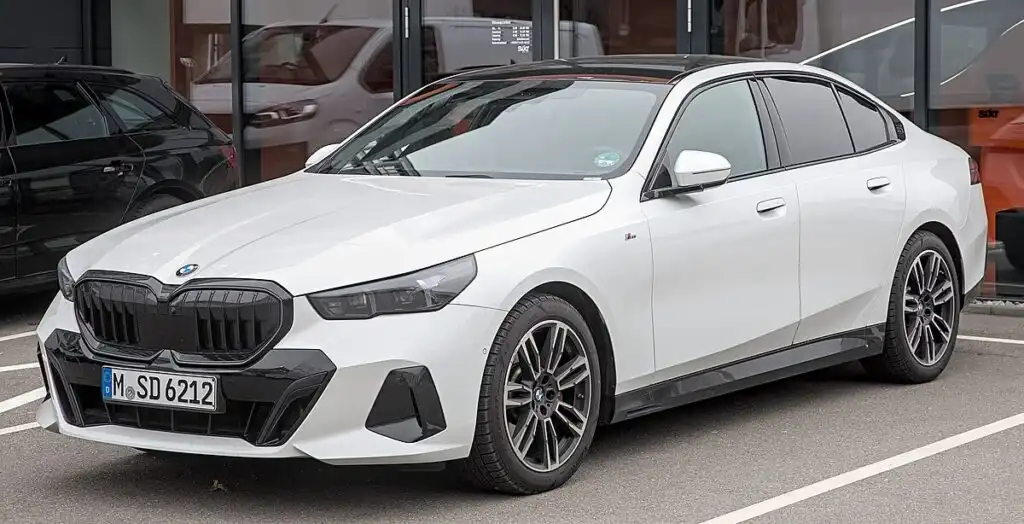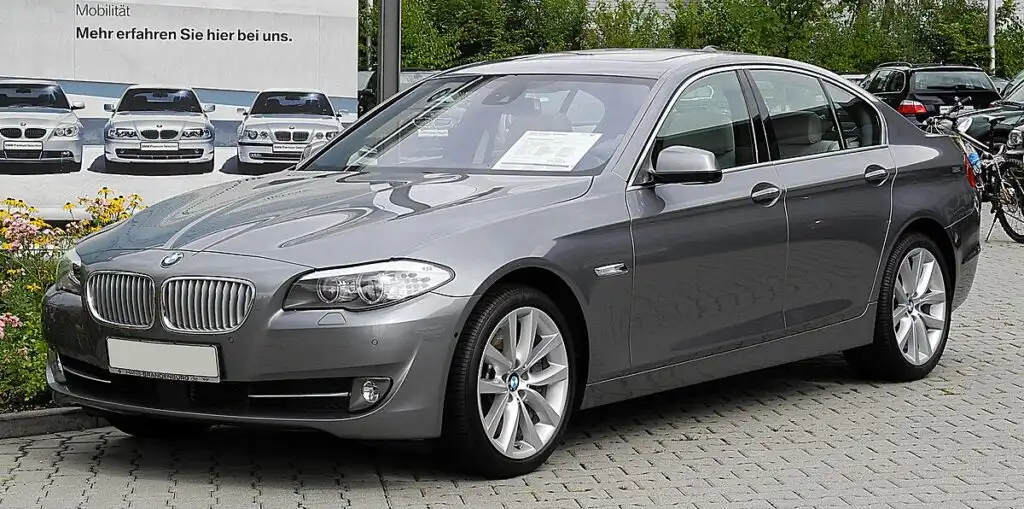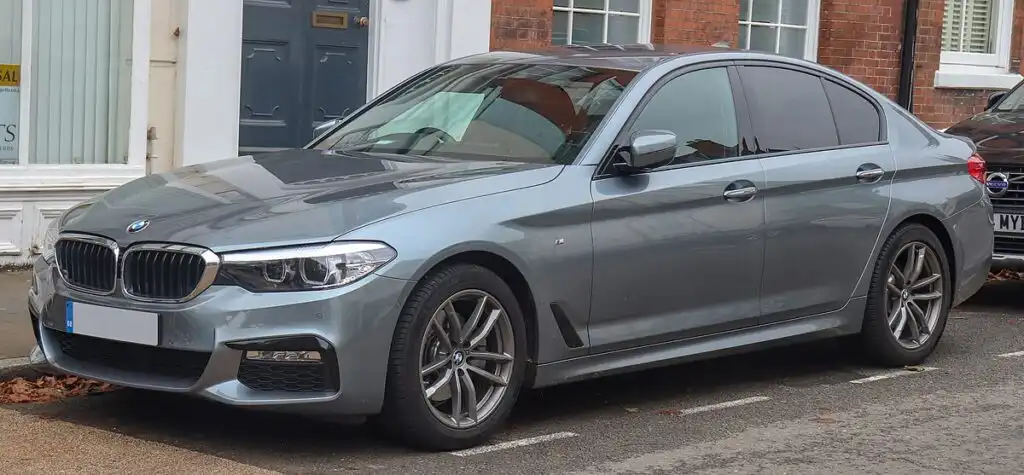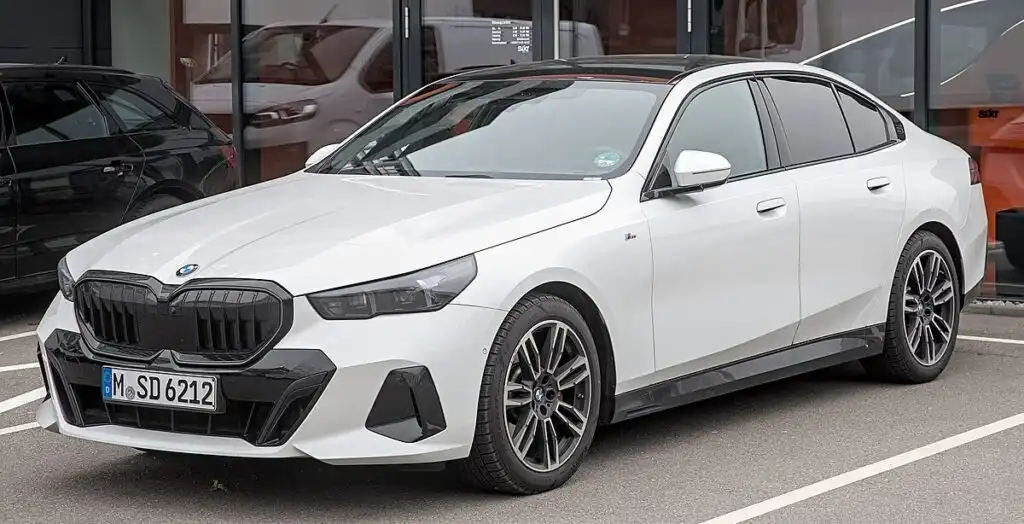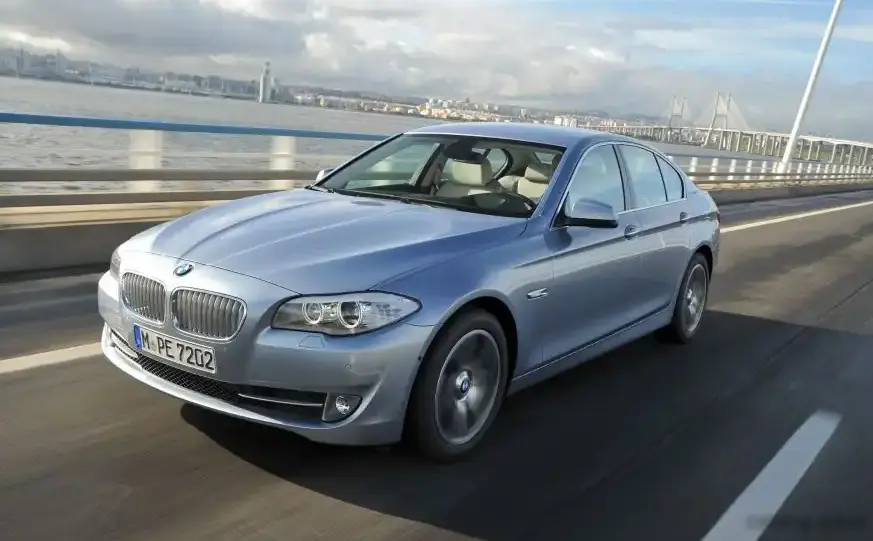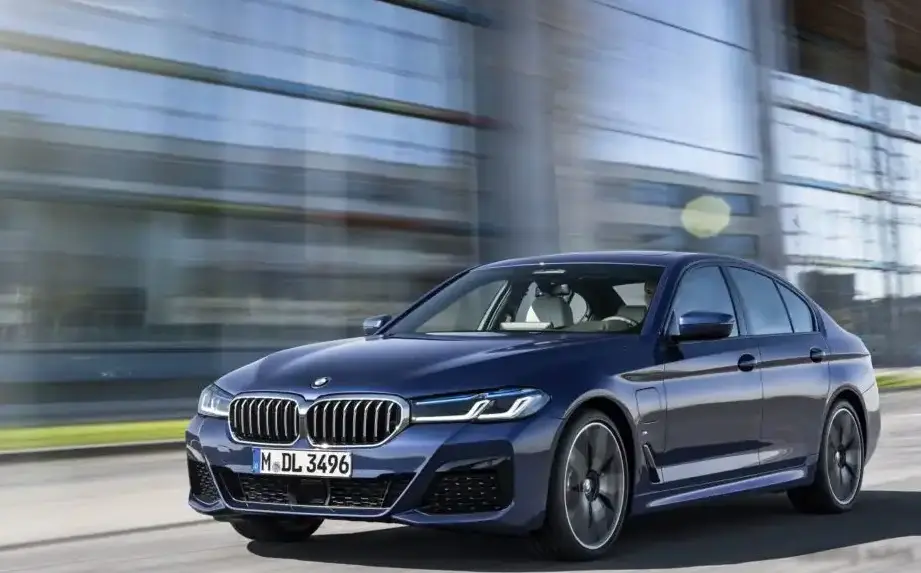
The BMW 520e, produced from March 2021 to 2022, represents BMW’s entry point into the plug-in hybrid (PHEV) variant of the G30 5 Series sedan following the LCI (Life Cycle Impulse) facelift in 2020. Positioned as an efficiency-focused model, the 520e combined a 2.0-liter turbocharged four-cylinder gasoline engine with an electric motor, offering a blend of performance and reduced emissions. It was designed to appeal to buyers seeking a premium sedan experience with the benefits of electric driving for shorter commutes, while retaining the flexibility of a conventional internal combustion engine for longer journeys. The 520e is a rear-wheel drive vehicle, utilizing an 8-speed Steptronic automatic transmission.
Technical Specifications
| Brand | BMW |
| Model | 5 Series |
| Generation | 5 Series Sedan (G30 LCI, facelift 2020) |
| Type (Engine) | 520e (204 Hp) Plug-in Hybrid Steptronic |
| Start of production | March, 2021 |
| End of production | 2022 |
| Powertrain Architecture | PHEV (Plug-in Hybrid Electric Vehicle) |
| Body type | Sedan |
| Seats | 5 |
| Doors | 4 |
| Combined fuel consumption (WLTP) | 1.3-1.8 l/100 km (180.9 – 130.7 US mpg, 217.3 – 156.9 UK mpg, 76.9 – 55.6 km/l) |
| CO2 emissions (WLTP) | 30-41 g/km |
| Fuel consumption (NEDC, WLTP equivalent) | 1.7-1.9 l/100 km (138.4 – 123.8 US mpg, 166.2 – 148.7 UK mpg, 58.8 – 52.6 km/l) |
| CO2 emissions (NEDC, WLTP equivalent) | 39-43 g/km |
| Fuel Type | Petrol / electricity |
| Acceleration 0 – 100 km/h | 7.9 sec |
| Acceleration 0 – 62 mph | 7.9 sec |
| Acceleration 0 – 60 mph | 7.5 sec |
| Maximum speed | 225 km/h (139.81 mph) |
| Emission standard | Euro 6d |
| Weight-to-power ratio | 9 kg/Hp, 111.2 Hp/tonne |
| Weight-to-torque ratio | 5.2 kg/Nm, 190.7 Nm/tonne |
| Gross battery capacity | 12 kWh |
| Battery voltage | 354 V |
| Battery technology | Lithium-ion (Li-Ion) |
| Battery location | Under the rear seats |
| All-electric range (WLTP) | 53-61 km (32.93 – 37.9 mi) |
| Average Energy consumption (WLTP) | 16.3-18.2 kWh/100 km (26.23 – 29.29 kWh/100 mi, 128 – 115 MPGe, 6.1 – 5.5 km/kWh, 3.8 – 3.4 mi/kWh) |
| Average Energy consumption (NEDC, WLTP equivalent) | 14.5-15.1 kWh/100 km (23.34 – 24.3 kWh/100 mi, 144 – 139 MPGe, 6.9 – 6.6 km/kWh, 4.3 – 4.1 mi/kWh) |
| Max speed (electric) | 140 km/h (86.99 mph) |
| Electric motor power | 109 Hp @ 3140 rpm (195.45 lb.-ft. @ 100-2500 rpm) |
| Electric motor Torque | 265 Nm @ 100-2500 rpm |
| Electric motor location | Between the combustion engine and the transmission |
| System power | 204 Hp |
| System torque | 350 Nm (258.15 lb.-ft.) |
| Power | 163 Hp @ 5000-6500 rpm (81.6 Hp/l) |
| Torque | 300 Nm @ 1350-3700 rpm (221.27 lb.-ft. @ 1350-3700 rpm) |
| Engine layout | Front, Longitudinal |
| Engine Model/Code | B48B20A |
| Engine displacement | 1998 cm3 (121.93 cu. in.) |
| Number of cylinders | 4 |
| Engine configuration | Inline |
| Cylinder Bore | 82 mm (3.23 in.) |
| Piston Stroke | 94.6 mm (3.72 in.) |
| Compression ratio | 11:1 |
| Number of valves per cylinder | 4 |
| Fuel injection system | Direct injection |
| Engine aspiration | Twin-power turbo, Intercooler |
| Valvetrain | VALVETRONIC |
| Engine oil capacity | 5.25 l (5.55 US qt | 4.62 UK qt) |
| Coolant | 6 l (6.34 US qt | 5.28 UK qt) |
| Kerb Weight | 1835 kg (4045.48 lbs.) |
| Max. weight | 2505 kg (5522.58 lbs.) |
| Max load | 670 kg (1477.1 lbs.) |
| Trunk (boot) space – minimum | 410 l (14.48 cu. ft.) |
| Fuel tank capacity | 46 l (12.15 US gal | 10.12 UK gal) |
| Max. roof load | 100 kg (220.46 lbs.) |
| Permitted trailer load with brakes (12%) | 1700 kg (3747.86 lbs.) |
| Permitted trailer load without brakes | 750 kg (1653.47 lbs.) |
| Permitted towbar download | 80 kg (176.37 lbs.) |
| Length | 4963 mm (195.39 in.) |
| Width | 1868 mm (73.54 in.) |
| Height | 1483 mm (58.39 in.) |
| Wheelbase | 2975 mm (117.13 in.) |
| Front track | 1604 mm (63.15 in.) |
| Rear (Back) track | 1631 mm (64.21 in.) |
| Ride height (ground clearance) | 150 mm (5.91 in.) |
| Drag coefficient (Cd) | 0.24 |
| Minimum turning circle (turning diameter) | 12 m (39.37 ft.) |
| Drivetrain Architecture | The Internal combustion engine (ICE) and electric motor drive the rear wheels of the car with the ability to work in full electric or mixed mode. |
| Drive wheel | Rear wheel drive |
| Number of gears and type of gearbox | 8 gears, automatic transmission Steptronic |
| Front suspension | Double wishbone |
| Rear suspension | Independent multi-link suspension |
| Front brakes | Ventilated discs |
| Rear brakes | Ventilated discs |
| Assisting systems | ABS (Anti-lock braking system) |
| Steering type | Steering rack and pinion |
| Power steering | Electric Steering |
| Tires size | 225/55 R17 |
| Wheel rims size | 7.5J x 17 |
Powertrain & Engine Architecture
The BMW 520e’s powertrain centers around the B48B20A 2.0-liter inline-four cylinder gasoline engine. This engine utilizes BMW’s TwinPower Turbo technology, incorporating a twin-scroll turbocharger and direct fuel injection. The engine produces 163 horsepower and 300 Nm (221 lb-ft) of torque. The electric motor, integrated between the engine and the 8-speed Steptronic automatic transmission, adds another 109 horsepower and 265 Nm (195 lb-ft) of torque. The combined system output is 204 horsepower and 350 Nm (258 lb-ft). The 12 kWh lithium-ion battery pack is positioned under the rear seats, minimizing impact on cabin space. The battery utilizes 354V architecture. BMW’s VALVETRONIC technology, a variable valve timing and lift system, optimizes engine efficiency and responsiveness.
Driving Characteristics
The 520e offers a noticeably different driving experience compared to its gasoline-only siblings. In electric mode, the vehicle provides near-silent acceleration and a smooth, linear power delivery. The electric motor’s instant torque contributes to brisk acceleration in urban environments. When the battery is depleted or during more demanding driving situations, the gasoline engine seamlessly engages. The combined power output delivers adequate performance, with a 0-60 mph time of around 7.5 seconds. However, it’s not as sporty or engaging as the higher-output 530i or 540i models. The 8-speed Steptronic transmission provides smooth and efficient gear changes, and is tuned to prioritize fuel economy in hybrid mode. The added weight of the battery pack, while not dramatically noticeable, does slightly impact handling compared to lighter 5 Series variants.
Equipment & Trim Levels
The 520e typically came standard with a comprehensive suite of features, reflecting its position as a premium model. Standard equipment included BMW’s iDrive infotainment system with a touchscreen display, navigation, automatic climate control, leather upholstery, and a suite of advanced driver-assistance systems such as lane departure warning and forward collision warning. Optional extras included features like a premium sound system, adaptive cruise control, parking assist, and upgraded interior trim options. The exterior styling was largely consistent with other 5 Series models, with subtle “e” badging to denote its plug-in hybrid status.
Chassis & Braking
The 520e utilizes a double-wishbone front suspension and an independent multi-link rear suspension, providing a comfortable and controlled ride. Ventilated disc brakes are fitted on all four wheels, offering ample stopping power. The suspension tuning is slightly softer than that of the sportier 5 Series models, prioritizing ride comfort. ABS (Anti-lock Braking System) is standard, along with electronic stability control and traction control systems. Due to the added weight from the battery pack, the 520e may have slightly thicker stabilizer bars compared to the base 5 Series models to maintain handling balance.
Market Reception & Comparison
The 520e was generally well-received by automotive critics, who praised its fuel efficiency, smooth electric driving experience, and comfortable ride. However, some reviewers noted that its performance was not as exhilarating as that of the more powerful 5 Series variants. Compared to the 530i, the 520e offered significantly better fuel economy but less overall power and a slightly less engaging driving experience. Against the 530e (a more powerful PHEV variant), the 520e represented a more affordable entry point into the plug-in hybrid world, albeit with reduced performance. The 520e’s real-world fuel economy depended heavily on driving habits and charging frequency, but owners could expect to achieve significantly higher MPG figures than conventional gasoline-powered 5 Series models.
Legacy
The BMW 520e represents an important step in BMW’s electrification strategy. While not the most powerful or sporty 5 Series variant, it offered a compelling combination of efficiency, comfort, and technology. The B48 engine, in conjunction with the electric motor and Steptronic transmission, has proven to be a relatively reliable powertrain. On the used car market, the 520e offers a good value proposition for buyers seeking a premium plug-in hybrid sedan. However, potential buyers should be aware of the importance of maintaining the battery pack and ensuring that the charging system is functioning correctly. The 520e paved the way for future BMW plug-in hybrid models and helped to establish BMW as a leader in the electric vehicle market.