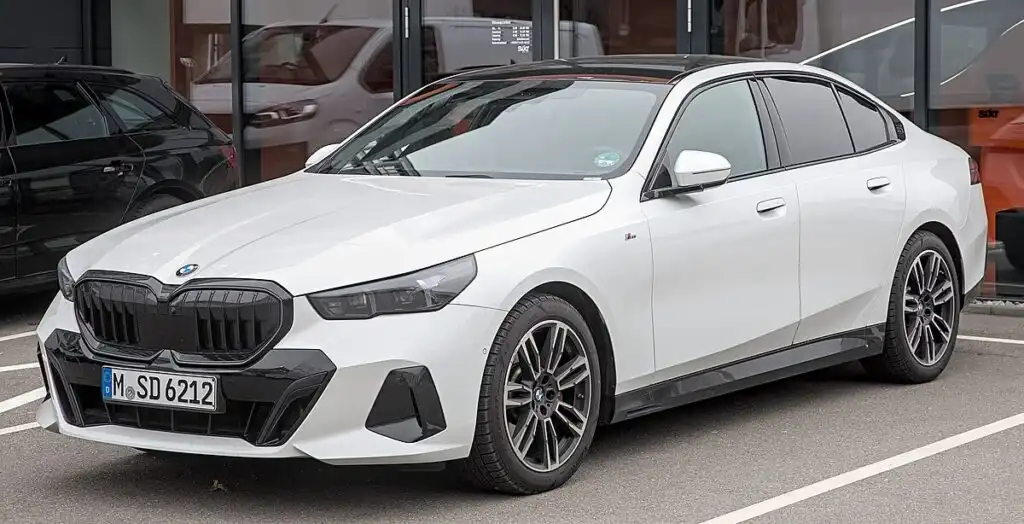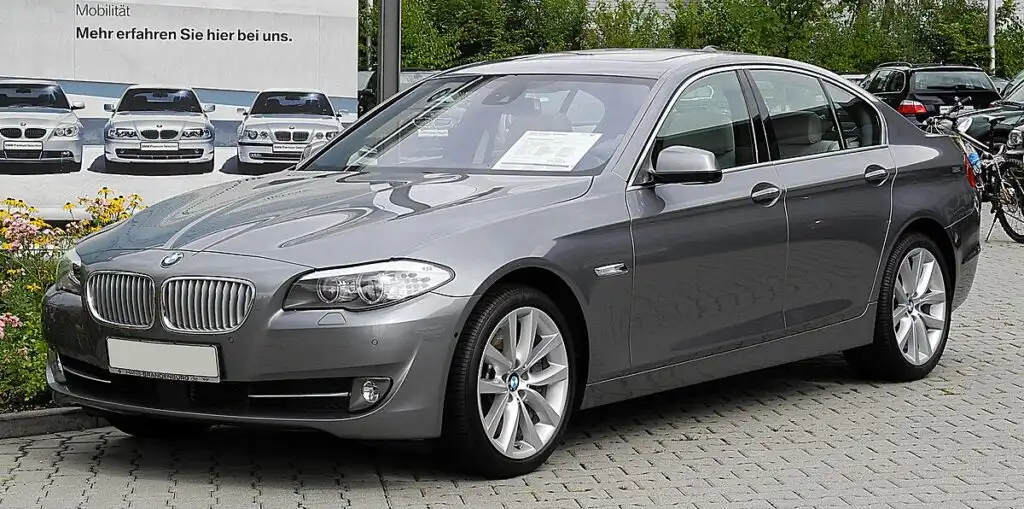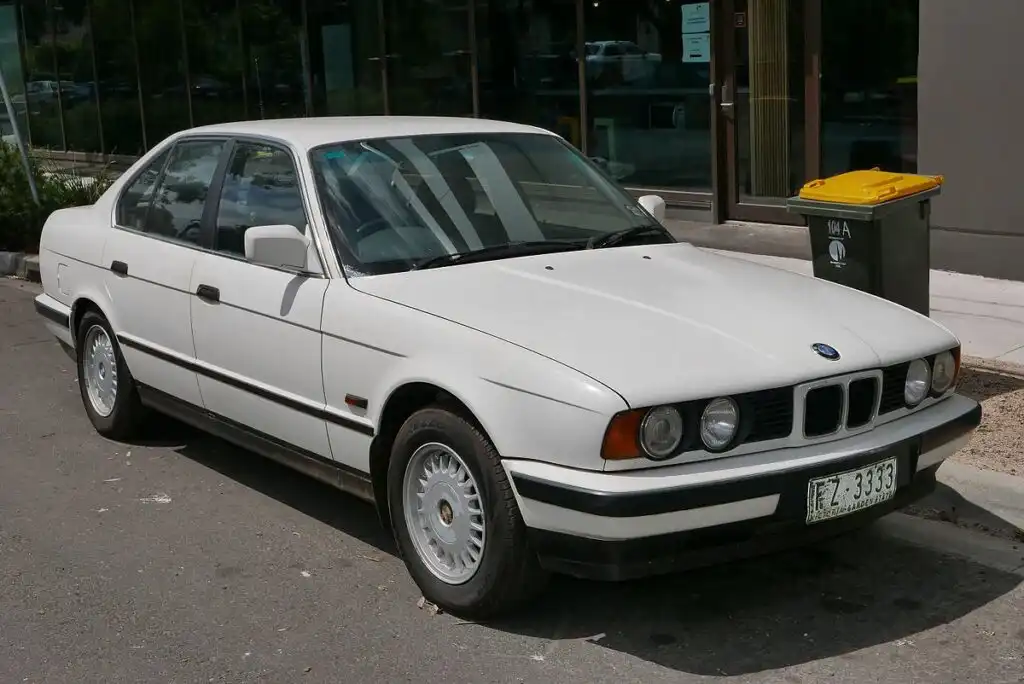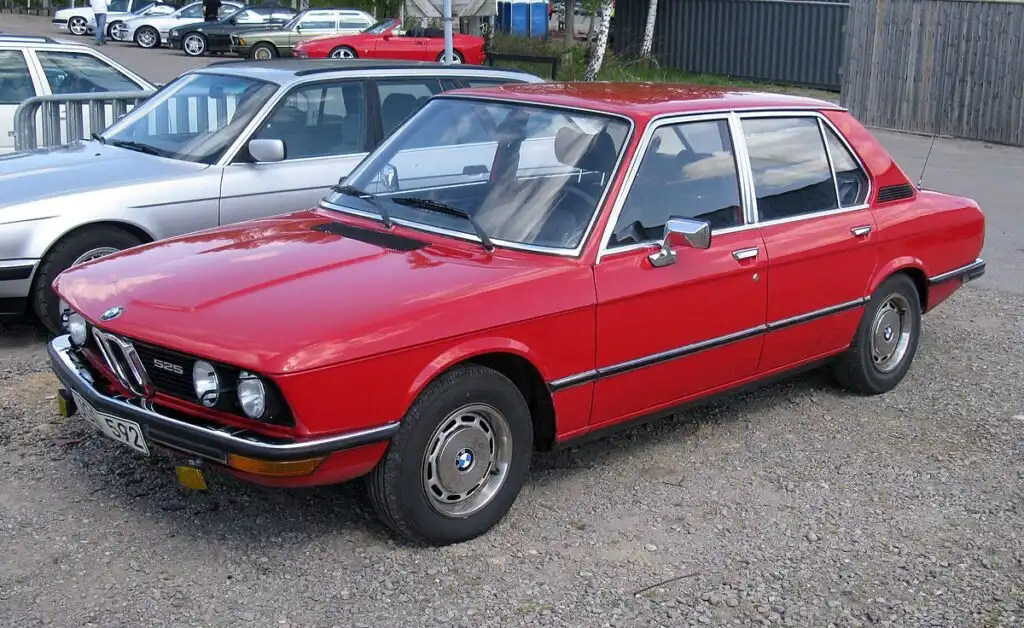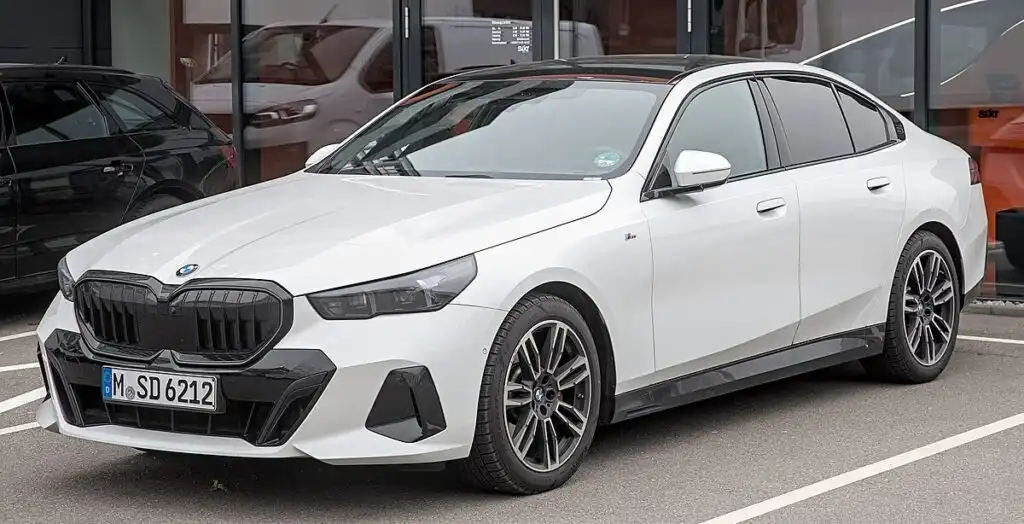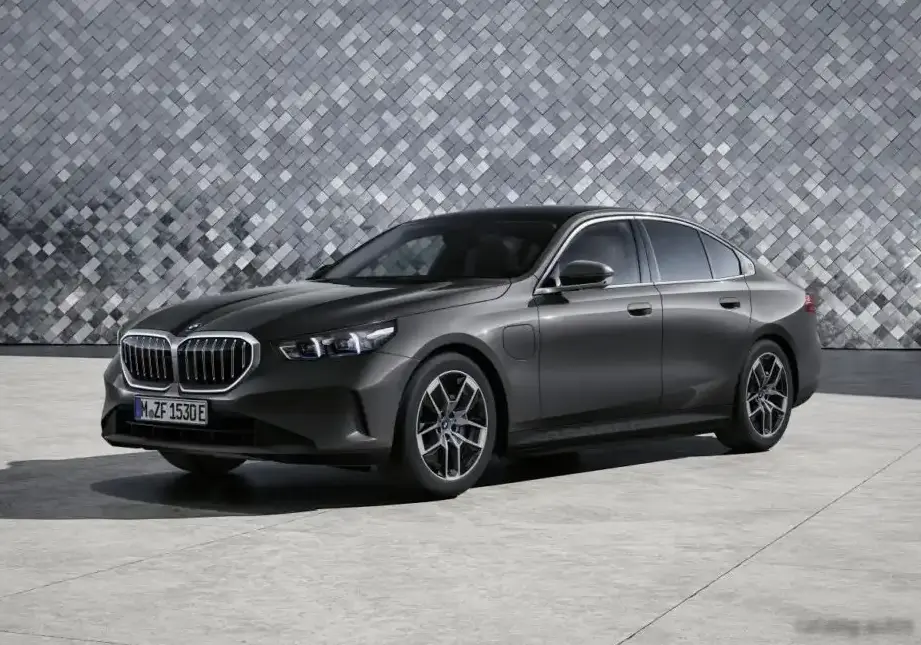
The BMW 5 Series G60 550e xDrive, introduced in November 2023, represents BMW’s latest foray into plug-in hybrid technology within its flagship executive sedan range. Positioned as a high-performance, efficiency-focused variant, the 550e combines a 3.0-liter inline-six gasoline engine with an electric motor, delivering a combined system output of 489 horsepower and 700 Nm (516 lb-ft) of torque. This model is part of the eighth generation of the 5 Series (G60), built on the modular architecture that also underpins other BMW models. The 550e aims to provide a balance between spirited driving dynamics and reduced emissions, catering to buyers seeking a premium sedan with electric driving capabilities.
Technical Specifications
| Brand | BMW |
| Model | 5 Series |
| Generation | 5 Series Sedan (G60) |
| Type (Engine) | 550e (489 Hp) Plug-in Hybrid xDrive Steptronic |
| Start of production | November, 2023 |
| Powertrain Architecture | PHEV (Plug-in Hybrid Electric Vehicle) |
| Body type | Sedan |
| Seats | 5 |
| Doors | 4 |
| Combined fuel consumption (WLTP) | 0.8-1 l/100 km (294 – 235.2 US mpg, 353.1 – 282.5 UK mpg, 125 – 100 km/l) |
| CO2 emissions (WLTP) | 19-23 g/km |
| Fuel Type | Petrol / electricity |
| Acceleration 0 – 100 km/h | 4.3 sec |
| Acceleration 0 – 62 mph | 4.3 sec |
| Acceleration 0 – 60 mph | 4.1 sec |
| Maximum speed | 250 km/h (155.34 mph), Electronically limited |
| Emission standard | Euro 6e |
| Weight-to-power ratio | 4.4 kg/Hp, 226.9 Hp/tonne |
| Weight-to-torque ratio | 3.1 kg/Nm, 324.8 Nm/tonne |
| Gross battery capacity | 22.1 kWh |
| Net (usable) battery capacity | 18.7 kWh |
| Battery voltage | 348 V |
| Battery technology | Lithium-ion (Li-Ion) |
| Battery location | Below the floor |
| All-electric range (WLTP) | 83-93 km (51.57 – 57.79 mi) |
| Average Energy consumption (WLTP) | 21.3-24.1 kWh/100 km (34.28 – 38.79 kWh/100 mi, 98 – 87 MPGe, 4.7 – 4.1 km/kWh, 2.9 – 2.6 mi/kWh) |
| Max speed (electric) | 140 km/h (86.99 mph) |
| Electric motor power | 197 Hp @ 7000 rpm (280 Nm @ 100-5500 rpm / 206.52 lb.-ft. @ 100-5500 rpm) |
| Electric motor location | Between the combustion engine and the transmission |
| Electric motor type | Synchronous |
| System power | 489 Hp |
| System torque | 700 Nm (516.29 lb.-ft.) |
| Power | 313 Hp @ 5000-6000 rpm (450 Nm @ 1750-4700 rpm / 331.9 lb.-ft. @ 1750-4700 rpm) |
| Power per litre | 104.4 Hp/l |
| Engine displacement | 2998 cm3 (182.95 cu. in.) |
| Number of cylinders | 6 |
| Engine configuration | Inline |
| Cylinder Bore | 82 mm (3.23 in.) |
| Piston Stroke | 94.6 mm (3.72 in.) |
| Compression ratio | 11:1 |
| Number of valves per cylinder | 4 |
| Fuel injection system | Direct injection |
| Engine aspiration | Twin-scroll turbo, Intercooler |
| Valvetrain | VALVETRONIC, Double-VANOS |
| Engine oil capacity | 6.5 l (6.87 US qt | 5.72 UK qt) |
| Kerb Weight | 2155 kg (4750.96 lbs.) |
| Max. weight | 2805 kg (6183.97 lbs.) |
| Max load | 650 kg (1433 lbs.) |
| Trunk (boot) space – minimum | 520 l (18.36 cu. ft.) |
| Fuel tank capacity | 60 l (15.85 US gal | 13.2 UK gal) |
| Max. roof load | 75 kg (165.35 lbs.) |
| Permitted trailer load with brakes (12%) | 2000 kg (4409.25 lbs.) |
| Permitted trailer load without brakes | 750 kg (1653.47 lbs.) |
| Permitted towbar download | 100 kg (220.46 lbs.) |
| Length | 5060 mm (199.21 in.) |
| Width | 1900 mm (74.8 in.) |
| Width including mirrors | 2156 mm (84.88 in.) |
| Height | 1515 mm (59.65 in.) |
| Wheelbase | 2995 mm (117.91 in.) |
| Front track | 1680 mm (66.14 in.) |
| Rear (Back) track | 1716 mm (67.56 in.) |
| Front overhang | 945 mm (37.2 in.) |
| Rear overhang | 1120 mm (44.09 in.) |
| Ride height (ground clearance) | 146 mm (5.75 in.) |
| Drag coefficient (Cd) | 0.24 |
| Minimum turning circle (turning diameter) | 11.8 m (38.71 ft.) |
| Drivetrain Architecture | The Internal combustion engine (ICE) and the electric motor permanently drive the four wheels of the car with the ability to work in full electric or mixed mode. |
| Drive wheel | All wheel drive (4×4) |
| Number of gears and type of gearbox | 8 gears, automatic transmission Steptronic |
| Front suspension | Coil spring, Double wishbone, Transverse stabilizer |
| Rear suspension | Independent multi-link suspension, Air suspension, Transverse stabilizer |
| Front brakes | Ventilated discs |
| Rear brakes | Ventilated discs |
| Assisting systems | ABS (Anti-lock braking system), 4-wheel steering (4WS, active rear steering) |
| Steering type | Steering rack and pinion |
| Power steering | Electric Steering |
| Tires size | 245/45 R19 |
| Wheel rims size | 8.5J x 19 |
Powertrain & Engine Architecture
At the heart of the 550e lies BMW’s B58B30S 3.0-liter inline-six engine, a well-regarded powerplant known for its smooth power delivery and refinement. This engine utilizes direct fuel injection and a twin-scroll turbocharger with intercooling to produce 313 horsepower and 450 Nm (331.9 lb-ft) of torque. The engine incorporates BMW’s VALVETRONIC variable valve timing and Double-VANOS variable camshaft control systems for optimized efficiency and responsiveness. Integrated with the engine is a 197 horsepower electric motor, drawing power from an 18.7 kWh (usable) lithium-ion battery pack located under the vehicle floor. The electric motor delivers 280 Nm (206.52 lb-ft) of torque. The combination of the engine and motor results in a total system output of 489 horsepower and 700 Nm (516.29 lb-ft) of torque. Power is transmitted to all four wheels via an eight-speed Steptronic automatic transmission. The transmission is specifically tuned to work seamlessly with both the engine and electric motor, providing smooth and efficient gear changes.
Driving Characteristics
The 550e offers a distinct driving experience compared to other 5 Series variants. In electric mode, the vehicle provides near-silent acceleration and a range of up to 93 km (57.79 miles) on the WLTP cycle. Switching to hybrid mode allows the engine and electric motor to work in tandem, delivering brisk acceleration – 0 to 60 mph in approximately 4.1 seconds. The electric motor provides instant torque, filling in gaps in the engine’s power delivery and enhancing responsiveness. The eight-speed automatic transmission is well-matched to the powertrain, offering smooth shifts and intelligent gear selection. Compared to the 540i, the 550e offers similar overall performance but with the added benefit of electric driving capability. Compared to the diesel-powered 530d, the 550e prioritizes refinement and reduced emissions over outright fuel economy in certain driving scenarios.
Equipment & Trim Levels
The 550e typically comes well-equipped, reflecting its position as a premium variant. Standard features include BMW’s iDrive 8 infotainment system with a large curved display, premium upholstery (often leather), advanced driver-assistance systems (such as lane keeping assist and adaptive cruise control), and automatic climate control. Optional extras include upgraded sound systems, ventilated seats, a head-up display, and various cosmetic enhancements. The interior design is consistent with other G60 5 Series models, emphasizing luxury and technology.
Chassis & Braking
The 550e utilizes a sophisticated chassis setup designed to balance comfort and handling. The front suspension features coil springs and a double wishbone design, while the rear suspension employs an independent multi-link setup with air suspension. The air suspension provides adjustable ride height and damping, enhancing both comfort and stability. Braking duties are handled by ventilated discs on all four wheels, providing ample stopping power. The vehicle is equipped with ABS, stability control, and other advanced braking assistance systems.
Market Reception & Comparison
The BMW 550e has been generally well-received by automotive critics, who praise its blend of performance, efficiency, and luxury. The plug-in hybrid powertrain offers a compelling alternative to traditional gasoline or diesel engines, particularly for drivers who frequently commute in urban areas. Fuel economy is significantly improved compared to non-hybrid 5 Series models, and the ability to drive in electric mode reduces emissions. Compared to other plug-in hybrid sedans in its class, the 550e stands out for its refined driving experience and powerful powertrain.
Legacy
As a relatively new model, the long-term reliability of the 550e remains to be fully established. However, BMW’s inline-six engines have a strong reputation for durability, and the hybrid powertrain components are covered by BMW’s standard warranty. The 550e represents a significant step forward in BMW’s electrification strategy, and it is likely to become a popular choice for buyers seeking a premium sedan with electric driving capabilities. On the used car market, early examples of the 550e are expected to hold their value well, particularly among buyers who prioritize fuel efficiency and environmental responsibility.