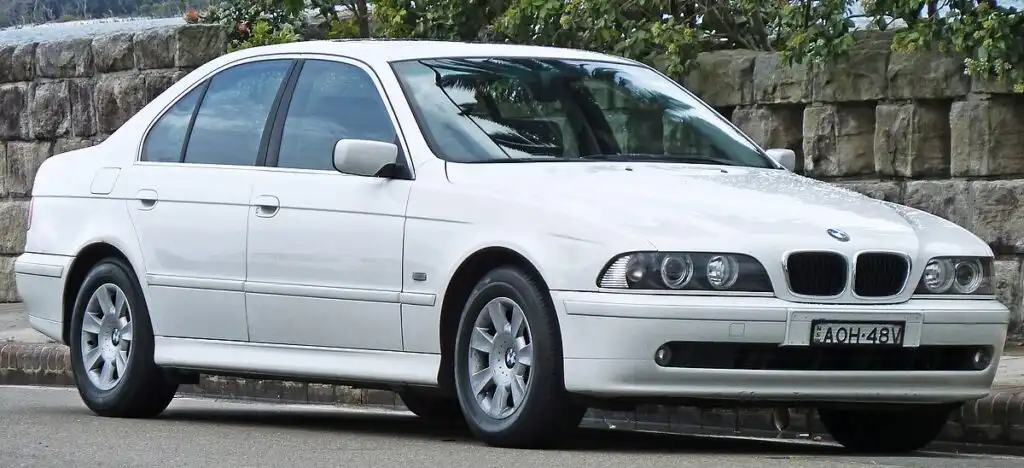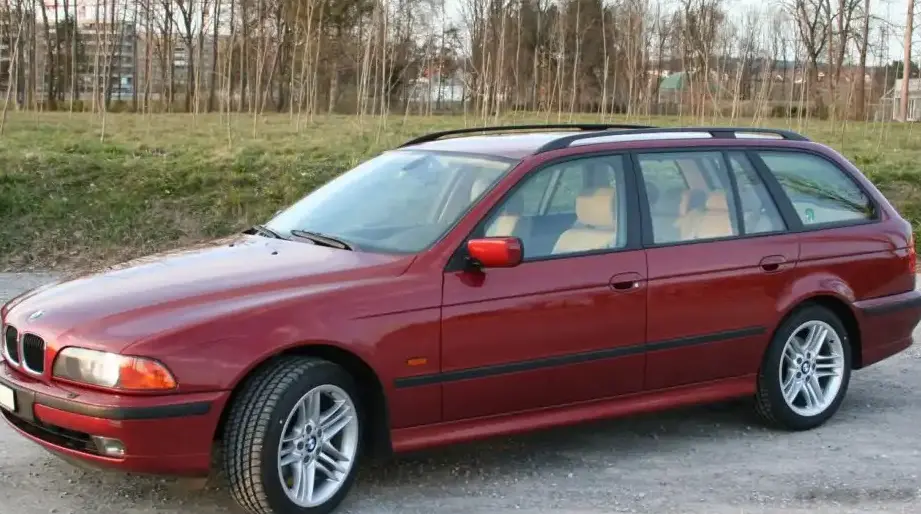
The BMW 5 Series Touring (E39) 525tds, produced between 1996 and 2000, represents a unique offering within the broader E39 5 Series range. This variant combined the practicality of the Touring (wagon) body style with BMW’s sophisticated diesel technology, specifically targeting European markets where diesel engines were – and continue to be – highly favored for their fuel efficiency and torque. The 525tds occupied a middle ground in the E39 lineup, offering a balance between performance, economy, and refinement, appealing to drivers seeking a comfortable and capable long-distance cruiser. It was positioned below the more powerful 530d and 540i models, and above the base 520d.
Technical Specifications
| Brand | BMW |
| Model | 5 Series |
| Generation | 5 Series Touring (E39) |
| Type (Engine) | 525tds (143 Hp) |
| Start of production | 1996 |
| End of production | 2000 |
| Powertrain Architecture | Internal Combustion engine |
| Body type | Station wagon (estate) |
| Seats | 5 |
| Doors | 5 |
| Fuel consumption (urban) | 11 l/100 km (21.4 US mpg) |
| Fuel consumption (extra urban) | 6.1 l/100 km (38.6 US mpg) |
| Fuel Type | Diesel |
| Acceleration 0 – 100 km/h | 11.4 sec |
| Acceleration 0 – 62 mph | 11.4 sec |
| Acceleration 0 – 60 mph | 10.8 sec |
| Maximum speed | 203 km/h (126.14 mph) |
| Weight-to-power ratio | 11 kg/Hp |
| Weight-to-torque ratio | 5.6 kg/Nm |
| Power | 143 Hp @ 4600 rpm |
| Torque | 280 Nm @ 2200 rpm (206.52 lb.-ft. @ 2200 rpm) |
| Engine layout | Front, Longitudinal |
| Engine Model/Code | M51D25 |
| Engine displacement | 2498 cm3 (152.44 cu. in.) |
| Number of cylinders | 6 |
| Engine configuration | Inline |
| Cylinder Bore | 80 mm (3.15 in.) |
| Piston Stroke | 82.8 mm (3.26 in.) |
| Compression ratio | 22:1 |
| Number of valves per cylinder | 2 |
| Fuel injection system | Precombustion chamber injection |
| Engine aspiration | Turbocharger, Intercooler |
| Valvetrain | OHC |
| Engine oil capacity | 6.75 l (7.13 US qt | 5.94 UK qt) |
| Coolant capacity | 10 l (10.57 US qt | 8.8 UK qt) |
| Kerb Weight | 1575 kg (3472.28 lbs.) |
| Max. weight | 2235 kg (4927.33 lbs.) |
| Max load | 660 kg (1455.05 lbs.) |
| Trunk (boot) space – minimum | 410 l (14.48 cu. ft.) |
| Trunk (boot) space – maximum | 1525 l (53.85 cu. ft.) |
| Fuel tank capacity | 70 l (18.49 US gal | 15.4 UK gal) |
| Length | 4805 mm (189.17 in.) |
| Width | 1800 mm (70.87 in.) |
| Height | 1445 mm (56.89 in.) |
| Wheelbase | 2850 mm (112.2 in.) |
| Front track | 1512 mm (59.53 in.) |
| Rear track | 1526 mm (60.08 in.) |
| Drivetrain Architecture | Rear wheel drive |
| Number of gears | 5 |
| Gearbox type | Manual transmission |
| Front suspension | Wishbone |
| Rear suspension | Inclined Lever |
| Front brakes | Ventilated discs |
| Rear brakes | Ventilated discs |
| Assisting systems | ABS (Anti-lock braking system) |
| Steering type | Steering rack and pinion |
| Power steering | Hydraulic Steering |
| Tires size | 225/55 R16 95V |
| Wheel rims size | 7J x 16 |
INTRODUCTION
The E39 5 Series, launched in 1995, was a pivotal model for BMW, representing a significant leap forward in terms of technology, refinement, and driving dynamics. The Touring variant, introduced shortly after the sedan, offered the same qualities in a more practical package. The 525tds, introduced in 1996, brought diesel power to the E39 Touring, catering to a growing demand for fuel-efficient and torquey vehicles, particularly in Europe. It was a key part of BMW’s strategy to offer a diverse range of engine options within the 5 Series, appealing to a wider customer base.
Powertrain & Engine Architecture
At the heart of the 525tds lies the M51D25, a 2.5-liter inline-six diesel engine. This engine utilized a precombustion chamber injection system, a technology common in European diesels of the era. This system involved injecting fuel into a small precombustion chamber within the cylinder head, where it was partially ignited before being transferred to the main combustion chamber. This design promoted more complete combustion and reduced engine noise. The M51D25 was turbocharged and intercooled, boosting power output to 143 horsepower and 280 Nm (206.52 lb.-ft.) of torque. The engine’s torque curve was notably flat, providing strong pulling power from low engine speeds. The 525tds was typically equipped with a 5-speed manual transmission, although an automatic option was also available. The automatic transmission, a 5-speed unit, was geared for comfort and fuel efficiency rather than outright performance.
Driving Characteristics
The 525tds offered a distinctly different driving experience compared to its gasoline-powered siblings. While lacking the outright acceleration of the 528i or 540i, the 525tds excelled in providing effortless cruising and strong mid-range performance. The high torque output meant that overtaking maneuvers could be executed with ease, even with a full load. The manual transmission offered precise shifts, while the automatic provided smooth and comfortable gear changes. The suspension, typical of BMW’s E39 platform, provided a good balance between ride comfort and handling. However, the added weight of the diesel engine and the Touring body style did result in slightly less agile handling compared to the lighter sedan models.
Equipment & Trim Levels
The 525tds Touring typically came well-equipped, reflecting BMW’s commitment to providing a premium experience. Standard features included power windows, central locking, air conditioning, and an upgraded audio system. Interior upholstery was typically cloth, with leather options available as an upgrade. The dashboard layout was consistent with other E39 models, featuring a clear and intuitive design. Optional extras included a sunroof, heated seats, navigation system, and upgraded wheels. Trim levels were relatively simple, with most customization options available through individual selections rather than distinct packages.
Chassis & Braking
The E39 5 Series Touring featured a robust chassis with independent suspension at all four wheels. The front suspension utilized a MacPherson strut design, while the rear employed an integral rear axle. The 525tds was equipped with ventilated disc brakes on all four wheels, providing ample stopping power. Anti-lock braking system (ABS) was standard, enhancing safety and stability. The suspension was tuned to provide a comfortable ride, but also offered good handling characteristics. Stabilizer bars were fitted front and rear to reduce body roll during cornering.
Market Reception & Comparison
The 525tds Touring was generally well-received by automotive critics, who praised its fuel efficiency, strong torque, and comfortable ride. It was seen as a practical and sensible choice for drivers who prioritized economy and long-distance comfort. Compared to the 528i and 540i, the 525tds offered significantly better fuel economy, but lacked their outright performance. Compared to the 520d, the 525tds provided a noticeable power upgrade and a more refined driving experience. The 525tds was a popular choice in Europe, where diesel engines were favored for their tax benefits and lower running costs.
Legacy
The M51D25 engine proved to be a durable and reliable powerplant, and many 525tds models continue to be driven today. While not as sought-after as some of the higher-performance E39 variants, the 525tds Touring represents a unique and appealing option for enthusiasts seeking a practical and fuel-efficient classic BMW. The availability of parts remains good, and the relatively simple mechanical design makes it a relatively easy car to maintain. The 525tds stands as a testament to BMW’s engineering prowess and its ability to create compelling vehicles that cater to a wide range of needs and preferences.