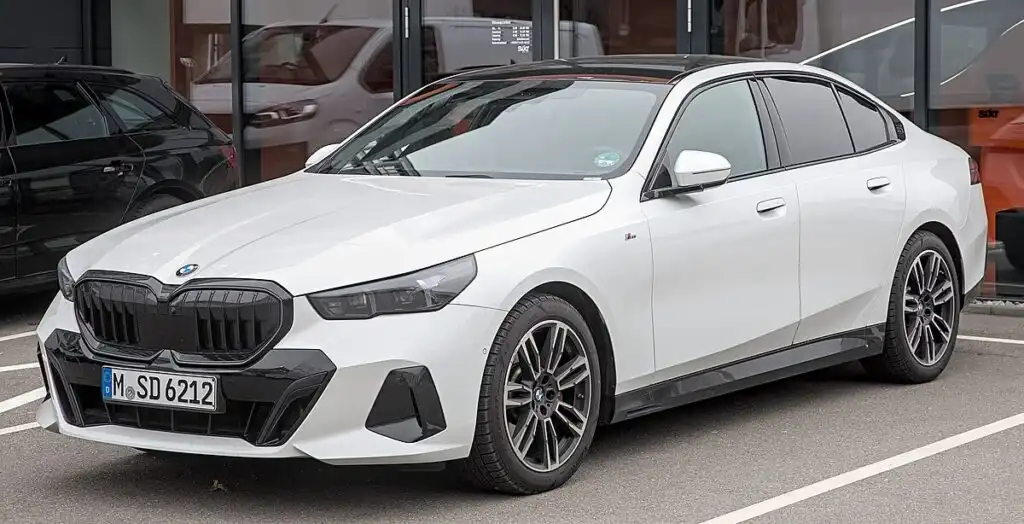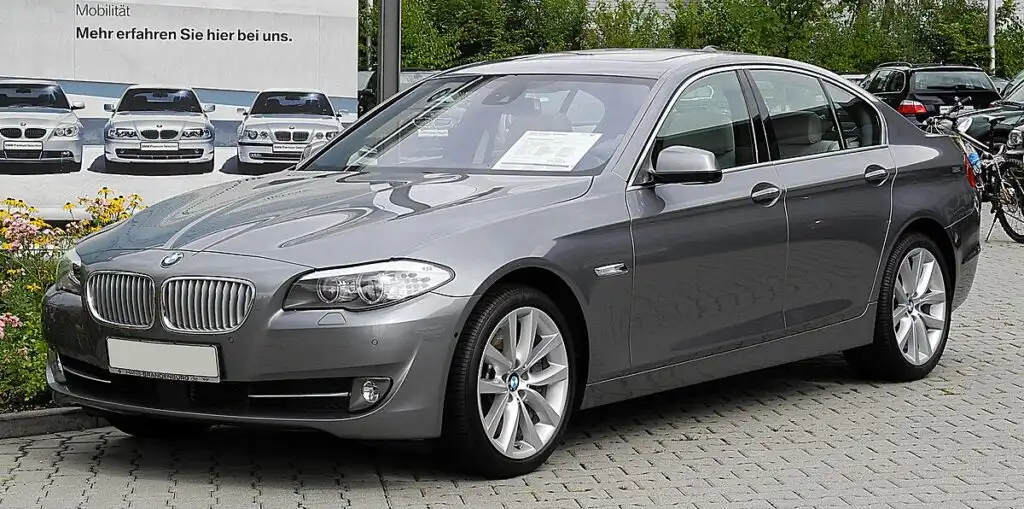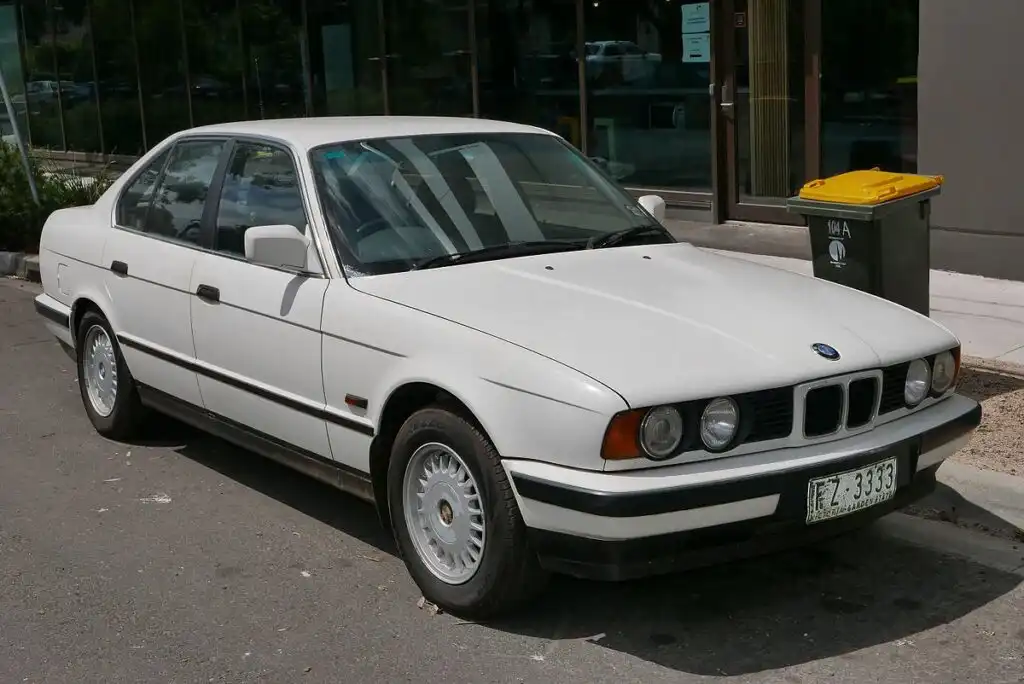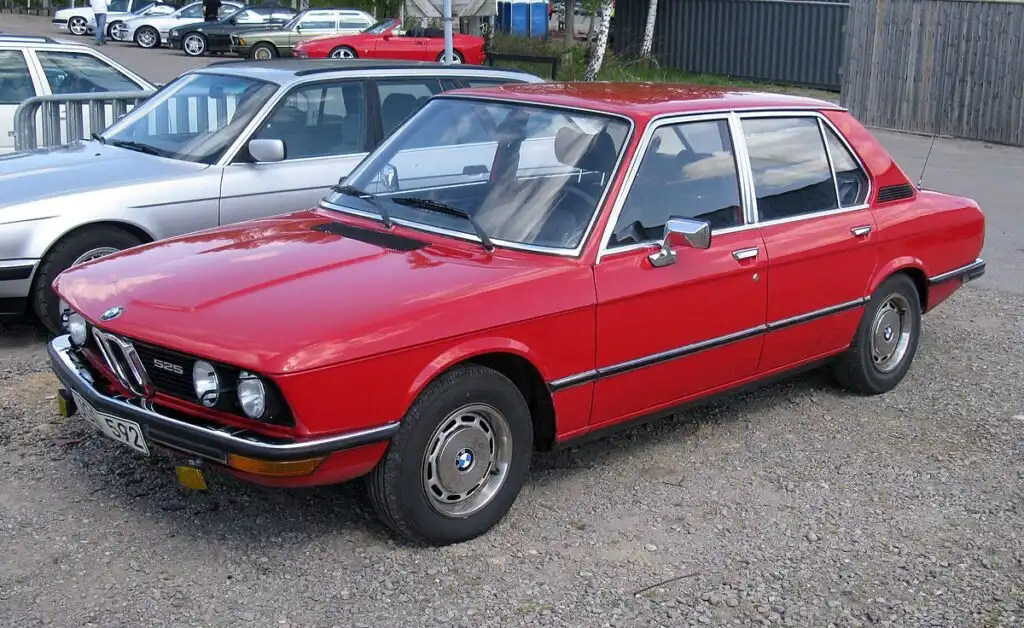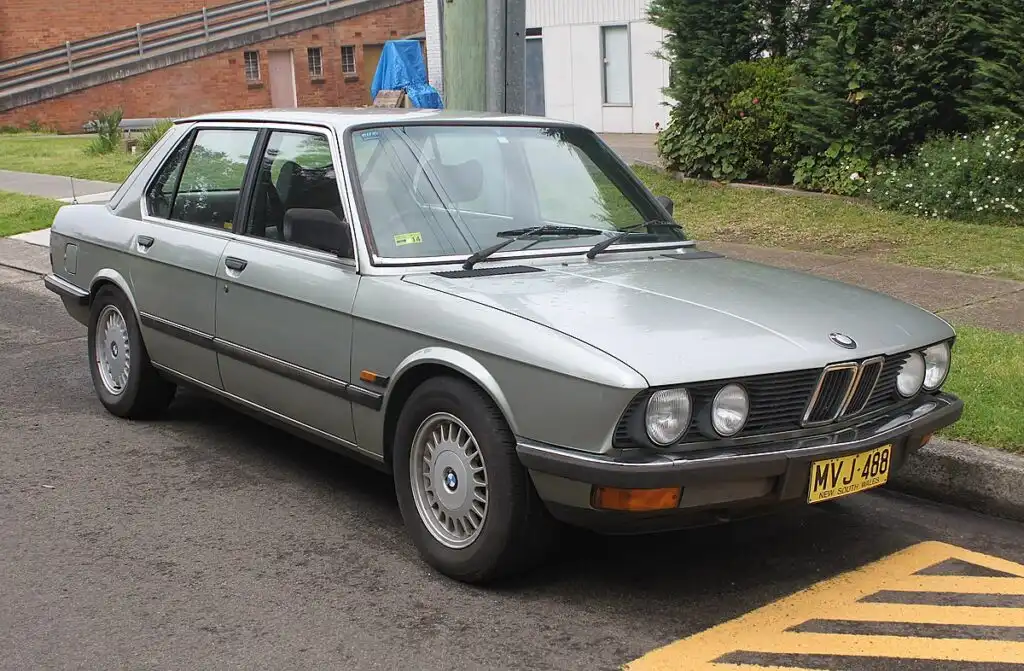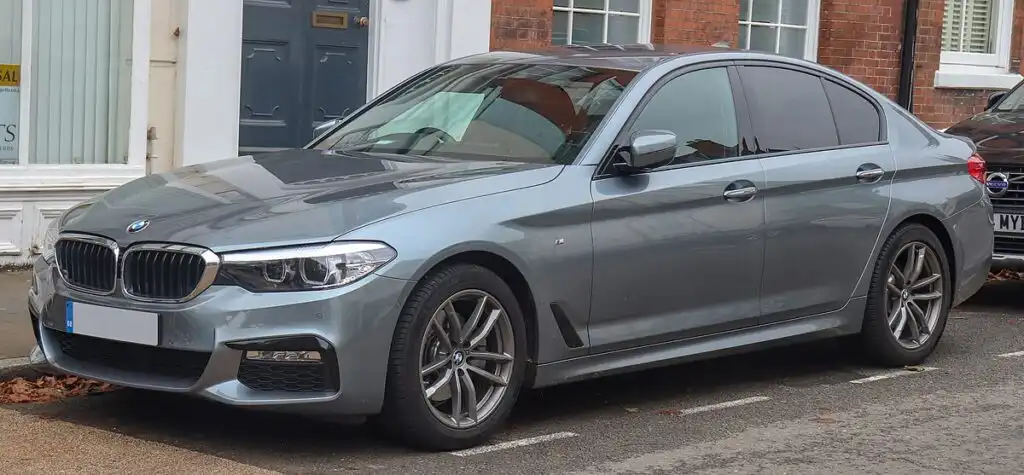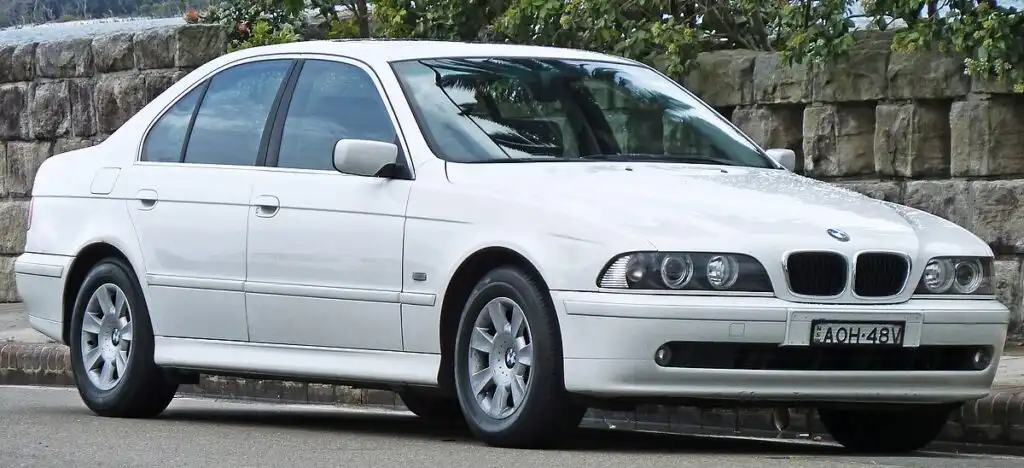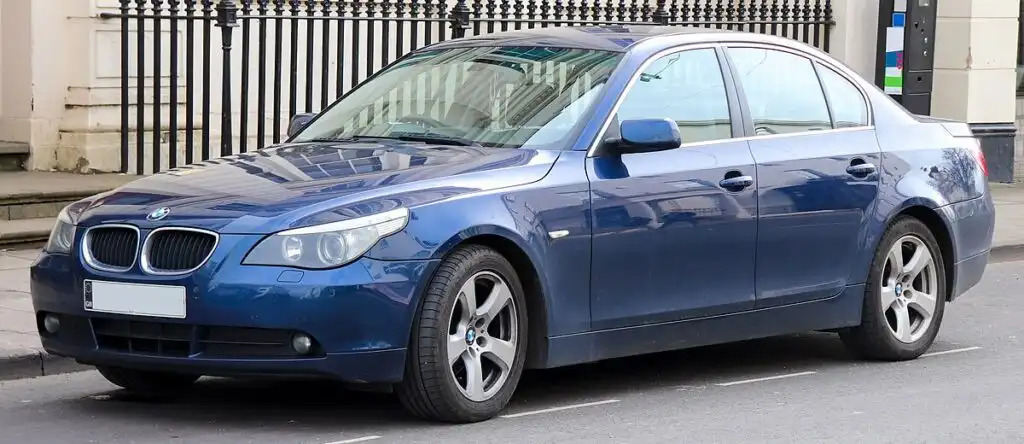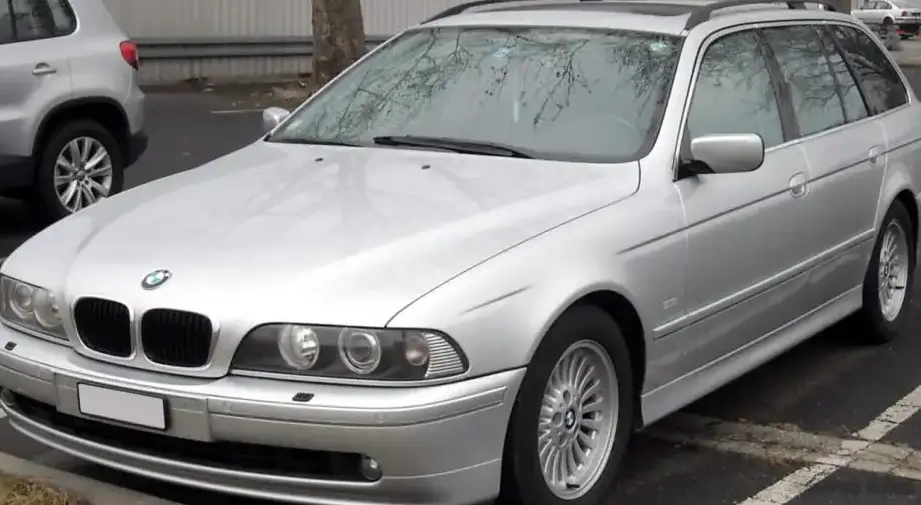
The BMW 5 Series Touring (E39) facelift 520i 24V, produced from 2000 to 2004, represents a compelling blend of practicality and the renowned BMW driving experience. This variant occupied a key position in the 5 Series lineup as an entry-level offering, providing access to the E39 Touring’s spaciousness and build quality with a focus on fuel efficiency and reasonable running costs. It was part of the E39 lifecycle facelift, incorporating styling and mechanical updates over the pre-2000 models. The 520i 24V aimed to appeal to buyers seeking a premium wagon without the higher price tag and performance demands of the 530i or 540i models.
Technical Specifications
| Brand | BMW |
| Model | 5 Series |
| Generation | 5 Series Touring (E39, Facelift 2000) |
| Type (Engine) | 520i 24V (170 Hp) |
| Start of production | 2000 year |
| End of production | 2004 year |
| Powertrain Architecture | Internal Combustion engine |
| Body type | Station wagon (estate) |
| Seats | 5 |
| Doors | 5 |
| Fuel consumption (economy) – urban | 12.8 l/100 km (18.4 US mpg, 22.1 UK mpg, 7.8 km/l) |
| Fuel consumption (economy) – extra urban | 7.5 l/100 km (31.4 US mpg, 37.7 UK mpg, 13.3 km/l) |
| Fuel consumption (economy) – combined | 9.5 l/100 km (24.8 US mpg, 29.7 UK mpg, 10.5 km/l) |
| Fuel Type | Petrol (Gasoline) |
| Acceleration 0 – 100 km/h | 9.5 sec |
| Acceleration 0 – 62 mph | 9.5 sec |
| Acceleration 0 – 60 mph | 9 sec (Calculated) |
| Maximum speed | 223 km/h (138.57 mph) |
| Weight-to-power ratio | 9.8 kg/Hp, 101.8 Hp/tonne |
| Weight-to-torque ratio | 8 kg/Nm, 125.7 Nm/tonne |
| Power | 170 Hp @ 6250 rpm |
| Power per litre | 78.3 Hp/l |
| Torque | 210 Nm @ 3500 rpm (154.89 lb.-ft. @ 3500 rpm) |
| Engine layout | Front, Longitudinal |
| Engine Model/Code | M54B22 |
| Engine displacement | 2171 cm3 (132.48 cu. in.) |
| Number of cylinders | 6 |
| Engine configuration | Inline |
| Cylinder Bore | 80 mm (3.15 in.) |
| Piston Stroke | 72 mm (2.83 in.) |
| Compression ratio | 10.8:1 |
| Number of valves per cylinder | 4 |
| Fuel injection system | Multi-port manifold injection |
| Engine aspiration | Naturally aspirated engine |
| Valvetrain | DOHC |
| Engine oil capacity | 6.5 l (6.87 US qt | 5.72 UK qt) |
| Coolant | 10.5 l (11.1 US qt | 9.24 UK qt) |
| Kerb Weight | 1670 kg (3681.72 lbs.) |
| Max. weight | 2195 kg (4839.15 lbs.) |
| Max load | 525 kg (1157.43 lbs.) |
| Trunk (boot) space – minimum | 410 l (14.48 cu. ft.) |
| Trunk (boot) space – maximum | 1525 l (53.85 cu. ft.) |
| Fuel tank capacity | 70 l (18.49 US gal | 15.4 UK gal) |
| Length | 4805 mm (189.17 in.) |
| Width | 1800 mm (70.87 in.) |
| Height | 1445 mm (56.89 in.) |
| Wheelbase | 2830 mm (111.42 in.) |
| Front track | 1512 mm (59.53 in.) |
| Rear (Back) track | 1527 mm (60.12 in.) |
| Drivetrain Architecture | Rear wheel drive |
| Drive wheel | Rear wheel drive |
| Number of gears and type of gearbox | 5 gears, manual transmission |
| Front suspension | Wishbone |
| Rear suspension | Inclined Lever |
| Front brakes | Ventilated discs |
| Rear brakes | Disc |
| Assisting systems | ABS (Anti-lock braking system) |
| Steering type | Steering rack and pinion |
| Power steering | Hydraulic Steering |
| Tires size | 225/60 R15 |
| Wheel rims size | 15 |
Powertrain & Engine Architecture
The heart of the 520i 24V is the M54B22, a 2.2-liter inline-six cylinder engine. This engine is a naturally aspirated powerplant featuring double overhead camshafts (DOHC) and four valves per cylinder. The M54 engine family was a significant improvement over its predecessor, the M52, offering increased refinement, improved fuel efficiency, and enhanced performance. The 520i utilized a multi-port fuel injection system, delivering fuel directly into the intake ports. The engine produced 170 horsepower at 6250 rpm and 210 Nm (155 lb-ft) of torque at 3500 rpm. The engine’s relatively high compression ratio of 10.8:1 contributed to its efficiency and responsiveness. The standard transmission was a 5-speed manual, though a 5-speed automatic transmission was also available, and often preferred by buyers seeking a more comfortable driving experience. The automatic transmission, while smooth, did slightly impact acceleration and fuel economy compared to the manual.
Driving Characteristics
The 520i 24V offered a balanced driving experience. While not overtly sporty, the inline-six engine provided smooth and linear power delivery. Acceleration from 0-60 mph took around 9 seconds, which was adequate for everyday driving but noticeably slower than the 530i or 540i variants. The automatic transmission, while offering convenience, resulted in some power loss and a less engaging driving experience compared to the manual. The suspension, typical of BMW, provided a comfortable ride while maintaining good handling characteristics. The rear-wheel-drive configuration contributed to the car’s balanced feel and predictable handling. The steering was precise and well-weighted, providing good feedback to the driver.
Equipment & Trim Levels
The 520i 24V typically came equipped with a respectable level of standard features. These included power windows, power locks, air conditioning, and an AM/FM stereo. Upholstery was typically cloth, though leather was available as an option. Optional extras included a sunroof, heated seats, automatic climate control, and a premium sound system. The facelift models (2000-2004) featured updated interior trim and switchgear compared to the pre-facelift E39s. The overall interior design was functional and well-built, reflecting BMW’s commitment to quality.
Chassis & Braking
The E39 5 Series utilized a robust chassis with a MacPherson strut front suspension and an independent multi-link rear suspension. The 520i typically featured ventilated disc brakes at the front and solid discs at the rear. Anti-lock braking system (ABS) was standard. The suspension was tuned to provide a comfortable ride while maintaining good handling. Stabilizer bars were fitted front and rear to reduce body roll during cornering. The steering system was a rack-and-pinion setup with hydraulic power assistance.
Market Reception & Comparison
The 520i 24V was generally well-received by automotive critics as a sensible and well-rounded option in the E39 lineup. It was praised for its comfortable ride, refined engine, and spacious interior. However, some critics noted that its performance was not as exhilarating as the higher-powered 530i or 540i models. Compared to the 530i, the 520i offered better fuel economy but significantly less power. The 520d (diesel) offered similar fuel economy with more torque, but lacked the smoothness of the gasoline engine. The 520i appealed to buyers who prioritized comfort, practicality, and fuel efficiency over outright performance.
Legacy
The M54B22 engine, found in the 520i 24V, is known for its reliability and durability when properly maintained. Common issues include oil leaks and occasional cooling system problems, but these are generally not major concerns. Today, the E39 5 Series Touring, including the 520i variant, enjoys a strong following among enthusiasts. Well-maintained examples are becoming increasingly collectible. The 520i 24V represents an affordable entry point into E39 ownership, offering a taste of the BMW experience without the higher price tag of the more powerful models. Its blend of practicality, comfort, and reliability ensures its continued appeal in the used car market.