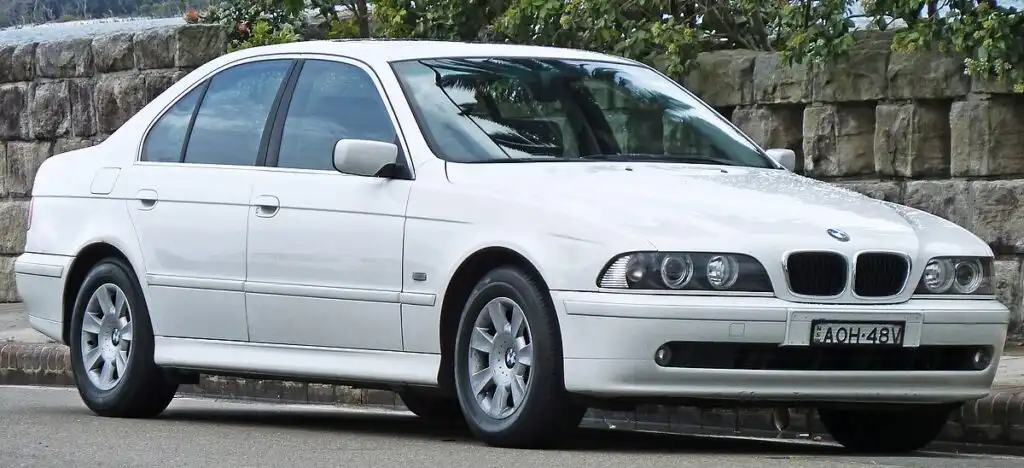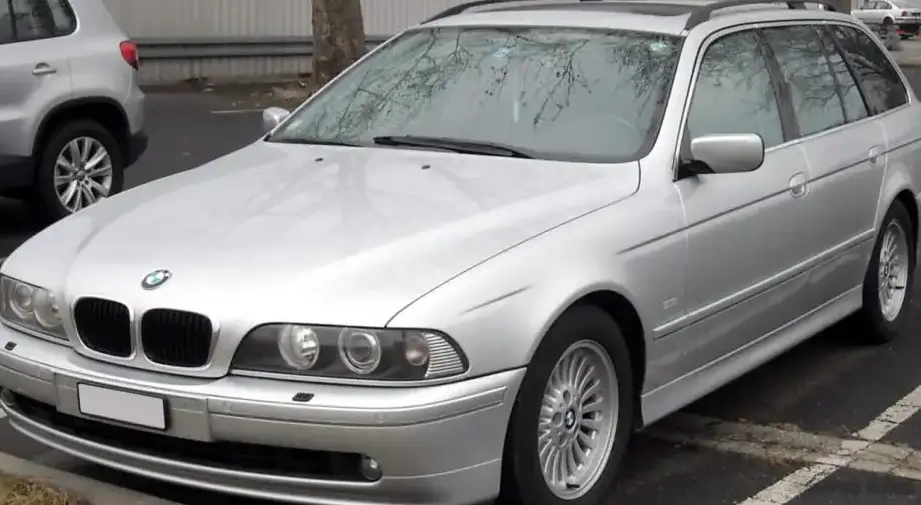
The BMW 5 Series Touring (E39) facelift 525i, produced from 2000 to 2004, represents a compelling blend of practicality and performance within the E39 generation. As a station wagon (estate) variant of the popular 5 Series, it offered the driving experience BMW was known for, combined with the increased cargo capacity demanded by families and enthusiasts alike. This particular iteration, powered by the M54B25 inline-six engine producing 192 horsepower, occupied a middle ground in the 5 Series lineup, offering a balance between affordability, fuel efficiency, and respectable performance. It served as a more accessible entry point into the E39 Touring range compared to the higher-performance 530i and 540i models.
Technical Specifications
| Brand | BMW |
| Model | 5 Series |
| Generation | 5 Series Touring (E39, Facelift 2000) |
| Type (Engine) | 525i (192 Hp) |
| Start of production | 2000 year |
| End of production | 2004 year |
| Powertrain Architecture | Internal Combustion engine |
| Body type | Station wagon (estate) |
| Seats | 5 |
| Doors | 5 |
| Fuel consumption (economy) – urban | 14.4 l/100 km (16.3 US mpg, 19.6 UK mpg, 6.9 km/l) |
| Fuel consumption (economy) – extra urban | 7.7 l/100 km (30.5 US mpg, 36.7 UK mpg, 13 km/l) |
| Fuel consumption (economy) – combined | 9.8 l/100 km (24 US mpg, 28.8 UK mpg, 10.2 km/l) |
| Fuel Type | Petrol (Gasoline) |
| Acceleration 0 – 100 km/h | 8.5 sec |
| Acceleration 0 – 62 mph | 8.5 sec |
| Acceleration 0 – 60 mph | 8.1 sec |
| Maximum speed | 235 km/h (146.02 mph) |
| Weight-to-power ratio | 8.8 kg/Hp, 114.3 Hp/tonne |
| Weight-to-torque ratio | 6.9 kg/Nm, 145.8 Nm/tonne |
| Power | 192 Hp @ 6000 rpm |
| Power per litre | 77 Hp/l |
| Torque | 245 Nm @ 3500 rpm (180.7 lb.-ft. @ 3500 rpm) |
| Engine layout | Front, Longitudinal |
| Engine Model/Code | M54B25 |
| Engine displacement | 2494 cm3 (152.19 cu. in.) |
| Number of cylinders | 6 |
| Engine configuration | Inline |
| Cylinder Bore | 84 mm (3.31 in.) |
| Piston Stroke | 75 mm (2.95 in.) |
| Compression ratio | 10.5:1 |
| Number of valves per cylinder | 4 |
| Fuel injection system | Multi-port manifold injection |
| Engine aspiration | Naturally aspirated engine |
| Valvetrain | DOHC |
| Engine oil capacity | 6.5 l (6.87 US qt | 5.72 UK qt) |
| Coolant | 10.5 l (11.1 US qt | 9.24 UK qt) |
| Kerb Weight | 1680 kg (3703.77 lbs.) |
| Max. weight | 2205 kg (4861.19 lbs.) |
| Max load | 525 kg (1157.43 lbs.) |
| Trunk (boot) space – minimum | 410 l (14.48 cu. ft.) |
| Trunk (boot) space – maximum | 1525 l (53.85 cu. ft.) |
| Fuel tank capacity | 70 l (18.49 US gal | 15.4 UK gal) |
| Length | 4805 mm (189.17 in.) |
| Width | 1800 mm (70.87 in.) |
| Height | 1445 mm (56.89 in.) |
| Wheelbase | 2830 mm (111.42 in.) |
| Front track | 1512 mm (59.53 in.) |
| Rear (Back) track | 1527 mm (60.12 in.) |
| Drivetrain Architecture | The Internal combustion engine (ICE) drives the rear wheels of the vehicle. |
| Drive wheel | Rear wheel drive |
| Number of gears and type of gearbox | 5 gears, manual transmission |
| Front suspension | Wishbone |
| Rear suspension | Inclined Lever |
| Front brakes | Ventilated discs |
| Rear brakes | Ventilated discs |
| Assisting systems | ABS (Anti-lock braking system) |
| Steering type | Steering rack and pinion |
| Power steering | Hydraulic Steering |
| Tires size | 225/60 R15 |
| Wheel rims size | 15 |
Powertrain & Engine Architecture
At the heart of the 525i Touring lies the M54B25, a 2.5-liter inline-six engine. This engine is a descendant of BMW’s long and storied history of smooth, powerful six-cylinder engines. The M54 featured double overhead camshafts (DOHC), four valves per cylinder, and a robust cast iron block with an aluminum cylinder head. Fuel delivery was handled by a multi-port fuel injection system, providing precise control over the air-fuel mixture. The engine produced 192 horsepower at 6000 rpm and 245 Nm (180.7 lb-ft) of torque at 3500 rpm. This engine was known for its smooth power delivery and relatively high reliability. The 5-speed manual transmission was standard, offering a direct connection to the engine and enhancing the driving experience. A 5-speed automatic transmission was also available, providing convenience for daily commuting.
Driving Characteristics
The 525i Touring with the manual transmission offered a balanced driving experience. Acceleration from 0 to 60 mph took approximately 8.1 seconds, making it reasonably quick for its time. The inline-six engine provided ample power for highway cruising and overtaking maneuvers. The automatic transmission, while offering convenience, did slightly diminish performance, with 0-60 mph times closer to 8.5 seconds. The gear ratios were tuned for a blend of fuel efficiency and responsiveness. Compared to the 530i and 540i models, the 525i offered a less aggressive driving experience, prioritizing comfort and fuel economy over outright performance. However, it still retained the BMW hallmarks of precise steering and well-controlled handling.
Equipment & Trim Levels
The 525i Touring typically came standard with features such as power windows, power locks, a sunroof, and air conditioning. Upholstery was typically cloth, although leather was available as an option. Standard dashboard configuration included wood trim and analog gauges. Optional extras included a premium sound system, navigation system, heated seats, and automatic climate control. The Touring model, by its nature, included features specific to its body style, such as a self-leveling rear suspension to compensate for varying cargo loads and a retractable cargo cover for security and privacy.
Chassis & Braking
The E39 Touring utilized a robust chassis with independent suspension at all four wheels. The front suspension employed a MacPherson strut design, while the rear suspension featured an independent multi-link setup. This configuration provided a comfortable ride and excellent handling characteristics. Braking duties were handled by ventilated disc brakes at all four corners, providing ample stopping power. Anti-lock braking system (ABS) was standard, enhancing safety and control during emergency braking situations. The 525i Touring typically featured slightly smaller stabilizer bars compared to the higher-performance models, contributing to a more comfortable ride.
Market Reception & Comparison
The 525i Touring was generally well-received by automotive critics. It was praised for its practicality, comfortable ride, and refined engine. However, some critics noted that the performance was not as exhilarating as the 530i or 540i models. Fuel economy was considered respectable for a vehicle of its size and class. In terms of reliability, the M54 engine proved to be relatively robust, although routine maintenance was essential. Compared to the 530i, the 525i offered a lower price point and better fuel economy, making it a more attractive option for budget-conscious buyers. Compared to the diesel-powered 525d, the 525i offered a smoother and more refined driving experience, albeit with slightly lower fuel economy.
Legacy
The E39 5 Series Touring, including the 525i variant, has become a highly sought-after classic among BMW enthusiasts. The M54 engine is known for its durability and relatively simple maintenance requirements. While age and mileage can lead to common issues such as oil leaks and cooling system failures, these are generally well-documented and relatively straightforward to address. Today, well-maintained examples of the 525i Touring command a premium in the used car market, appealing to those who appreciate its blend of practicality, performance, and classic BMW styling.