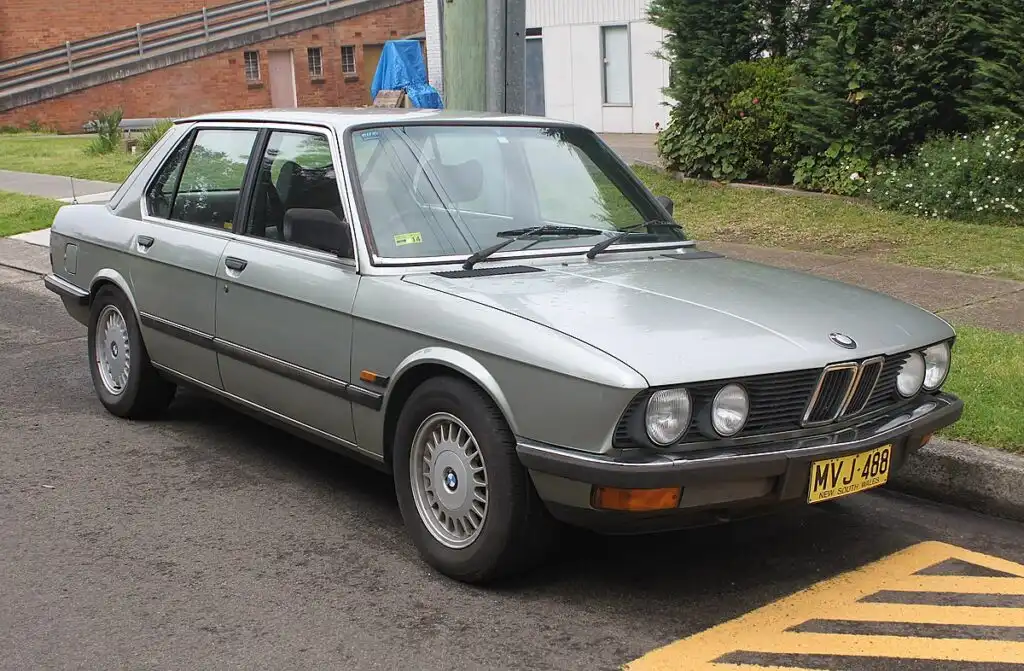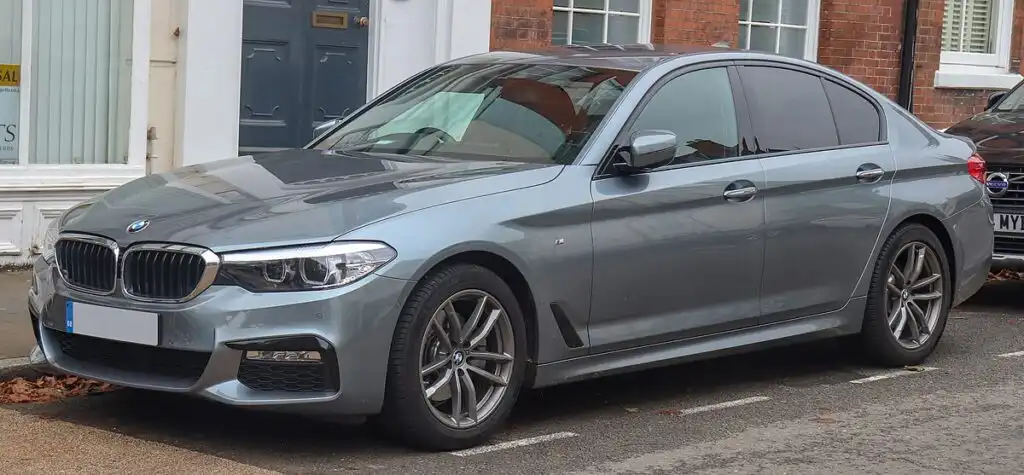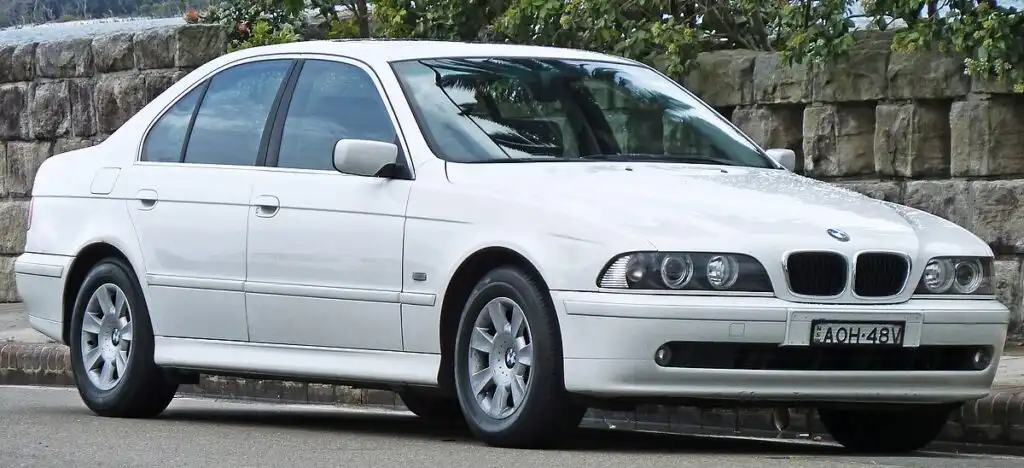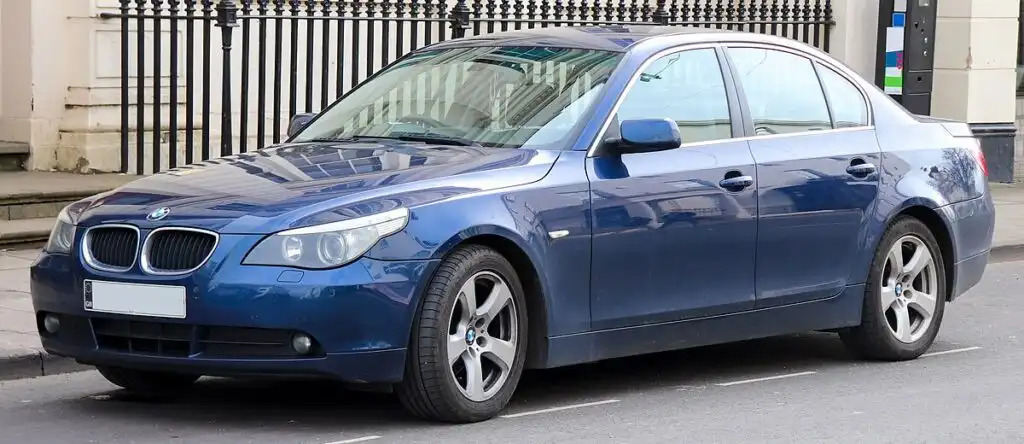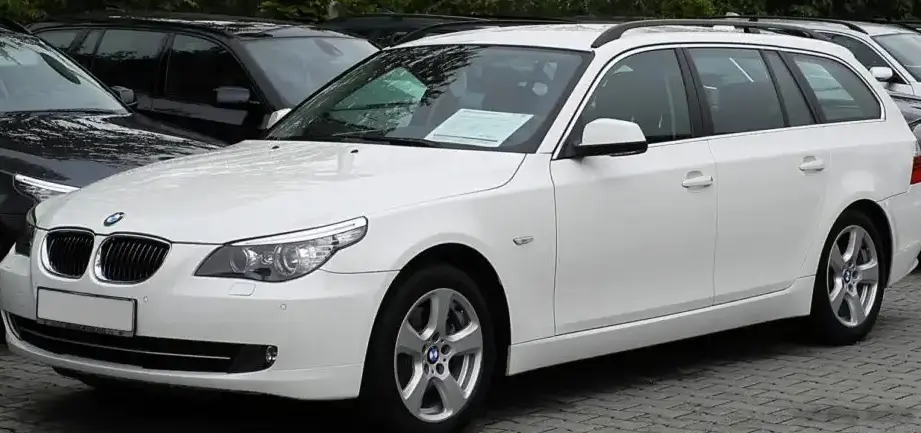
The BMW 5 Series Touring (E61 LCI), specifically the 520i variant produced from 2007 to 2010, represents a mid-cycle refresh of the E61 wagon. Positioned as an entry-level offering within the 5 Series Touring range, it aimed to provide the practicality of a station wagon with BMW’s characteristic driving dynamics, albeit with a focus on fuel efficiency and affordability. The “LCI” (Life Cycle Impulse) facelift brought styling updates, revised engine options, and improvements to the interior compared to the pre-2007 E61 models. This variant was primarily sold in the European market, where the demand for premium wagons remained strong, and to a lesser extent in other regions where BMW offered the 5 Series Touring.
Technical Specifications
| Brand | BMW |
| Model | 5 Series |
| Generation | 5 Series Touring (E61 LCI, facelift 2007) |
| Type (Engine) | 520i (170 Hp) |
| Start of production | 2007 |
| End of production | 2010 |
| Powertrain Architecture | Internal Combustion engine |
| Body type | Station wagon (estate) |
| Seats | 5 |
| Doors | 5 |
| Fuel consumption (economy) – urban | 9.4 l/100 km (25 US mpg, 30.1 UK mpg, 10.6 km/l) |
| Fuel consumption (economy) – extra urban | 5.6 l/100 km (42 US mpg, 50.4 UK mpg, 17.9 km/l) |
| Fuel consumption (economy) – combined | 6.9 l/100 km (34.1 US mpg, 40.9 UK mpg, 14.5 km/l) |
| Fuel Type | Petrol (Gasoline) |
| Acceleration 0 – 100 km/h | 9 sec |
| Acceleration 0 – 62 mph | 9 sec |
| Acceleration 0 – 60 mph | 8.6 sec |
| Maximum speed | 220 km/h (136.7 mph) |
| Emission standard | Euro 4 |
| Weight-to-power ratio | 9.2 kg/Hp, 109 Hp/tonne |
| Weight-to-torque ratio | 7.4 kg/Nm, 134.6 Nm/tonne |
| Power | 170 Hp @ 6700 rpm |
| Power per litre | 85.2 Hp/l |
| Torque | 210 Nm @ 4250 rpm (154.89 lb.-ft. @ 4250 rpm) |
| Engine layout | Front, Longitudinal |
| Engine Model/Code | N43B20A |
| Engine displacement | 1995 cm3 (121.74 cu. in.) |
| Number of cylinders | 4 |
| Engine configuration | Inline |
| Cylinder Bore | 84 mm (3.31 in.) |
| Piston Stroke | 90 mm (3.54 in.) |
| Compression ratio | 12:1 |
| Number of valves per cylinder | 4 |
| Fuel injection system | Direct injection |
| Engine aspiration | Naturally aspirated engine |
| Engine oil capacity | 4.25 l (4.49 US qt | 3.74 UK qt) |
| Coolant | 9.8 l (10.36 US qt | 8.62 UK qt) |
| Kerb Weight | 1560 kg (3439.21 lbs.) |
| Max. weight | 2160 kg (4761.98 lbs.) |
| Max load | 600 kg (1322.77 lbs.) |
| Trunk (boot) space – minimum | 500 l (17.66 cu. ft.) |
| Trunk (boot) space – maximum | 1650 l (58.27 cu. ft.) |
| Fuel tank capacity | 70 l (18.49 US gal | 15.4 UK gal) |
| Length | 4843 mm (190.67 in.) |
| Width | 1846 mm (72.68 in.) |
| Height | 1491 mm (58.7 in.) |
| Wheelbase | 2888 mm (113.7 in.) |
| Front track | 1558 mm (61.34 in.) |
| Rear (Back) track | 1581 mm (62.24 in.) |
| Ride height (ground clearance) | 143 mm (5.63 in.) |
| Drag coefficient (Cd) | 0.29 |
| Minimum turning circle (turning diameter) | 11.4 m (37.4 ft.) |
| Drivetrain Architecture | The Internal combustion engine (ICE) drives the rear wheels of the vehicle. |
| Drive wheel | Rear wheel drive |
| Number of gears and type of gearbox | 6 gears, manual transmission |
| Front brakes | Ventilated discs |
| Rear brakes | Disc |
| Assisting systems | ABS (Anti-lock braking system) |
| Steering type | Steering rack and pinion |
| Tires size | 225/55 R16 W |
| Wheel rims size | 16 |
Powertrain & Engine Architecture
The 520i Touring LCI was powered by the N43B20A, a 2.0-liter naturally aspirated inline-four cylinder engine. This engine was part of BMW’s new generation of four-cylinder powerplants, featuring direct fuel injection, fully variable valve timing (Double-VANOS), and a lightweight construction. The N43 engine was designed to improve fuel efficiency and reduce emissions compared to its predecessors. The direct injection system allowed for more precise fuel delivery, optimizing combustion and enhancing power output. The engine produced 170 horsepower at 6700 rpm and 210 Nm (155 lb-ft) of torque at 4250 rpm. The engine’s relatively high compression ratio of 12:1 contributed to its efficiency. The 520i was typically paired with a six-speed manual transmission, although a six-speed automatic transmission was also available. The automatic transmission offered smooth shifts and contributed to the car’s ease of driving, but at the expense of some performance and fuel economy compared to the manual.
Driving Characteristics
The 520i Touring LCI with the manual transmission offered a reasonably engaging driving experience, though it wasn’t as sporty as the six-cylinder 530i or 535i models. Acceleration from 0 to 60 mph took around 8.6 seconds, and the top speed was limited to 136.7 mph. The engine felt responsive enough for everyday driving, but it lacked the outright punch of larger engines, particularly when fully loaded or climbing hills. The automatic transmission, while smooth, dulled the driving experience somewhat, with slightly slower gear changes and a less direct connection to the engine. The suspension, typical of BMW, provided a good balance between comfort and handling, allowing for confident cornering and a relatively smooth ride. The rear-wheel-drive configuration contributed to the car’s balanced handling characteristics.
Equipment & Trim Levels
The 520i Touring LCI typically came standard with features such as automatic climate control, power windows and mirrors, a multi-function steering wheel, and a basic audio system. Upholstery was usually cloth, though leather was available as an option. The LCI facelift brought subtle interior updates, including revised trim materials and improved switchgear. Optional extras included a premium sound system, navigation system, sunroof, heated seats, and parking sensors. The 520i was often seen as the entry point to the 5 Series Touring range, and as such, it was often equipped with fewer luxury features than the higher-end models.
Chassis & Braking
The E61 Touring featured a MacPherson strut front suspension and an independent multi-link rear suspension. The suspension was tuned to provide a comfortable ride while maintaining good handling characteristics. The 520i typically used ventilated disc brakes at the front and solid disc brakes at the rear. Anti-lock braking system (ABS) was standard, providing enhanced braking performance and stability. The steering was a rack-and-pinion system with hydraulic power assistance, offering precise and responsive steering feel. The standard tire size was 225/55 R16, mounted on 16-inch alloy wheels.
Market Reception & Comparison
The 520i Touring LCI was generally well-received by automotive critics as a practical and efficient wagon. It was praised for its comfortable ride, spacious interior, and BMW’s trademark driving dynamics. However, some critics noted that the 2.0-liter engine felt underpowered, especially when compared to the more powerful six-cylinder options. In terms of fuel economy, the 520i offered a significant improvement over the larger-engined models, achieving around 34.1 US mpg in combined driving. Compared to the 525i or 530i Touring, the 520i was more affordable to purchase and operate, but it lacked the performance and prestige of its more powerful siblings. The 520d (diesel) was a popular alternative, offering even better fuel economy and similar torque, but with a different driving character.
Legacy
The N43B20A engine, while generally reliable, has been known to experience some issues with the piezoelectric fuel injectors and the thermostat housing. Regular maintenance and the use of high-quality oil are crucial for ensuring the longevity of this engine. Today, the 520i Touring LCI represents an affordable entry point into BMW ownership. Well-maintained examples are still relatively common on the used car market, and they offer a good balance of practicality, comfort, and driving enjoyment. While it may not be the most exciting 5 Series variant, it remains a capable and well-rounded wagon that appeals to buyers looking for a premium vehicle with good fuel economy and a spacious interior.