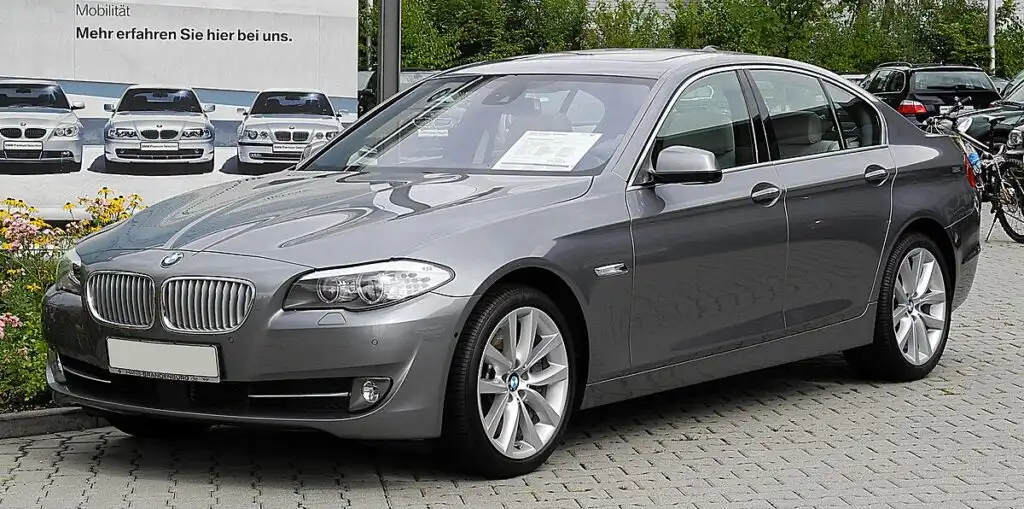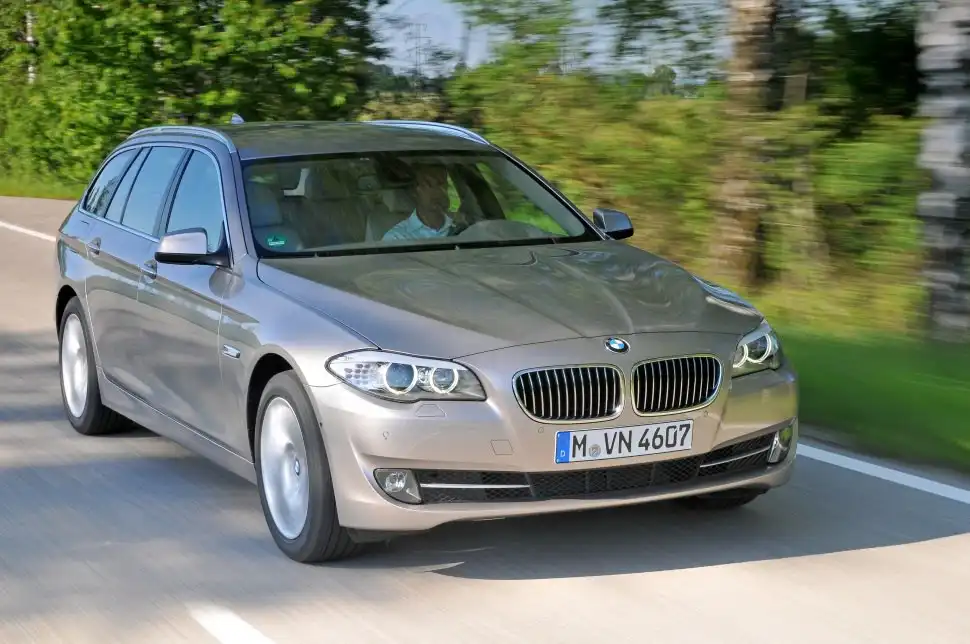
The BMW 5 Series Touring (F11) 520d, produced from 2010 to 2013, represents BMW’s entry into the premium, mid-size wagon segment with a focus on fuel efficiency and usable performance. Positioned as the base diesel variant within the F11 5 Series Touring range, it offered a more economical alternative to the higher-powered 525d, 530d, and 535d models. The F11 generation, built on the BMW F10 platform, aimed to blend the practicality of a station wagon with the driving dynamics expected of a BMW. This particular 520d variant was primarily sold in Europe, where the demand for wagons remains strong, and to a lesser extent in other markets where estate cars are popular.
Technical Specifications
| Brand | BMW |
| Model | 5 Series |
| Generation | 5 Series Touring (F11) |
| Type (Engine) | 520d (184 Hp) |
| Start of production | 2010 |
| End of production | 2013 |
| Powertrain Architecture | Internal Combustion engine |
| Body type | Station wagon (estate) |
| Seats | 5 |
| Doors | 5 |
| Fuel consumption (urban) | 6.2 l/100 km (37.9 US mpg, 45.6 UK mpg, 16.1 km/l) |
| Fuel consumption (extra urban) | 4.5 l/100 km (52.3 US mpg, 62.8 UK mpg, 22.2 km/l) |
| Fuel consumption (combined) | 5.1 l/100 km (46.1 US mpg, 55.4 UK mpg, 19.6 km/l) |
| CO2 emissions | 135 g/km |
| Fuel Type | Diesel |
| Acceleration 0 – 100 km/h | 8.3 sec |
| Acceleration 0 – 62 mph | 8.3 sec |
| Acceleration 0 – 60 mph | 7.9 sec |
| Maximum speed | 222 km/h (137.94 mph) |
| Emission standard | Euro 5 |
| Weight-to-power ratio | 9.3 kg/Hp, 107.6 Hp/tonne |
| Weight-to-torque ratio | 4.5 kg/Nm, 222.2 Nm/tonne |
| Power | 184 Hp @ 4000 rpm |
| Power per litre | 92.2 Hp/l |
| Torque | 380 Nm @ 1750-2750 rpm (280.27 lb.-ft. @ 1750-2750 rpm) |
| Engine layout | Front, Longitudinal |
| Engine Model/Code | N47D20C |
| Engine displacement | 1995 cm3 (121.74 cu. in.) |
| Number of cylinders | 4 |
| Engine configuration | Inline |
| Cylinder Bore | 84 mm (3.31 in.) |
| Piston Stroke | 90 mm (3.54 in.) |
| Compression ratio | 16.5:1 |
| Number of valves per cylinder | 4 |
| Fuel injection system | Diesel Commonrail |
| Engine aspiration | Turbocharger, Intercooler |
| Engine oil capacity | 5.2 l (5.49 US qt | 4.58 UK qt) |
| Coolant | 7.2 l (7.61 US qt | 6.34 UK qt) |
| Kerb Weight | 1710 kg (3769.9 lbs.) |
| Max. weight | 2360 kg (5202.91 lbs.) |
| Max load | 650 kg (1433 lbs.) |
| Trunk (boot) space – minimum | 560 l (19.78 cu. ft.) |
| Trunk (boot) space – maximum | 1670 l (58.98 cu. ft.) |
| Fuel tank capacity | 70 l (18.49 US gal | 15.4 UK gal) |
| Max. roof load | 100 kg (220.46 lbs.) |
| Permitted trailer load with brakes (12%) | 2000 kg (4409.25 lbs.) |
| Permitted trailer load without brakes | 750 kg (1653.47 lbs.) |
| Permitted towbar download | 90 kg (198.42 lbs.) |
| Length | 4907 mm (193.19 in.) |
| Width | 1860 mm (73.23 in.) |
| Height | 1462 mm (57.56 in.) |
| Wheelbase | 2968 mm (116.85 in.) |
| Front track | 1600 mm (62.99 in.) |
| Rear (Back) track | 1626 mm (64.02 in.) |
| Ride height (ground clearance) | 141 mm (5.55 in.) |
| Drag coefficient (Cd) | 0.31 |
| Minimum turning circle (turning diameter) | 11.95 m (39.21 ft.) |
| Drivetrain Architecture | The Internal combustion engine (ICE) drives the rear wheels of the vehicle. |
| Drive wheel | Rear wheel drive |
| Number of gears and type of gearbox | 6 gears, manual transmission |
| Front suspension | Double wishbone |
| Rear suspension | Independent multi-link suspension |
| Front brakes | Ventilated discs |
| Rear brakes | Ventilated discs |
| Assisting systems | ABS (Anti-lock braking system) |
| Steering type | Steering rack and pinion |
| Power steering | Electric Steering |
| Tires size | 225/55 R17 97W |
| Wheel rims size | 8J x 17 |
Powertrain & Engine Architecture
The 520d Touring utilizes the BMW N47D20C engine, a 2.0-liter inline-four cylinder diesel engine. This engine is a cornerstone of BMW’s EfficientDynamics strategy, prioritizing fuel economy and reduced emissions. The N47 series is known for its second-generation common rail direct injection system, operating at pressures up to 1800 bar, which contributes to efficient combustion and reduced particulate matter. The engine also features a variable geometry turbocharger (VGT) and an intercooler to enhance power and torque delivery. The 520d was typically paired with a six-speed manual transmission, although an eight-speed automatic transmission was also available as an option. The automatic transmission offered smoother shifts and improved fuel efficiency, but at a slight cost to driver engagement. The engine’s timing chain, while designed for longevity, became a known point of potential failure in some N47 engines, requiring preventative maintenance or eventual replacement.
Driving Characteristics
The 520d Touring, with its 184 horsepower and 280 lb-ft of torque, provided adequate performance for everyday driving. Acceleration from 0-60 mph took around 7.9 seconds, making it competitive within its class. However, compared to the more powerful 525d or 530d variants, the 520d felt noticeably less responsive, particularly during overtaking maneuvers. The manual transmission offered a more engaging driving experience, allowing drivers to fully utilize the engine’s torque band. The automatic transmission, while convenient, could sometimes feel hesitant in its shifts. The rear-wheel-drive configuration contributed to balanced handling, typical of BMW vehicles, but could also lead to oversteer in challenging conditions. The suspension setup prioritized comfort, providing a smooth ride quality, but at the expense of some body roll during cornering.
Equipment & Trim Levels
The 520d Touring typically came standard with features such as automatic climate control, power windows, power mirrors, a multi-function steering wheel, and a basic audio system. Upholstery was generally cloth, with leather upholstery available as an optional upgrade. Common optional extras included a navigation system, a premium sound system, parking sensors, heated seats, and a sunroof. Trim levels varied depending on the market, but generally followed a progression from base ‘SE’ to higher-spec ‘Sport’ or ‘Luxury’ trims, each adding more features and cosmetic enhancements. The ‘Sport’ trim often included sport seats, a sport suspension, and unique exterior styling cues, while the ‘Luxury’ trim focused on comfort and refinement with features like wood trim and upgraded leather upholstery.
Chassis & Braking
The F11 5 Series Touring featured a double wishbone front suspension and an independent multi-link rear suspension, providing a comfortable and controlled ride. The 520d typically came equipped with ventilated disc brakes on all four wheels, offering ample stopping power. Anti-lock Braking System (ABS) and Electronic Stability Control (ESC) were standard safety features. The rear suspension geometry was tuned to accommodate the increased weight and load-carrying capacity of the wagon body style. Stabilizer bars were fitted to both the front and rear axles to reduce body roll during cornering. The steering system utilized an electric power steering system, providing precise and responsive steering feel.
Market Reception & Comparison
The 520d Touring was generally well-received by automotive critics as a practical and efficient option within the premium wagon segment. It was praised for its fuel economy, comfortable ride, and spacious interior. However, some critics noted that the engine lacked the outright performance of its more powerful siblings. Compared to the 525d, the 520d offered significantly better fuel economy but sacrificed around 30 horsepower. The 520d also represented a more affordable entry point into the 5 Series Touring range, making it attractive to buyers who prioritized value and efficiency over outright performance. Reliability was generally good, although the potential timing chain issues with the N47 engine were a concern for some owners.
Legacy
The BMW 5 Series Touring (F11) 520d remains a popular choice in the used car market, particularly in Europe. Its combination of practicality, fuel efficiency, and BMW driving dynamics continues to appeal to buyers. The N47 engine, despite its potential timing chain issues, is generally considered to be a robust and reliable unit when properly maintained. Regular oil changes and preventative maintenance are crucial to ensure the longevity of the engine. The F11 5 Series Touring represents a well-rounded and capable wagon that offers a compelling alternative to traditional SUVs and crossovers.