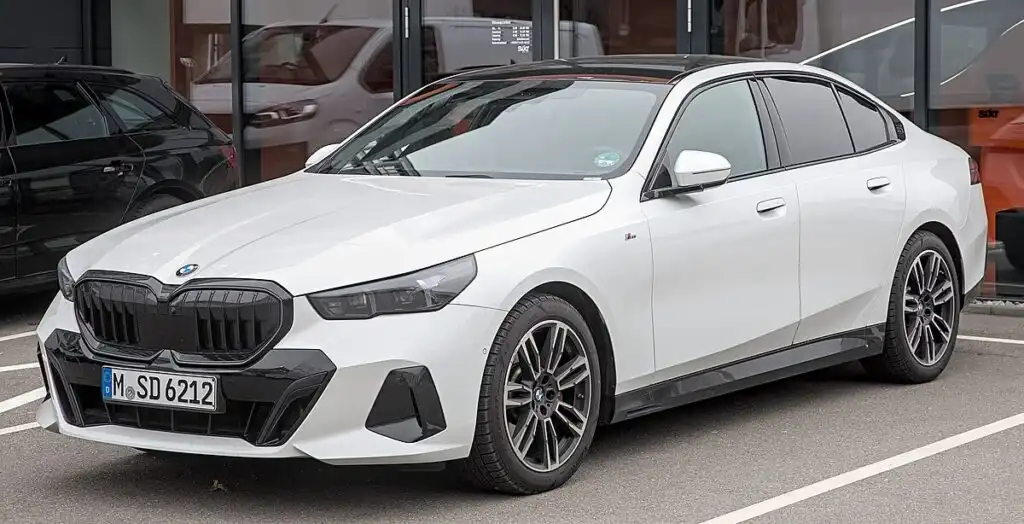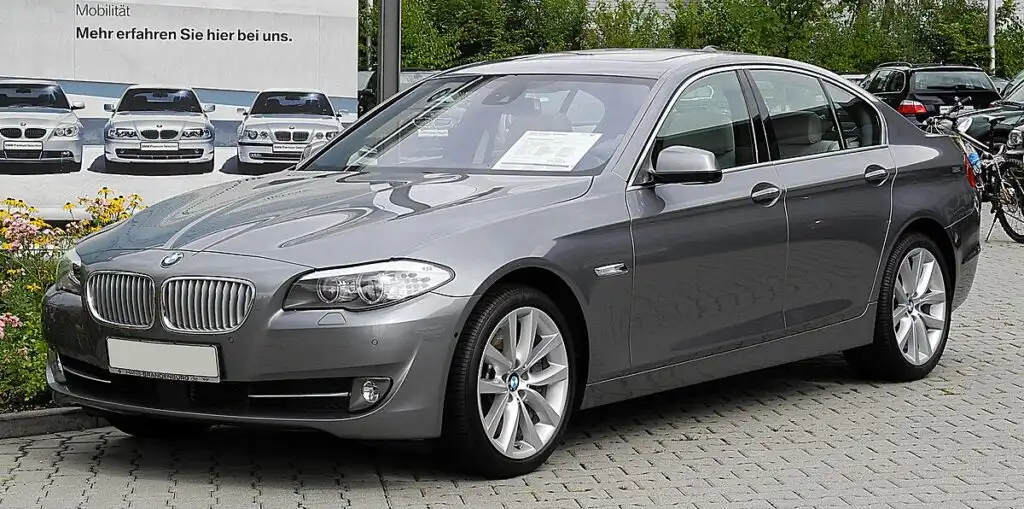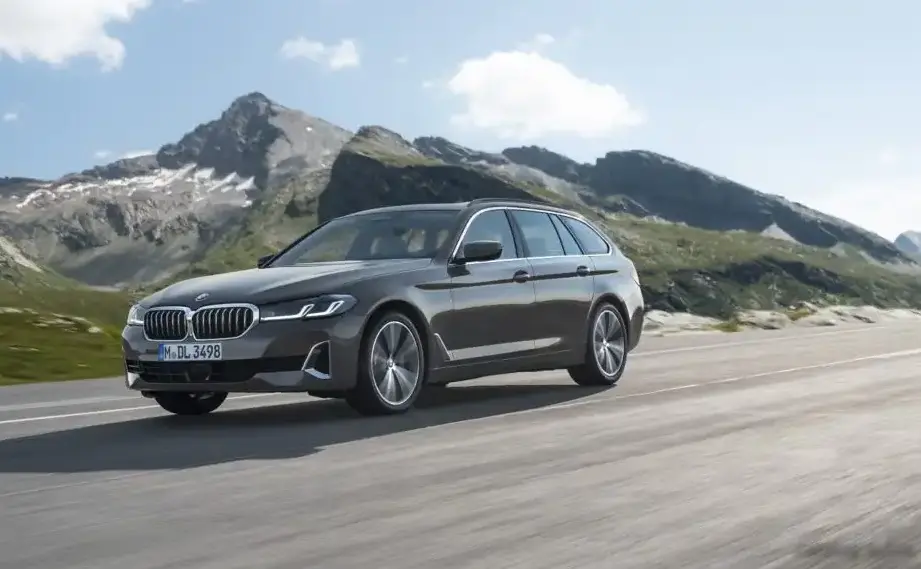
The BMW 530e xDrive Touring, part of the G31 LCI (Life Cycle Impulse, or facelift) generation of the 5 Series, represents BMW’s foray into plug-in hybrid technology within the premium station wagon segment. Introduced in July 2020 and remaining in production until February 2024, this variant combined a 2.0-liter turbocharged four-cylinder gasoline engine with an electric motor, offering a balance of performance, efficiency, and practicality. Positioned as a mid-range offering within the 5 Series Touring lineup, it catered to buyers seeking reduced emissions and the flexibility of electric driving without sacrificing the driving experience associated with the BMW brand. The 530e Touring was primarily marketed in Europe and other regions with established charging infrastructure and incentives for electric vehicles.
Technical Specifications
| Brand | BMW |
| Model | 5 Series |
| Generation | 5 Series Touring (G31 LCI, facelift 2020) |
| Type (Engine) | 530e (292 Hp) Plug-in Hybrid Steptronic |
| Start of production | July, 2020 |
| End of production | February, 2024 |
| Powertrain Architecture | PHEV (Plug-in Hybrid Electric Vehicle) |
| Body type | Station wagon (estate) |
| Seats | 5 |
| Doors | 5 |
| Combined fuel consumption (WLTP) | 1.5-1.9 l/100 km (156.8 – 123.8 US mpg, 188.3 – 148.7 UK mpg, 66.7 – 52.6 km/l) |
| CO2 emissions (WLTP) | 35-43 g/km |
| Fuel consumption (NEDC, WLTP equivalent) | 1.8-2.0 l/100 km (130.7 – 117.6 US mpg, 156.9 – 141.2 UK mpg, 55.6 – 50 km/l) |
| CO2 emissions (NEDC, WLTP equivalent) | 42-46 g/km |
| Fuel Type | Petrol / electricity |
| Acceleration 0 – 100 km/h | 6.1 sec |
| Acceleration 0 – 62 mph | 6.1 sec |
| Acceleration 0 – 60 mph | 5.8 sec |
| Maximum speed | 225 km/h (139.81 mph) |
| Emission standard | Euro 6d |
| Weight-to-power ratio | 6.5 kg/Hp, 153.7 Hp/tonne |
| Weight-to-torque ratio | 4.5 kg/Nm, 221.1 Nm/tonne |
| Gross battery capacity | 12 kWh |
| Battery voltage | 354 V |
| Battery technology | Lithium-ion (Li-Ion) |
| Battery location | Under the rear seats |
| All-electric range (WLTP) | 51-57 km (31.69 – 35.42 mi) |
| Average Energy consumption (WLTP) | 17.0-18.5 kWh/100 km (27.36 – 29.77 kWh/100 mi, 123 – 113 MPGe, 5.9 – 5.4 km/kWh, 3.7 – 3.4 mi/kWh) |
| Average Energy consumption (NEDC, WLTP equivalent) | 15.4-16.1 kWh/100 km (24.78 – 25.91 kWh/100 mi, 136 – 130 MPGe, 6.5 – 6.2 km/kWh, 4 – 3.9 mi/kWh) |
| Max speed (electric) | 140 km/h (86.99 mph) |
| Electric motor power | 109 Hp @ 3140 rpm (195.45 lb.-ft. @ 100-2500 rpm) |
| Electric motor torque | 265 Nm @ 100-2500 rpm |
| Electric motor location | Between the combustion engine and the transmission |
| System power | 292 Hp |
| System torque | 420 Nm (309.78 lb.-ft.) |
| Power | 184 Hp @ 5000-6500 rpm (92.1 Hp/l) |
| Torque | 300 Nm @ 1350-4000 rpm (221.27 lb.-ft. @ 1350-4000 rpm) |
| Engine layout | Front, Longitudinal |
| Engine Model/Code | B48B20A |
| Engine displacement | 1998 cm3 (121.93 cu. in.) |
| Number of cylinders | 4 |
| Engine configuration | Inline |
| Cylinder Bore | 82 mm (3.23 in.) |
| Piston Stroke | 94.6 mm (3.72 in.) |
| Compression ratio | 11:1 |
| Number of valves per cylinder | 4 |
| Fuel injection system | Direct injection |
| Engine aspiration | Twin-power turbo, Intercooler |
| Valvetrain | VALVETRONIC |
| Engine oil capacity | 5.25 l (5.55 US qt | 4.62 UK qt) |
| Coolant | 9.9 l (10.46 US qt | 8.71 UK qt) |
| Kerb Weight | 1900 kg (4188.78 lbs.) |
| Max. weight | 2550 kg (5621.79 lbs.) |
| Max load | 650 kg (1433 lbs.) |
| Trunk (boot) space – minimum | 430 l (15.19 cu. ft.) |
| Trunk (boot) space – maximum | 1560 l (55.09 cu. ft.) |
| Fuel tank capacity | 46 l (12.15 US gal | 10.12 UK gal) |
| Max. roof load | 100 kg (220.46 lbs.) |
| Permitted trailer load with brakes (12%) | 1700 kg (3747.86 lbs.) |
| Permitted trailer load without brakes | 750 kg (1653.47 lbs.) |
| Permitted towbar download | 90 kg (198.42 lbs.) |
| Length | 4963 mm (195.39 in.) |
| Width | 1868 mm (73.54 in.) |
| Height | 1498 mm (58.98 in.) |
| Wheelbase | 2975 mm (117.13 in.) |
| Front track | 1605 mm (63.19 in.) |
| Rear (Back) track | 1630 mm (64.17 in.) |
| Ride height (ground clearance) | 143 mm (5.63 in.) |
| Drag coefficient (Cd) | 0.29 |
| Minimum turning circle (turning diameter) | 12 m (39.37 ft.) |
| Drivetrain Architecture | The Internal combustion engine (ICE) and electric motor drive the rear wheels of the car with the ability to work in full electric or mixed mode. |
| Drive wheel | Rear wheel drive |
| Number of gears and type of gearbox | 8 gears, automatic transmission Steptronic |
| Front suspension | Double wishbone |
| Rear suspension | Independent multi-link suspension |
| Front brakes | Ventilated discs |
| Rear brakes | Ventilated discs |
| Assisting systems | ABS (Anti-lock braking system) |
| Steering type | Steering rack and pinion |
| Power steering | Electric Steering |
| Tires size | 245/45 R18 |
| Wheel rims size | 8J x 18 |
INTRODUCTION
The BMW 530e xDrive Touring (G31 LCI) is a plug-in hybrid station wagon that debuted in July 2020 as part of the facelifted 5 Series range. Built on the G31 platform, which underpinned the fifth generation of the 5 Series Touring, the 530e combined a 2.0-liter turbocharged four-cylinder gasoline engine (B48) with an electric motor integrated into the eight-speed Steptronic automatic transmission. This configuration allowed for both all-electric driving for shorter distances and the combined power of both engines for longer journeys. The ‘e’ designation signifies the electric powertrain, while ‘xDrive’ denotes BMW’s all-wheel-drive system, although the 530e Touring was primarily rear-wheel drive with the electric motor assisting in traction. The LCI update brought styling revisions, updated technology, and refinements to the hybrid system.
Powertrain & Engine Architecture
At the heart of the 530e Touring lies the BMW B48B20A 2.0-liter inline-four cylinder engine. This engine utilizes direct fuel injection and a twin-scroll turbocharger to produce 184 horsepower and 300 Nm (221 lb-ft) of torque. The engine features BMW’s VALVETRONIC technology, which allows for precise control of valve lift and timing, optimizing efficiency and responsiveness. The electric motor, delivering 109 horsepower and 265 Nm (195 lb-ft) of torque, is positioned between the engine and the transmission. The combined system output is 292 horsepower and 420 Nm (309 lb-ft) of torque. The 12 kWh lithium-ion battery pack is located under the rear seats, impacting cargo space slightly but maintaining a low center of gravity. The Steptronic eight-speed automatic transmission is specifically tuned to work seamlessly with the electric motor, providing smooth and efficient gear changes. The hybrid system allows for selectable driving modes, including Electric, Hybrid, and Sport, each altering the powertrain’s behavior to prioritize efficiency, balance, or performance.
Driving Characteristics
The 530e Touring offers a unique driving experience compared to its gasoline-powered siblings. In all-electric mode, the vehicle provides near-silent acceleration and a range of approximately 51-57 kilometers (32-35 miles) under WLTP testing. This is sufficient for many daily commutes. Switching to Hybrid mode allows the car to automatically manage the interplay between the gasoline engine and electric motor, optimizing fuel efficiency. The Sport mode prioritizes performance, utilizing both power sources for maximum acceleration. While the 530e is not as overtly sporty as the 540i, it still delivers brisk performance, achieving 0-60 mph in around 5.8 seconds. The weight of the battery pack does add some weight, but the low center of gravity contributes to stable handling. The eight-speed automatic transmission provides smooth and responsive shifts, and the electric motor provides instant torque, enhancing responsiveness at lower speeds.
Equipment & Trim Levels
The 530e Touring typically came well-equipped, reflecting its position as a premium vehicle. Standard features included BMW’s iDrive infotainment system with a touchscreen display, navigation, Apple CarPlay and Android Auto compatibility, leather upholstery, automatic climate control, and a suite of advanced driver-assistance systems such as lane departure warning, forward collision warning, and automatic emergency braking. Optional extras included a premium sound system, panoramic sunroof, adaptive cruise control, and upgraded interior trim options. The LCI facelift brought updated interior trim options and enhanced iDrive functionality. The exterior styling was also refreshed with new headlights, taillights, and a revised front grille.
Chassis & Braking
The 530e Touring utilizes a double-wishbone front suspension and an independent multi-link rear suspension, providing a comfortable and controlled ride. The suspension is tuned to balance handling and comfort, and the adaptive suspension option allowed drivers to adjust the damping characteristics to suit their preferences. The braking system consists of ventilated discs on all four wheels, providing ample stopping power. The regenerative braking system captures energy during deceleration, replenishing the battery and further enhancing efficiency. The standard tires were 245/45 R18, providing a good balance of grip and comfort.
Market Reception & Comparison
The 530e Touring was generally well-received by automotive critics, who praised its blend of performance, efficiency, and practicality. It was seen as a compelling alternative to traditional gasoline-powered station wagons, particularly for drivers who frequently commute in urban areas or have access to charging infrastructure. Compared to the 520i and 530i Touring models, the 530e offered superior fuel economy and the ability to drive in all-electric mode. However, it was more expensive and slightly heavier. Compared to the 540i, it offered less overall power and performance but provided a more environmentally friendly option. The 530e also faced competition from other plug-in hybrid station wagons, such as the Mercedes-Benz E 300 e Estate and the Volvo V60 Recharge.
Legacy
The BMW 530e Touring (G31 LCI) represents an important step in BMW’s electrification strategy. While no longer in production, it remains a popular choice on the used car market, offering a compelling combination of luxury, performance, and efficiency. The B48 engine and Steptronic transmission have proven to be reliable, and the hybrid system has generally held up well over time. However, potential buyers should be aware of the potential for battery degradation and the importance of regular maintenance. The 530e Touring paved the way for BMW’s current generation of plug-in hybrid vehicles and helped to establish the brand as a leader in the electric vehicle market.