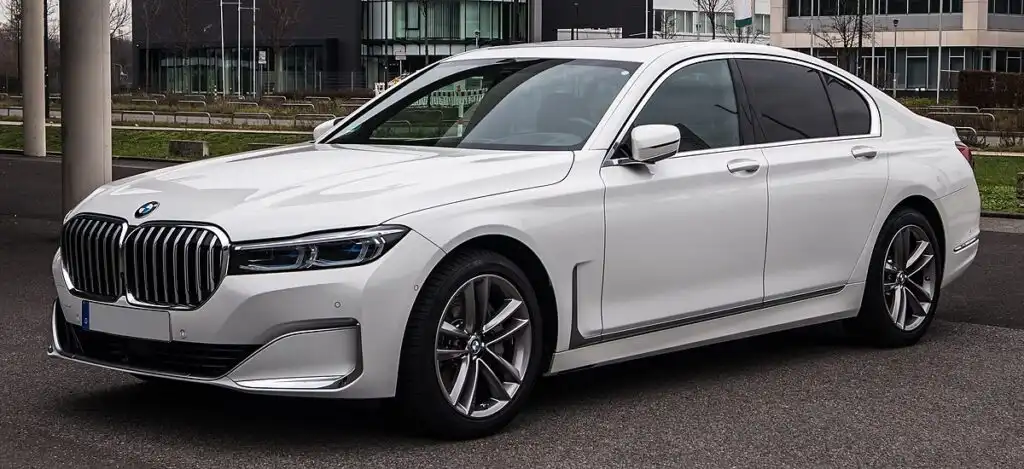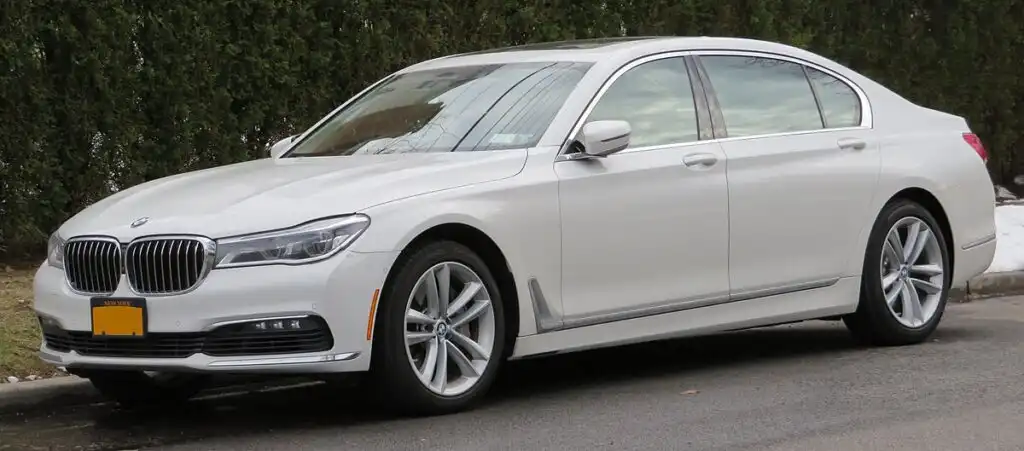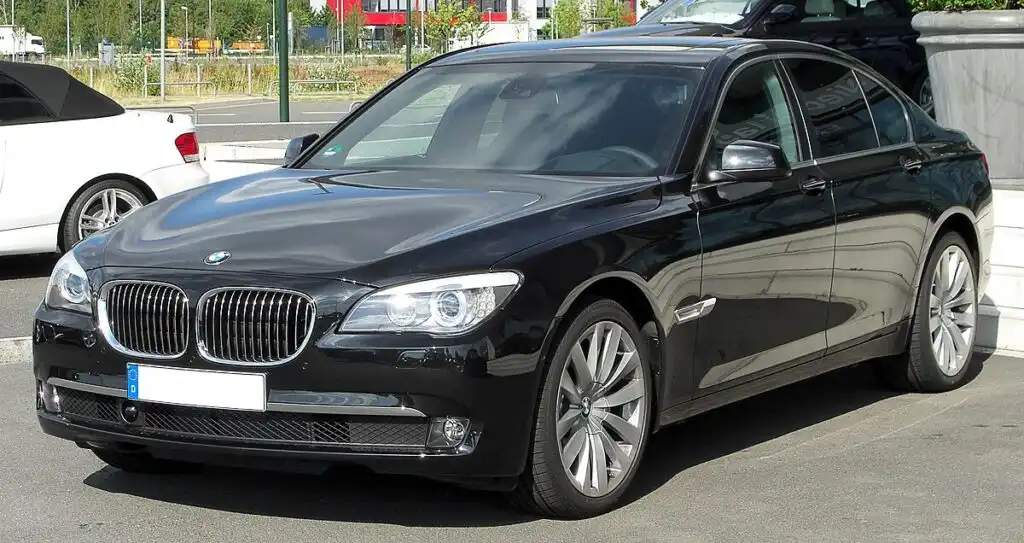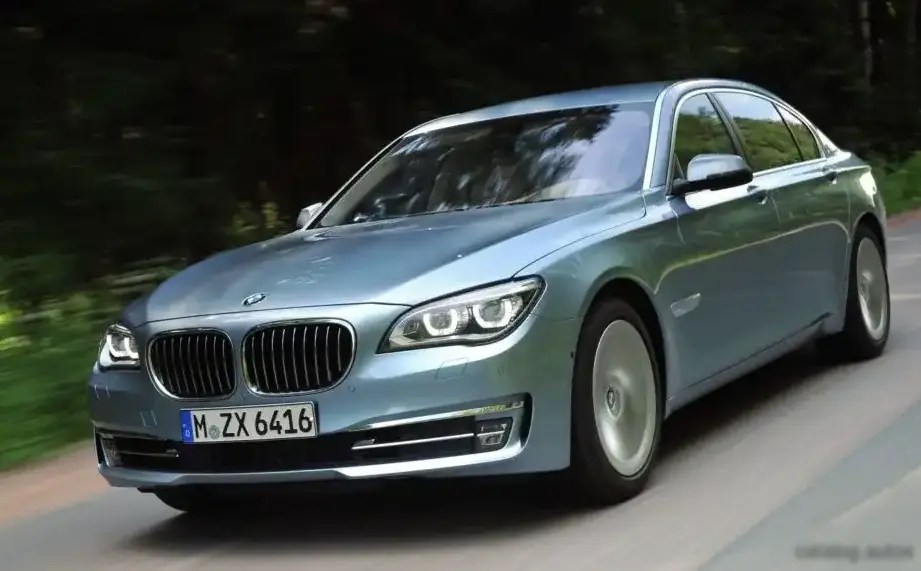
The BMW 7 Series ActiveHybrid 3.0 (F01h LCI), produced from July 2012 to June 2015, represented BMW’s attempt to blend luxury, performance, and fuel efficiency in its flagship sedan. This variant, part of the F01/F02 7 Series generation which received a Life Cycle Impulse (LCI) facelift in 2012, utilized a full hybrid electric vehicle (FHEV) powertrain. Positioned as a mid-range offering within the 7 Series lineup, it slotted between the conventionally powered 730d/740i models and the high-performance 750i/760Li. The ActiveHybrid 3.0 aimed to appeal to buyers seeking a sophisticated luxury car with improved fuel economy compared to its gasoline-only counterparts, without sacrificing the BMW driving experience.
Technical Specifications
| Brand | BMW |
| Model | 7 Series |
| Generation | 7 Series ActiveHybrid (F01h LCI, facelift 2012) |
| Type (Engine) | ActiveHybrid 3.0 (354 Hp) Steptronic |
| Start of production | July, 2012 |
| End of production | June, 2015 |
| Powertrain Architecture | FHEV (Full Hybrid Electric Vehicle) |
| Body type | Sedan |
| Seats | 5 |
| Doors | 4 |
| Fuel consumption (economy) – urban (NEDC) | 6 l/100 km (39.2 US mpg, 47.1 UK mpg, 16.7 km/l) |
| Fuel consumption (economy) – extra urban (NEDC) | 7.2 l/100 km (32.7 US mpg, 39.2 UK mpg, 13.9 km/l) |
| Fuel consumption (economy) – combined (NEDC) | 6.8 l/100 km (34.6 US mpg, 41.5 UK mpg, 14.7 km/l) |
| CO2 emissions (NEDC) | 158 g/km |
| Fuel Type | Petrol (Gasoline) |
| Acceleration 0 – 100 km/h | 5.7 sec |
| Acceleration 0 – 62 mph | 5.7 sec |
| Acceleration 0 – 60 mph | 5.4 sec |
| Maximum speed | 250 km/h (155.34 mph), Electronically limited |
| Emission standard | Euro 5 |
| Weight-to-power ratio | 5.8 kg/Hp, 173.1 Hp/tonne |
| Weight-to-torque ratio | 4.1 kg/Nm, 244.5 Nm/tonne |
| Gross battery capacity | 0.4 kWh |
| Battery technology | Lithium-ion (Li-Ion) |
| Battery location | Inside the trunk |
| All-electric range (NEDC) | 4 km (2.49 mi) |
| Max speed (electric) | 60 km/h (37.28 mph) |
| Electric motor power | 55 Hp |
| Electric motor Torque | 210 Nm (154.89 lb.-ft.) |
| Electric motor location | Between the combustion engine and the transmission |
| System power | 354 Hp @ 5800-6000 rpm |
| System torque | 500 Nm @ 1300-4500 rpm (368.78 lb.-ft. @ 1300-4500 rpm) |
| Power | 320 Hp @ 5800 rpm |
| Torque | 450 Nm @ 1300-4500 rpm (331.9 lb.-ft. @ 1300-4500 rpm) |
| Engine layout | Front, Longitudinal |
| Engine Model/Code | N55B30A |
| Engine displacement | 2979 cm3 (181.79 cu. in.) |
| Number of cylinders | 6 |
| Engine configuration | Inline |
| Cylinder Bore | 84 mm (3.31 in.) |
| Piston Stroke | 89.6 mm (3.53 in.) |
| Compression ratio | 10.2:1 |
| Number of valves per cylinder | 4 |
| Fuel injection system | Direct injection |
| Engine aspiration | Twin-power turbo, Intercooler |
| Valvetrain | DOHC |
| Engine oil capacity | 6.5 l (6.87 US qt | 5.72 UK qt) |
| Coolant | 10.4 l (10.99 US qt | 9.15 UK qt) |
| Kerb Weight | 2045 kg (4508.45 lbs.) |
| Max. weight | 2575 kg (5676.9 lbs.) |
| Max load | 530 kg (1168.45 lbs.) |
| Trunk (boot) space – minimum | 360 l (12.71 cu. ft.) |
| Fuel tank capacity | 80 l (21.13 US gal | 17.6 UK gal) |
| Max. roof load | 100 kg (220.46 lbs.) |
| Length | 5079 mm (199.96 in.) |
| Width | 1902 mm (74.88 in.) |
| Width including mirrors | 2142 mm (84.33 in.) |
| Height | 1471 mm (57.91 in.) |
| Wheelbase | 3070 mm (120.87 in.) |
| Front track | 1611 mm (63.43 in.) |
| Rear (Back) track | 1650 mm (64.96 in.) |
| Front overhang | 866 mm (34.09 in.) |
| Rear overhang | 1143 mm (45 in.) |
| Ride height (ground clearance) | 152 mm (5.98 in.) |
| Drag coefficient (Cd) | 0.28 |
| Minimum turning circle (turning diameter) | 12.2 m (40.03 ft.) |
| Drivetrain Architecture | The Internal combustion engine (ICE) and electric motor drive the rear wheels of the car with the ability to work in full electric or mixed mode. |
| Drive wheel | Rear wheel drive |
| Number of gears and type of gearbox | 8 gears, automatic transmission Steptronic |
| Front suspension | Double wishbone |
| Rear suspension | Independent multi-link suspension, Air suspension |
| Front brakes | Ventilated discs |
| Rear brakes | Ventilated discs |
| Assisting systems | ABS (Anti-lock braking system) |
| Steering type | Steering rack and pinion |
| Power steering | Electric Steering |
| Tires size | 245/50 R18 |
| Wheel rims size | 8J x 18 |
INTRODUCTION
The BMW 7 Series ActiveHybrid 3.0, launched in 2012 as part of the LCI refresh of the F01 generation, aimed to provide a more fuel-efficient alternative within the luxury sedan segment. It combined a 3.0-liter inline-six gasoline engine with an electric motor, resulting in a combined system output of 354 horsepower. The ActiveHybrid 3.0 was designed to offer a balance between performance and economy, appealing to buyers who desired the prestige of a 7 Series but were conscious of fuel consumption and emissions. It utilized a rear-wheel-drive layout and an 8-speed Steptronic automatic transmission, delivering a refined driving experience characteristic of the BMW brand.
Powertrain & Engine Architecture
At the heart of the ActiveHybrid 3.0 lies the N55B30A 3.0-liter inline-six engine, a turbocharged powerplant known for its responsiveness and efficiency. This engine produced 320 horsepower and 331.9 lb-ft of torque. The engine features direct fuel injection and BMW’s Valvetronic variable valve timing system, optimizing combustion for both power and fuel economy. Coupled with this engine is a 55-horsepower electric motor integrated between the engine and the 8-speed automatic transmission. The electric motor draws power from a 0.4 kWh lithium-ion battery pack located in the trunk, reducing cargo space slightly. The hybrid system allows for limited all-electric driving (up to 4 km or 2.49 miles) at speeds up to 60 km/h (37.28 mph). The transmission, BMW’s Steptronic, is a sophisticated unit that provides smooth and quick gear changes, enhancing both comfort and performance. The system prioritizes electric drive at low speeds and assists the gasoline engine during acceleration, maximizing efficiency.
Driving Characteristics
The ActiveHybrid 3.0 delivers a driving experience that leans towards comfort and refinement. While not as overtly sporty as the 750i, the combined output of 354 horsepower provides ample power for effortless cruising and confident overtaking. Acceleration from 0 to 60 mph takes approximately 5.4 seconds. The electric motor provides instant torque, filling in gaps in the gasoline engine’s power delivery and contributing to a smooth and linear acceleration curve. The 8-speed automatic transmission is well-tuned, offering seamless shifts and contributing to the car’s overall refinement. The hybrid system’s regenerative braking feature helps to recapture energy during deceleration, further improving fuel economy. Compared to the 740i, the ActiveHybrid 3.0 offers similar performance but with noticeably improved fuel efficiency, particularly in city driving.
Equipment & Trim Levels
The ActiveHybrid 3.0 came standard with a comprehensive array of luxury features, befitting its position in the 7 Series lineup. Standard equipment included leather upholstery, power-adjustable heated front seats, a premium sound system, a navigation system, and a rear-view camera. Available options included upgraded leather, a panoramic sunroof, active steering, and various driver-assistance systems such as lane departure warning and adaptive cruise control. The interior design mirrored that of other F01/F02 7 Series models, with a focus on high-quality materials and elegant styling. Trim levels were relatively limited, with most customization options available through individual selections rather than distinct packages.
Chassis & Braking
The ActiveHybrid 3.0 utilizes a double-wishbone front suspension and an independent multi-link rear suspension, providing a comfortable and controlled ride. Air suspension was standard, further enhancing ride quality and allowing for adjustable ride height. Ventilated disc brakes are fitted on all four wheels, providing ample stopping power. The car is equipped with ABS (Anti-lock Braking System), electronic stability control, and traction control, ensuring confident handling in various driving conditions. The added weight of the hybrid components (battery and electric motor) does slightly impact handling agility compared to lighter 7 Series models, but the air suspension and well-tuned chassis help to mitigate this effect.
Market Reception & Comparison
The ActiveHybrid 3.0 received generally positive reviews from automotive critics. It was praised for its smooth and quiet operation, comfortable ride, and improved fuel economy compared to conventional 7 Series models. However, some critics noted that the hybrid system added complexity and cost, and that the all-electric range was limited. Compared to the 740i, the ActiveHybrid 3.0 offered similar performance with better fuel economy, but at a higher price point. Against competitors like the Lexus LS Hybrid, the BMW offered a more engaging driving experience, while the Lexus prioritized ultimate comfort and refinement.
Legacy
The BMW 7 Series ActiveHybrid 3.0 represents an early step in BMW’s journey towards electrification. While not a runaway sales success, it demonstrated BMW’s commitment to developing hybrid technology and integrating it into its luxury vehicles. The N55 engine proved to be reliable, and the hybrid system, while complex, has generally held up well over time. On the used car market, the ActiveHybrid 3.0 can be found at relatively attractive prices, offering a luxurious and fuel-efficient option for buyers seeking a flagship sedan. However, potential buyers should be aware of the added maintenance costs associated with the hybrid system and ensure that the battery pack is in good condition.