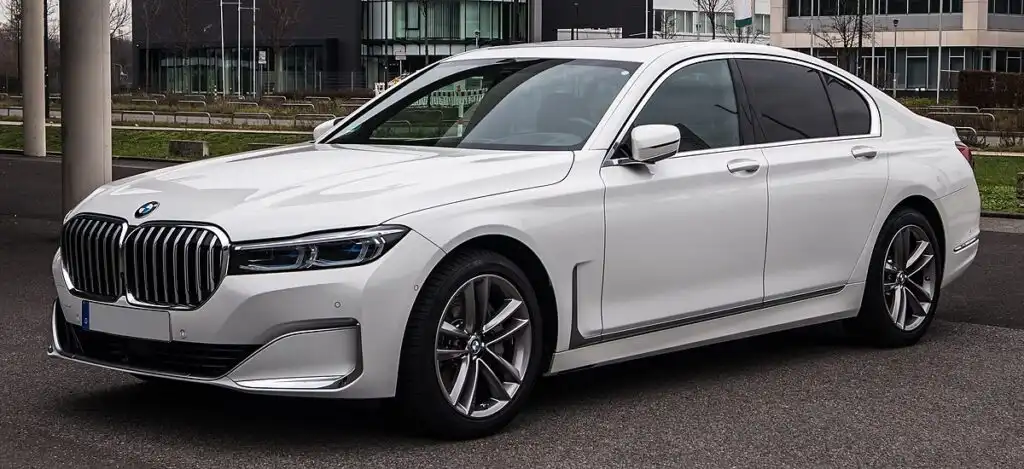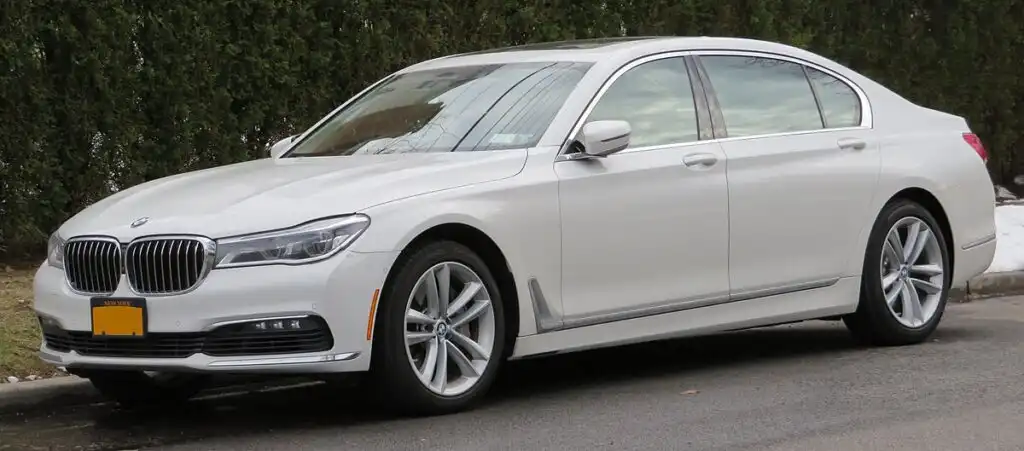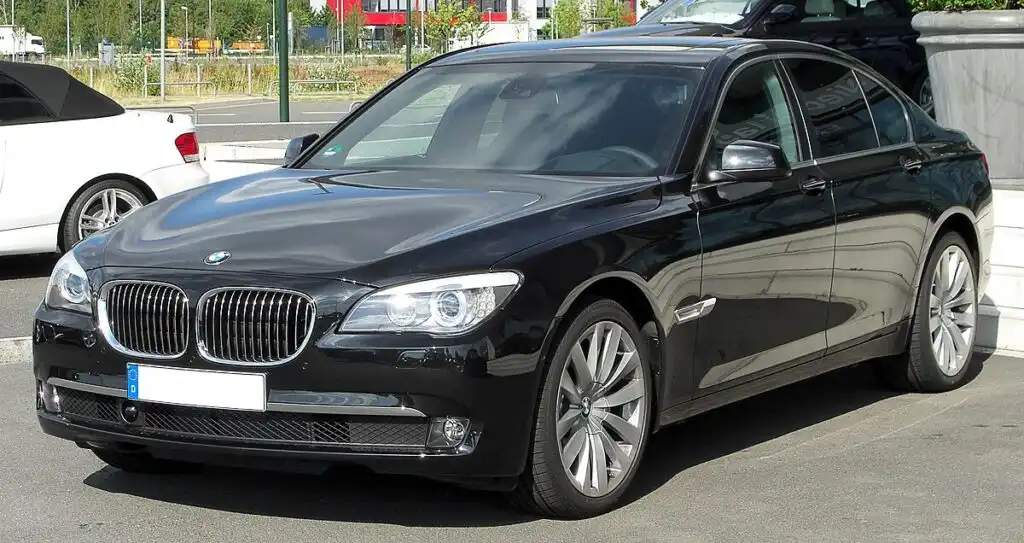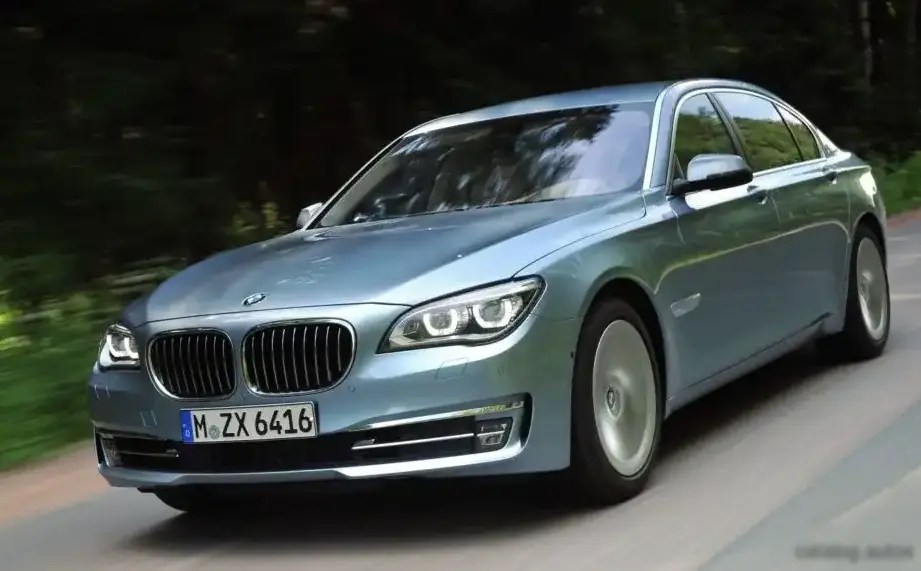
The BMW 7 Series ActiveHybrid Long (F02h LCI), specifically the ActiveHybrid 3.0 variant with the Steptronic automatic transmission, represents BMW’s foray into luxury hybrid technology. Produced from July 2012 to June 2015, this model was primarily aimed at the European and Asian markets, where demand for fuel-efficient luxury vehicles was growing. It builds upon the standard long-wheelbase 7 Series (F02) but incorporates a full hybrid electric vehicle (FHEV) powertrain. The “LCI” designation signifies a Life Cycle Impulse, or facelift, applied to the F02 generation in 2012, bringing updated styling and technology.
Technical Specifications
| Brand | BMW |
| Model | 7 Series |
| Generation | 7 Series ActiveHybrid Long (F02h LCI, facelift 2012) |
| Type (Engine) | ActiveHybrid 3.0 (354 Hp) Steptronic |
| Start of production | July, 2012 |
| End of production | June, 2015 |
| Powertrain Architecture | FHEV (Full Hybrid Electric Vehicle) |
| Body type | Sedan |
| Seats | 5 |
| Doors | 4 |
| Fuel consumption (economy) – urban (NEDC) | 6 l/100 km (39.2 US mpg, 47.1 UK mpg, 16.7 km/l) |
| Fuel consumption (economy) – extra urban (NEDC) | 7.2 l/100 km (32.7 US mpg, 39.2 UK mpg, 13.9 km/l) |
| Fuel consumption (economy) – combined (NEDC) | 6.8 l/100 km (34.6 US mpg, 41.5 UK mpg, 14.7 km/l) |
| CO2 emissions (NEDC) | 158 g/km |
| Fuel Type | Petrol (Gasoline) |
| Acceleration 0 – 100 km/h | 5.7 sec |
| Acceleration 0 – 62 mph | 5.7 sec |
| Acceleration 0 – 60 mph | 5.4 sec |
| Maximum speed | 250 km/h (155.34 mph), Electronically limited |
| Emission standard | Euro 5 |
| Weight-to-power ratio | 5.6 kg/Hp, 177.4 Hp/tonne |
| Weight-to-torque ratio | 4 kg/Nm, 250.6 Nm/tonne |
| Gross battery capacity | 0.4 kWh |
| Battery technology | Lithium-ion (Li-Ion) |
| Battery location | Inside the trunk |
| All-electric range (NEDC) | 4 km (2.49 mi) |
| Max speed (electric) | 60 km/h (37.28 mph) |
| Electric motor power | 55 Hp |
| Electric motor Torque | 210 Nm (154.89 lb.-ft.) |
| Electric motor location | Between the combustion engine and the transmission |
| System power | 354 Hp @ 5800-6000 rpm |
| System torque | 500 Nm @ 1300-4500 rpm (368.78 lb.-ft. @ 1300-4500 rpm) |
| Power | 320 Hp @ 5800 rpm |
| Torque | 450 Nm @ 1300-4500 rpm (331.9 lb.-ft. @ 1300-4500 rpm) |
| Engine layout | Front, Longitudinal |
| Engine Model/Code | N55B30A |
| Engine displacement | 2979 cm3 (181.79 cu. in.) |
| Number of cylinders | 6 |
| Engine configuration | Inline |
| Cylinder Bore | 84 mm (3.31 in.) |
| Piston Stroke | 89.6 mm (3.53 in.) |
| Compression ratio | 10.2:1 |
| Number of valves per cylinder | 4 |
| Fuel injection system | Direct injection |
| Engine aspiration | Twin-power turbo, Intercooler |
| Valvetrain | DOHC |
| Engine oil capacity | 6.5 l (6.87 US qt | 5.72 UK qt) |
| Coolant | 10.5 l (11.1 US qt | 9.24 UK qt) |
| Kerb Weight | 1995 kg (4398.22 lbs.) |
| Max. weight | 2585 kg (5698.95 lbs.) |
| Max load | 590 kg (1300.73 lbs.) |
| Trunk (boot) space – minimum | 360 l (12.71 cu. ft.) |
| Fuel tank capacity | 80 l (21.13 US gal | 17.6 UK gal) |
| Max. roof load | 100 kg (220.46 lbs.) |
| Length | 5219 mm (205.47 in.) |
| Width | 1902 mm (74.88 in.) |
| Height | 1481 mm (58.31 in.) |
| Wheelbase | 3210 mm (126.38 in.) |
| Front track | 1611 mm (63.43 in.) |
| Rear (Back) track | 1650 mm (64.96 in.) |
| Front overhang | 866 mm (34.09 in.) |
| Rear overhang | 1143 mm (45 in.) |
| Ride height (ground clearance) | 152 mm (5.98 in.) |
| Drag coefficient (Cd) | 0.28 |
| Minimum turning circle (turning diameter) | 12.7 m (41.67 ft.) |
| Drive wheel | Rear wheel drive |
| Number of gears and type of gearbox | 8 gears, automatic transmission Steptronic |
| Front suspension | Double wishbone |
| Rear suspension | Independent multi-link suspension, Air suspension |
| Front brakes | Ventilated discs |
| Rear brakes | Ventilated discs |
Powertrain & Engine Architecture
At the heart of the ActiveHybrid 3.0 lies BMW’s N55B30A 3.0-liter inline-six cylinder engine. This engine, known for its responsiveness and smooth power delivery, produces 320 horsepower and 331.9 lb-ft of torque. It utilizes direct fuel injection and a single twin-scroll turbocharger, contributing to both efficiency and performance. The electric motor, positioned between the engine and the eight-speed Steptronic automatic transmission, adds another 55 horsepower and 154.89 lb-ft of torque. The lithium-ion battery pack, with a gross capacity of 0.4 kWh, is located within the trunk, slightly reducing cargo space. The system combines the output of both power sources to deliver a total of 354 horsepower and 368.78 lb-ft of torque. The Steptronic transmission is specifically tuned to work seamlessly with the hybrid system, offering smooth shifts and optimized gear selection for both fuel economy and performance.
Driving Characteristics
The 7 Series ActiveHybrid 3.0 offers a unique driving experience. In electric-only mode, it can travel up to 4 kilometers (2.49 miles) at speeds up to 60 km/h (37.28 mph), providing near-silent operation in urban environments. However, the relatively small battery capacity limits the duration of electric-only driving. During normal driving, the hybrid system intelligently manages the interplay between the gasoline engine and the electric motor. The electric motor provides instant torque, filling in gaps in the engine’s power delivery and enhancing acceleration. The 0-60 mph time of approximately 5.4 seconds is respectable for a large luxury sedan. Compared to the standard 750i, the ActiveHybrid 3.0 offers similar performance but with improved fuel economy. The Steptronic transmission, while smooth, can sometimes feel less engaging than the available manual transmission in other 7 Series variants.
Equipment & Trim Levels
The ActiveHybrid 3.0 typically came well-equipped, reflecting its position as a flagship luxury vehicle. Standard features included leather upholstery, a premium sound system, navigation, a rear-view camera, and a host of driver-assistance systems. The long wheelbase provided ample rear legroom, enhancing passenger comfort. Optional extras included features like massaging seats, a panoramic sunroof, and advanced parking assistance systems. Interior trim options were similar to those offered on other 7 Series models, allowing for a degree of personalization.
Chassis & Braking
The ActiveHybrid 3.0 utilizes a double-wishbone front suspension and an independent multi-link rear suspension with air suspension. The air suspension provides a comfortable ride and allows for adjustable ride height. Ventilated disc brakes are used on all four wheels, providing ample stopping power. The car is equipped with ABS, stability control, and other advanced braking and safety systems. Due to the added weight of the hybrid components, the suspension was tuned to provide a stable and controlled ride.
Market Reception & Comparison
The BMW 7 Series ActiveHybrid 3.0 was generally well-received by critics, who praised its fuel efficiency and smooth driving experience. However, some reviewers noted that the hybrid system added complexity and cost without a dramatic improvement in performance compared to the standard 750i. The fuel economy, rated at 34.6 US mpg combined, was a significant improvement over the non-hybrid models. Compared to other hybrid luxury sedans of the time, such as the Lexus LS 600h, the 7 Series ActiveHybrid offered a more engaging driving experience but less impressive electric-only range.
Legacy
The BMW 7 Series ActiveHybrid 3.0 represents an important step in BMW’s development of hybrid technology. While not a massive sales success, it paved the way for future hybrid and electric vehicles from the brand. The N55 engine, in particular, is known for its reliability, although the hybrid components can be more complex and potentially expensive to repair. On the used car market, the ActiveHybrid 3.0 offers a compelling value proposition for buyers seeking a luxurious and fuel-efficient sedan. However, potential buyers should be aware of the potential maintenance costs associated with the hybrid system and ensure that the battery pack is in good condition.