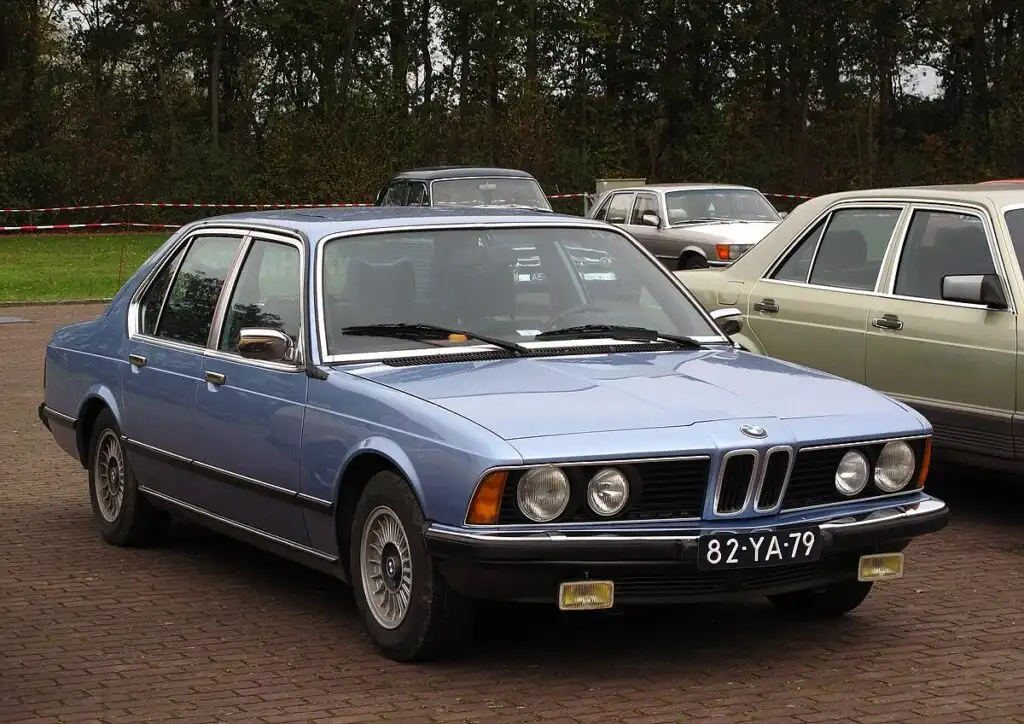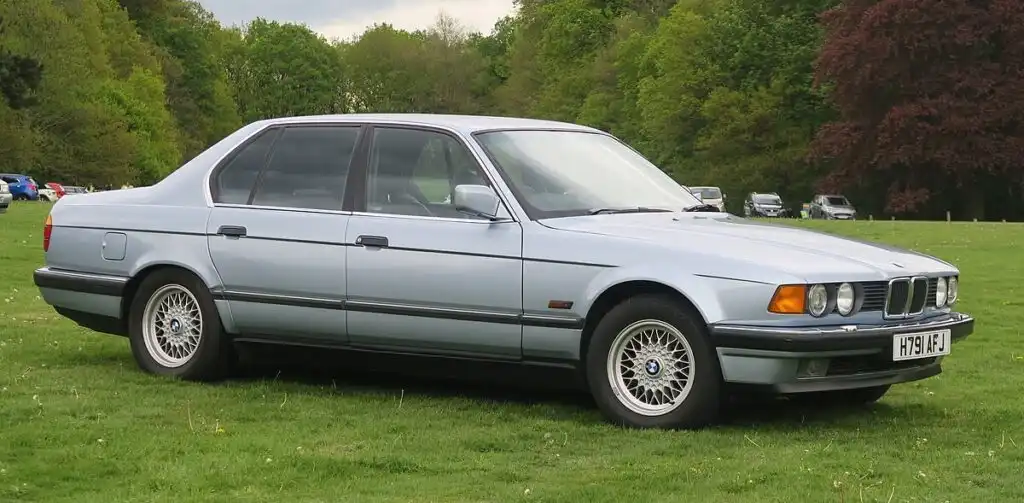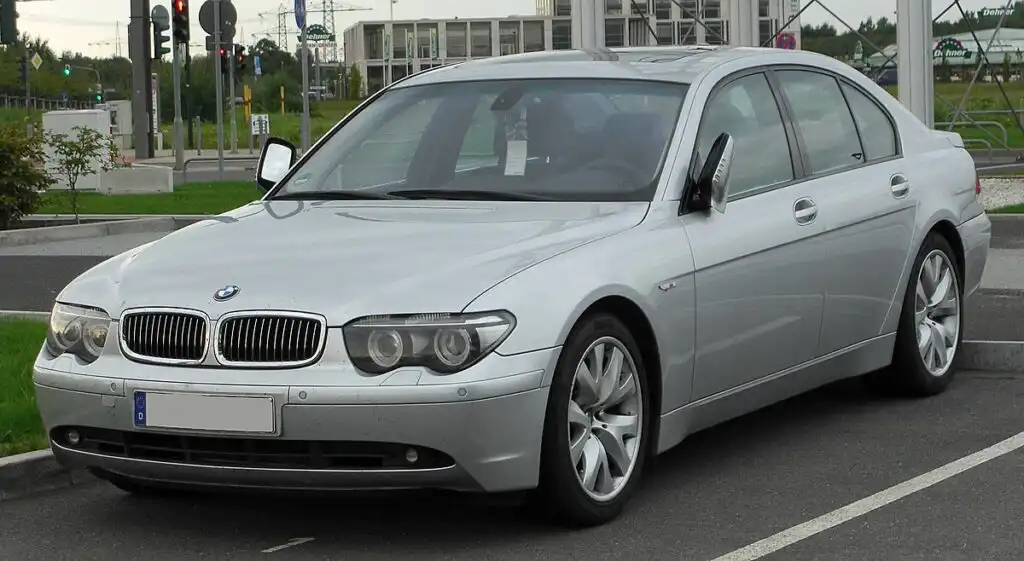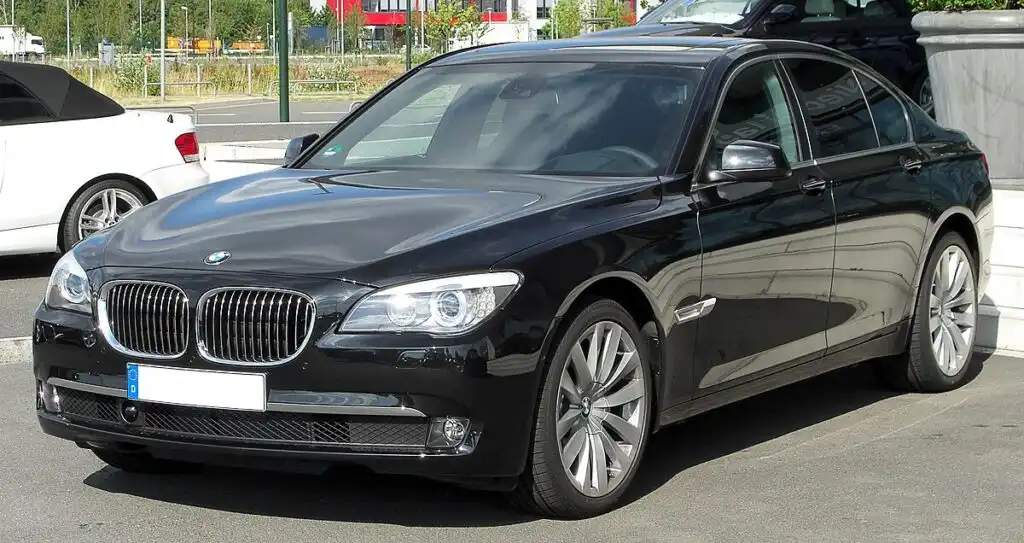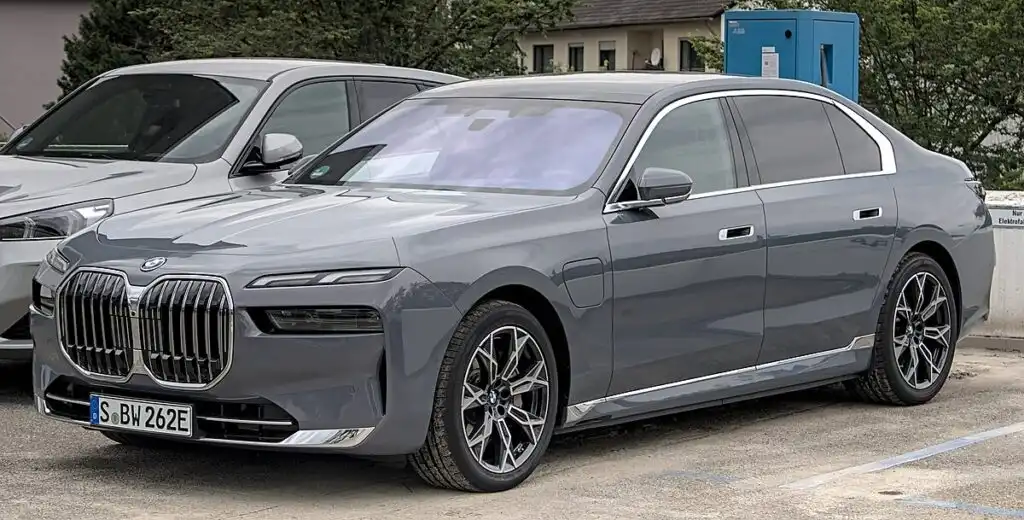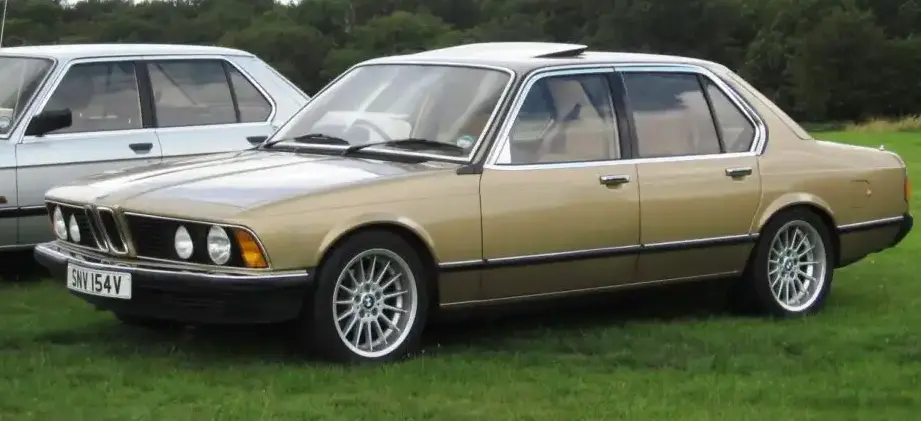
The BMW 733i, produced between 1977 and 1979, represents an important early version of BMW’s flagship 7 Series sedan (E23 generation). Positioned as a mid-range offering within the initial 7 Series lineup, it served as a bridge between the entry-level 728 and the more powerful 735i. The 733i was BMW’s attempt to balance luxury, performance, and improved fuel economy compared to its larger-displacement sibling, primarily targeting the North American market where emissions regulations and fuel costs were becoming increasingly important. It was the first generation of the 7 Series, replacing the BMW E3 line of luxury sedans.
Technical Specifications
| Brand | BMW |
| Model | 7 Series |
| Generation | 7 Series (E23) |
| Type (Engine) | 733i (197 Hp) |
| Start of production | 1977 |
| End of production | 1979 |
| Powertrain Architecture | Internal Combustion engine |
| Body type | Sedan |
| Seats | 5 |
| Doors | 4 |
| Fuel Type | Petrol (Gasoline) |
| Acceleration 0 – 100 km/h | 8.9 sec |
| Acceleration 0 – 62 mph | 8.9 sec |
| Acceleration 0 – 60 mph | 8.5 sec |
| Maximum speed | 205 km/h (127.38 mph) |
| Weight-to-power ratio | 8.1 kg/Hp, 123.1 Hp/tonne |
| Weight-to-torque ratio | 5.7 kg/Nm, 175 Nm/tonne |
| Power | 197 Hp @ 5500 rpm |
| Power per litre | 61.5 Hp/l |
| Torque | 280 Nm @ 4300 rpm (206.52 lb.-ft. @ 4300 rpm) |
| Engine layout | Front, Longitudinal |
| Engine Model/Code | 326EZ1 |
| Engine displacement | 3205 cm3 (195.58 cu. in.) |
| Number of cylinders | 6 |
| Engine configuration | Inline |
| Cylinder Bore | 89 mm (3.5 in.) |
| Piston Stroke | 86 mm (3.39 in.) |
| Compression ratio | 9.3:1 |
| Number of valves per cylinder | 2 |
| Fuel injection system | Multi-port manifold injection |
| Engine aspiration | Naturally aspirated engine |
| Valvetrain | SOHC |
| Kerb Weight | 1600 kg (3527.4 lbs.) |
| Max. weight | 2070 kg (4563.57 lbs.) |
| Max load | 470 kg (1036.17 lbs.) |
| Fuel tank capacity | 90 l (23.78 US gal | 19.8 UK gal) |
| Length | 4860 mm (191.34 in.) |
| Width | 1800 mm (70.87 in.) |
| Height | 1430 mm (56.3 in.) |
| Wheelbase | 2795 mm (110.04 in.) |
| Front track | 1502 mm (59.13 in.) |
| Rear (Back) track | 1524 mm (60 in.) |
| Ride height (ground clearance) | 132 mm (5.2 in.) |
| Drivetrain Architecture | The Internal combustion engine (ICE) drives the rear wheels of the vehicle. |
| Drive wheel | Rear wheel drive |
| Number of gears and type of gearbox | 4 gears, manual transmission |
| Front suspension | Independent, type McPherson with coil spring and anti-roll bar |
| Rear suspension | Independent coil spring |
| Front brakes | Ventilated discs |
| Rear brakes | Disc |
| Assisting systems | ABS (Anti-lock braking system) |
| Tires size | 205/70 HR14; 220/55 HR390 TRX |
| Wheel rims size | 6.5 J x 14; 165 T 390 |
Powertrain & Engine Architecture
The heart of the 733i is the M326 engine, a 3.2-liter inline-six cylinder powerplant designated as the 326EZ1. This engine utilized a cast iron block and an aluminum cylinder head, a common configuration for BMW at the time. It featured a single overhead camshaft (SOHC) operating two valves per cylinder. The engine’s defining feature was its Bosch L-Jetronic fuel injection system, a significant advancement over carburetors, providing more precise fuel delivery and improved emissions control. The L-Jetronic system used a warm-up regulator, air flow sensor, and control unit to determine the optimal fuel mixture. The engine produced 197 horsepower at 5,500 rpm and 280 Nm (206.52 lb-ft) of torque at 4,300 rpm. The 733i was exclusively offered with a four-speed manual transmission, providing a direct connection between the engine and the rear wheels.
Driving Characteristics
The 733i offered a balanced driving experience. While not as overtly sporty as the 735i, it provided ample power for comfortable cruising and confident overtaking. The 0-60 mph time of around 8.5 seconds was respectable for the era. The four-speed manual transmission allowed for precise control, but the gear ratios were geared more towards fuel efficiency and relaxed highway driving than outright acceleration. Compared to the 735i, the 733i felt less eager to rev, with peak power arriving slightly higher in the rev range. The suspension, while comfortable, wasn’t as firm as the 735i, resulting in a slightly softer ride and more body roll in corners. The 733i’s weight of approximately 3,527 lbs contributed to a feeling of substantiality and solidity on the road.
Equipment & Trim Levels
The 733i came standard with a respectable level of equipment for the late 1970s. Interior appointments included cloth upholstery, power windows, central locking, and a basic AM/FM radio. Leather upholstery, air conditioning, a sunroof, and upgraded sound systems were available as optional extras. The dashboard layout was typical of BMW at the time, with a driver-focused design and clearly marked gauges. The 733i’s trim level was generally considered a step above the base 728, offering a more refined interior and a slightly more comprehensive list of standard features. However, it lacked some of the more luxurious touches found in the top-of-the-line 735i.
Chassis & Braking
The E23 7 Series featured an independent suspension system all around. The front suspension utilized McPherson struts with coil springs and an anti-roll bar, while the rear suspension employed a semi-trailing arm design with coil springs. This setup provided a good balance of ride comfort and handling. The 733i was equipped with ventilated disc brakes at the front and solid disc brakes at the rear. Power assistance was standard. The braking system was generally considered effective for the car’s weight and performance. ABS (Anti-lock Braking System) was an optional extra, a relatively advanced feature for the time. The car’s tires were typically 205/70 HR14 or 220/55 HR390 TRX, depending on the optional wheel package.
Market Reception & Comparison
The 733i was generally well-received by automotive critics. It was praised for its comfortable ride, refined interior, and relatively fuel-efficient engine. However, some critics noted that it lacked the outright performance of the 735i. Compared to the 728, the 733i offered a significant power upgrade and a more satisfying driving experience. Compared to the 735i, the 733i was more affordable and offered slightly better fuel economy. In terms of reliability, the M326 engine proved to be a durable and long-lasting unit, although regular maintenance was essential. The L-Jetronic fuel injection system could be prone to issues if not properly maintained.
Legacy
The BMW 733i holds a significant place in BMW’s history as one of the first iterations of its flagship 7 Series sedan. The M326 engine, while superseded by later designs, remains a respected powerplant among BMW enthusiasts. Today, well-maintained 733i models are sought after by collectors and classic car enthusiasts. The car’s relatively simple mechanical design makes it easier to maintain and repair compared to more modern vehicles. While not as common as the 735i, the 733i offers a unique blend of luxury, performance, and classic BMW styling, making it a desirable and increasingly valuable classic car.