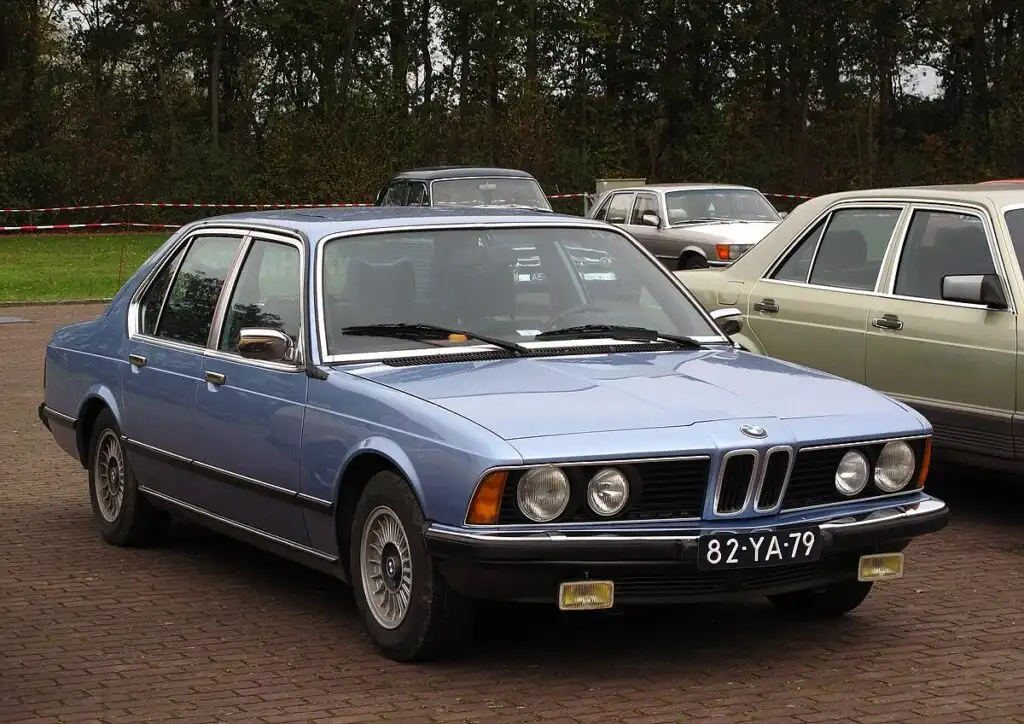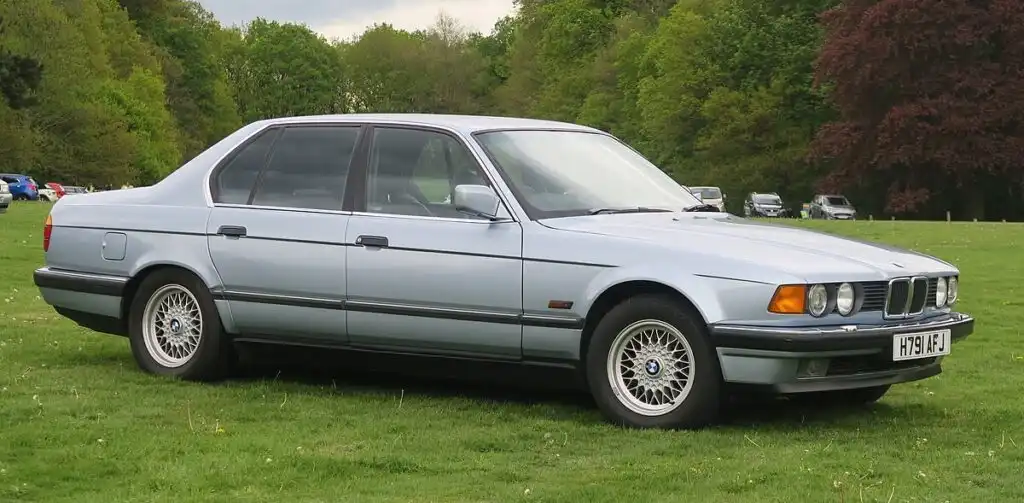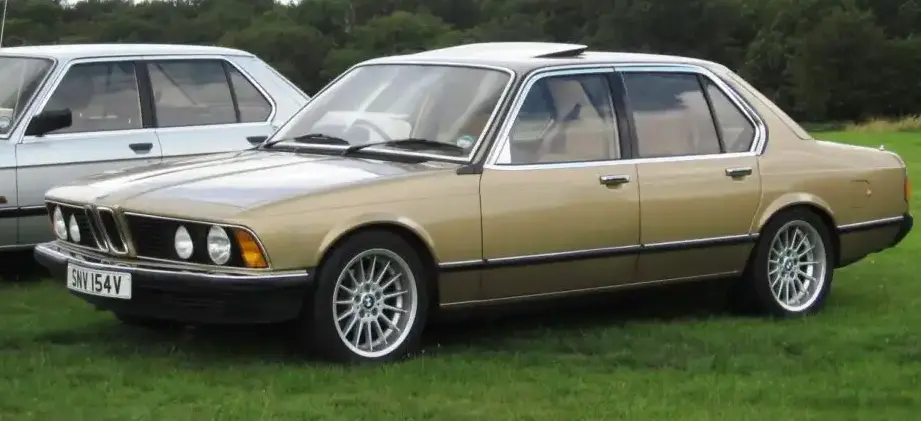
The BMW 733i, produced between 1977 and 1979, represents a pivotal early iteration of BMW’s flagship sedan, the 7 Series (E23). Positioned as a mid-range offering within the initial E23 lineup, it bridged the gap between the base 728 and the more powerful 735i. This model was crucial in establishing the 7 Series as a technologically advanced and luxurious vehicle, competing directly with Mercedes-Benz S-Class models. The 733i was primarily aimed at the North American market, where larger displacement engines were favored, and it served as an important stepping stone for BMW’s expansion into the premium luxury segment in the United States.
Technical Specifications
| Brand | BMW |
| Model | 7 Series |
| Generation | 7 Series (E23) |
| Type (Engine) | 733i (197 Hp) Automatic |
| Start of production | 1977 |
| End of production | 1979 |
| Powertrain Architecture | Internal Combustion engine |
| Body type | Sedan |
| Seats | 5 |
| Doors | 4 |
| Fuel Type | Petrol (Gasoline) |
| Acceleration 0 – 100 km/h | 10.6 sec |
| Acceleration 0 – 62 mph | 10.6 sec |
| Acceleration 0 – 60 mph | 10.1 sec |
| Maximum speed | 198 km/h (123.03 mph) |
| Weight-to-power ratio | 8.2 kg/Hp, 121.6 Hp/tonne |
| Weight-to-torque ratio | 5.8 kg/Nm, 172.8 Nm/tonne |
| Power | 197 Hp @ 5500 rpm |
| Power per litre | 61.5 Hp/l |
| Torque | 280 Nm @ 4300 rpm (206.52 lb.-ft. @ 4300 rpm) |
| Engine layout | Front, Longitudinal |
| Engine Model/Code | 326EZ1 |
| Engine displacement | 3205 cm3 (195.58 cu. in.) |
| Number of cylinders | 6 |
| Engine configuration | Inline |
| Cylinder Bore | 89 mm (3.5 in.) |
| Piston Stroke | 86 mm (3.39 in.) |
| Compression ratio | 9.3:1 |
| Number of valves per cylinder | 2 |
| Fuel injection system | Multi-port manifold injection |
| Engine aspiration | Naturally aspirated engine |
| Valvetrain | SOHC |
| Kerb Weight | 1620 kg (3571.49 lbs.) |
| Max. weight | 2070 kg (4563.57 lbs.) |
| Max load | 450 kg (992.08 lbs.) |
| Fuel tank capacity | 90 l (23.78 US gal | 19.8 UK gal) |
| Length | 4860 mm (191.34 in.) |
| Width | 1800 mm (70.87 in.) |
| Height | 1430 mm (56.3 in.) |
| Wheelbase | 2795 mm (110.04 in.) |
| Front track | 1502 mm (59.13 in.) |
| Rear (Back) track | 1524 mm (60 in.) |
| Ride height (ground clearance) | 132 mm (5.2 in.) |
| Drivetrain Architecture | The Internal combustion engine (ICE) drives the rear wheels of the vehicle. |
| Drive wheel | Rear wheel drive |
| Number of gears and type of gearbox | 3 gears, automatic transmission |
| Front suspension | Independent, type McPherson with coil spring and anti-roll bar |
| Rear suspension | Independent coil spring |
| Front brakes | Ventilated discs |
| Rear brakes | Disc |
| Assisting systems | ABS (Anti-lock braking system) |
| Tires size | 205/70 HR14; 220/55 HR390 TRX |
| Wheel rims size | 6.5 J x 14; 165 T 390 |
Powertrain & Engine Architecture
The heart of the 733i is the M326 engine, a 3.3-liter inline-six cylinder powerplant designated as the 326EZ1. This engine is a naturally aspirated, single overhead camshaft (SOHC) design, featuring Bosch K-Jetronic multi-port fuel injection. This system, while advanced for its time, provided precise fuel delivery for improved efficiency and performance. The engine’s bore and stroke measured 89mm x 86mm, resulting in a displacement of 3205cc. The 9.3:1 compression ratio contributed to the engine’s 197 horsepower at 5500 rpm and 280 Nm (206.52 lb-ft) of torque at 4300 rpm. The engine is longitudinally mounted, driving the rear wheels. Paired with the engine was a 3-speed automatic transmission, a common configuration for luxury cars of the era, prioritizing smooth operation over outright performance.
Driving Characteristics
The 733i’s automatic transmission, while offering convenience, did impact its acceleration compared to the 5-speed manual versions of the 735i. The 0-60 mph time was around 10.1 seconds, and 0-100 km/h took approximately 10.6 seconds. While not a sports car, the 733i provided adequate power for comfortable highway cruising and city driving. The automatic transmission’s gear ratios were optimized for fuel economy and smooth shifts, rather than aggressive acceleration. Compared to the more powerful 735i, the 733i felt less responsive, particularly during overtaking maneuvers. However, the automatic transmission made it a more accessible and user-friendly option for drivers less concerned with maximizing performance.
Equipment & Trim Levels
The 733i came standard with a respectable level of equipment for the late 1970s. Interior features included comfortable cloth upholstery, power windows, central locking, and a basic audio system. Leather upholstery, air conditioning, and a sunroof were popular optional extras. The dashboard layout was typical of BMW at the time, with a driver-focused design and clear instrumentation. The 733i’s trim level was generally considered mid-range, offering a balance between luxury and affordability within the E23 lineup. It lacked some of the more extravagant features found on the 735i, such as upgraded sound systems and more extensive leather trim.
Chassis & Braking
The E23 7 Series featured an independent suspension system on both the front and rear axles. The front suspension utilized a McPherson strut design with coil springs and an anti-roll bar, while the rear employed an independent coil spring setup. This configuration provided a comfortable ride and good handling characteristics for a large sedan. Braking duties were handled by ventilated discs at the front and solid discs at the rear. An Anti-lock Braking System (ABS) was available as an option, a relatively advanced feature for the time, enhancing safety and control during hard braking. The 733i’s curb weight of 1620 kg (3571.49 lbs) was substantial, but the suspension and braking systems were adequately tuned to manage the vehicle’s mass.
Market Reception & Comparison
The 733i was generally well-received by automotive critics, particularly in the North American market. It was praised for its comfortable ride, spacious interior, and refined driving experience. However, some reviewers noted that its performance was not as exhilarating as that of the 735i. Compared to the 728, the 733i offered a significant power upgrade, making it a more desirable option for drivers seeking greater performance. Fuel economy was reasonable for a vehicle of its size and engine displacement, although it was not a primary selling point. Reliability was generally good, although the K-Jetronic fuel injection system could require specialized maintenance.
Legacy
The BMW 733i, while a relatively short-lived model, played a significant role in establishing the 7 Series as a benchmark for luxury sedans. The M326 engine proved to be a durable and reliable powerplant, and many examples are still on the road today. In the used car market, the 733i is often considered a more affordable entry point into E23 ownership compared to the more sought-after 735i. Its combination of comfort, reliability, and classic BMW styling makes it a popular choice among enthusiasts and collectors. The 733i represents a fascinating chapter in BMW’s history, showcasing the company’s commitment to innovation and luxury in the late 1970s.