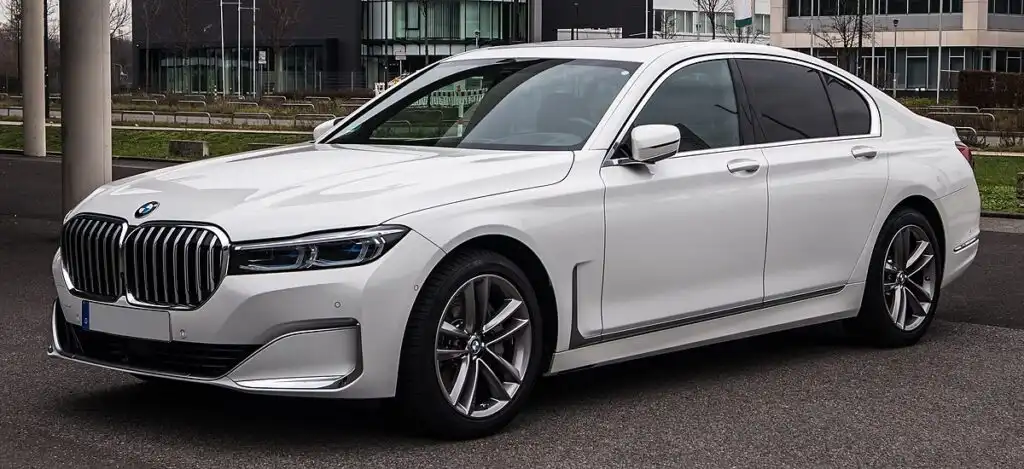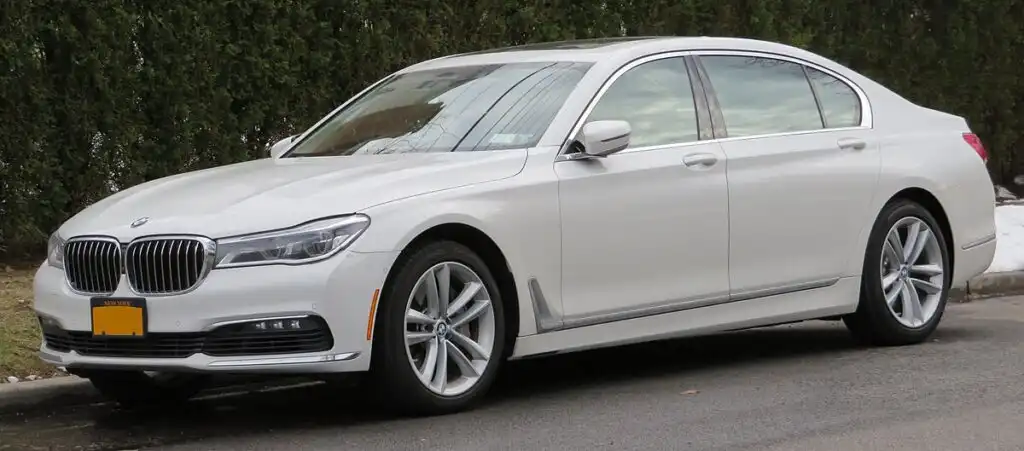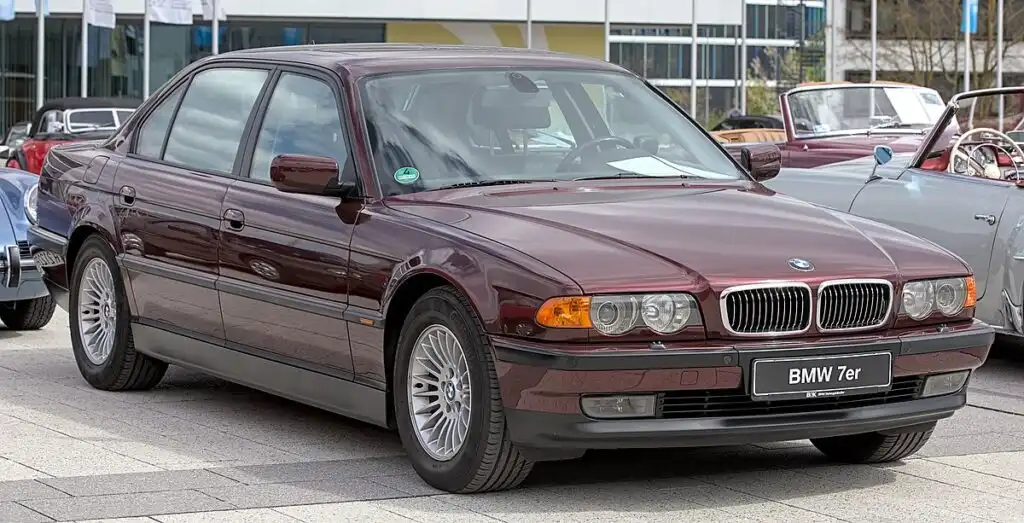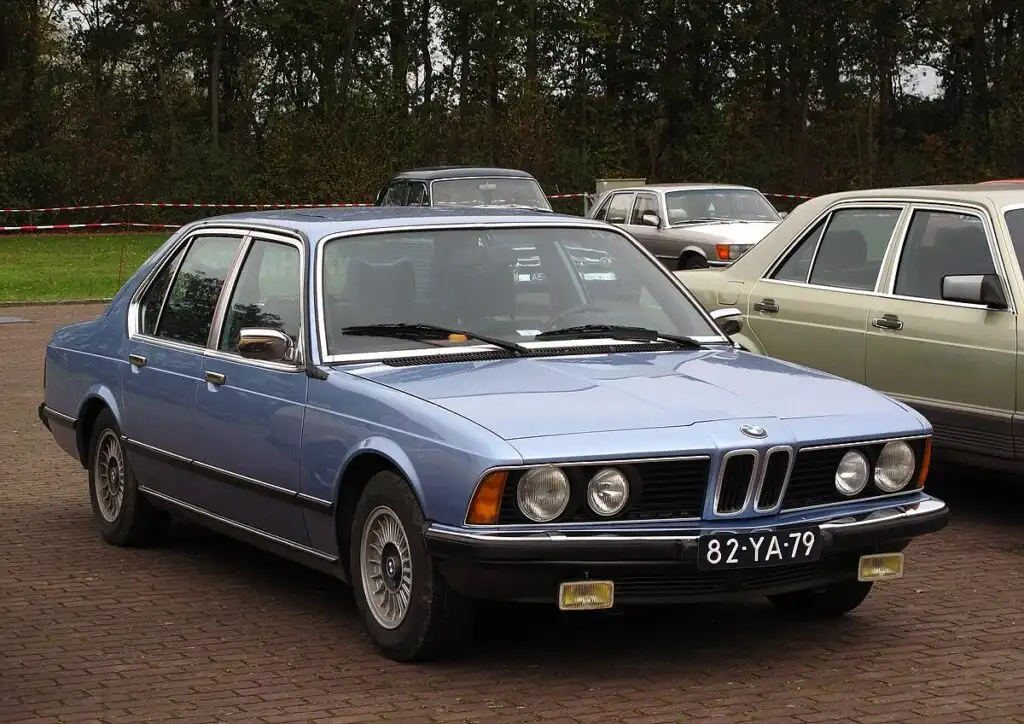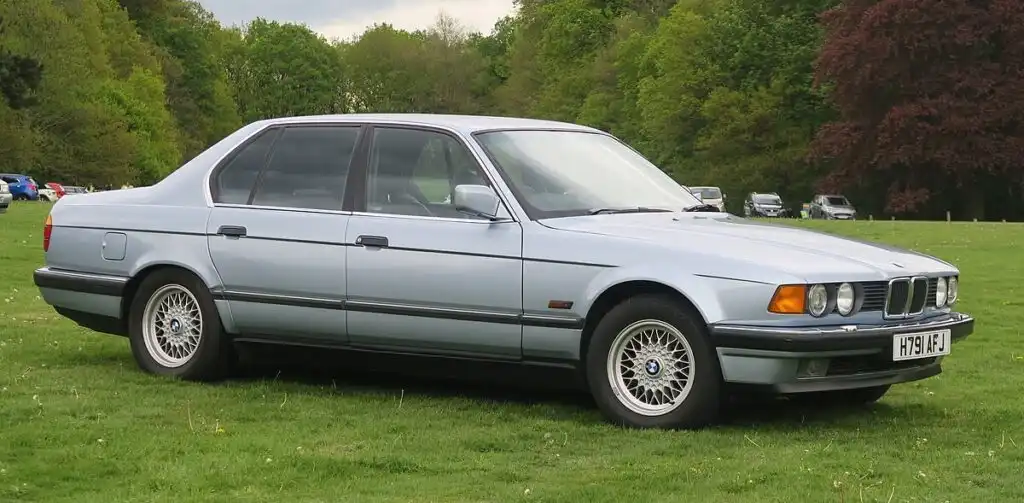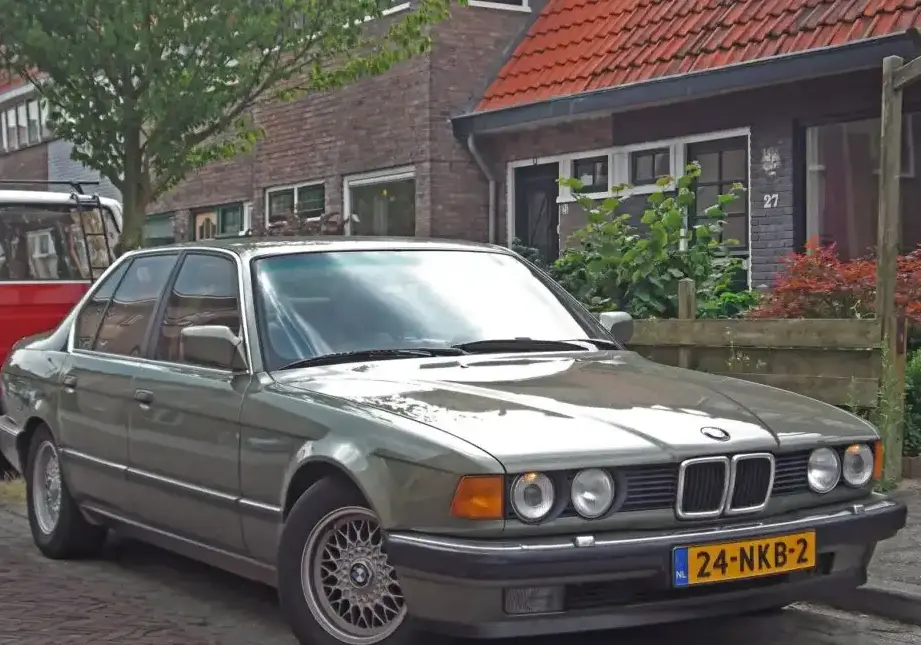
The BMW 730i, produced between 1986 and 1992, was an entry-level variant of the E32 7 Series, BMW’s flagship luxury sedan. Positioned below the 735i and later the 740i and 750iL models, the 730i offered a more accessible entry point into the E32 range while still delivering the core BMW driving experience and luxury appointments. It was primarily marketed in Europe and other regions where smaller displacement engines were favored due to taxation and fuel economy considerations. The 730i represented a significant step up in size and technology compared to its E28 predecessor, introducing features like double-glazed windows, advanced climate control, and a more sophisticated chassis.
Technical Specifications
| Brand | BMW |
| Model | 7 Series |
| Generation | 7 Series (E32) |
| Type (Engine) | 730i (197 Hp) Automatic |
| Start of production | 1986 |
| End of production | 1992 |
| Powertrain Architecture | Internal Combustion engine |
| Body type | Sedan |
| Seats | 5 |
| Doors | 4 |
| Fuel consumption (urban) | 16.4 l/100 km (14.3 US mpg, 17.2 UK mpg, 6.1 km/l) |
| Fuel consumption (extra urban) | 7.4 l/100 km (31.8 US mpg, 38.2 UK mpg, 13.5 km/l) |
| Fuel consumption (combined) | 11 l/100 km (21.4 US mpg, 25.7 UK mpg, 9.1 km/l) |
| Fuel Type | Petrol (Gasoline) |
| Acceleration 0 – 100 km/h | 10.8 sec |
| Acceleration 0 – 62 mph | 10.8 sec |
| Acceleration 0 – 60 mph | 10.3 sec |
| Maximum speed | 217 km/h (134.84 mph) |
| Weight-to-power ratio | 8.2 kg/Hp, 121.6 Hp/tonne |
| Weight-to-torque ratio | 5.9 kg/Nm, 169.8 Nm/tonne |
| Power | 197 Hp @ 5800 rpm |
| Power per litre | 66 Hp/l |
| Torque | 275 Nm @ 4000 rpm (202.83 lb.-ft. @ 4000 rpm) |
| Engine layout | Front, Longitudinal |
| Engine Model/Code | M30B30 |
| Engine displacement | 2986 cm3 (182.22 cu. in.) |
| Number of cylinders | 6 |
| Engine configuration | Inline |
| Cylinder Bore | 89 mm (3.5 in.) |
| Piston Stroke | 80 mm (3.15 in.) |
| Compression ratio | 9.2:1 |
| Number of valves per cylinder | 2 |
| Fuel injection system | Multi-port manifold injection |
| Engine aspiration | Naturally aspirated engine |
| Engine oil capacity | 5.75 l (6.08 US qt, 5.06 UK qt) |
| Coolant capacity | 12 l (12.68 US qt, 10.56 UK qt) |
| Kerb Weight | 1620 kg (3571.49 lbs.) |
| Max. weight | 2150 kg (4739.94 lbs.) |
| Max load | 530 kg (1168.45 lbs.) |
| Trunk (boot) space – minimum | 500 l (17.66 cu. ft.) |
| Fuel tank capacity | 90 l (23.78 US gal, 19.8 UK gal) |
| Length | 4910 mm (193.31 in.) |
| Width | 1845 mm (72.64 in.) |
| Height | 1411 mm (55.55 in.) |
| Wheelbase | 2832 mm (111.5 in.) |
| Front track | 1527 mm (60.12 in.) |
| Rear track | 1550 mm (61.02 in.) |
| Drag coefficient (Cd) | 0.32 |
| Minimum turning circle | 11.6 m (38.06 ft.) |
| Drivetrain Architecture | Rear wheel drive |
| Number of gears | 4 |
| Gearbox type | Automatic transmission |
| Front suspension | Spring Strut |
| Rear suspension | Coil spring |
| Front brakes | Ventilated discs |
| Rear brakes | Disc |
| Assisting systems | ABS (Anti-lock braking system) |
| Steering type | Steering rack and pinion |
| Power steering | Hydraulic Steering |
| Tires size | 205/65 VR 15 |
| Wheel rims size | 15 |
Powertrain & Engine Architecture
The 730i was powered by the M30B30, a 3.0-liter inline-six engine. This engine was a descendant of the long-running M30 family, known for its smoothness and durability. The B30 variant featured multi-port fuel injection, a Bosch Motronic engine management system, and a 9.2:1 compression ratio. The engine produced 197 horsepower at 5800 rpm and 275 Nm (202.83 lb-ft) of torque at 4000 rpm. The engine’s layout was longitudinal, meaning it was mounted with the crankshaft running from front to rear, a typical configuration for rear-wheel-drive BMWs. Paired with the M30B30 was a 4-speed automatic transmission, providing smooth but not particularly sporty shifts. This transmission was chosen to appeal to buyers prioritizing comfort and ease of use over outright performance.
Driving Characteristics
The 730i Automatic offered a comfortable and refined driving experience, but it wasn’t designed for spirited performance. The 4-speed automatic transmission, while smooth, resulted in a 0-60 mph time of around 10.3 seconds, noticeably slower than the manual transmission or the more powerful 735i. The gear ratios were optimized for fuel efficiency and relaxed cruising rather than rapid acceleration. The engine delivered adequate power for everyday driving, but overtaking maneuvers required careful planning. Compared to the 735i, the 730i felt less responsive, particularly at higher speeds. However, the automatic transmission made it a more user-friendly option for city driving and long highway journeys.
Equipment & Trim Levels
The 730i came standard with a respectable level of equipment, befitting a luxury sedan. This included power windows, central locking, air conditioning, and a basic audio system. Upholstery was typically cloth, although leather was available as an option. Dashboard configuration was consistent across the E32 range, featuring a clear and functional layout with analog gauges. Optional extras included a sunroof, upgraded audio systems, heated seats, and a more advanced climate control system. The 730i often served as a base for customers to add options, allowing them to tailor the car to their specific preferences.
Chassis & Braking
The E32 7 Series featured an independent suspension system, with MacPherson struts at the front and semi-trailing arms at the rear. The 730i, being the entry-level model, typically had a slightly softer suspension setup compared to the higher-spec variants. Braking was accomplished via ventilated discs at the front and solid discs at the rear. Anti-lock braking system (ABS) was standard, enhancing safety and control. The 730i’s curb weight of 1620 kg (3571.49 lbs) meant that the braking system was adequate but not exceptionally powerful.
Market Reception & Comparison
The 730i was generally well-received by critics as a comfortable and well-built luxury sedan. However, its performance was often criticized as being underwhelming, particularly when compared to the 735i. Fuel economy was a strong point, making it a more attractive option in markets with high fuel prices. The 730i offered a more affordable entry point into the E32 range, appealing to buyers who prioritized comfort and refinement over outright performance. Compared to the 735i, the 730i was also generally less expensive to maintain, due to the simpler engine and lower overall complexity.
Legacy
The M30B30 engine, when properly maintained, proved to be remarkably durable. Many 730i models have accumulated high mileage without major mechanical issues. The 4-speed automatic transmission is also generally reliable, although rebuilds can be costly. Today, the E32 730i is considered a classic BMW, appreciated by enthusiasts for its build quality, comfortable ride, and understated elegance. While not as sought-after as the higher-performance models, the 730i offers a more affordable way to experience the E32 generation and remains a viable option for those seeking a classic luxury sedan.