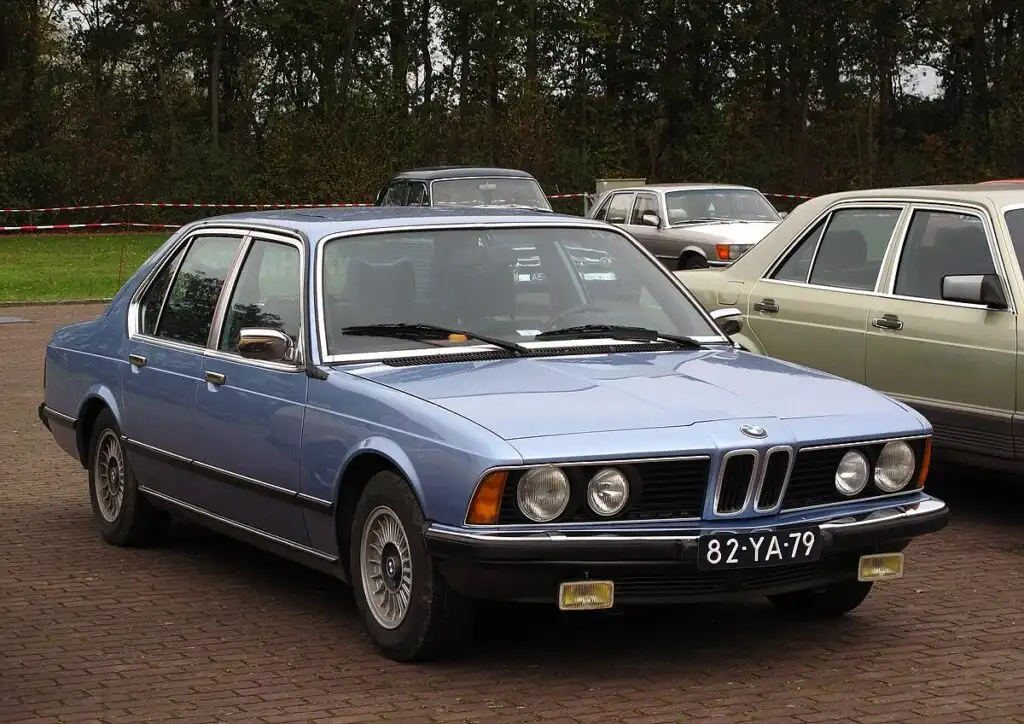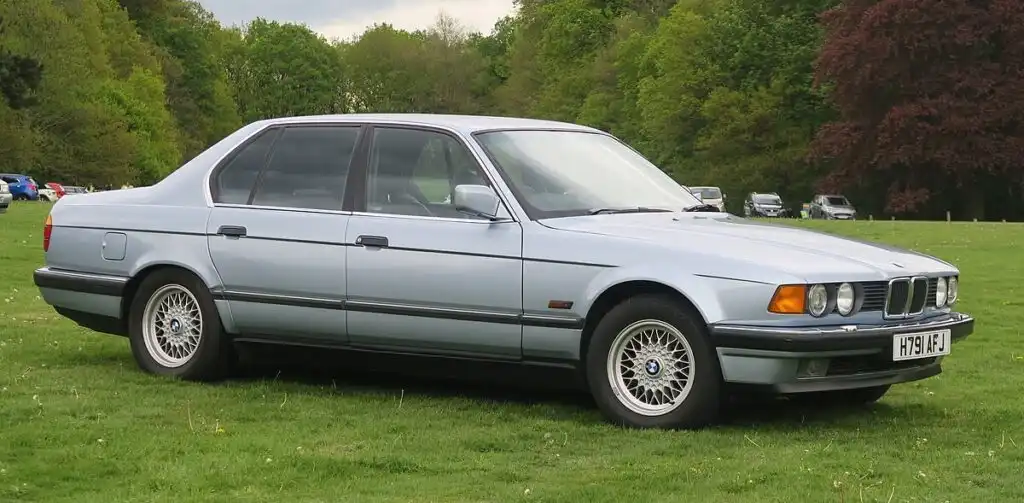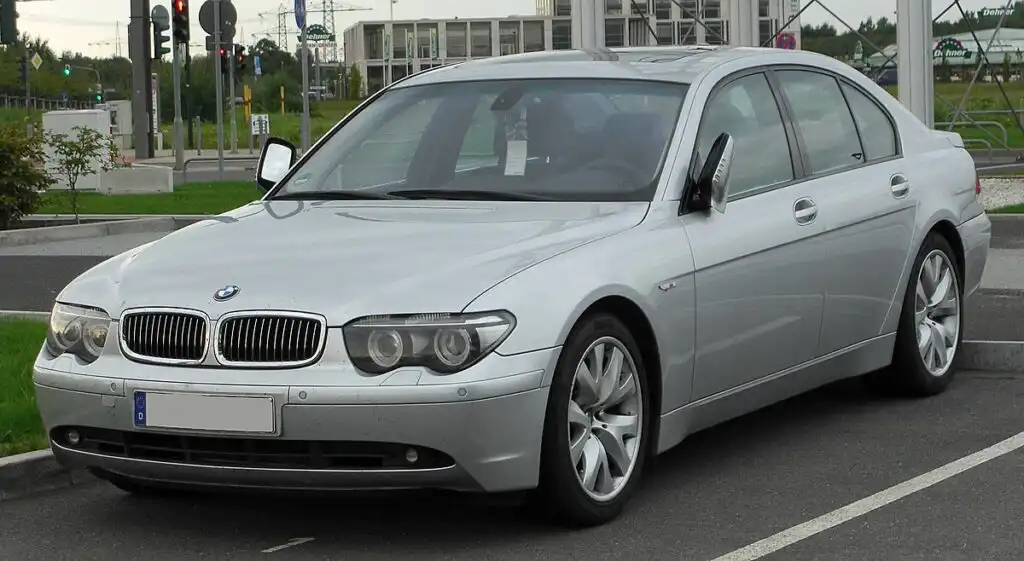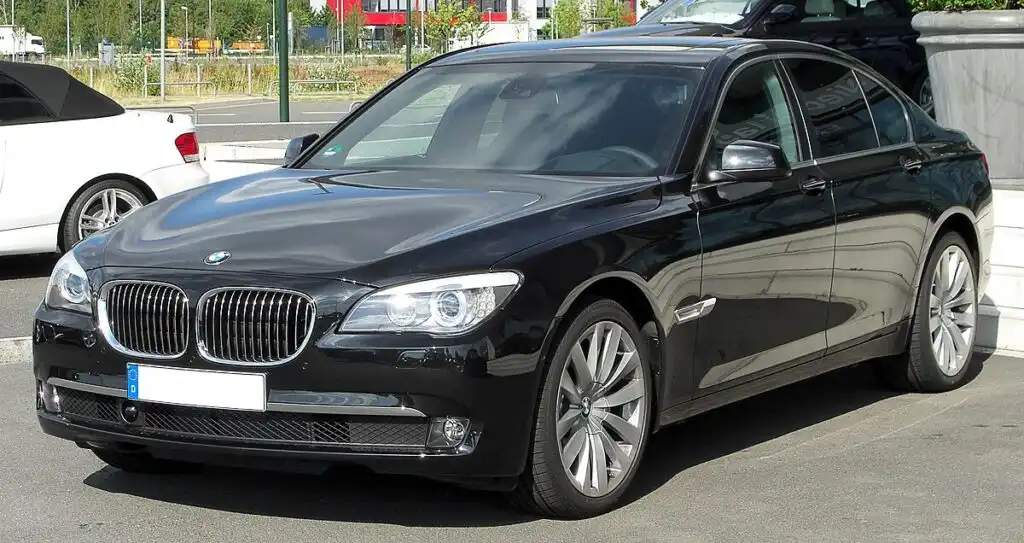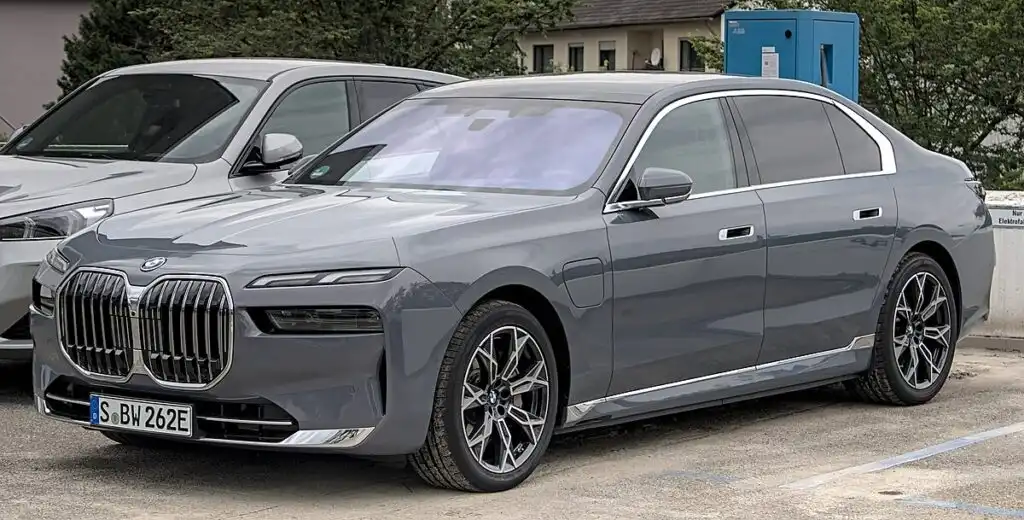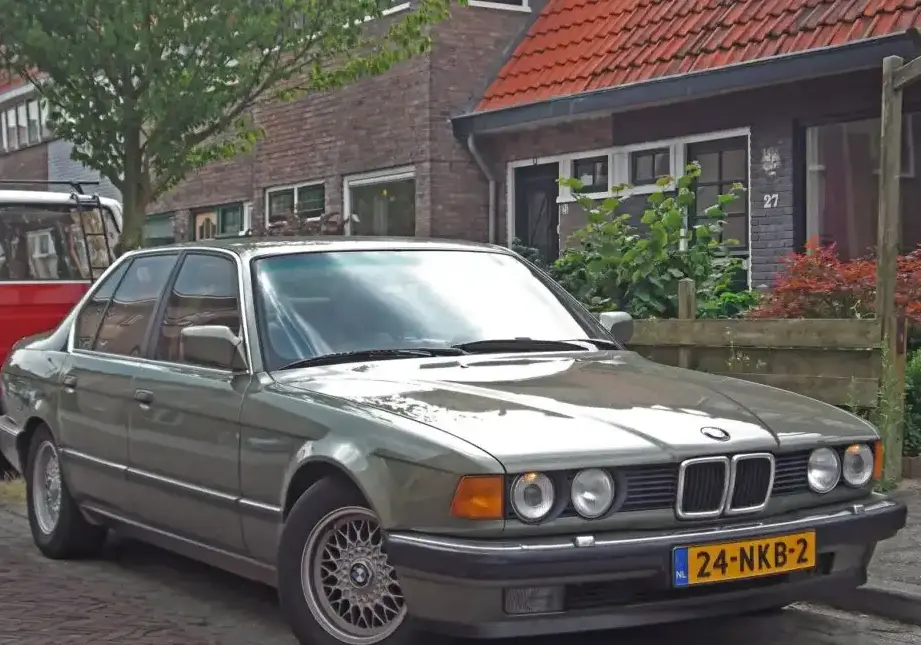
The BMW 735i, produced between 1986 and 1992, was a pivotal model within the E32 generation of the 7 Series. Representing a significant step forward in BMW’s flagship sedan, the 735i aimed to blend luxury, performance, and advanced technology. It served as a mid-range offering in the E32 lineup, positioned above the base 730i and below the high-performance 750iL. The E32 generation as a whole was notable for being the first 7 Series to offer a fully electronic engine management system and a host of other innovations that would become hallmarks of the modern luxury sedan.
Technical Specifications
| Brand | BMW |
| Model | 7 Series |
| Generation | 7 Series (E32) |
| Type (Engine) | 735i (220 Hp) |
| Start of production | 1986 |
| End of production | 1992 |
| Powertrain Architecture | Internal Combustion engine |
| Body type | Sedan |
| Seats | 5 |
| Doors | 4 |
| Fuel consumption (urban) | 15.9 l/100 km (14.8 US mpg, 17.8 UK mpg, 6.3 km/l) |
| Fuel consumption (extra urban) | 7.7 l/100 km (30.5 US mpg, 36.7 UK mpg, 13 km/l) |
| Fuel consumption (combined) | 11.1 l/100 km (21.2 US mpg, 25.4 UK mpg, 9 km/l) |
| Fuel Type | Petrol (Gasoline) |
| Acceleration 0 – 100 km/h | 7.9 sec |
| Acceleration 0 – 62 mph | 7.9 sec |
| Acceleration 0 – 60 mph | 7.5 sec |
| Maximum speed | 233 km/h (144.78 mph) |
| Weight-to-power ratio | 7.3 kg/Hp, 137.5 Hp/tonne |
| Weight-to-torque ratio | 5.1 kg/Nm, 196.9 Nm/tonne |
| Power | 220 Hp @ 5700 rpm |
| Power per litre | 64.1 Hp/l |
| Torque | 315 Nm @ 4000 rpm (232.33 lb.-ft. @ 4000 rpm) |
| Engine layout | Front, Longitudinal |
| Engine Model/Code | M30B35 |
| Engine displacement | 3430 cm3 (209.31 cu. in.) |
| Number of cylinders | 6 |
| Engine configuration | Inline |
| Cylinder Bore | 92 mm (3.62 in.) |
| Piston Stroke | 86 mm (3.39 in.) |
| Compression ratio | 9.2:1 |
| Number of valves per cylinder | 2 |
| Fuel injection system | Multi-port manifold injection |
| Engine aspiration | Naturally aspirated engine |
| Engine oil capacity | 5.75 l (6.08 US qt | 5.06 UK qt) |
| Coolant | 12 l (12.68 US qt | 10.56 UK qt) |
| Kerb Weight | 1600 kg (3527.4 lbs.) |
| Max. weight | 2150 kg (4739.94 lbs.) |
| Max load | 550 kg (1212.54 lbs.) |
| Trunk (boot) space – minimum | 500 l (17.66 cu. ft.) |
| Fuel tank capacity | 90 l (23.78 US gal | 19.8 UK gal) |
| Length | 4910 mm (193.31 in.) |
| Width | 1845 mm (72.64 in.) |
| Height | 1411 mm (55.55 in.) |
| Wheelbase | 2832 mm (111.5 in.) |
| Front track | 1527 mm (60.12 in.) |
| Rear (Back) track | 1550 mm (61.02 in.) |
| Drag coefficient (Cd) | 0.32 |
| Minimum turning circle (turning diameter) | 11.6 m (38.06 ft.) |
| Drivetrain Architecture | Rear wheel drive |
| Drive wheel | Rear wheel drive |
| Number of gears and type of gearbox | 5 gears, manual transmission |
| Front suspension | Coil spring |
| Rear suspension | Coil spring |
| Front brakes | Ventilated discs |
| Rear brakes | Disc |
| Assisting systems | ABS (Anti-lock braking system) |
| Steering type | Steering rack and pinion |
| Power steering | Hydraulic Steering |
| Tires size | 225/60 R15 |
| Wheel rims size | 15 |
Powertrain & Engine Architecture
The heart of the 735i was the M30B35 engine, a 3.5-liter inline-six cylinder powerplant. This engine was a further evolution of BMW’s long-running M30 family, known for its smoothness and durability. The B35 variant featured Bosch Motronic fuel injection, a significant upgrade over earlier carbureted or CIS-injected M30s. This electronic fuel injection system, combined with a revised cylinder head and improved intake manifold, allowed for increased power output and improved fuel efficiency. The engine produced 220 horsepower at 5700 rpm and 315 Nm (232 lb-ft) of torque at 4000 rpm. The 735i was typically equipped with a 5-speed manual transmission, though a 4-speed automatic transmission was also available. The automatic, while offering convenience, did slightly diminish acceleration performance.
Driving Characteristics
The 735i offered a refined and capable driving experience. The inline-six engine delivered smooth, linear power, making it well-suited for both city driving and highway cruising. The manual transmission provided precise gear changes and allowed drivers to fully exploit the engine’s power. The automatic transmission, while less engaging, offered a comfortable and effortless driving experience. Compared to the 730i, the 735i offered noticeably more power and acceleration. However, it didn’t possess the outright performance of the range-topping 750iL, which featured a V12 engine. The E32 chassis provided a comfortable ride, absorbing bumps and imperfections in the road effectively. Steering was precise and well-weighted, providing good feedback to the driver.
Equipment & Trim Levels
The 735i came standard with a generous array of features, befitting its status as a luxury sedan. Standard equipment included leather upholstery, power-adjustable front seats, air conditioning, a sunroof, and an advanced sound system. Optional extras included heated seats, a rear sunshade, and a telephone system. The interior design was characterized by its understated elegance and high-quality materials. The dashboard layout was clean and functional, with all controls within easy reach of the driver. Trim levels were relatively simple, with most customization options revolving around interior color schemes and optional equipment packages.
Chassis & Braking
The E32 7 Series featured an independent suspension on all four wheels, utilizing coil springs and shock absorbers. The front suspension employed MacPherson struts, while the rear suspension utilized a semi-trailing arm design. This suspension setup provided a comfortable ride and good handling characteristics. The 735i was equipped with ventilated disc brakes on all four wheels, providing ample stopping power. An Anti-lock Braking System (ABS) was standard, enhancing safety and stability during hard braking. The steering system was a rack-and-pinion setup with hydraulic power assistance, offering precise and responsive steering feel.
Market Reception & Comparison
The 735i was generally well-received by automotive critics. It was praised for its smooth engine, comfortable ride, and luxurious interior. However, some critics noted that the E32 was relatively expensive compared to its competitors. Compared to the 730i, the 735i offered a significant performance upgrade, making it the preferred choice for drivers who prioritized power and acceleration. Fuel economy was reasonable for a vehicle of its size and performance, averaging around 21.2 US mpg in combined driving. Reliability was generally good, although the complex electronic systems of the E32 could occasionally require attention.
Legacy
The BMW E32 735i remains a sought-after classic car today. Its combination of luxury, performance, and advanced technology has earned it a loyal following among BMW enthusiasts. The M30B35 engine is known for its durability and is considered one of the best inline-six engines ever produced by BMW. Well-maintained examples of the 735i are becoming increasingly rare and valuable. While the electronic systems can require occasional maintenance, the E32 735i offers a unique and rewarding driving experience that continues to appeal to enthusiasts today. The car represents a high point in BMW’s engineering and design, and it remains a testament to the brand’s commitment to building exceptional automobiles.