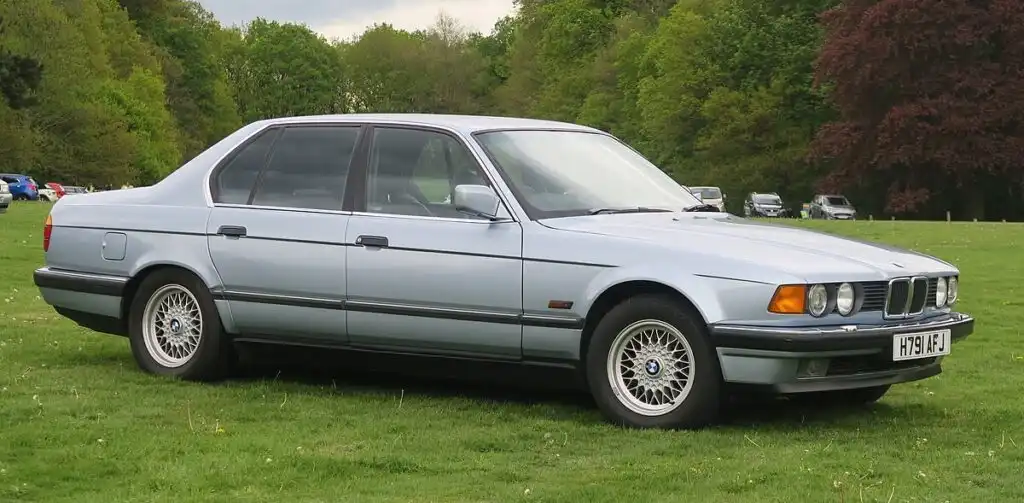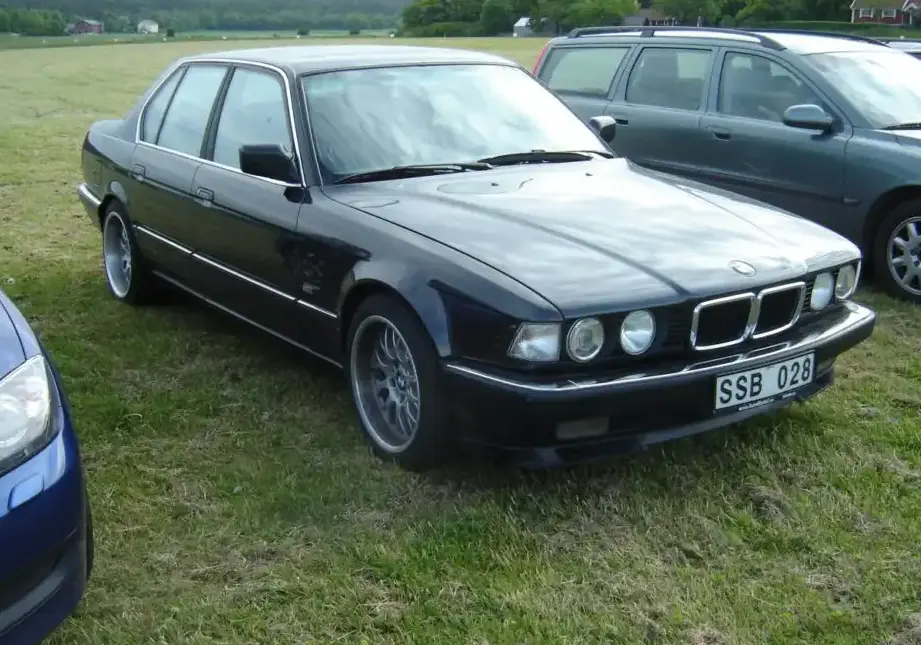
The BMW 730i, produced between 1992 and 1994, was a key variant within the E32 generation of the 7 Series luxury sedan. Representing the entry point into the E32 range for many buyers, the 730i offered a blend of BMW’s renowned engineering and a more accessible price point compared to the flagship 750iL. This facelifted version of the E32, introduced in 1992, featured subtle styling revisions and improvements to the interior, solidifying its position as a sophisticated and technologically advanced vehicle for its time. The 730i was primarily marketed towards buyers seeking a luxurious and comfortable driving experience, prioritizing refinement over outright performance, though it still delivered a distinctly BMW driving feel.
Technical Specifications
| Brand | BMW |
| Model | 7 Series |
| Generation | 7 Series (E32, facelift 1992) |
| Type (Engine) | 730i (188 Hp) cat |
| Start of production | 1992 |
| End of production | 1994 |
| Powertrain Architecture | Internal Combustion engine |
| Body type | Sedan |
| Seats | 5 |
| Doors | 4 |
| Fuel consumption (urban) | 16.3 l/100 km (14.4 US mpg, 17.3 UK mpg, 6.1 km/l) |
| Fuel consumption (extra urban) | 7.6 l/100 km (30.9 US mpg, 37.2 UK mpg, 13.2 km/l) |
| Fuel consumption (combined) | 11.1 l/100 km (21.2 US mpg, 25.4 UK mpg, 9 km/l) |
| Fuel Type | Petrol (Gasoline) |
| Acceleration 0 – 100 km/h | 9.4 sec |
| Acceleration 0 – 62 mph | 9.4 sec |
| Acceleration 0 – 60 mph | 8.9 sec |
| Maximum speed | 220 km/h (136.7 mph) |
| Weight-to-power ratio | 8.5 kg/Hp, 117.5 Hp/tonne |
| Weight-to-torque ratio | 6.2 kg/Nm, 162.5 Nm/tonne |
| Power | 188 Hp @ 5800 rpm |
| Power per litre | 63 Hp/l |
| Torque | 260 Nm @ 4000 rpm (191.77 lb.-ft. @ 4000 rpm) |
| Engine layout | Front, Longitudinal |
| Engine Model/Code | M30B30 |
| Engine displacement | 2986 cm3 (182.22 cu. in.) |
| Number of cylinders | 6 |
| Engine configuration | Inline |
| Cylinder Bore | 89 mm (3.5 in.) |
| Piston Stroke | 80 mm (3.15 in.) |
| Compression ratio | 9:1 |
| Number of valves per cylinder | 2 |
| Fuel injection system | Multi-port manifold injection |
| Engine aspiration | Naturally aspirated engine |
| Engine oil capacity | 5.75 l (6.08 US qt, 5.06 UK qt) |
| Coolant | 12 l (12.68 US qt, 10.56 UK qt) |
| Kerb Weight | 1600 kg (3527.4 lbs.) |
| Max. weight | 2130 kg (4695.85 lbs.) |
| Max load | 530 kg (1168.45 lbs.) |
| Trunk (boot) space – minimum | 500 l (17.66 cu. ft.) |
| Fuel tank capacity | 90 l (23.78 US gal, 19.8 UK gal) |
| Length | 4910 mm (193.31 in.) |
| Width | 1845 mm (72.64 in.) |
| Height | 1411 mm (55.55 in.) |
| Wheelbase | 2832 mm (111.5 in.) |
| Front track | 1527 mm (60.12 in.) |
| Rear (Back) track | 1550 mm (61.02 in.) |
| Drag coefficient (Cd) | 0.32 |
| Minimum turning circle | 11.6 m (38.06 ft.) |
| Drivetrain Architecture | Rear wheel drive |
| Drive wheel | Rear wheel drive |
| Number of gears and type of gearbox | 5 gears, manual transmission |
| Front suspension | Coil spring |
| Rear suspension | Coil spring |
| Front brakes | Ventilated discs |
| Rear brakes | Disc |
| Assisting systems | ABS (Anti-lock braking system) |
| Steering type | Steering rack and pinion |
| Power steering | Hydraulic Steering |
| Tires size | 205/65 VR 15 |
| Wheel rims size | 15 |
INTRODUCTION
The 730i, introduced with the 1992 facelift of the E32 7 Series, represented a strategic move by BMW to broaden the appeal of its flagship sedan. While the 750iL catered to those desiring ultimate performance and luxury, the 730i offered a more balanced proposition, appealing to buyers who prioritized comfort, refinement, and a prestigious badge without the significantly higher price tag. The E32 platform, known for its robust construction and advanced technology for its era, provided a solid foundation for the 730i. It was positioned as a sophisticated executive car, competing with models like the Mercedes-Benz S-Class and the Audi A8.
Powertrain & Engine Architecture
At the heart of the 730i lay the M30B30, a 3.0-liter inline-six engine. This engine was a descendant of BMW’s long-running M30 family, known for its smoothness and durability. The B30 variant featured multi-port fuel injection, enhancing efficiency and responsiveness. The engine produced 188 horsepower at 5800 rpm and 260 Nm (191.77 lb-ft) of torque at 4000 rpm. The 730i was typically paired with a 5-speed manual transmission, though a 4-speed automatic transmission was also available, and was a popular choice for buyers prioritizing ease of use. The automatic transmission, while providing smooth shifts, did slightly impact acceleration compared to the manual version. The engine’s inline-six configuration contributed to its inherently smooth operation and balanced power delivery.
Driving Characteristics
The 730i, particularly with the manual transmission, offered a surprisingly engaging driving experience for a large luxury sedan. While not as overtly sporty as some of its rivals, it provided ample power for comfortable highway cruising and confident overtaking. The automatic transmission, while smooth, resulted in a slightly more relaxed driving experience, with a focus on comfort rather than outright performance. The 0-60 mph time of around 8.9 seconds was respectable for the early 1990s, but noticeably slower than the 750iL. The suspension, tuned for comfort, absorbed bumps and imperfections in the road effectively, providing a refined ride quality. Steering was precise and well-weighted, typical of BMW’s engineering philosophy.
Equipment & Trim Levels
The 730i came standard with a comprehensive list of features, befitting its luxury sedan status. These included power-adjustable front seats, leather upholstery, climate control, power windows and locks, and an AM/FM stereo. Optional extras included a sunroof, upgraded sound system, rear climate control, and a telephone system. Interior trim options allowed buyers to personalize their vehicles, with choices ranging from wood veneers to aluminum accents. The overall interior design emphasized elegance and functionality, with a focus on creating a comfortable and inviting cabin.
Chassis & Braking
The E32 7 Series featured a robust chassis with independent suspension at all four wheels. The front suspension utilized coil springs and MacPherson struts, while the rear employed a semi-trailing arm setup with coil springs. This configuration provided a good balance of ride comfort and handling. Braking duties were handled by ventilated discs at the front and solid discs at the rear, with ABS (Anti-lock Braking System) as standard equipment. The ABS system enhanced safety by preventing wheel lockup during hard braking. The 730i’s weight distribution was well-balanced, contributing to its stable and predictable handling characteristics.
Market Reception & Comparison
The 730i was generally well-received by automotive critics, who praised its comfortable ride, refined interior, and balanced performance. It was often seen as a more sensible alternative to the more expensive 750iL, offering a similar level of luxury and technology at a lower price point. Compared to the 750iL, the 730i offered less outright power and acceleration, but it also consumed less fuel and was generally less expensive to maintain. Against competitors like the Mercedes-Benz S-Class, the 730i was often lauded for its more engaging driving dynamics and sportier character.
Legacy
The E32 730i has developed a loyal following among BMW enthusiasts. The M30B30 engine is known for its reliability and longevity, and well-maintained examples can still provide years of trouble-free service. However, like any classic car, the 730i requires regular maintenance and attention to detail. Parts availability can be a challenge, but a thriving aftermarket supports the E32 platform. Today, the 730i represents a piece of automotive history, embodying BMW’s commitment to engineering excellence and luxurious driving experiences. Its blend of comfort, refinement, and understated performance continues to appeal to collectors and enthusiasts alike, making it a desirable classic in the used car market.