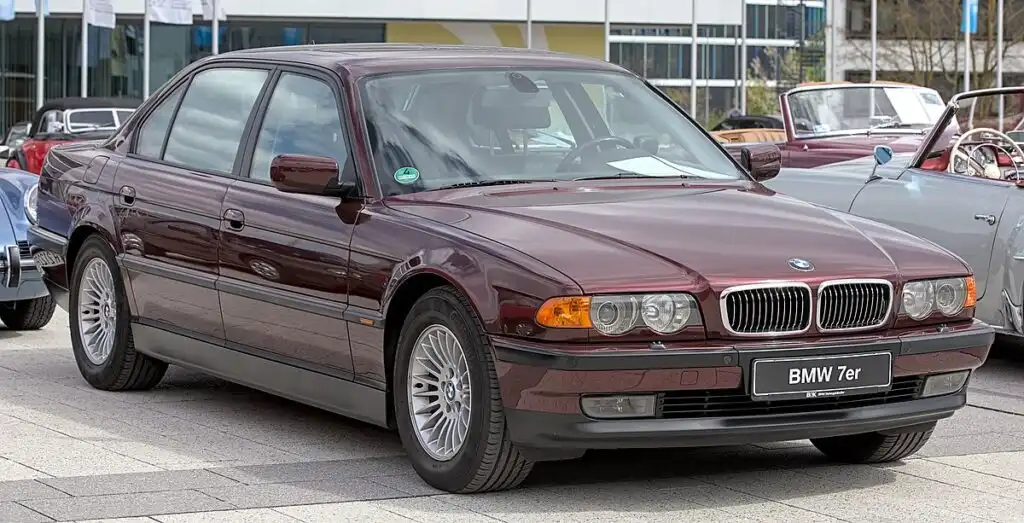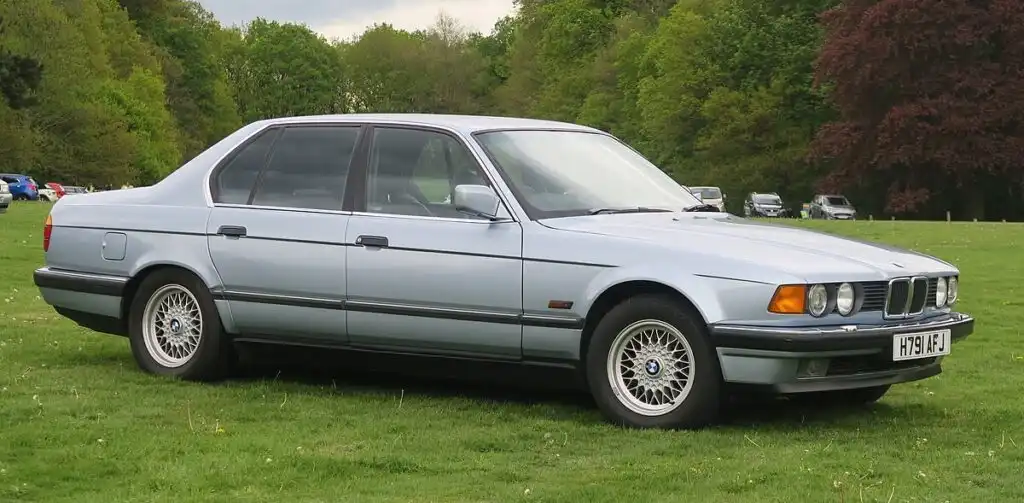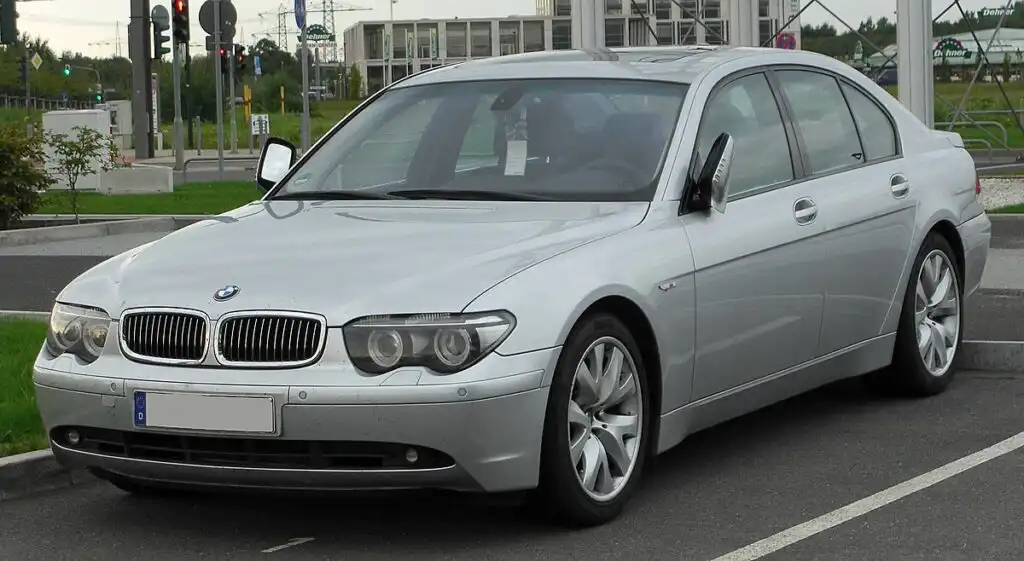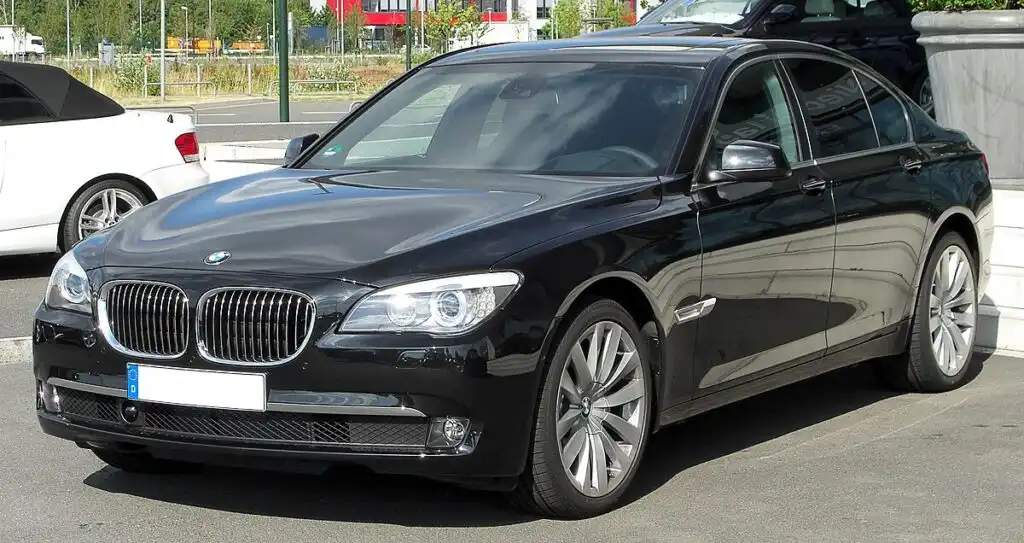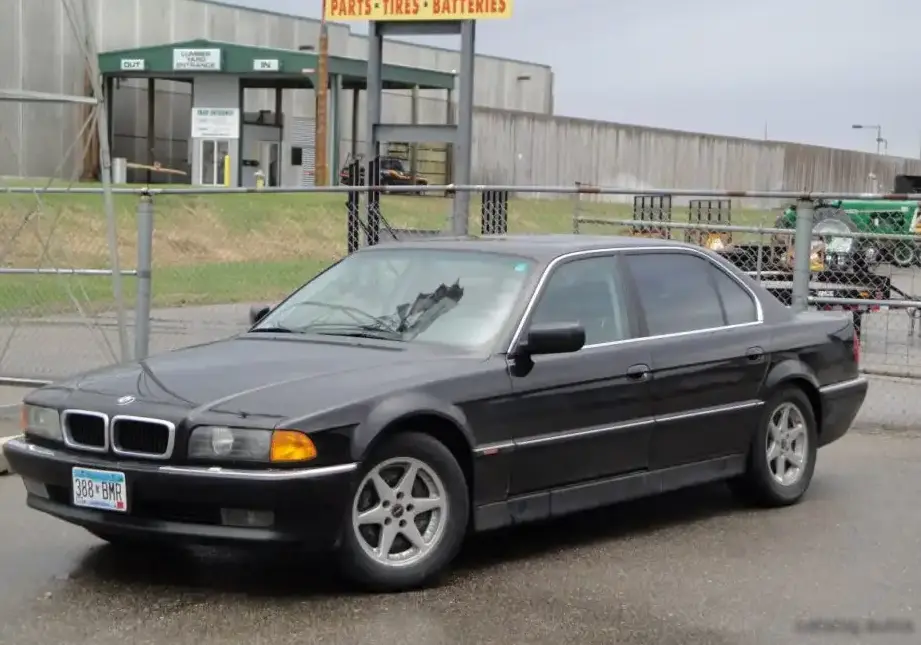
The BMW 725tds, produced between 1996 and 1998, was a diesel-powered variant of the E38 generation 7 Series luxury sedan. Positioned as a more fuel-efficient alternative within the 7 Series lineup, it aimed to offer a balance between the prestige of the flagship model and the practicality of a diesel engine, particularly appealing to European buyers where diesel fuel was more prevalent and favorably taxed. This model utilized BMW’s M51D25 engine paired with a 5-speed Steptronic automatic transmission, offering a unique driving experience compared to the gasoline-powered 7 Series models.
Technical Specifications
| Brand | BMW |
| Model | 7 Series |
| Generation | 7 Series (E38) |
| Type (Engine) | 725tds (143 Hp) Steptronic |
| Start of production | 1996 |
| End of production | 1998 |
| Powertrain Architecture | Internal Combustion engine |
| Body type | Sedan |
| Seats | 5 |
| Doors | 4 |
| Fuel consumption (urban) | 12.5 l/100 km (18.8 US mpg, 22.6 UK mpg, 8 km/l) |
| Fuel consumption (extra urban) | 6.9 l/100 km (34.1 US mpg, 40.9 UK mpg, 14.5 km/l) |
| Fuel consumption (combined) | 9 l/100 km (26.1 US mpg, 31.4 UK mpg, 11.1 km/l) |
| Fuel Type | Diesel |
| Acceleration 0 – 100 km/h | 12.2 sec |
| Acceleration 0 – 62 mph | 12.2 sec |
| Acceleration 0 – 60 mph | 11.6 sec |
| Maximum speed | 202 km/h (125.52 mph) |
| Weight-to-power ratio | 12.1 kg/Hp, 82.7 Hp/tonne |
| Weight-to-torque ratio | 6.2 kg/Nm, 161.8 Nm/tonne |
| Power | 143 Hp @ 4600 rpm |
| Power per litre | 57.3 Hp/l |
| Torque | 280 Nm @ 2200 rpm (206.52 lb.-ft. @ 2200 rpm) |
| Engine layout | Front, Longitudinal |
| Engine Model/Code | M51D25 |
| Engine displacement | 2497 cm3 (152.38 cu. in.) |
| Number of cylinders | 6 |
| Engine configuration | Inline |
| Cylinder Bore | 80 mm (3.15 in.) |
| Piston Stroke | 82.8 mm (3.26 in.) |
| Compression ratio | 22:1 |
| Number of valves per cylinder | 2 |
| Fuel injection system | Precombustion chamber injection |
| Engine aspiration | Turbocharger, Intercooler |
| Valvetrain | OHC |
| Engine oil capacity | 7 l (7.4 US qt | 6.16 UK qt) |
| Coolant capacity | 9.8 l (10.36 US qt | 8.62 UK qt) |
| Kerb Weight | 1730 kg (3814 lbs.) |
| Max. weight | 2265 kg (4993.47 lbs.) |
| Max load | 535 kg (1179.47 lbs.) |
| Trunk (boot) space – minimum | 500 l (17.66 cu. ft.) |
| Fuel tank capacity | 85 l (22.45 US gal | 18.7 UK gal) |
| Length | 4984 mm (196.22 in.) |
| Width | 1862 mm (73.31 in.) |
| Height | 1435 mm (56.5 in.) |
| Wheelbase | 2930 mm (115.35 in.) |
| Front track | 1552 mm (61.1 in.) |
| Rear (Back) track | 1568 mm (61.73 in.) |
| Drag coefficient (Cd) | 0.30 |
| Minimum turning circle | 11.6 m (38.06 ft.) |
| Drivetrain Architecture | Rear wheel drive |
| Number of gears and type of gearbox | 5 gears, automatic transmission Steptronic |
| Front suspension | Coil spring |
| Rear suspension | Inclined Lever |
| Front brakes | Ventilated discs |
| Rear brakes | Disc |
| Assisting systems | ABS (Anti-lock braking system) |
| Steering type | Steering rack and pinion |
| Power steering | Hydraulic Steering |
| Tires size | 215/60 R16 |
| Wheel rims size | 16 |
Powertrain & Engine Architecture
The heart of the 725tds is the BMW M51D25, a 2.5-liter inline-six diesel engine. This engine utilized a precombustion chamber injection system, a common technology for diesel engines of the era, designed to improve combustion efficiency and reduce noise. A turbocharger with an intercooler was employed to boost power output, bringing it to 143 horsepower and 280 Nm (206.52 lb-ft) of torque. The engine’s longitudinal mounting and rear-wheel-drive configuration were standard for BMW sedans at the time. The 5-speed Steptronic automatic transmission offered a degree of driver control with manual shift capabilities, though it wasn’t as responsive as a traditional manual gearbox. This transmission was designed to provide smooth gear changes and enhance the overall driving comfort expected of a luxury sedan.
Driving Characteristics
The 725tds offered a distinctly different driving experience compared to its gasoline-powered siblings. While lacking the outright acceleration of the 730i or 740i, the diesel engine provided ample torque from low engine speeds, making it well-suited for relaxed cruising and effortless overtaking. The Steptronic transmission, while smooth, could feel somewhat hesitant during quick downshifts. The gear ratios were optimized for fuel efficiency and comfortable highway driving rather than sporty performance. Compared to the manual transmission options available on other 7 Series models, the 725tds automatic prioritized ease of use over driver engagement.
Equipment & Trim Levels
The 725tds typically came equipped with a generous array of standard features befitting a luxury sedan. These included leather upholstery, power-adjustable front seats with memory function, automatic climate control, a premium sound system, and wood trim accents. Optional extras included a sunroof, upgraded sound systems, rear seat entertainment, and various driver assistance systems. The trim level was generally consistent across the 725tds models, with customization options primarily revolving around interior color schemes and optional equipment packages.
Chassis & Braking
The E38 7 Series featured a robust chassis with independent suspension all around. The 725tds utilized coil springs in the front and an inclined lever rear suspension. Braking duties were handled by ventilated discs at the front and solid discs at the rear, equipped with an Anti-lock Braking System (ABS) as standard. The suspension was tuned for a comfortable ride, prioritizing smoothness over sporty handling. Stabilizer bars were fitted to both the front and rear axles to reduce body roll during cornering.
Market Reception & Comparison
The 725tds was primarily aimed at the European market, where diesel engines were highly regarded for their fuel efficiency and lower running costs. Critics generally praised the car’s comfortable ride, spacious interior, and fuel economy. However, some reviewers noted the engine’s relative lack of refinement compared to gasoline engines and the somewhat sluggish performance of the Steptronic transmission. Compared to the 730i, the 725tds offered significantly better fuel economy but less power and acceleration. Against other diesel-powered luxury sedans of the time, such as the Mercedes-Benz S320 CDI, the 725tds offered a compelling combination of performance, comfort, and prestige.
Legacy
The M51D25 engine proved to be a durable and reliable powerplant, and many 725tds models remain on the road today. While not as sought-after as the higher-performance 7 Series variants, the 725tds represents a unique and interesting chapter in BMW’s history. Its combination of luxury, fuel efficiency, and diesel power appealed to a specific segment of the market, and it remains a relatively affordable entry point into E38 7 Series ownership. The Steptronic transmission, while not without its quirks, has also proven to be reasonably reliable with proper maintenance. In the used car market, the 725tds is often valued for its practicality and lower running costs compared to its gasoline-powered counterparts.