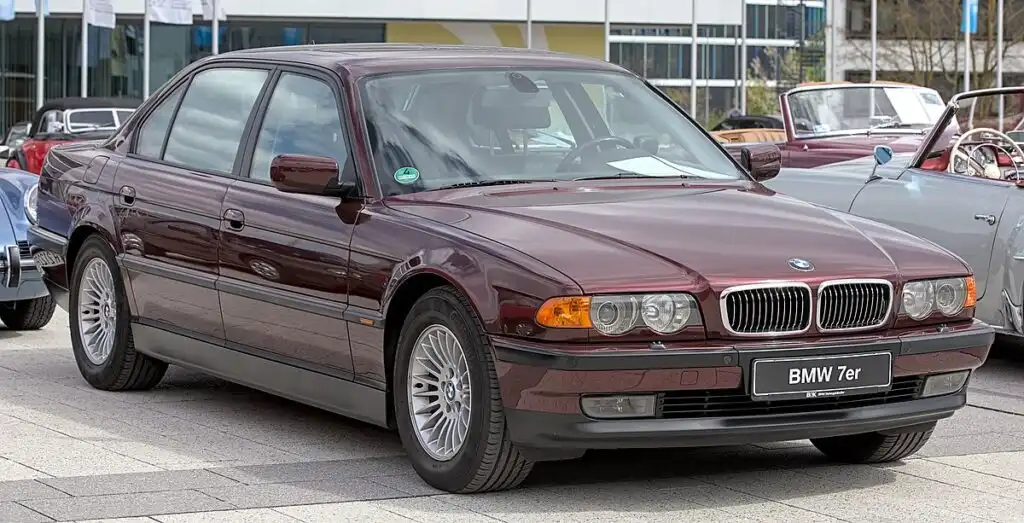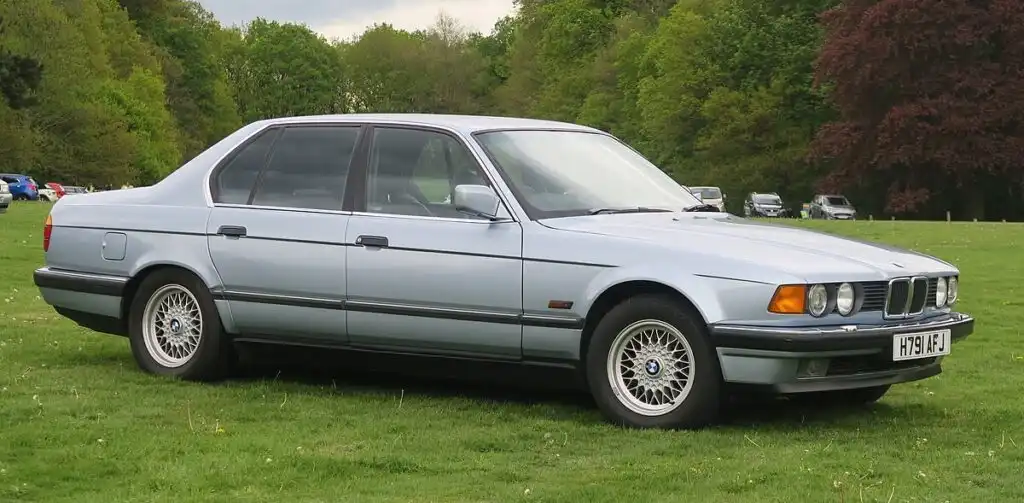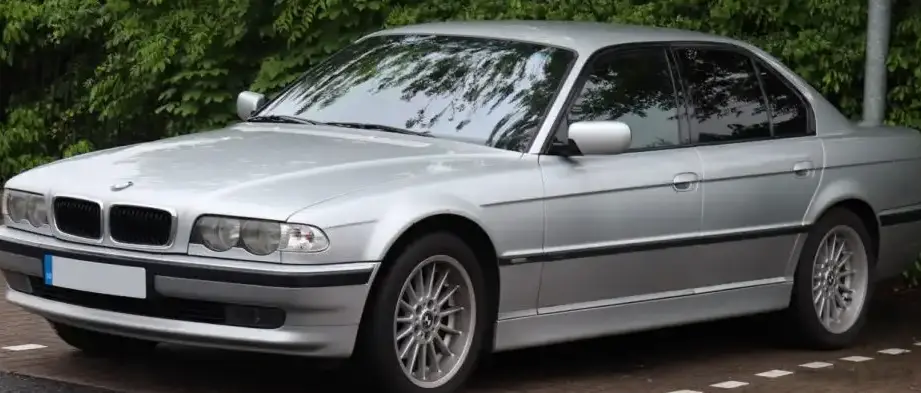
The BMW 725tds, produced from 1998 to 2000, was a diesel-powered variant of the E38 generation 7 Series luxury sedan. Introduced as part of the facelifted E38 range, it aimed to offer a more fuel-efficient alternative to the gasoline-powered models, particularly in European markets where diesel engines were increasingly popular. This model occupied a mid-range position within the 7 Series lineup, offering a balance between performance, luxury, and economy. It represented BMW’s commitment to diesel technology and its attempt to cater to a broader customer base seeking a refined yet economical large sedan.
Technical Specifications
| Brand | BMW |
| Model | 7 Series |
| Generation | 7 Series (E38, facelift 1998) |
| Type (Engine) | 725tds (143 Hp) |
| Start of production | 1998 |
| End of production | 2000 |
| Powertrain Architecture | Internal Combustion engine |
| Body type | Sedan |
| Seats | 5 |
| Doors | 4 |
| Fuel consumption (urban) | 11 l/100 km (21.4 US mpg, 25.7 UK mpg, 9.1 km/l) |
| Fuel consumption (extra urban) | 6.2 l/100 km (37.9 US mpg, 45.6 UK mpg, 16.1 km/l) |
| Fuel consumption (combined) | 8 l/100 km (29.4 US mpg, 35.3 UK mpg, 12.5 km/l) |
| Fuel Type | Diesel |
| Acceleration 0 – 100 km/h | 11.4 sec |
| Acceleration 0 – 62 mph | 11.4 sec |
| Acceleration 0 – 60 mph | 10.8 sec |
| Maximum speed | 206 km/h (128 mph) |
| Weight-to-power ratio | 12 kg/Hp, 83.6 Hp/tonne |
| Weight-to-torque ratio | 6.1 kg/Nm, 163.7 Nm/tonne |
| Power | 143 Hp @ 4600 rpm |
| Power per litre | 57.3 Hp/l |
| Torque | 280 Nm @ 2200 rpm (206.52 lb.-ft. @ 2200 rpm) |
| Engine layout | Front, Longitudinal |
| Engine Model/Code | M51D25 |
| Engine displacement | 2497 cm3 (152.38 cu. in.) |
| Number of cylinders | 6 |
| Engine configuration | Inline |
| Cylinder Bore | 80 mm (3.15 in.) |
| Piston Stroke | 82.8 mm (3.26 in.) |
| Compression ratio | 22:1 |
| Number of valves per cylinder | 2 |
| Fuel injection system | Precombustion chamber injection |
| Engine aspiration | Turbocharger, Intercooler |
| Valvetrain | SOHC |
| Engine oil capacity | 7 l (7.4 US qt | 6.16 UK qt) |
| Coolant | 9.8 l (10.36 US qt | 8.62 UK qt) |
| Kerb Weight | 1710 kg (3769.9 lbs.) |
| Max. weight | 2245 kg (4949.38 lbs.) |
| Max load | 535 kg (1179.47 lbs.) |
| Trunk (boot) space – minimum | 500 l (17.66 cu. ft.) |
| Fuel tank capacity | 85 l (22.45 US gal | 18.7 UK gal) |
| Length | 4984 mm (196.22 in.) |
| Width | 1862 mm (73.31 in.) |
| Height | 1435 mm (56.5 in.) |
| Wheelbase | 2930 mm (115.35 in.) |
| Front track | 1552 mm (61.1 in.) |
| Rear (Back) track | 1568 mm (61.73 in.) |
| Drag coefficient (Cd) | 0.30 |
| Minimum turning circle | 11.6 m (38.06 ft.) |
| Drivetrain Architecture | Rear wheel drive |
| Drive wheel | Rear wheel drive |
| Number of gears | 5 |
| Gearbox type | Manual transmission |
| Front suspension | Wishbone |
| Rear suspension | Inclined Lever |
| Front brakes | Ventilated discs |
| Rear brakes | Disc |
| Assisting systems | ABS (Anti-lock braking system) |
| Steering type | Steering rack and pinion |
| Power steering | Hydraulic Steering |
| Tires size | 215/65 R16 |
| Wheel rims size | 16 |
Powertrain & Engine Architecture
The heart of the 725tds was the BMW M51D25, a 2.5-liter inline-six diesel engine. This engine utilized precombustion chamber injection, a system common in diesel engines of the era, to improve combustion efficiency and reduce noise. A turbocharger with an intercooler was employed to boost power output to 143 horsepower and 280 Nm (206.52 lb.-ft.) of torque. The engine featured a single overhead camshaft (SOHC) valvetrain with two valves per cylinder. The M51D25 was known for its durability and relatively smooth operation for a diesel engine of its time. The 725tds was equipped with a 5-speed manual transmission, delivering power to the rear wheels. This transmission was chosen to complement the engine’s torque characteristics and provide a more engaging driving experience.
Driving Characteristics
The 725tds offered a distinctly different driving experience compared to its gasoline-powered siblings. While it lacked the outright acceleration of the 730i or 740i, the diesel engine provided ample torque from low engine speeds, making it well-suited for relaxed cruising and effortless overtaking. The manual transmission allowed for precise control, and the gear ratios were optimized for fuel efficiency and usable power. The 0-60 mph time of around 10.8 seconds was respectable for a large luxury sedan of the late 1990s, but the focus was more on providing a comfortable and economical driving experience rather than outright performance. Compared to the automatic transmissions offered in other 7 Series models, the manual gearbox in the 725tds provided a more direct connection to the engine and a more involved driving feel.
Equipment & Trim Levels
The 725tds typically came with a generous level of standard equipment, befitting its status as a luxury sedan. This included features such as automatic climate control, power-adjustable front seats, a premium sound system, and alloy wheels. Interior upholstery was typically cloth or leatherette, with leather being an optional upgrade. Optional extras included a sunroof, navigation system, upgraded sound system, and parking sensors. The dashboard layout was consistent with other E38 7 Series models, featuring a clean and functional design with wood trim accents. The trim level was generally positioned as a step above the base models, offering a good balance of features and value.
Chassis & Braking
The 725tds shared the same chassis and suspension components as other E38 7 Series models. It featured an independent wishbone suspension at the front and an inclined lever rear suspension, providing a comfortable and controlled ride. The braking system consisted of ventilated discs at the front and solid discs at the rear, with ABS (Anti-lock Braking System) as standard. The suspension was tuned to prioritize comfort and stability, making it well-suited for long-distance driving. The steering was a rack-and-pinion system with hydraulic power assistance, providing precise and responsive handling.
Market Reception & Comparison
The 725tds was generally well-received by automotive critics, who praised its fuel efficiency, comfortable ride, and refined diesel engine. However, some critics noted that it lacked the performance of the gasoline-powered models. Compared to the 730i, the 725tds offered significantly better fuel economy but less horsepower and acceleration. Compared to the 740i, the performance difference was even more pronounced. The 725tds appealed to buyers who prioritized fuel economy and low-speed torque over outright performance. It was particularly popular in European markets where diesel fuel was cheaper and more readily available than gasoline.
Legacy
The BMW 725tds, while not the most iconic of the E38 7 Series variants, remains a respected and sought-after model among enthusiasts. The M51D25 engine is known for its durability and reliability, and well-maintained examples can still provide years of service. In the used car market, the 725tds represents a relatively affordable entry point into E38 ownership, offering a taste of BMW luxury and refinement at a reasonable price. Its fuel efficiency and robust engine make it a practical choice for those seeking a classic luxury sedan for everyday use. The 725tds stands as a testament to BMW’s early commitment to diesel technology and its ability to create a refined and enjoyable driving experience even with a diesel powertrain.