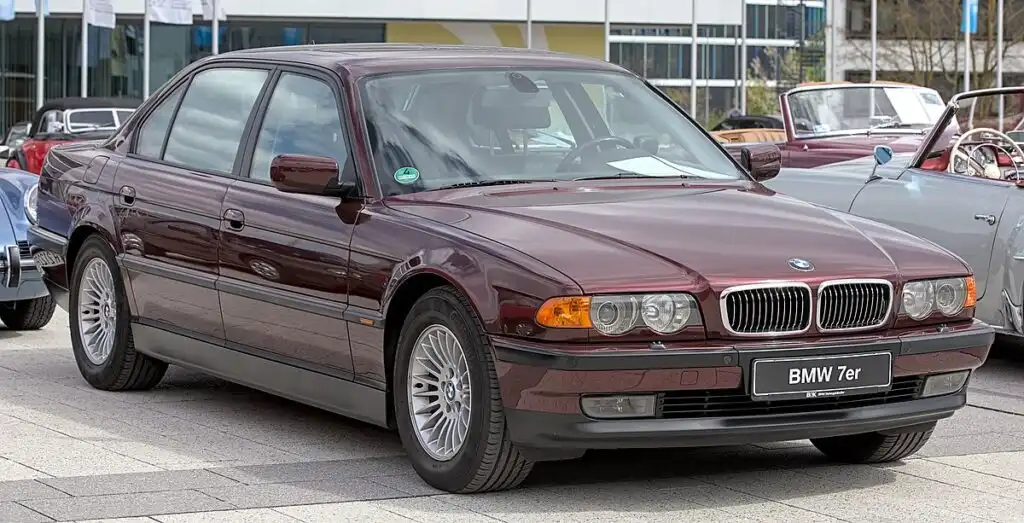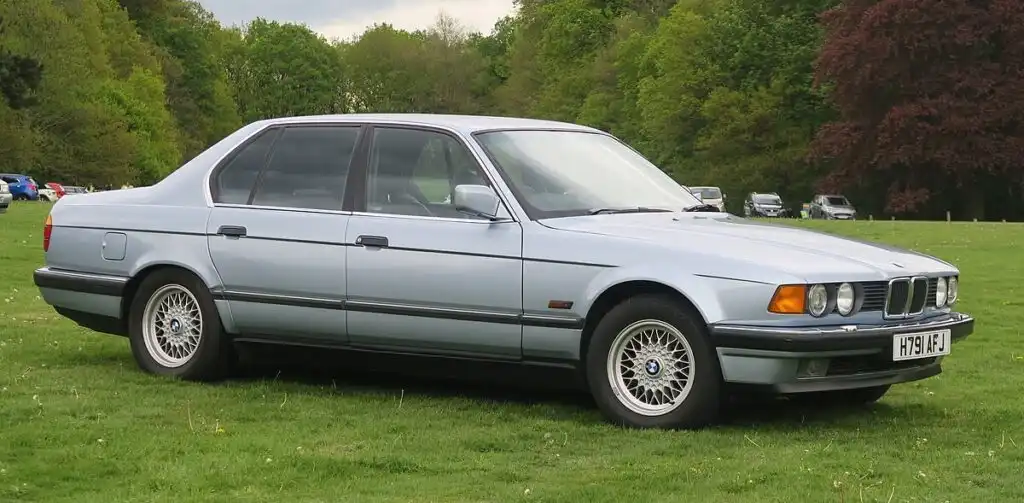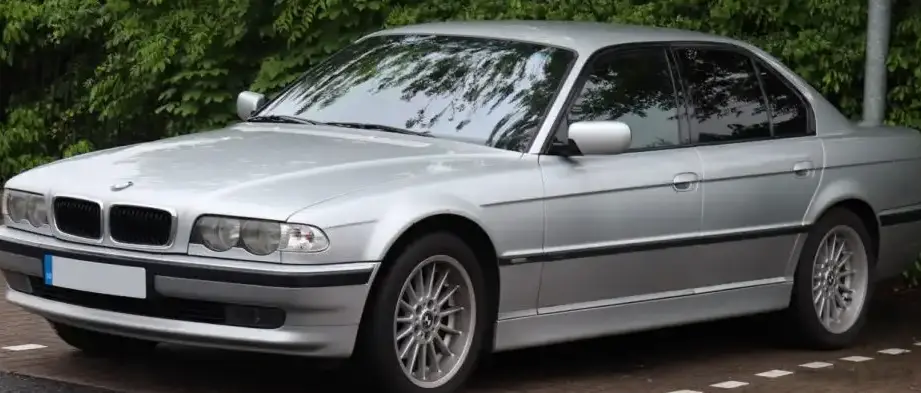
The BMW 725tds, produced from 1998 to 2000, was a variant of the E38 7 Series luxury sedan. Introduced during the facelift of the E38 generation, it represented BMW’s attempt to offer a more fuel-efficient and accessible entry point into the flagship 7 Series range, particularly in European markets where diesel engines were highly favored. This model combined a 2.5-liter inline-six diesel engine with a five-speed Steptronic automatic transmission, aiming to balance luxury, performance, and economy. It occupied a mid-range position within the E38 lineup, slotting below the more powerful petrol-powered 730i, 740i, and 750iL models.
Technical Specifications
| Brand | BMW |
| Model | 7 Series |
| Generation | 7 Series (E38, facelift 1998) |
| Type (Engine) | 725tds (143 Hp) Steptronic |
| Start of production | 1998 |
| End of production | 2000 |
| Powertrain Architecture | Internal Combustion engine |
| Body type | Sedan |
| Seats | 5 |
| Doors | 4 |
| Fuel consumption (urban) | 12.5 l/100 km (18.8 US mpg, 22.6 UK mpg, 8 km/l) |
| Fuel consumption (extra urban) | 6.9 l/100 km (34.1 US mpg, 40.9 UK mpg, 14.5 km/l) |
| Fuel consumption (combined) | 9 l/100 km (26.1 US mpg, 31.4 UK mpg, 11.1 km/l) |
| Fuel Type | Diesel |
| Acceleration 0 – 100 km/h | 12.2 sec |
| Acceleration 0 – 62 mph | 12.2 sec |
| Acceleration 0 – 60 mph | 11.6 sec |
| Maximum speed | 202 km/h (125.52 mph) |
| Weight-to-power ratio | 12.1 kg/Hp, 82.7 Hp/tonne |
| Weight-to-torque ratio | 6.2 kg/Nm, 161.8 Nm/tonne |
| Power | 143 Hp @ 4600 rpm |
| Power per litre | 57.3 Hp/l |
| Torque | 280 Nm @ 2200 rpm (206.52 lb.-ft. @ 2200 rpm) |
| Engine layout | Front, Longitudinal |
| Engine Model/Code | M51D25 |
| Engine displacement | 2497 cm3 (152.38 cu. in.) |
| Number of cylinders | 6 |
| Engine configuration | Inline |
| Cylinder Bore | 80 mm (3.15 in.) |
| Piston Stroke | 82.8 mm (3.26 in.) |
| Compression ratio | 22:1 |
| Number of valves per cylinder | 2 |
| Fuel injection system | Precombustion chamber injection |
| Engine aspiration | Turbocharger, Intercooler |
| Valvetrain | SOHC |
| Engine oil capacity | 7 l (7.4 US qt | 6.16 UK qt) |
| Coolant | 9.8 l (10.36 US qt | 8.62 UK qt) |
| Kerb Weight | 1730 kg (3814 lbs.) |
| Max. weight | 2265 kg (4993.47 lbs.) |
| Max load | 535 kg (1179.47 lbs.) |
| Trunk (boot) space – minimum | 500 l (17.66 cu. ft.) |
| Fuel tank capacity | 85 l (22.45 US gal | 18.7 UK gal) |
| Length | 4984 mm (196.22 in.) |
| Width | 1862 mm (73.31 in.) |
| Height | 1435 mm (56.5 in.) |
| Wheelbase | 2930 mm (115.35 in.) |
| Front track | 1552 mm (61.1 in.) |
| Rear (Back) track | 1568 mm (61.73 in.) |
| Drag coefficient (Cd) | 0.30 |
| Minimum turning circle | 11.6 m (38.06 ft.) |
| Drivetrain Architecture | Rear wheel drive |
| Number of gears and type of gearbox | 5 gears, automatic transmission Steptronic |
| Front suspension | Wishbone |
| Rear suspension | Inclined Lever |
| Front brakes | Ventilated discs |
| Rear brakes | Disc |
| Assisting systems | ABS (Anti-lock braking system) |
| Steering type | Steering rack and pinion |
| Power steering | Hydraulic Steering |
| Tires size | 215/65 R16 |
| Wheel rims size | 16 |
Powertrain & Engine Architecture
The heart of the 725tds was the M51D25, a 2.5-liter inline-six diesel engine. This engine utilized precombustion chamber injection, a system common in European diesels of the era, which involved injecting fuel into a small pre-chamber connected to the main combustion chamber. This design promoted more complete combustion and reduced engine noise. A turbocharger with an intercooler was employed to boost power output to 143 horsepower and 280 Nm (206.52 lb-ft) of torque. The engine featured a single overhead camshaft (SOHC) valvetrain. The five-speed Steptronic automatic transmission, a trademark of BMW, provided smooth gear changes and allowed for both automatic and manual shifting modes. This transmission was known for its reliability and responsiveness, contributing to a comfortable driving experience.
Driving Characteristics
The 725tds offered a distinctly different driving experience compared to its petrol-powered siblings. While lacking the outright acceleration of the 730i or 740i, the diesel engine delivered strong low-end torque, making it well-suited for relaxed cruising and effortless overtaking. The Steptronic transmission, while smooth, wasn’t as quick to downshift as some later iterations. The gear ratios were optimized for fuel efficiency and comfortable highway driving. Compared to the manual transmission options available on other 7 Series models, the automatic version prioritized convenience over sporty engagement. The 0-60 mph time of around 11.6 seconds was respectable for a large luxury sedan of that era, but clearly positioned it as the more economical choice.
Equipment & Trim Levels
The 725tds typically came equipped with a generous array of standard features befitting a luxury vehicle. These included leather upholstery, power-adjustable front seats with memory function, automatic climate control, a premium sound system, and wood trim. Standard safety features included ABS, traction control, and multiple airbags. Optional extras included a navigation system, upgraded sound systems, rear sunshades, and various customization options for interior trim and exterior paint. The trim level was generally consistent across the 725tds models, with options primarily focused on adding convenience and luxury features.
Chassis & Braking
The E38 7 Series featured a robust chassis with independent suspension all around. The front suspension utilized a wishbone design, while the rear employed an inclined lever setup. This configuration provided a comfortable ride and good handling characteristics. The 725tds, due to its weight, utilized ventilated disc brakes at the front and solid discs at the rear. The hydraulic power steering offered precise control and a comfortable driving experience. The ABS system ensured effective braking performance in various conditions.
Market Reception & Comparison
The 725tds was primarily aimed at the European market, where diesel engines were highly popular due to their fuel efficiency and lower running costs. Critics generally praised the car’s comfortable ride, spacious interior, and fuel economy. However, some noted that the diesel engine lacked the refinement and performance of the petrol alternatives. Compared to the 730i, the 725tds offered significantly better fuel economy but less horsepower and acceleration. Against the more powerful 740i and 750iL, the differences were even more pronounced. The 725tds represented a value-oriented option within the 7 Series range, appealing to buyers who prioritized economy and comfort over outright performance.
Legacy
The M51D25 engine proved to be a durable and reliable powerplant, and many 725tds models have remained on the road for decades. The Steptronic transmission also demonstrated good longevity. Today, the 725tds is considered a relatively affordable entry point into E38 7 Series ownership. While not as sought-after as the higher-performance petrol models, it offers a comfortable and luxurious driving experience at a lower price point. Maintenance costs are generally reasonable, although sourcing specific parts can sometimes be challenging. The 725tds stands as a testament to BMW’s ability to blend luxury, efficiency, and durability in a large executive sedan.