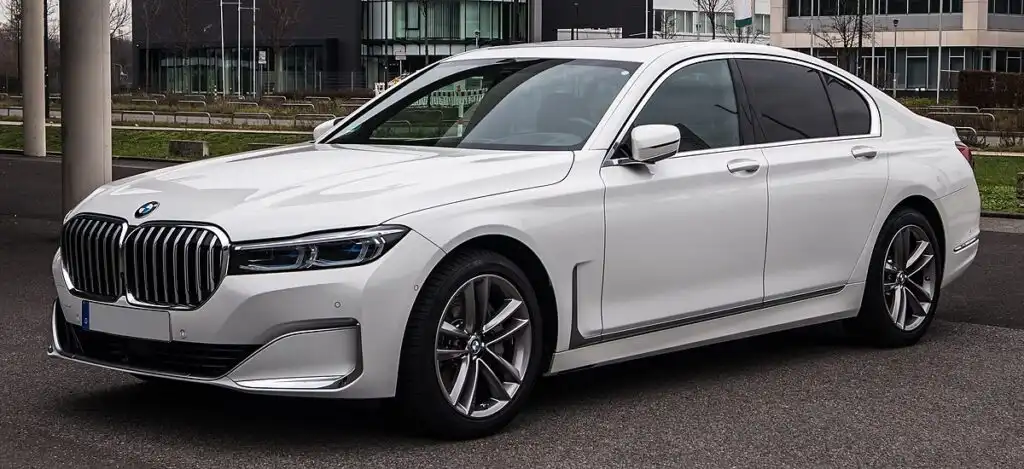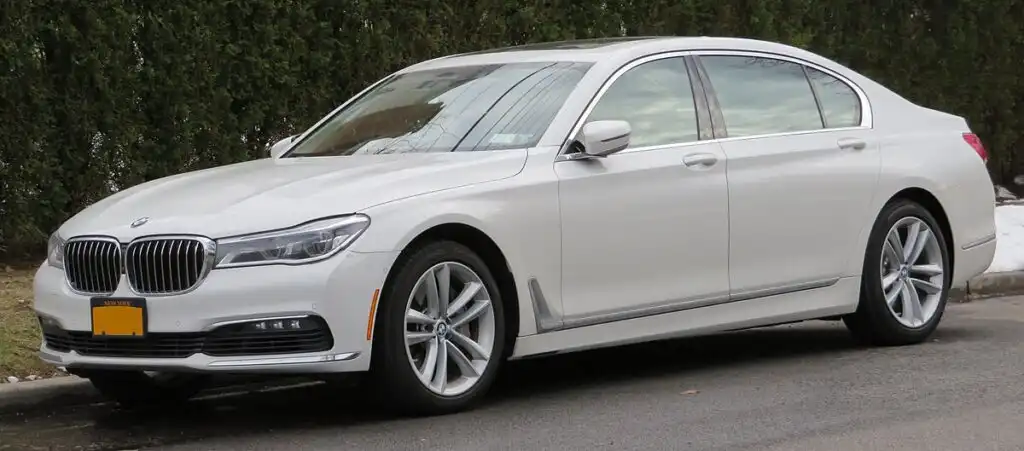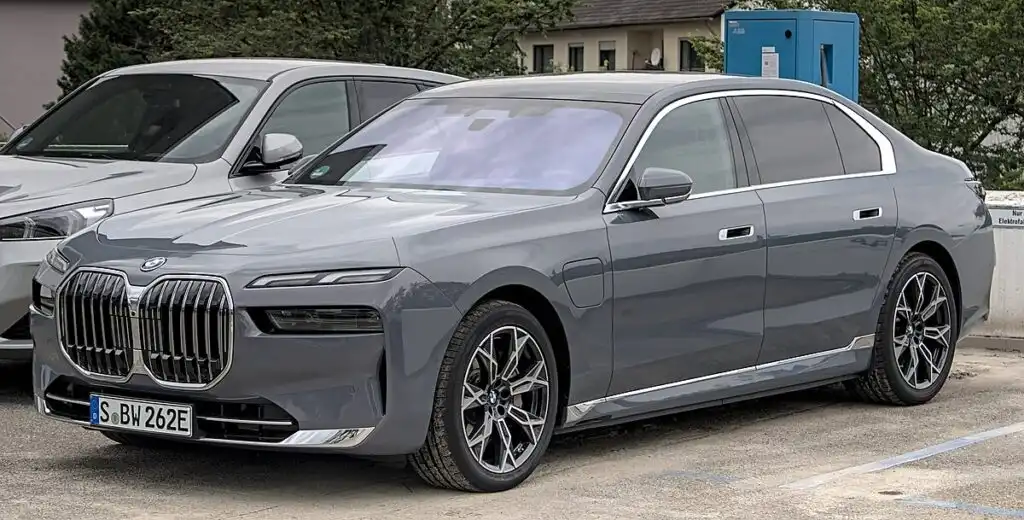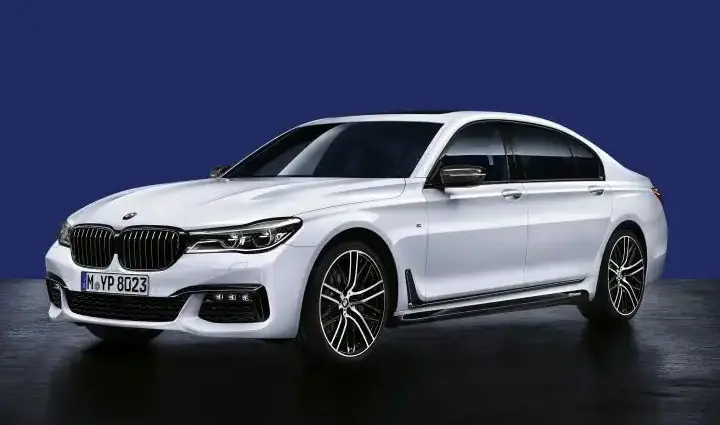
The BMW 730d Steptronic, produced between 2015 and 2019, was a key variant within the G11 generation of the BMW 7 Series. Positioned as a more efficient and accessible entry point into the flagship 7 Series range, the 730d offered a compelling blend of luxury, performance, and fuel economy. It served as a popular alternative to the higher-performance 740i and 750i models, particularly in European markets where diesel engines held significant market share. This model represented BMW’s commitment to providing a sophisticated, technologically advanced luxury sedan with a focus on refined driving dynamics and reduced running costs.
Technical Specifications
| Brand | BMW |
| Model | 7 Series |
| Generation | 7 Series (G11) |
| Type (Engine) | 730d (265 Hp) Steptronic |
| Start of production | 2015 |
| End of production | 2019 |
| Powertrain Architecture | Internal Combustion engine |
| Body type | Sedan |
| Seats | 5 |
| Doors | 4 |
| Fuel consumption (urban) | 5.3-5.8 l/100 km (44.4 – 40.6 US mpg, 53.3 – 48.7 UK mpg, 18.9 – 17.2 km/l) |
| Fuel consumption (extra urban) | 4.0-4.4 l/100 km (58.8 – 53.5 US mpg, 70.6 – 64.2 UK mpg, 25 – 22.7 km/l) |
| Fuel consumption (combined) | 4.5-4.9 l/100 km (52.3 – 48 US mpg, 62.8 – 57.6 UK mpg, 22.2 – 20.4 km/l) |
| CO2 emissions | 119-129 g/km |
| Fuel Type | Diesel |
| Acceleration 0 – 100 km/h | 6.1 sec |
| Acceleration 0 – 62 mph | 6.1 sec |
| Acceleration 0 – 60 mph | 5.8 sec |
| Maximum speed | 250 km/h (155.34 mph) |
| Emission standard | Euro 6 |
| Weight-to-power ratio | 6.6 kg/Hp, 151 Hp/tonne |
| Weight-to-torque ratio | 2.8 kg/Nm, 353.3 Nm/tonne |
| Power | 265 Hp @ 4000 rpm |
| Torque | 620 Nm @ 2000-2500 rpm (457.29 lb.-ft. @ 2000-2500 rpm) |
| Engine layout | Front, Longitudinal |
| Engine Model/Code | B57D30A |
| Engine displacement | 2993 cm3 (182.64 cu. in.) |
| Number of cylinders | 6 |
| Engine configuration | Inline |
| Cylinder Bore | 84 mm (3.31 in.) |
| Piston Stroke | 90 mm (3.54 in.) |
| Compression ratio | 16.5:1 |
| Number of valves per cylinder | 4 |
| Fuel injection system | Diesel Commonrail |
| Engine aspiration | Twin-power turbo, Intercooler |
| Engine oil capacity | 6.5 l (6.87 US qt | 5.72 UK qt) |
| Coolant | 11.9 l (12.57 US qt | 10.47 UK qt) |
| Kerb Weight | 1755 kg (3869.11 lbs.) |
| Max. weight | 2450 kg (5401.33 lbs.) |
| Max load | 695 kg (1532.21 lbs.) |
| Trunk (boot) space – minimum | 515 l (18.19 cu. ft.) |
| Fuel tank capacity | 78 l (20.61 US gal | 17.16 UK gal) |
| Max. roof load | 100 kg (220.46 lbs.) |
| Permitted trailer load with brakes (12%) | 2100 kg (4629.71 lbs.) |
| Permitted trailer load without brakes | 750 kg (1653.47 lbs.) |
| Permitted towbar download | 100 kg (220.46 lbs.) |
| Length | 5098 mm (200.71 in.) |
| Width | 1902 mm (74.88 in.) |
| Height | 1478 mm (58.19 in.) |
| Wheelbase | 3070 mm (120.87 in.) |
| Front track | 1618 mm (63.7 in.) |
| Rear (Back) track | 1646 mm (64.8 in.) |
| Ride height (ground clearance) | 135 mm (5.31 in.) |
| Drag coefficient (Cd) | 0.24 |
| Minimum turning circle (turning diameter) | 12.3 m (40.35 ft.) |
| Drivetrain Architecture | The Internal combustion engine (ICE) drives the rear wheels of the vehicle. |
| Drive wheel | Rear wheel drive |
| Number of gears and type of gearbox | 8 gears, automatic transmission Steptronic |
| Front suspension | Double wishbone |
| Rear suspension | Independent multi-link suspension |
| Front brakes | Ventilated discs |
| Rear brakes | Ventilated discs |
| Assisting systems | ABS (Anti-lock braking system) |
| Steering type | Steering rack and pinion |
| Tires size | 225/60 R17 99Y; 245/50 R18; 245/45 R19; 275/40 R19; 245/40 R20; 275/35 R20; 245/35 R21; 275/30 R21 |
| Wheel rims size | 7.5J x 17; 8J x 18; 8.5J x 19; 9.5J x 19; 8.5J x 20; 10J x 20; 8.5J x 21; 10J x 21 |
INTRODUCTION
The BMW 730d Steptronic, part of the G11 7 Series lineup produced from 2015 to 2019, represented a significant step forward in luxury and efficiency. Built on the modular 310 platform, also underpinning models like the BMW 5 Series (G30), the G11 7 Series aimed to redefine the luxury sedan segment. The 730d specifically targeted buyers seeking a sophisticated and comfortable driving experience without the higher running costs associated with the larger, gasoline-powered engines. It offered a compelling alternative, particularly in Europe, where diesel engines were favored for their fuel efficiency and torque.
Powertrain & Engine Architecture
At the heart of the 730d lies the B57D30A, a 3.0-liter inline-six diesel engine. This engine is a member of BMW’s modular engine family, known for its robust construction and advanced technology. The B57 features a common-rail direct injection system operating at extremely high pressures (2,200 bar) for optimized combustion and reduced emissions. A twin-scroll turbocharger with variable geometry turbine (VGT) technology provides a broad torque curve and responsive performance. The engine also incorporates advanced cooling systems and friction reduction technologies to enhance efficiency. The “D30A” designation indicates a specific output level of 300 horsepower (approximately 265 hp in US specification due to differences in measurement standards). Paired with the engine is BMW’s 8-speed Steptronic automatic transmission, renowned for its smooth shifts and intelligent programming. This transmission adapts to driving style and conditions, optimizing gear selection for both performance and fuel economy. The transmission also features steering wheel-mounted paddle shifters for manual control.
Driving Characteristics
The 730d Steptronic delivers a refined and comfortable driving experience. While not as overtly sporty as the 740i or 750i, the 730d offers ample power and torque for effortless cruising and confident overtaking. The 620 Nm (457 lb-ft) of torque, available from 2000-2500 rpm, provides strong acceleration in everyday driving situations. The 8-speed automatic transmission contributes to a smooth and seamless power delivery. Gear ratios are tuned for both fuel efficiency and responsiveness. Compared to the higher-output models, the 730d feels less urgent in its acceleration, taking approximately 6.1 seconds to reach 60 mph. However, the difference is often imperceptible in normal driving conditions. The 730d’s weight distribution and sophisticated suspension system contribute to excellent stability and handling, providing a composed and reassuring ride quality.
Equipment & Trim Levels
The 730d Steptronic came well-equipped as standard, reflecting its position as a flagship luxury sedan. Standard features typically included leather upholstery, power-adjustable front seats with memory function, a premium sound system, a large infotainment screen with iDrive controller, navigation system, automatic climate control, and a comprehensive suite of safety features including lane departure warning, collision avoidance, and automatic emergency braking. Optional extras included features such as massaging seats, a rear entertainment system, a panoramic sunroof, upgraded leather options, and advanced driver-assistance systems like adaptive cruise control and parking assist. Trim levels varied by market, but generally offered increasing levels of luxury and technology.
Chassis & Braking
The G11 7 Series featured a sophisticated chassis designed for both comfort and handling. The front suspension utilized a double-wishbone design, while the rear employed an independent multi-link setup. Air suspension was standard on the 730d, providing a remarkably smooth and controlled ride. The air suspension also allowed for adjustable ride height. Braking duties were handled by ventilated disc brakes on all four wheels, providing ample stopping power. The 730d also incorporated BMW’s Dynamic Stability Control (DSC) system, which helps to maintain stability and control in challenging driving conditions. The steering system was a rack-and-pinion setup with electric power assistance, offering precise and responsive steering feel.
Market Reception & Comparison
The 730d Steptronic was generally well-received by automotive critics. It was praised for its refined driving experience, luxurious interior, and impressive fuel economy. Critics noted that the 730d offered a compelling value proposition compared to the more expensive 740i and 750i models. Compared to the 740i, the 730d offered similar levels of luxury and technology but with lower running costs. The 730d’s fuel economy was significantly better than that of the 740i, making it a more practical choice for drivers who cover long distances. Compared to the 750i, the 730d offered a more balanced driving experience, with less emphasis on outright performance. Reliability reports suggest the B57 engine is generally robust, although diesel particulate filter (DPF) issues can occur with frequent short trips.
Legacy
The BMW 730d Steptronic (G11) has established itself as a reliable and desirable luxury sedan in the used car market. The B57 engine is known for its longevity and relatively low maintenance costs, provided it is properly maintained. The G11 7 Series, in general, is considered a technologically advanced and well-built vehicle. The 730d’s combination of luxury, performance, and fuel economy continues to appeal to buyers seeking a sophisticated and practical flagship sedan. As with any used vehicle, potential buyers should carefully inspect the car’s maintenance history and consider a pre-purchase inspection by a qualified mechanic.