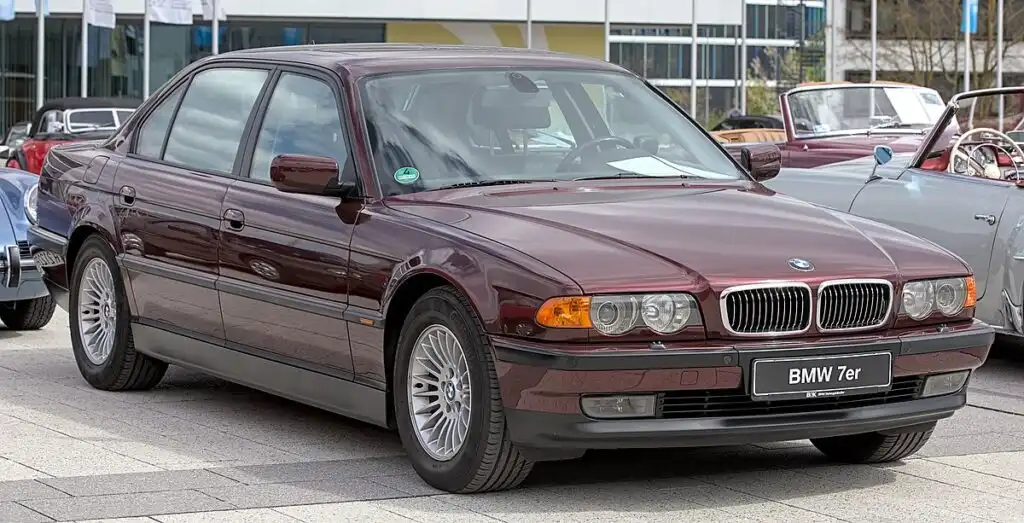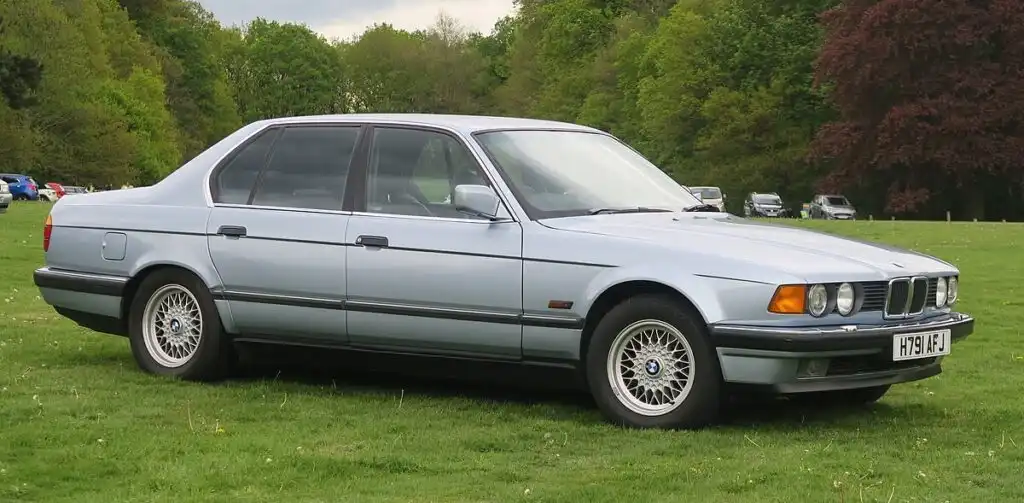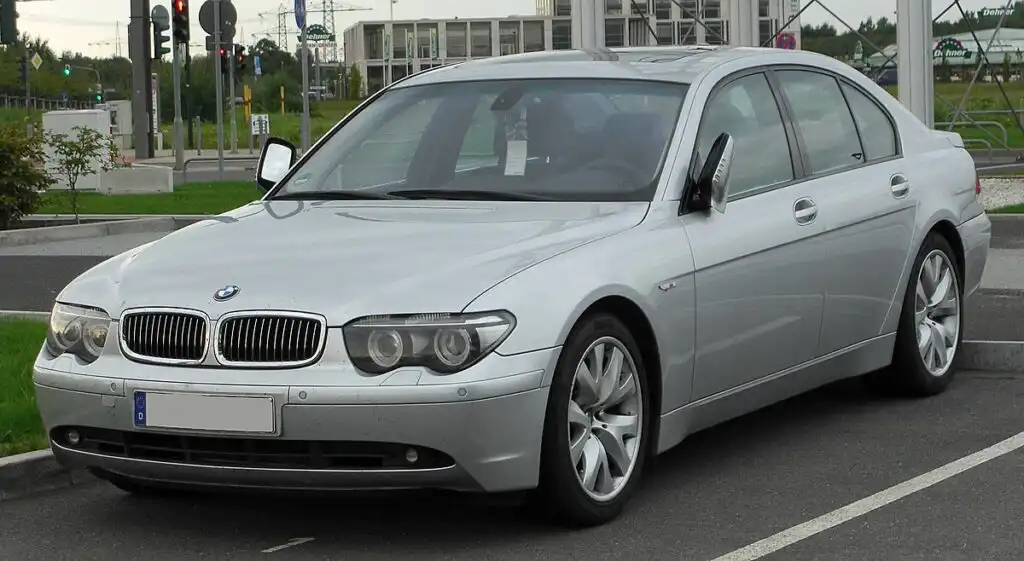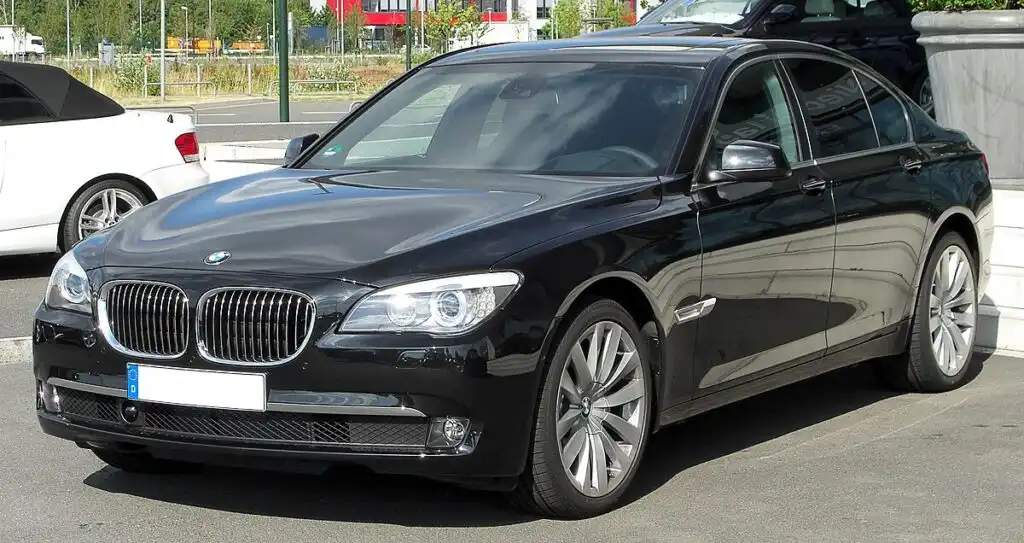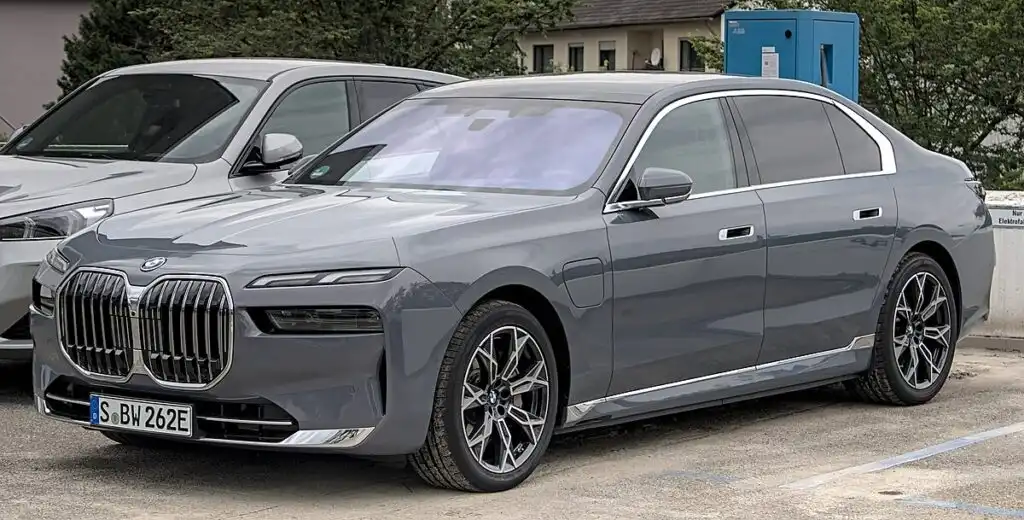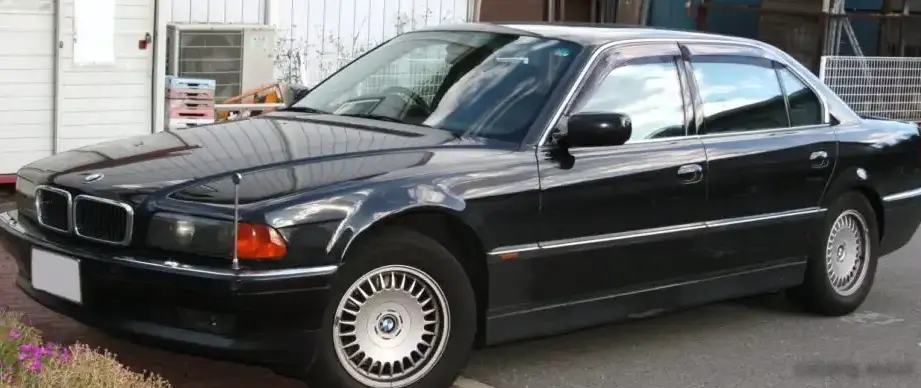
The BMW 740iL, produced between 1994 and 1996, represents a significant iteration of the E38 7 Series, BMW’s flagship luxury sedan. The “L” designation signifies a long-wheelbase version, offering increased rear passenger space, a key feature for the North American market where this model was particularly popular. Positioned as a mid-range offering within the E38 lineup – slotted between the 730iL and the high-performance 750iL – the 740iL aimed to balance luxury, performance, and value. It was a crucial model in establishing BMW’s dominance in the full-size luxury segment during the mid-1990s.
Technical Specifications
| Brand | BMW |
| Model | 7 Series |
| Generation | 7 Series Long (E38) |
| Type (Engine) | 740iL 4.0 (286 Hp) Steptronic |
| Start of production | 1994 |
| End of production | 1996 |
| Powertrain Architecture | Internal Combustion engine |
| Body type | Sedan |
| Seats | 5 |
| Doors | 4 |
| Fuel consumption (economy) – urban | 16.3 l/100 km (14.4 US mpg, 17.3 UK mpg, 6.1 km/l) |
| Fuel consumption (economy) – extra urban | 8.3 l/100 km (28.3 US mpg, 34 UK mpg, 12 km/l) |
| Fuel consumption (economy) – combined | 11.5 l/100 km (20.5 US mpg, 24.6 UK mpg, 8.7 km/l) |
| Fuel Type | Petrol (Gasoline) |
| Acceleration 0 – 100 km/h | 7.4 sec |
| Acceleration 0 – 62 mph | 7.4 sec |
| Acceleration 0 – 60 mph | 7 sec |
| Maximum speed | 250 km/h (155.34 mph) |
| Weight-to-power ratio | 6.5 kg/Hp, 153.4 Hp/tonne |
| Weight-to-torque ratio | 4.7 kg/Nm, 214.5 Nm/tonne |
| Power | 286 Hp @ 5800 rpm |
| Power per litre | 71.8 Hp/l |
| Torque | 400 Nm @ 4500 rpm (295.02 lb.-ft. @ 4500 rpm) |
| Engine layout | Front, Longitudinal |
| Engine Model/Code | M60B40 |
| Engine displacement | 3982 cm3 (243 cu. in.) |
| Number of cylinders | 8 |
| Engine configuration | V-engine |
| Cylinder Bore | 89 mm (3.5 in.) |
| Piston Stroke | 80 mm (3.15 in.) |
| Compression ratio | 10:1 |
| Number of valves per cylinder | 4 |
| Fuel injection system | Multi-port manifold injection |
| Engine aspiration | Naturally aspirated engine |
| Valvetrain | DOHC |
| Engine oil capacity | 7.5 l (7.93 US qt | 6.6 UK qt) |
| Coolant | 12.5 l (13.21 US qt | 11 UK qt) |
| Kerb Weight | 1865 kg (4111.62 lbs.) |
| Max. weight | 2400 kg (5291.09 lbs.) |
| Max load | 535 kg (1179.47 lbs.) |
| Trunk (boot) space – minimum | 500 l (17.66 cu. ft.) |
| Fuel tank capacity | 95 l (25.1 US gal | 20.9 UK gal) |
| Length | 5124 mm (201.73 in.) |
| Width | 1862 mm (73.31 in.) |
| Height | 1425 mm (56.1 in.) |
| Wheelbase | 3070 mm (120.87 in.) |
| Front track | 1552 mm (61.1 in.) |
| Rear (Back) track | 1568 mm (61.73 in.) |
| Drag coefficient (Cd) | 0.30 |
| Minimum turning circle (turning diameter) | 12.2 m (40.03 ft.) |
| Drivetrain Architecture | The Internal combustion engine (ICE) drives the rear wheels of the vehicle. |
| Drive wheel | Rear wheel drive |
| Number of gears and type of gearbox | 5 gears, automatic transmission Steptronic |
| Front suspension | Wishbone |
| Rear suspension | Inclined Lever |
| Front brakes | Ventilated discs |
| Rear brakes | Disc |
| Assisting systems | ABS (Anti-lock braking system) |
| Steering type | Steering rack and pinion |
| Power steering | Hydraulic Steering |
| Tires size | 235/60 R16 |
| Wheel rims size | 16 |
Powertrain & Engine Architecture
The heart of the 740iL is the M60B40 4.0-liter V8 engine. This engine, a cornerstone of BMW’s engineering prowess in the early 1990s, features a 90-degree V-angle and utilizes aluminum alloy cylinder heads and block. It employs multi-port fuel injection, delivering fuel directly into the intake ports, and a double overhead camshaft (DOHC) valvetrain with four valves per cylinder. This configuration allowed for excellent breathing and contributed to the engine’s smooth power delivery. The M60B40 produces 286 horsepower at 5800 rpm and 400 Nm (295 lb-ft) of torque at 4500 rpm. Paired with this engine is a 5-speed Steptronic automatic transmission, BMW’s early implementation of a driver-selectable automatic gearbox. This transmission offered both fully automatic operation and the ability for the driver to manually shift gears, providing a degree of control not typically found in luxury sedans of the era.
Driving Characteristics
The 740iL’s driving experience was characterized by a blend of effortless power and refined comfort. The 4.0-liter V8 provided ample acceleration, reaching 60 mph in approximately 7 seconds. While not as overtly sporty as the 750iL with its V12 engine, the 740iL offered a more accessible and usable powerband. The Steptronic transmission, while not as quick-shifting as modern automatics, provided smooth and predictable gear changes. Compared to the 730iL, which featured a smaller inline-six engine, the 740iL offered a significant performance upgrade. The longer wheelbase of the ‘L’ models did contribute to a slightly less agile feel than the standard 7 Series, but this was a trade-off accepted for the increased rear passenger legroom.
Equipment & Trim Levels
The 740iL came standard with a comprehensive list of luxury features, befitting its flagship status. These included leather upholstery, power-adjustable front seats with memory function, automatic climate control, a premium sound system, and wood trim throughout the cabin. The long-wheelbase configuration provided generous rear legroom, making it a popular choice for chauffeured transport. Optional extras included a rear entertainment system, upgraded leather, a sunroof, and various driver assistance features. The interior design was classic BMW, emphasizing functionality and understated elegance.
Chassis & Braking
The E38 7 Series featured an independent suspension system all around, with a wishbone setup at the front and an inclined lever setup at the rear. This provided a comfortable ride while maintaining good handling characteristics. The 740iL was equipped with ventilated disc brakes at the front and solid disc brakes at the rear. Anti-lock braking system (ABS) was standard, enhancing safety and control during hard braking. The steering was a rack-and-pinion system with hydraulic power assistance, providing precise and responsive steering feel.
Market Reception & Comparison
The 740iL was generally well-received by automotive critics. It was praised for its powerful engine, comfortable ride, and luxurious interior. However, some critics noted that the Steptronic transmission could feel slightly hesitant at times. Compared to the 730iL, the 740iL offered a noticeable performance advantage, justifying its higher price tag for buyers prioritizing power. Against competitors like the Mercedes-Benz S-Class and the Lexus LS400, the 740iL held its own, offering a more driver-focused experience than the Lexus and a more technologically advanced package than some of the older Mercedes models.
Legacy
The M60B40 engine, while robust, is known to require regular maintenance, particularly regarding the cooling system and valve cover gaskets. The Steptronic transmission, while innovative for its time, can be prone to issues with age, including slipping and erratic shifting. Despite these potential maintenance concerns, the E38 740iL remains a desirable classic car, appreciated for its blend of luxury, performance, and timeless design. Well-maintained examples command respectable prices in the used car market, appealing to enthusiasts who appreciate a piece of BMW’s engineering heritage. The E38 generation, and the 740iL specifically, set a high standard for full-size luxury sedans, influencing the design and technology of subsequent generations of BMW’s flagship model.