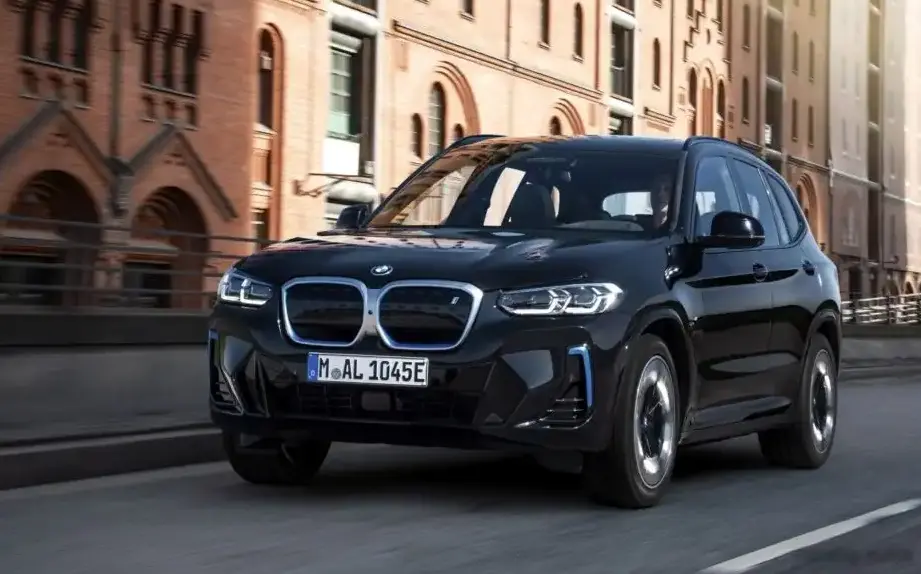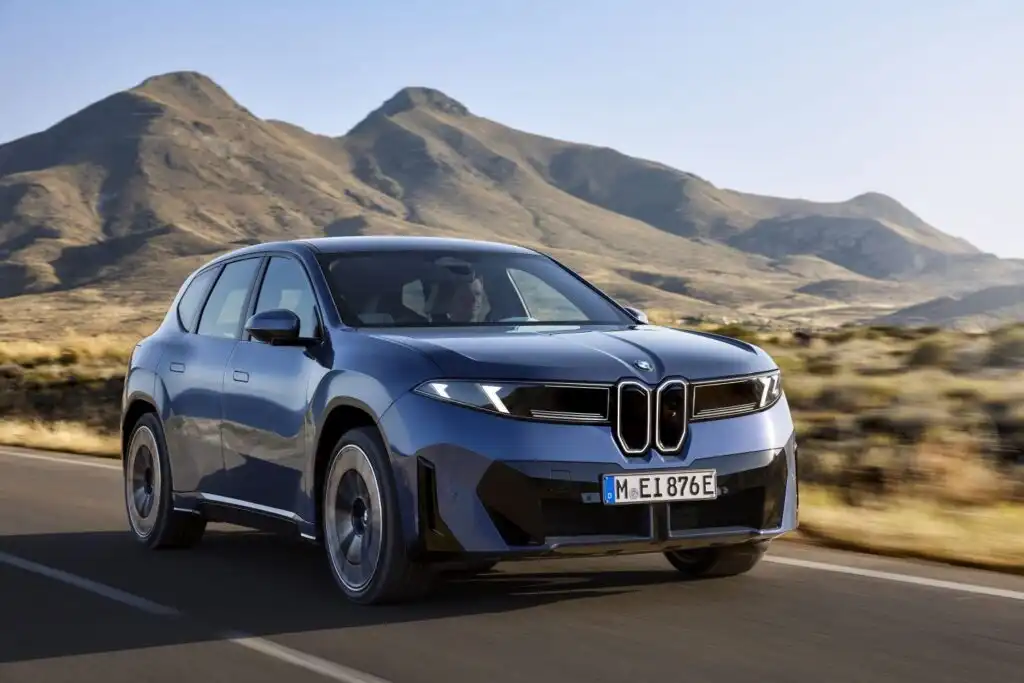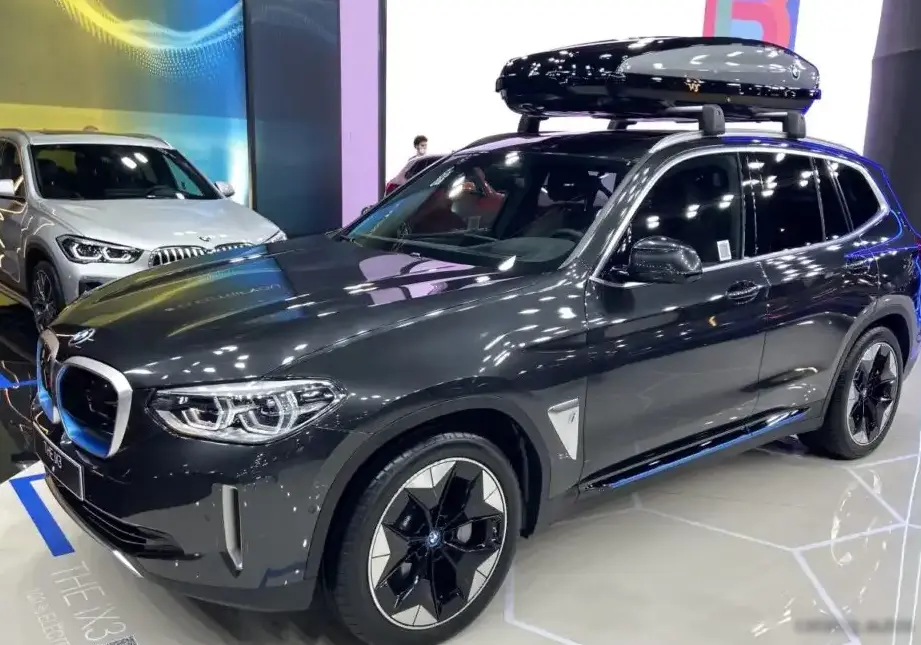
The BMW iX3 (G08), specifically the 80 kWh variant producing 286 horsepower, represents BMW’s initial foray into a fully electric SUV offering. Production spanned from July 2020 to August 2021, positioning the iX3 as a key model in BMW’s expanding electric vehicle lineup. Built upon the existing X3 platform (though extensively modified for electric propulsion), the iX3 aimed to deliver a familiar BMW driving experience with zero tailpipe emissions. This model was primarily targeted at the European and Chinese markets, where demand for electric SUVs was rapidly growing, and served as a technological showcase for BMW’s fifth-generation eDrive powertrain.
Technical Specifications
| Brand | BMW |
| Model | iX3 |
| Generation | iX3 (G08) |
| Type (Engine) | 80 kWh (286 Hp) |
| Start of production | July, 2020 |
| End of production | August, 2021 |
| Powertrain Architecture | BEV (Electric Vehicle) |
| Body type | SUV |
| Seats | 5 |
| Doors | 5 |
| Fuel Type | Electricity |
| Acceleration 0 – 100 km/h | 6.8 sec |
| Acceleration 0 – 62 mph | 6.8 sec |
| Acceleration 0 – 60 mph | 6.5 sec |
| Maximum speed | 180 km/h (111.85 mph) |
| Weight-to-power ratio | 7.6 kg/Hp, 130.9 Hp/tonne |
| Weight-to-torque ratio | 5.5 kg/Nm, 183.1 Nm/tonne |
| Gross battery capacity | 80 kWh |
| Battery voltage | 400 V |
| Battery technology | Lithium-ion (Li-Ion) |
| Battery location | Below the floor |
| All-electric range (WLTP) | 460 km (285.83 mi) |
| All-electric range | 520 km (323.11 mi) |
| Average Energy consumption (WLTP) | 18.5-19.5 kWh/100 km (29.77 – 31.38 kWh/100 mi) (113 – 107 MPGe) (5.4 – 5.1 km/kWh) (3.4 – 3.2 mi/kWh) |
| Average Energy consumption | 17.5-17.8 kWh/100 km (28.16 – 28.65 kWh/100 mi) (120 – 118 MPGe) (5.7 – 5.6 km/kWh) (3.6 – 3.5 mi/kWh) |
| Electric motor power | 286 Hp @ 6000 rpm |
| Electric motor Torque | 400 Nm (295.02 lb.-ft.) |
| Electric motor model/code | HA0001N0 |
| Maximum revolutions of the electric motor | 17000 rpm |
| Electric motor location | Rear axle, Transverse |
| Electric motor type | Synchronous |
| System power | 286 Hp @ 6000 rpm |
| System torque | 400 Nm (295.02 lb.-ft.) |
| Kerb Weight | 2185 kg (4817.1 lbs.) |
| Max. weight | 2725 kg (6007.6 lbs.) |
| Max load | 540 kg (1190.5 lbs.) |
| Trunk (boot) space – minimum | 510 l (18.01 cu. ft.) |
| Trunk (boot) space – maximum | 1560 l (55.09 cu. ft.) |
| Max. roof load | 100 kg (220.46 lbs.) |
| Permitted trailer load with brakes (12%) | 750 kg (1653.47 lbs.) |
| Permitted trailer load without brakes | 750 kg (1653.47 lbs.) |
| Permitted towbar download | 75 kg (165.35 lbs.) |
| Length | 4734 mm (186.38 in.) |
| Width | 1891 mm (74.45 in.) |
| Width including mirrors | 2138 mm (84.17 in.) |
| Height | 1668 mm (65.67 in.) |
| Wheelbase | 2864 mm (112.76 in.) |
| Front track | 1600 mm (62.99 in.) |
| Rear (Back) track | 1616 mm (63.62 in.) |
| Front overhang | 860 mm (33.86 in.) |
| Rear overhang | 1010 mm (39.76 in.) |
| Ride height (ground clearance) | 179 mm (7.05 in.) |
| Drag coefficient (Cd) | 0.29 |
| Minimum turning circle (turning diameter) | 12.1 m (39.7 ft.) |
| Approach angle | 23.1° |
| Departure angle | 20.9° |
| Ramp-over (brakeover) angle | 14.8° |
| Wading depth | 500 mm (19.69 in.) |
| Drivetrain Architecture | One electric motor drives the rear wheels. |
| Drive wheel | Rear wheel drive |
| Number of gears and type of gearbox | 1 gears, automatic transmission |
| Front suspension | Double wishbone |
| Rear suspension | Independent multi-link suspension |
| Front brakes | Ventilated discs |
| Rear brakes | Ventilated discs |
| Assisting systems | ABS (Anti-lock braking system) |
| Steering type | Steering rack and pinion |
| Power steering | Electric Steering |
| Tires size | 245/50 R19 105W XL |
| Wheel rims size | 7.5J x 19 |
Powertrain & Engine Architecture
The iX3’s powertrain centers around BMW’s fifth-generation eDrive system. This comprises a single, rear-mounted electric motor (HA0001N0) producing 286 hp and 400 Nm (295 lb-ft) of torque. The motor is a synchronous design, known for its efficiency and power density. Power is delivered through a single-speed automatic transmission, typical of electric vehicles. The 80 kWh lithium-ion battery pack is located under the vehicle floor, contributing to a low center of gravity and improved handling. The battery utilizes a 400V architecture. The iX3 does not employ active thermal management for the battery, relying on air cooling, a cost-saving measure compared to more sophisticated liquid cooling systems found in some competitors.
Driving Characteristics
The iX3 80 kWh offers brisk acceleration, achieving 0-60 mph in approximately 6.5 seconds. While not as overtly sporty as some of BMW’s gasoline-powered SUVs, the instant torque delivery of the electric motor provides responsive performance. The single-speed transmission means there are no gear changes, resulting in smooth and linear acceleration. Compared to the gasoline-powered X3 variants, the iX3 feels more refined and quieter, particularly in urban driving. The rear-wheel-drive configuration contributes to a balanced feel, though it may not offer the same level of all-weather capability as the xDrive all-wheel-drive X3 models. The regenerative braking system allows for one-pedal driving, enhancing efficiency and convenience.
Equipment & Trim Levels
The iX3 80 kWh typically came well-equipped as standard. Features included BMW’s iDrive infotainment system with a 12.3-inch touchscreen, navigation, Apple CarPlay and Android Auto compatibility, and a suite of driver-assistance systems such as lane departure warning, forward collision warning, and automatic emergency braking. Interior upholstery was typically a combination of Sensatec (BMW’s synthetic leather) and cloth. Optional extras included leather upholstery, a panoramic sunroof, premium sound system, and adaptive cruise control. Trim levels varied slightly by market, but generally focused on adding cosmetic enhancements and convenience features.
Chassis & Braking
The iX3 utilizes a modified version of the X3’s chassis, optimized for the added weight of the battery pack. The front suspension features a double wishbone design, while the rear employs an independent multi-link setup. The suspension was tuned to provide a comfortable ride while maintaining BMW’s characteristic handling dynamics. Braking is handled by ventilated discs on all four wheels. Due to the regenerative braking system, the conventional brakes are used less frequently, contributing to extended brake pad life. The iX3 does not feature the larger brakes found on higher-performance X3 variants.
Market Reception & Comparison
The iX3 was generally well-received by automotive critics, who praised its refined driving experience, comfortable ride, and efficient powertrain. However, some criticisms were leveled at its relatively conservative styling and the lack of all-wheel drive availability. Compared to other electric SUVs in its class, such as the Audi e-tron and Mercedes-Benz EQC, the iX3 offered a competitive range and performance at a slightly lower price point. Its energy consumption of 17.5-19.5 kWh/100km translated to a respectable MPGe figure. Compared to the gasoline-powered X3, the iX3 offered significantly lower running costs due to the elimination of fuel expenses and reduced maintenance requirements.
Legacy
The BMW iX3 served as an important stepping stone in BMW’s electrification strategy. While its production run was relatively short, it demonstrated BMW’s commitment to electric mobility and paved the way for future electric models. The iX3’s eDrive powertrain technology has been further refined and incorporated into other BMW EVs. On the used car market, the iX3 80 kWh remains a desirable option for buyers seeking a premium electric SUV with a proven track record. The longevity of the battery pack is a key consideration for potential buyers, and well-maintained examples are expected to offer many years of reliable service.