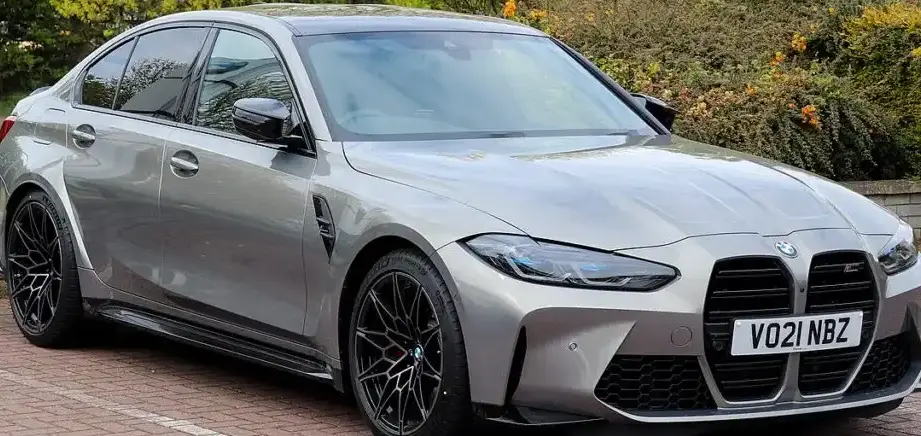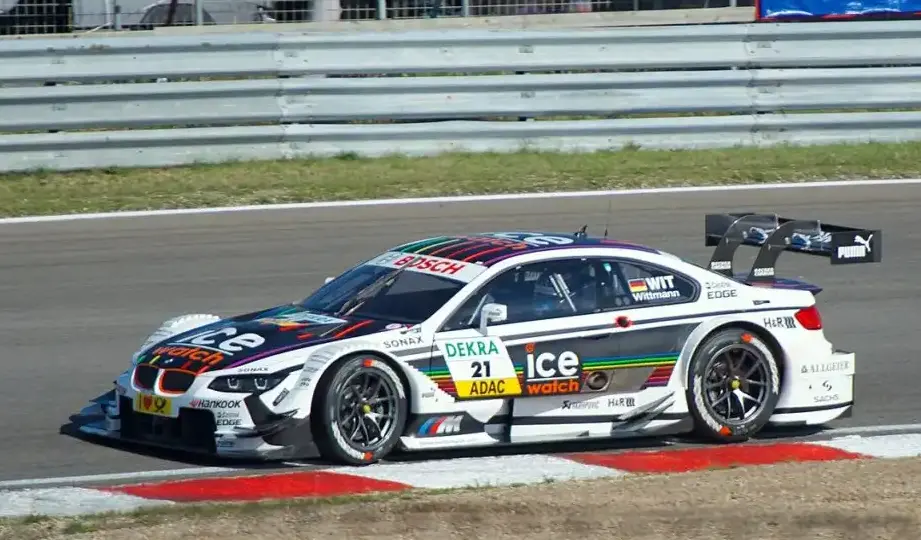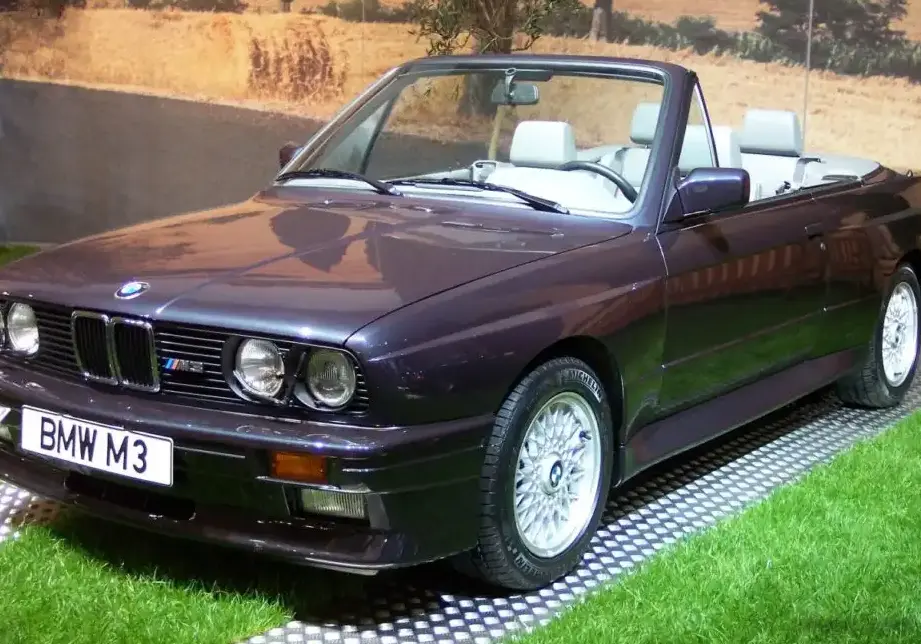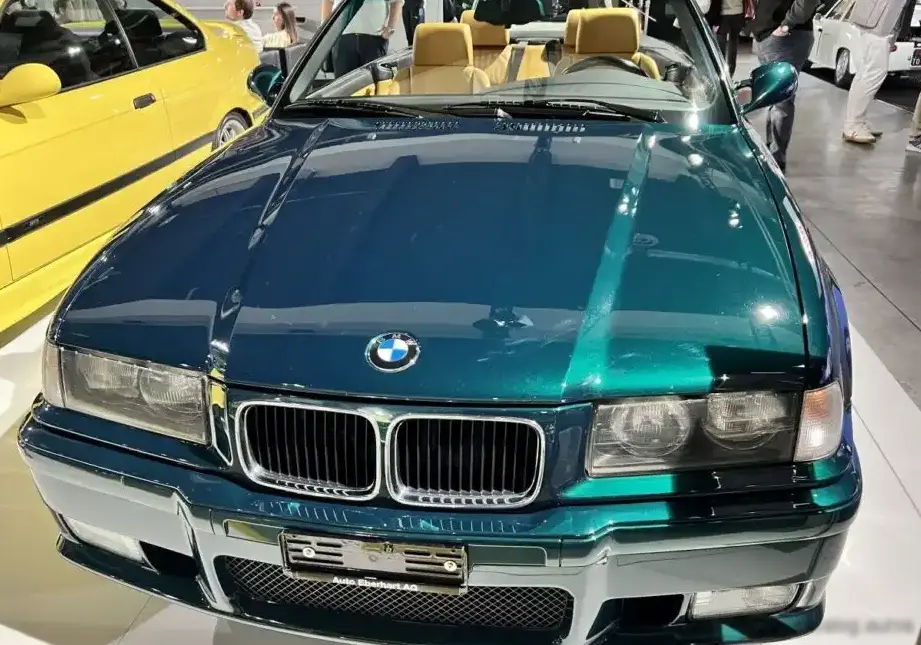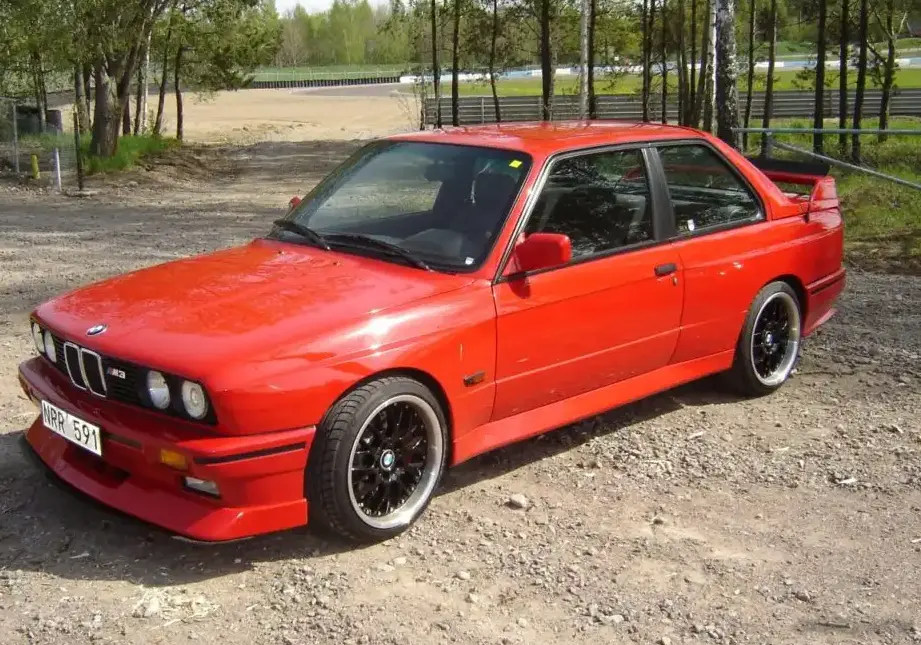
The BMW M3 Coupe (E30) 2.3, produced from 1989 to 1990, represents a pivotal moment in the evolution of high-performance sports cars. Built upon the foundation of the E30 3-Series, the M3 was specifically engineered for homologation purposes – to meet the requirements for participation in Group A touring car racing. This resulted in a road car that was far more than just a cosmetic upgrade; it was a meticulously crafted machine designed for both track prowess and spirited road driving. The 2.3-liter variant, often referred to as the “CAT” version due to its catalytic converter, was a key offering during the final years of the E30 M3’s production run, balancing performance with increasingly stringent emissions regulations. It occupied the top position in the E30 M3 lineup, offering the highest power output available in the coupe body style.
Technical Specifications
| Brand | BMW |
| Model | M3 |
| Generation | M3 Coupe (E30) |
| Type (Engine) | 2.3 (215 Hp) CAT |
| Start of production | 1989 |
| End of production | 1990 |
| Powertrain Architecture | Internal Combustion engine |
| Body type | Coupe |
| Seats | 4 |
| Doors | 2 |
| Fuel consumption (economy) – urban | 12.4 l/100 km (19 US mpg, 22.8 UK mpg, 8.1 km/l) |
| Fuel consumption (economy) – extra urban | 6.2 l/100 km (37.9 US mpg, 45.6 UK mpg, 16.1 km/l) |
| Fuel consumption (economy) – combined | 7.8 l/100 km (30.2 US mpg, 36.2 UK mpg, 12.8 km/l) |
| Fuel Type | Petrol (Gasoline) |
| Acceleration 0 – 100 km/h | 6.7 sec |
| Acceleration 0 – 62 mph | 6.7 sec |
| Acceleration 0 – 60 mph | 6.4 sec |
| Maximum speed | 241 km/h (149.75 mph) |
| Weight-to-power ratio | 5.6 kg/Hp, 179.2 Hp/tonne |
| Weight-to-torque ratio | 5.2 kg/Nm, 191.7 Nm/tonne |
| Power | 215 Hp @ 6750 rpm |
| Power per litre | 93.4 Hp/l |
| Torque | 230 Nm @ 4600 rpm (169.64 lb.-ft. @ 4600 rpm) |
| Engine layout | Front, Longitudinal |
| Engine Model/Code | S14B23 |
| Engine displacement | 2302 cm3 (140.48 cu. in.) |
| Number of cylinders | 4 |
| Engine configuration | Inline |
| Cylinder Bore | 93.4 mm (3.68 in.) |
| Piston Stroke | 84 mm (3.31 in.) |
| Compression ratio | 10.5:1 |
| Number of valves per cylinder | 4 |
| Fuel injection system | Multi-port manifold injection |
| Engine aspiration | Naturally aspirated engine |
| Engine oil capacity | 4.4 l (4.65 US qt | 3.87 UK qt) |
| Coolant | 11 l (11.62 US qt | 9.68 UK qt) |
| Kerb Weight | 1200 kg (2645.55 lbs.) |
| Max. weight | 1600 kg (3527.4 lbs.) |
| Max load | 400 kg (881.85 lbs.) |
| Trunk (boot) space – minimum | 420 l (14.83 cu. ft.) |
| Fuel tank capacity | 70 l (18.49 US gal | 15.4 UK gal) |
| Length | 4345 mm (171.06 in.) |
| Width | 1680 mm (66.14 in.) |
| Height | 1370 mm (53.94 in.) |
| Wheelbase | 2565 mm (100.98 in.) |
| Front track | 1414 mm (55.67 in.) |
| Rear (Back) track | 1435 mm (56.5 in.) |
| Drag coefficient (Cd) | 0.33 |
| Minimum turning circle | 11.1 m (36.42 ft.) |
| Drivetrain Architecture | Rear wheel drive |
| Number of gears and type of gearbox | 5 gears, manual transmission |
| Front suspension | Coil spring |
| Rear suspension | Coil spring |
| Front brakes | Ventilated discs |
| Rear brakes | Disc |
| Assisting systems | ABS (Anti-lock braking system) |
| Steering type | Steering rack and pinion |
| Power steering | Hydraulic Steering |
| Tires size | 205/55 R15 |
| Wheel rims size | 15 |
Powertrain & Engine Architecture
The heart of the E30 M3 2.3 CAT is the S14B23 engine, a 2.3-liter inline-four cylinder powerplant. This engine is a highly modified version of the BMW M10 block, featuring a lightweight aluminum cylinder head, individual throttle bodies, and a high-compression ratio of 10.5:1. The “CAT” designation indicates the presence of a catalytic converter, implemented to meet stricter emissions standards in many markets. The S14 engine utilizes a multi-port fuel injection system, providing precise fuel delivery for optimal performance and efficiency. The valvetrain consists of dual overhead camshafts (DOHC) operating four valves per cylinder, contributing to the engine’s impressive breathing and high-revving nature. The engine produces 215 horsepower at 6750 rpm and 230 Nm (169.64 lb-ft) of torque at 4600 rpm. The sole transmission option for the 2.3 CAT was a Getrag 265 five-speed manual gearbox, known for its precise shifts and durability.
Driving Characteristics
The E30 M3 2.3 CAT delivers a driving experience that is both engaging and rewarding. The 2.3-liter engine provides a strong surge of power throughout the rev range, encouraging drivers to explore its limits. While not as raw or visceral as earlier M3 variants, the 2.3 CAT offers a more refined and accessible power delivery. The five-speed manual transmission allows for precise gear selection, and the rear-wheel-drive layout provides excellent balance and handling. Compared to the earlier 2.0-liter M3, the 2.3 CAT offers increased torque and a broader powerband, making it more tractable in everyday driving situations. However, it lacks the ultimate edge of the later Evolution models. The car’s relatively light weight (around 2645 lbs) contributes to its nimble handling and quick acceleration – 0 to 60 mph in approximately 6.4 seconds.
Equipment & Trim Levels
The E30 M3 2.3 CAT was generally well-equipped, though options were available to further enhance the driving experience and comfort. Standard features included sport seats, a leather-wrapped steering wheel, and a limited-slip differential. The interior trim was typically finished in a combination of cloth and leather. Optional extras included a sunroof, air conditioning, and upgraded audio systems. The exterior was characterized by its distinctive aerodynamic body kit, including a front spoiler, rear wing, and flared wheel arches. Paint options were varied, with popular choices including Alpine White, Macao Blue, and Misano Red.
Chassis & Braking
The E30 M3’s chassis was significantly upgraded compared to the standard 3-Series. It featured stiffer springs, upgraded shock absorbers, and a larger diameter stabilizer bar, resulting in improved handling and reduced body roll. The braking system consisted of ventilated discs at the front and solid discs at the rear. An Anti-lock Braking System (ABS) was standard, enhancing safety and control. The suspension geometry was optimized for track performance, providing precise steering and predictable handling characteristics. The car’s relatively short wheelbase and wide track contributed to its agility and stability.
Market Reception & Comparison
The E30 M3 2.3 CAT was widely praised by automotive journalists and enthusiasts alike. Critics lauded its exceptional handling, responsive engine, and overall driving experience. While the catalytic converter slightly reduced peak power compared to earlier versions, it did little to diminish the car’s overall performance. Compared to other sports cars of the era, the E30 M3 offered a unique combination of performance, practicality, and refinement. Its fuel economy, while not exceptional, was reasonable for a high-performance vehicle – around 30.2 US mpg combined. The M3 2.3 CAT was generally considered to be a more accessible and user-friendly option than the more hardcore Evolution models, making it a popular choice for both track day enthusiasts and everyday drivers.
Legacy
The BMW E30 M3 2.3 CAT has cemented its place as a true icon in automotive history. Its success on the track and its enduring appeal to enthusiasts have made it a highly sought-after collector’s car. The S14 engine is renowned for its durability and tunability, and well-maintained examples continue to provide years of reliable performance. Today, the E30 M3 2.3 CAT commands a premium in the used car market, reflecting its rarity, historical significance, and exceptional driving characteristics. It remains a benchmark for sports car design and engineering, and a testament to BMW’s commitment to performance and innovation.