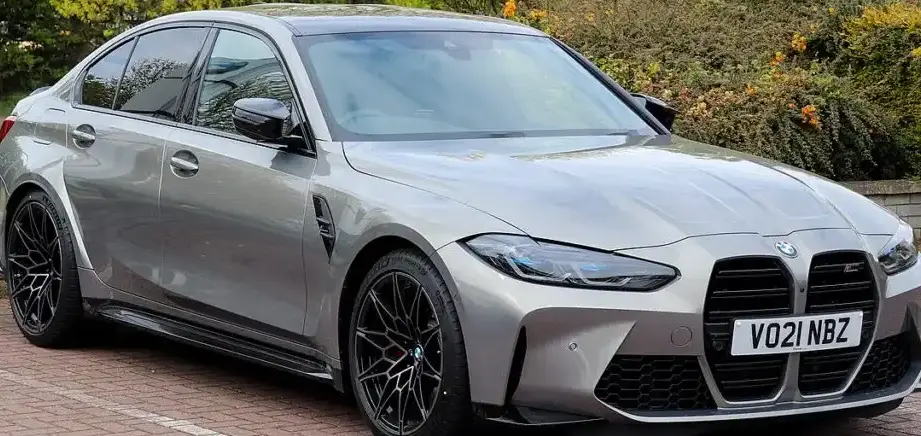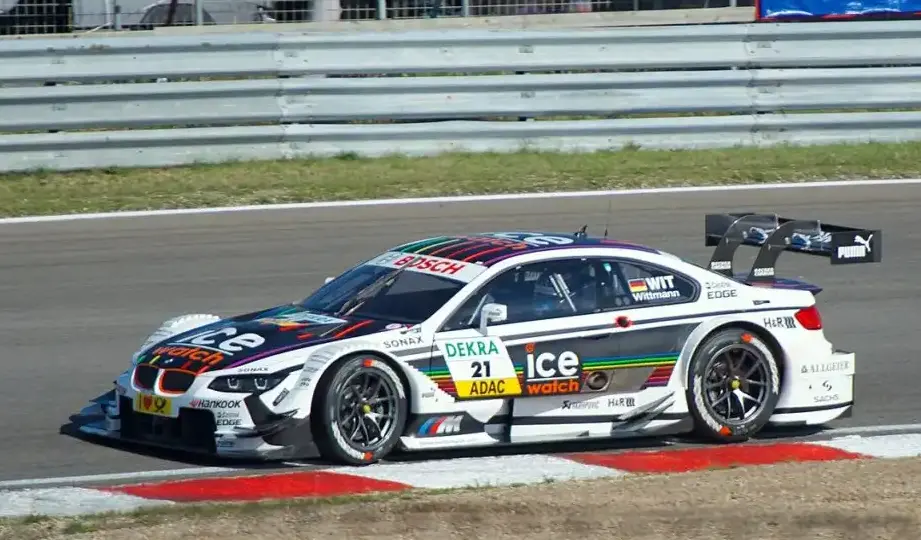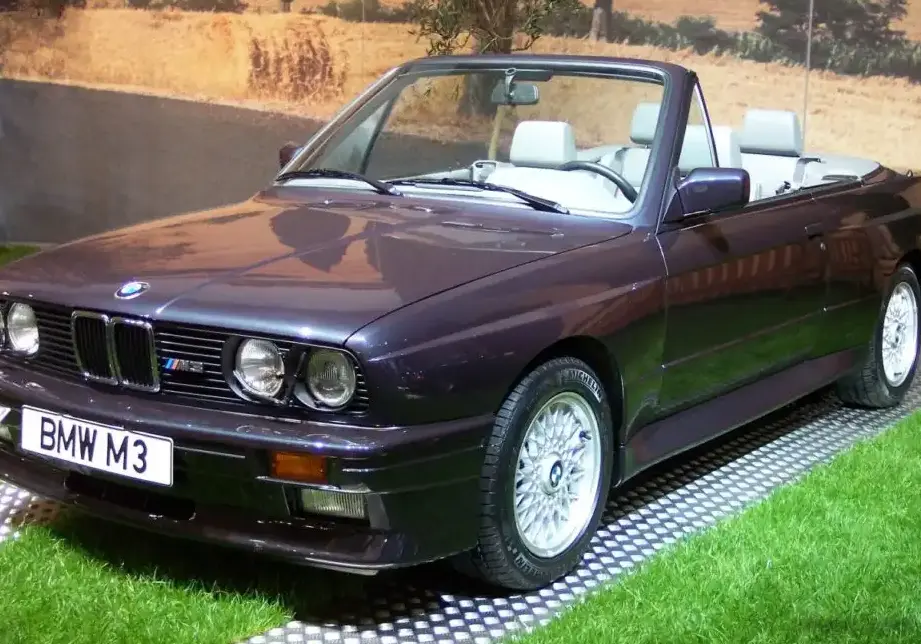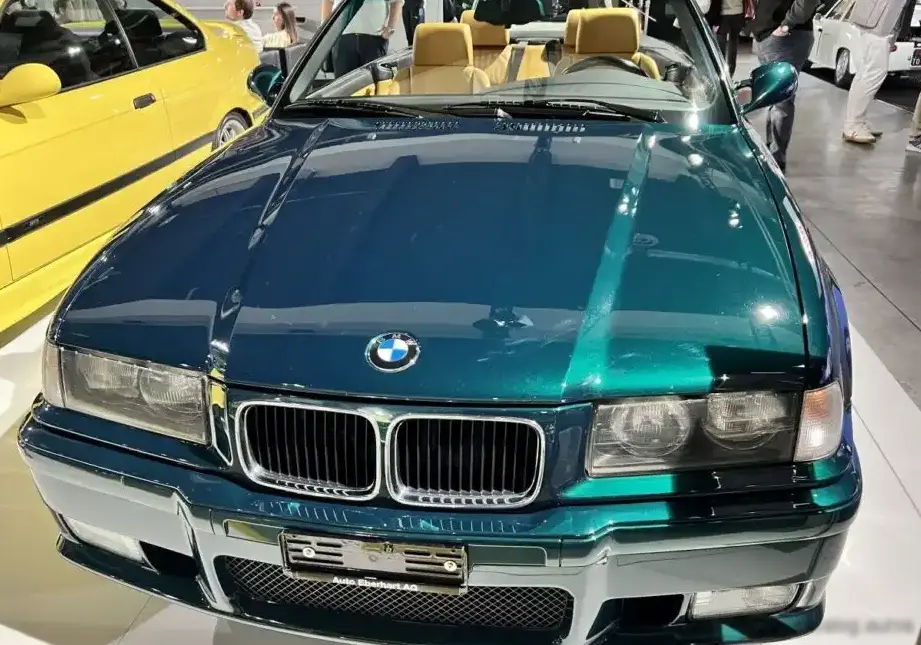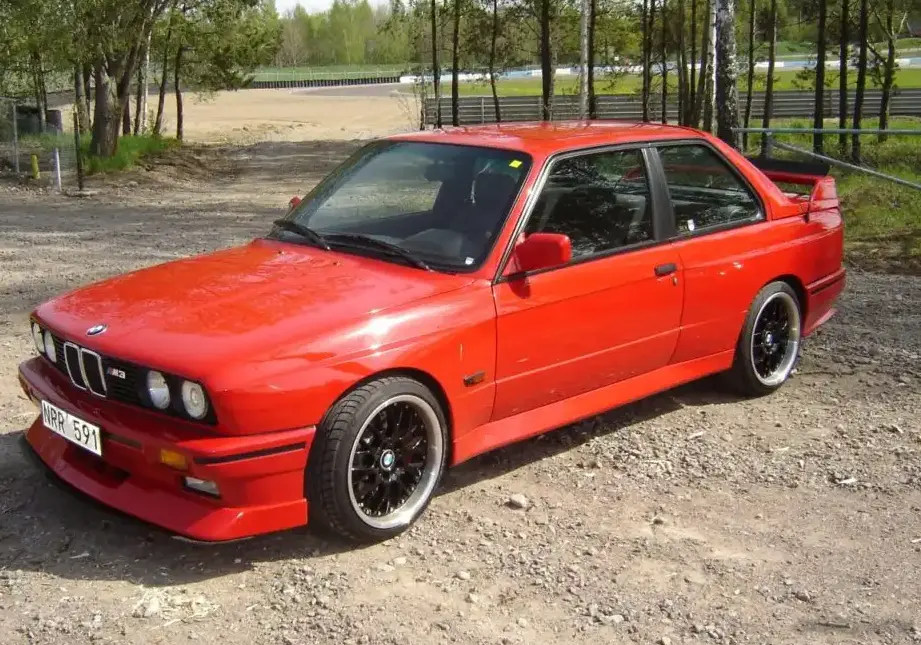
The BMW M3 Coupe (E30) 2.3 Evolution, produced between 1988 and 1990, represents a pivotal point in the lineage of BMW’s iconic M3. Built upon the foundation of the E30 3-Series, the M3 was conceived as a homologation special for Group A touring car racing. The 2.3 Evolution model, often simply referred to as the “Evo,” was a further refinement of the already potent M3, designed to improve performance and meet evolving racing regulations. It sat at the top of the E30 M3 Coupe range, offering increased power and subtle but significant aerodynamic enhancements over the earlier 2.3-liter models. The E30 M3, in all its iterations, quickly became a benchmark for handling and driver engagement, establishing a legacy that continues to this day.
Technical Specifications
| Brand | BMW |
| Model | M3 |
| Generation | M3 Coupe (E30) |
| Type (Engine) | 2.3 (220 Hp) Evolution |
| Start of production | 1988 |
| End of production | 1990 |
| Powertrain Architecture | Internal Combustion engine |
| Body type | Coupe |
| Seats | 4 |
| Doors | 2 |
| Fuel consumption (economy) – urban | 11 l/100 km (21.4 US mpg, 25.7 UK mpg, 9.1 km/l) |
| Fuel consumption (economy) – extra urban | 7.2 l/100 km (32.7 US mpg, 39.2 UK mpg, 13.9 km/l) |
| Fuel consumption (economy) – combined | 8 l/100 km (29.4 US mpg, 35.3 UK mpg, 12.5 km/l) |
| Fuel Type | Petrol (Gasoline) |
| Acceleration 0 – 100 km/h | 6.7 sec |
| Acceleration 0 – 62 mph | 6.7 sec |
| Acceleration 0 – 60 mph | 6.4 sec |
| Maximum speed | 243 km/h (150.99 mph) |
| Weight-to-power ratio | 5.5 kg/Hp, 183.3 Hp/tonne |
| Weight-to-torque ratio | 5 kg/Nm, 200 Nm/tonne |
| Power | 220 Hp @ 6750 rpm |
| Power per litre | 95.6 Hp/l |
| Torque | 240 Nm @ 4750 rpm (177.01 lb.-ft. @ 4750 rpm) |
| Engine layout | Front, Longitudinal |
| Engine Model/Code | S14B23 |
| Engine displacement | 2302 cm3 (140.48 cu. in.) |
| Number of cylinders | 4 |
| Engine configuration | Inline |
| Cylinder Bore | 93.4 mm (3.68 in.) |
| Piston Stroke | 84 mm (3.31 in.) |
| Compression ratio | 11:1 |
| Number of valves per cylinder | 4 |
| Fuel injection system | Multi-port manifold injection |
| Engine aspiration | Naturally aspirated engine |
| Engine oil capacity | 4.4 l (4.65 US qt | 3.87 UK qt) |
| Coolant | 11 l (11.62 US qt | 9.68 UK qt) |
| Kerb Weight | 1200 kg (2645.55 lbs.) |
| Max. weight | 1600 kg (3527.4 lbs.) |
| Max load | 400 kg (881.85 lbs.) |
| Trunk (boot) space – minimum | 420 l (14.83 cu. ft.) |
| Fuel tank capacity | 70 l (18.49 US gal | 15.4 UK gal) |
| Length | 4345 mm (171.06 in.) |
| Width | 1680 mm (66.14 in.) |
| Height | 1370 mm (53.94 in.) |
| Wheelbase | 2565 mm (100.98 in.) |
| Front track | 1424 mm (56.06 in.) |
| Rear (Back) track | 1445 mm (56.89 in.) |
| Drag coefficient (Cd) | 0.33 |
| Minimum turning circle | 11.1 m (36.42 ft.) |
| Drivetrain Architecture | Rear wheel drive |
| Drive wheel | Rear wheel drive |
| Number of gears and type of gearbox | 5 gears, manual transmission |
| Front brakes | Ventilated discs |
| Rear brakes | Disc |
| Assisting systems | ABS (Anti-lock braking system) |
| Steering type | Steering rack and pinion |
| Power steering | Hydraulic Steering |
| Tires size | 225/45 ZR16 |
| Wheel rims size | 16 |
Powertrain & Engine Architecture
The heart of the E30 M3 Evolution is the S14B23 2.3-liter inline-four engine. This engine is a highly modified version of the standard BMW M10 block, featuring a lightweight crankshaft, forged pistons, and a revised cylinder head with larger valves and optimized porting. The “B23” designation refers to the engine’s displacement. Fuel delivery is managed by a Bosch Motronic fuel injection system, providing precise control over the air-fuel mixture. The S14 engine is renowned for its responsive throttle response and willingness to rev, characteristics crucial for both track performance and spirited road driving. The Evolution model benefited from a slightly higher compression ratio and refined engine management, contributing to the increased power output. The engine is longitudinally mounted, driving the rear wheels through a robust five-speed manual transmission. This transmission features close ratios designed to maximize acceleration and maintain optimal engine speed during cornering.
Driving Characteristics
The 2.3 Evolution delivers a driving experience that is both visceral and rewarding. The 220 horsepower, while modest by modern standards, feels substantial in the relatively lightweight E30 chassis. Acceleration to 60 mph takes approximately 6.4 seconds, and the car will continue to accelerate to a top speed of 151 mph. The manual transmission’s precise shift action and close ratios encourage frequent gear changes, keeping the engine in its sweet spot. The E30 M3’s suspension, featuring MacPherson struts in the front and semi-trailing arms in the rear, provides excellent handling balance and a communicative feel. The Evolution model’s stiffer suspension and limited-slip differential further enhance its cornering capabilities. Compared to the earlier 2.3-liter M3s, the Evolution feels more composed and predictable at the limit, offering a higher level of driver confidence.
Equipment & Trim Levels
The E30 M3 Evolution was relatively sparsely equipped by modern standards, reflecting its focus on performance. Standard features included sport seats, a leather-wrapped steering wheel, and a basic stereo system. The interior trim was typically finished in cloth or leather, with a minimalist dashboard layout. Optional extras included sunroof, air conditioning, and upgraded sound systems. The Evolution model also featured unique exterior styling cues, including a larger rear wing, adjustable front splitters, and wider wheel arches, all designed to improve aerodynamic efficiency. These visual enhancements, combined with the car’s distinctive paint colors, set the Evolution apart from other E30 M3 variants.
Chassis & Braking
The E30 M3’s chassis is a key element of its exceptional handling. The car’s relatively short wheelbase and wide track contribute to its agility and stability. The suspension is tuned for a balance between comfort and performance, providing a firm but not overly harsh ride. Braking duties are handled by ventilated discs at the front and solid discs at the rear, with ABS available as an option. The Evolution model benefited from upgraded brake calipers and rotors, providing improved stopping power and fade resistance. The limited-slip differential is a crucial component, helping to maintain traction during cornering and maximizing power delivery to the rear wheels.
Market Reception & Comparison
The BMW M3 Evolution was widely praised by automotive journalists for its exceptional handling, responsive engine, and overall driving experience. It was considered a benchmark in its class, setting a new standard for performance coupes. Compared to the standard E30 M3, the Evolution offered a noticeable improvement in performance and handling, justifying its higher price tag. It also stood out from other contemporary sports cars, such as the Porsche 944 and the Nissan 300ZX, with its focus on driver engagement and track-oriented performance. Fuel economy, while not a primary concern for M3 buyers, was reasonable for a high-performance car of its era, averaging around 29 mpg in combined driving.
Legacy
The E30 M3 Evolution remains a highly sought-after collector’s car today. Its combination of performance, handling, and historical significance has cemented its place as a classic. The S14 engine is known for its durability, but regular maintenance is essential to ensure its longevity. Parts availability is generally good, although some specific components can be difficult to find. The E30 M3 Evolution represents a golden age of BMW engineering, a time when the company prioritized driver engagement and performance above all else. It continues to inspire enthusiasts and serve as a reminder of the enduring appeal of a well-engineered sports car.