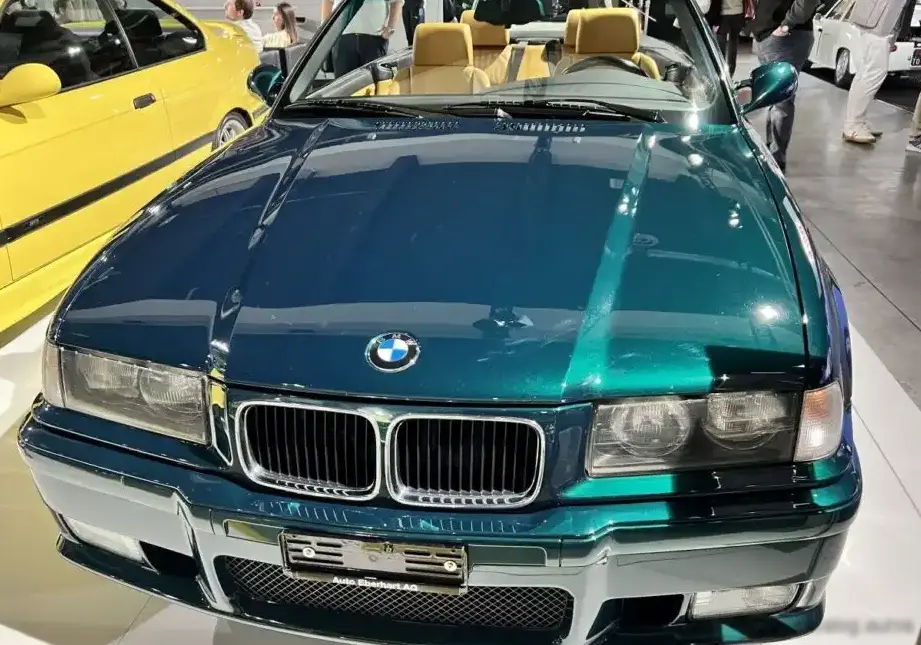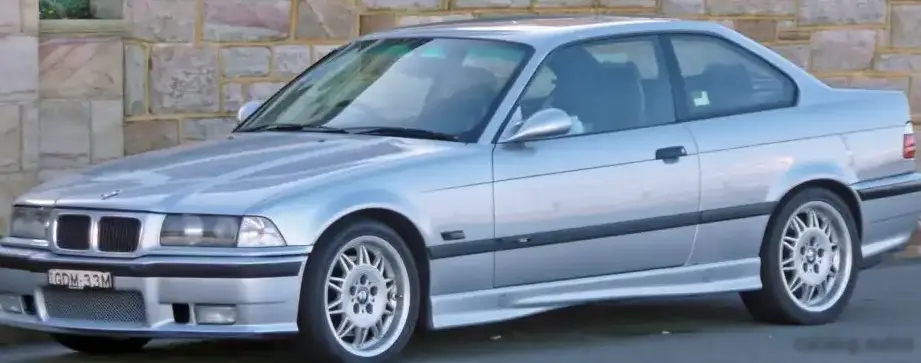
The BMW M3 Coupe (E36) 3.0i, produced from 1992 to 1995, represents a pivotal moment in the M3 lineage. Positioned as the flagship coupe within the E36 generation, it offered a significant performance upgrade over the base 3-Series models. Built on the E36 platform, which also underpinned the 3-Series sedan and convertible, the 3.0i variant was the most potent engine option available in the coupe body style during its production run, preceding the later introduction of the more focused and track-oriented M3 Lightweight. It served as a bridge between the earlier, more raw E30 M3 and the increasingly sophisticated M3s of the 21st century.
Technical Specifications
| Brand | BMW |
| Model | M3 |
| Generation | M3 Coupe (E36) |
| Type (Engine) | 3.0i (286 Hp) |
| Start of production | 1992 |
| End of production | 1995 |
| Powertrain Architecture | Internal Combustion engine |
| Body type | Coupe |
| Seats | 5 |
| Doors | 2 |
| Fuel consumption (economy) – urban | 13 l/100 km (18.1 US mpg, 21.7 UK mpg, 7.7 km/l) |
| Fuel consumption (economy) – extra urban | 7.9 l/100 km (29.8 US mpg, 35.8 UK mpg, 12.7 km/l) |
| Fuel consumption (economy) – combined | 9.1 l/100 km (25.8 US mpg, 31 UK mpg, 11 km/l) |
| Fuel Type | Petrol (Gasoline) |
| Acceleration 0 – 100 km/h | 6 sec |
| Acceleration 0 – 62 mph | 6 sec |
| Acceleration 0 – 60 mph | 5.7 sec |
| Maximum speed | 250 km/h (155.34 mph) |
| Weight-to-power ratio | 5.1 kg/Hp, 195.9 Hp/tonne |
| Weight-to-torque ratio | 4.6 kg/Nm, 219.2 Nm/tonne |
| Power | 286 Hp @ 7000 rpm |
| Power per litre | 95.7 Hp/l |
| Torque | 320 Nm @ 3600 rpm (236.02 lb.-ft. @ 3600 rpm) |
| Engine layout | Front, Longitudinal |
| Engine Model/Code | S50B30 |
| Engine displacement | 2990 cm3 (182.46 cu. in.) |
| Number of cylinders | 6 |
| Engine configuration | Inline |
| Cylinder Bore | 86 mm (3.39 in.) |
| Piston Stroke | 85.8 mm (3.38 in.) |
| Compression ratio | 10.8:1 |
| Number of valves per cylinder | 4 |
| Fuel injection system | Multi-port manifold injection |
| Engine aspiration | Naturally aspirated engine |
| Valvetrain | DOHC |
| Engine oil capacity | 7 l (7.4 US qt | 6.16 UK qt) |
| Coolant | 10.8 l (11.41 US qt | 9.5 UK qt) |
| Kerb Weight | 1460 kg (3218.75 lbs.) |
| Max. weight | 1930 kg (4254.92 lbs.) |
| Max load | 470 kg (1036.17 lbs.) |
| Trunk (boot) space – minimum | 405 l (14.3 cu. ft.) |
| Fuel tank capacity | 65 l (17.17 US gal | 14.3 UK gal) |
| Length | 4433 mm (174.53 in.) |
| Width | 1710 mm (67.32 in.) |
| Height | 1335 mm (52.56 in.) |
| Wheelbase | 2700 mm (106.3 in.) |
| Front track | 1422 mm (55.98 in.) |
| Rear (Back) track | 1444 mm (56.85 in.) |
| Ride height (ground clearance) | 110 mm (4.33 in.) |
| Drag coefficient (Cd) | 0.32 |
| Minimum turning circle (turning diameter) | 10.7 m (35.1 ft.) |
| Drivetrain Architecture | Rear wheel drive |
| Number of gears and type of gearbox | 5 gears, manual transmission |
| Front suspension | Wishbone |
| Rear suspension | Coil spring |
| Front brakes | Ventilated discs |
| Rear brakes | Ventilated discs |
| Assisting systems | ABS (Anti-lock braking system) |
| Steering type | Steering rack and pinion |
| Power steering | Hydraulic Steering |
| Tires size | 235/40 R17 |
| Wheel rims size | 17 |
Powertrain & Engine Architecture
The heart of the E36 M3 3.0i is the S50B30, a 3.0-liter inline-six engine. This engine is a derivative of the S50 engine initially developed for the European market, but adapted for US specifications. It features a cast iron block and an aluminum cylinder head, incorporating dual overhead camshafts (DOHC) and four valves per cylinder. The S50B30 utilizes Bosch Motronic 3.1 engine management, controlling multi-port fuel injection and ignition timing. The engine’s 86mm bore and 85.8mm stroke contribute to its responsive nature. The 3.0i was exclusively offered with a 5-speed manual transmission, providing a direct connection between the engine and the rear wheels. This transmission was known for its precise shifts and robust construction.
Driving Characteristics
The 3.0i M3 Coupe delivers a distinctly engaging driving experience. The 286 horsepower and 236 lb-ft of torque provide brisk acceleration, with 0-60 mph times consistently in the 5.7-second range. The engine is characterized by its linear power delivery and willingness to rev, making it enjoyable on both the street and the track. The manual transmission’s gear ratios are well-matched to the engine’s powerband, allowing for quick and precise shifts. Compared to the later M3 Lightweight, the 3.0i offers a slightly more compliant ride, making it a more comfortable daily driver. However, it lacks the Lightweight’s more aggressive suspension tuning and weight reduction, resulting in slightly less sharp handling.
Equipment & Trim Levels
The M3 3.0i Coupe was relatively well-equipped, though options were plentiful. Standard features included sport seats, a leather-wrapped steering wheel, power windows and locks, and an upgraded sound system. Common optional extras included a sunroof, heated seats, and a premium sound system. Interior trim was typically dark wood or aluminum. The M3 also featured unique exterior styling cues, such as wider wheel arches, a front splitter, and a rear spoiler, differentiating it from the standard 3-Series coupe.
Chassis & Braking
The E36 M3 Coupe benefits from a reinforced chassis and upgraded suspension components compared to the standard 3-Series. The front suspension utilizes a MacPherson strut design, while the rear features a multi-link setup. Stiffer springs and dampers, along with thicker stabilizer bars, contribute to improved handling and reduced body roll. Braking duties are handled by ventilated discs at all four corners, providing ample stopping power. ABS (Anti-lock Braking System) was standard. The suspension setup was tuned to provide a balance between performance and comfort, making the M3 a capable and enjoyable car to drive in a variety of conditions.
Market Reception & Comparison
The E36 M3 3.0i was widely praised by automotive journalists for its performance, handling, and overall driving experience. It was often compared favorably to other sports coupes of the era, such as the Porsche 968 and the Acura NSX. Critics noted the M3’s balanced chassis, responsive engine, and precise transmission. Fuel economy was reasonable for a high-performance car, averaging around 25.8 US mpg in combined driving. Reliability was generally good, although preventative maintenance was crucial, particularly regarding cooling system components. Compared to the 3.2L M3 that followed, the 3.0i was seen as more raw and engaging, appealing to drivers who preferred a more analog driving experience.
Legacy
The E36 M3 3.0i Coupe has become a highly sought-after classic among BMW enthusiasts. Its combination of performance, handling, and relative affordability has made it a popular choice for both collectors and drivers. Well-maintained examples are appreciating in value. The S50B30 engine is known for its durability, but regular maintenance, including oil changes and cooling system inspections, is essential to prevent issues. Today, the E36 M3 3.0i represents a significant chapter in BMW’s M-car history, embodying the spirit of a driver’s car in a package that remains engaging and rewarding to drive.