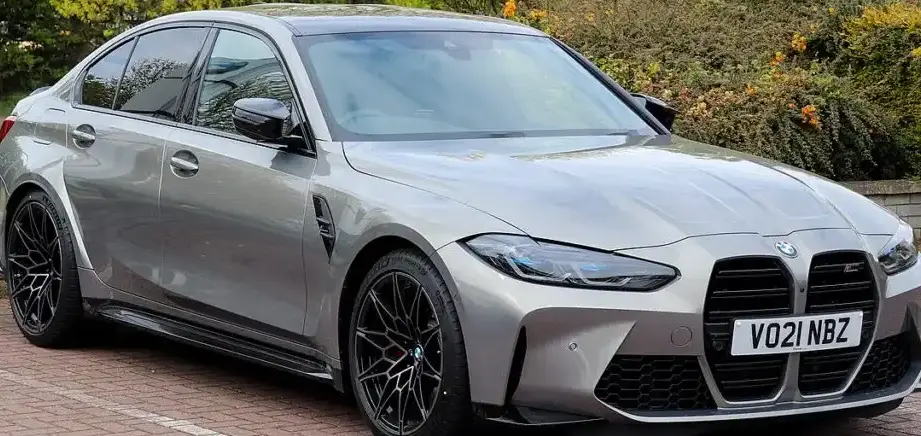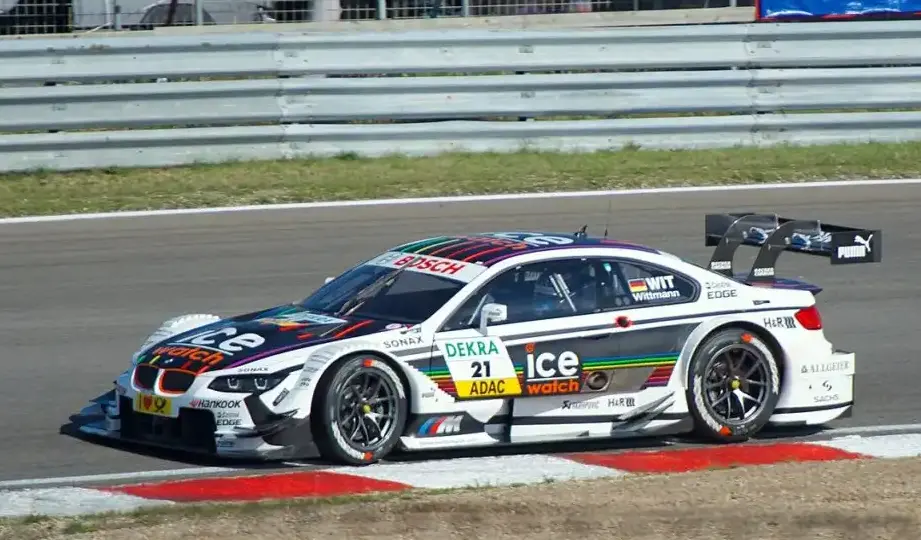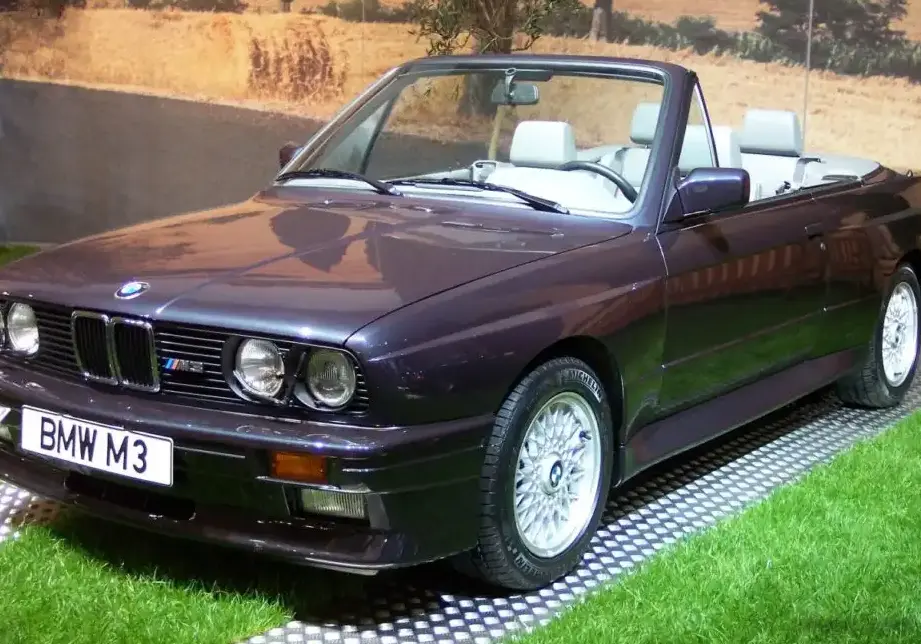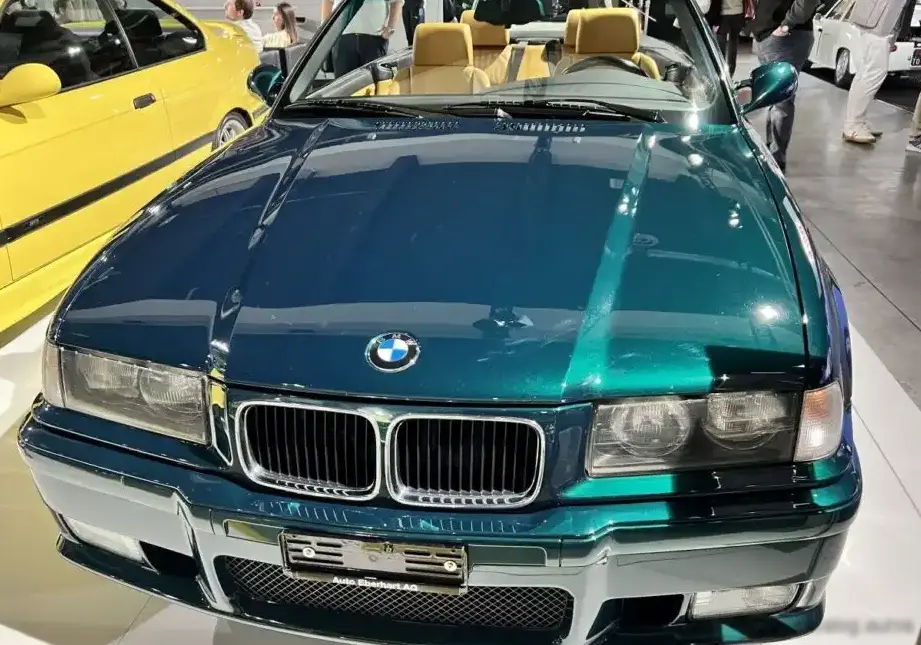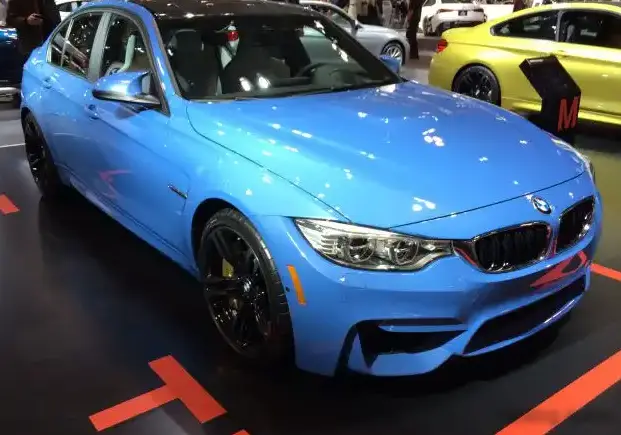
The BMW M3 (F80), produced from 2014 to 2020, represents the fourth generation of the high-performance M3 lineage. This generation marked a significant departure from previous M3s, adopting a turbocharged inline-six engine and offering a dual-clutch transmission (DCT) for the first time. Positioned as the core performance variant of the 3 Series (F30) range, the F80 M3 aimed to deliver a thrilling driving experience with enhanced track capability while maintaining a degree of everyday usability. The 3.0-liter (431 hp) DCT configuration was a popular choice, balancing performance with the convenience of an automatic transmission.
Technical Specifications
| Brand | BMW |
| Model | M3 |
| Generation | M3 (F80) |
| Type (Engine) | 3.0 (431 Hp) DCT |
| Start of production | 2014 |
| End of production | 2020 |
| Powertrain Architecture | Internal Combustion engine |
| Body type | Sedan |
| Seats | 5 |
| Doors | 4 |
| Fuel consumption (economy) – urban | 11.1 l/100 km (21.2 US mpg) |
| Fuel consumption (economy) – extra urban | 6.7 l/100 km (35.1 US mpg) |
| Fuel consumption (economy) – combined | 8.3 l/100 km (28.3 US mpg) |
| CO2 emissions | 194 g/km |
| Fuel Type | Petrol (Gasoline) |
| Acceleration 0 – 100 km/h | 4.1 sec |
| Acceleration 0 – 62 mph | 4.1 sec |
| Acceleration 0 – 60 mph | 3.9 sec |
| Maximum speed | 250 km/h (155.34 mph) |
| Emission standard | Euro 6 |
| Weight-to-power ratio | 3.6 kg/Hp |
| Weight-to-torque ratio | 2.8 kg/Nm |
| Power | 431 Hp @ 5500-7300 rpm |
| Torque | 550 Nm @ 1850-5500 rpm (405.66 lb.-ft. @ 1850-5500 rpm) |
| Engine layout | Front, Longitudinal |
| Engine Model/Code | S55B30A |
| Engine displacement | 2979 cm3 (181.79 cu. in.) |
| Number of cylinders | 6 |
| Engine configuration | Inline |
| Cylinder Bore | 84 mm (3.31 in.) |
| Piston Stroke | 89.6 mm (3.53 in.) |
| Compression ratio | 10.2:1 |
| Number of valves per cylinder | 4 |
| Fuel injection system | Direct injection |
| Engine aspiration | Twin-power turbo, Intercooler |
| Engine oil capacity | 6.5 l (6.87 US qt | 5.72 UK qt) |
| Coolant | 13.9 l (14.69 US qt | 12.23 UK qt) |
| Kerb Weight | 1560 kg (3439.21 lbs.) |
| Max. weight | 2100 kg (4629.71 lbs.) |
| Max load | 540 kg (1190.5 lbs.) |
| Trunk (boot) space – minimum | 480 l (16.95 cu. ft.) |
| Fuel tank capacity | 60 l (15.85 US gal | 13.2 UK gal) |
| Max. roof load | 75 kg (165.35 lbs.) |
| Length | 4671 mm (183.9 in.) |
| Width | 1877 mm (73.9 in.) |
| Width including mirrors | 2037 mm (80.2 in.) |
| Height | 1424 mm (56.06 in.) |
| Wheelbase | 2812 mm (110.71 in.) |
| Front track | 1579 mm (62.17 in.) |
| Rear (Back) track | 1603 mm (63.11 in.) |
| Front overhang | 811 mm (31.93 in.) |
| Rear overhang | 1048 mm (41.26 in.) |
| Drag coefficient (Cd) | 0.34 |
| Minimum turning circle (turning diameter) | 12.2 m (40.03 ft.) |
| Drivetrain Architecture | Rear wheel drive |
| Number of gears and type of gearbox | 7 gears, automatic transmission DCT |
| Front suspension | Independent coil spring |
| Rear suspension | Independent multi-link suspension |
| Front brakes | Ventilated discs |
| Rear brakes | Ventilated discs |
| Assisting systems | ABS (Anti-lock braking system) |
| Steering type | Steering rack and pinion |
| Power steering | Electric Steering |
| Tires size | 255/40 ZR18 95Y; 275/40 ZR18 99Y |
| Wheel rims size | 9.0J x 18; 10.0J x 18 |
Powertrain & Engine Architecture
The heart of the F80 M3 is the S55B30A, a 3.0-liter inline-six engine. This engine represents a significant shift from the naturally aspirated engines of previous M3 generations. It utilizes direct injection, a twin-scroll turbocharger, and BMW’s Valvetronic variable valve timing and variable valve lift technology. The S55 produces 431 horsepower at 5,500-7,300 rpm and 405 lb-ft of torque between 1,850 and 5,500 rpm. The DCT (Dual Clutch Transmission) is a seven-speed unit that provides rapid, precise shifts. Unlike a traditional automatic, the DCT uses two separate clutches – one for odd gears and one for even gears – allowing for near-instantaneous gear changes. This transmission is crucial to maximizing the engine’s performance potential.
Driving Characteristics
The 3.0-liter DCT M3 delivers a markedly different driving experience compared to its predecessors and other variants within the F30 3 Series lineup. While the manual transmission offered a more engaging, driver-focused experience, the DCT provides exceptional responsiveness and acceleration. The DCT’s programming allows for both comfortable cruising and aggressive, track-focused driving. The broad torque curve of the S55 engine means strong acceleration is available across a wide range of engine speeds. Compared to the standard 3 Series models, the M3’s suspension is significantly stiffer and more performance-oriented, resulting in a firmer ride. The steering is precise and well-weighted, providing excellent feedback to the driver. The DCT’s shift speed and programming contribute to a 0-60 mph time of around 3.9 seconds.
Equipment & Trim Levels
The F80 M3 came standard with a comprehensive list of features, including leather upholstery, power-adjustable front seats, a premium sound system, and a navigation system. The interior featured M-specific trim elements, such as carbon fiber accents and M badging. Optional extras included upgraded leather, a head-up display, adaptive cruise control, and a driver assistance package. The Competition Package, introduced in 2016, added even more aggressive styling cues, a slightly more powerful engine (444 hp), and revised suspension tuning. Exterior color options were extensive, and a variety of wheel designs were available.
Chassis & Braking
The F80 M3 features a robust chassis designed to handle the increased power and performance. The suspension utilizes independent coil springs in the front and an independent multi-link setup in the rear. The M3’s braking system consists of ventilated discs at all four corners, providing ample stopping power. The standard brakes are already quite capable, but carbon-ceramic brakes were available as an option for even greater performance and fade resistance. The M3 also features an electronically controlled limited-slip differential, which helps to improve traction and handling during cornering.
Market Reception & Comparison
The F80 M3 was widely praised by automotive critics for its performance, handling, and overall driving experience. The turbocharged engine was initially a point of contention for some purists, but its performance capabilities quickly won over most reviewers. Compared to the previous E92 M3, the F80 offered significantly more power and torque, resulting in faster acceleration and improved track performance. The DCT transmission was also generally well-received, although some drivers preferred the engagement of the manual transmission. Fuel economy was reasonable for a high-performance car, averaging around 28.3 US mpg in combined driving. Reliability was generally good, although some owners reported issues with the cooling system and oil leaks.
Legacy
The F80 M3 represents a pivotal moment in the M3’s history, embracing forced induction and advanced transmission technology. The S55 engine proved to be a robust and capable powerplant, and the DCT transmission offered a compelling blend of performance and convenience. On the used car market, the F80 M3 remains a highly sought-after vehicle, commanding premium prices. Well-maintained examples are considered a solid investment for enthusiasts seeking a thrilling and capable performance sedan. The F80’s influence can be seen in subsequent M cars, solidifying its place as a modern classic.