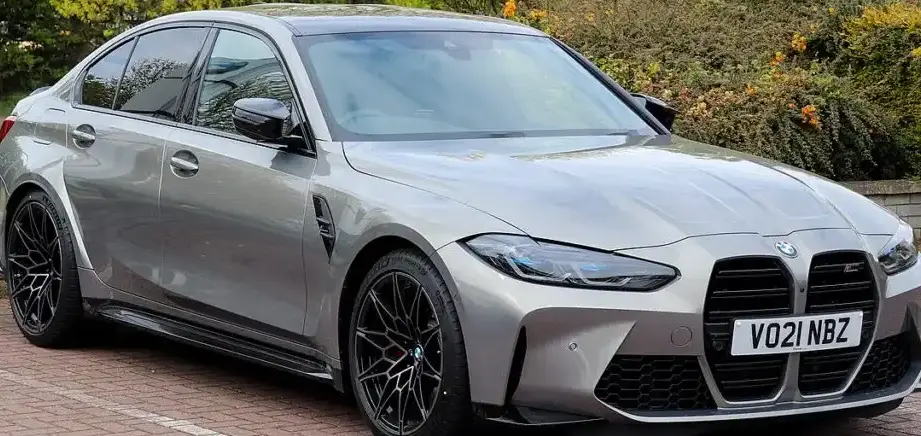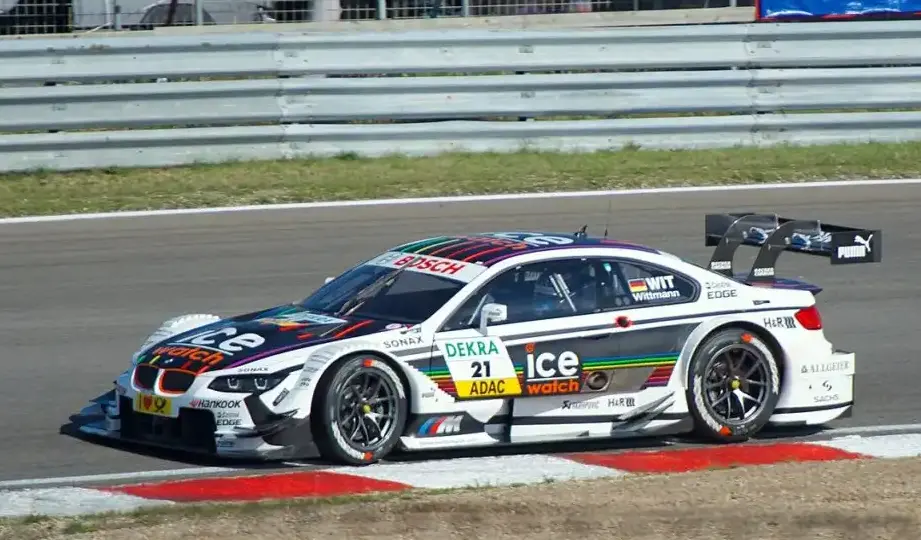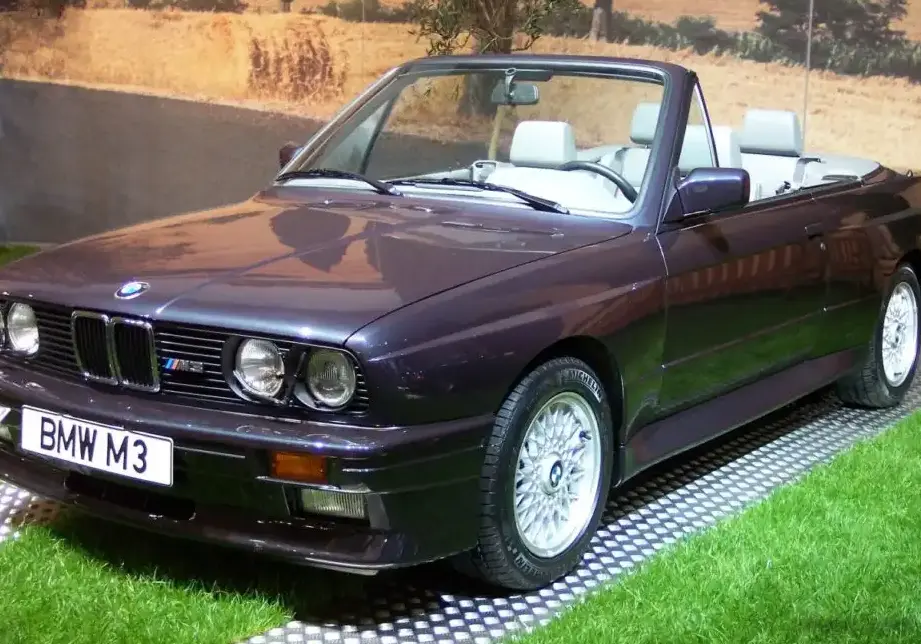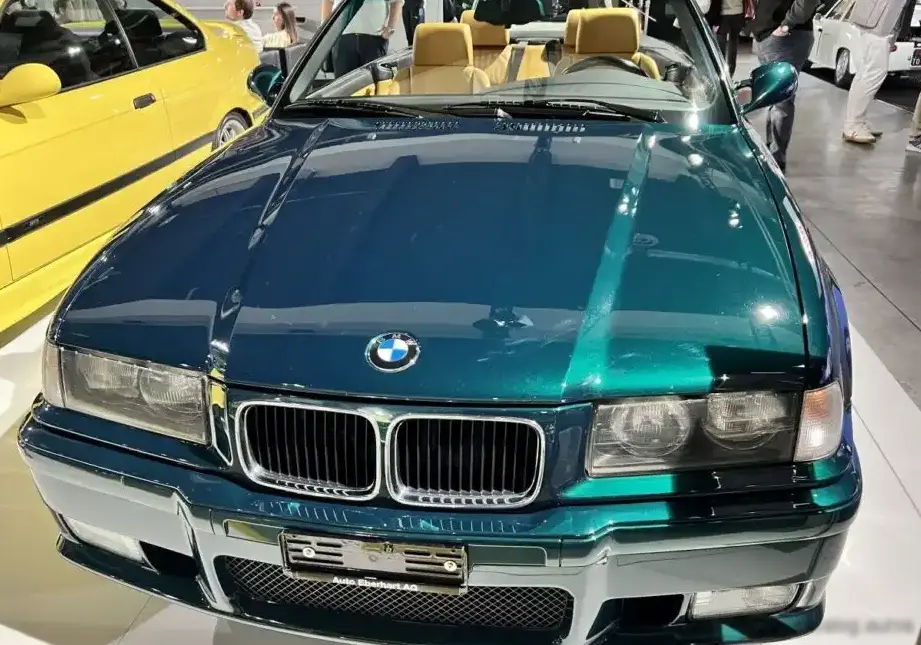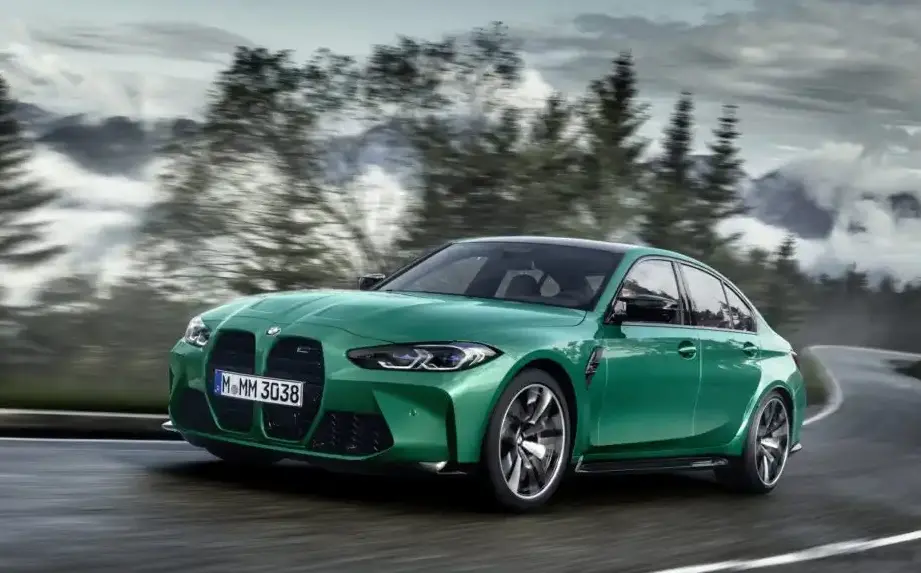
The BMW M3 (G80) Competition 3.0, equipped with the Steptronic 8-speed automatic transmission, represents a significant iteration in the storied lineage of BMW’s high-performance M3. Introduced for the 2021 model year and continuing through 2024, this variant sits at the pinnacle of the G80 M3 range, offering a substantial increase in power and performance over the base M3. It is built on the CLAR (Cluster Architecture) platform, shared with the 3 Series, but extensively modified for enhanced track capability and driving dynamics. The G80 generation marked a controversial design departure for the M3, featuring a large, vertically-oriented kidney grille, but the Competition variant quickly established itself as a benchmark in the high-performance sedan segment.
Technical Specifications
| Brand | BMW |
| Model | M3 |
| Generation | M3 (G80) |
| Type (Engine) | Competition 3.0 (510 Hp) Steptronic |
| Start of production | 2020 year |
| End of production | 2024 year |
| Powertrain Architecture | Internal Combustion engine |
| Body type | Sedan |
| Seats | 5 |
| Doors | 4 |
| Combined fuel consumption (WLTP) | 10.0-10.2 l/100 km |
| Combined fuel consumption (US mpg) | 23.5 – 23.1 |
| Combined fuel consumption (UK mpg) | 28.2 – 27.7 |
| Combined fuel consumption (km/l) | 10 – 9.8 |
| CO2 emissions (WLTP) | 228-234 g/km |
| Fuel consumption (urban – NEDC) | 14.6 l/100 km |
| Fuel consumption (urban – US mpg) | 16.1 |
| Fuel consumption (urban – UK mpg) | 19.3 |
| Fuel consumption (urban – km/l) | 6.8 |
| Fuel consumption (extra urban – NEDC) | 7.6 l/100 km |
| Fuel consumption (extra urban – US mpg) | 30.9 |
| Fuel consumption (extra urban – UK mpg) | 37.2 |
| Fuel consumption (extra urban – km/l) | 13.2 |
| Fuel consumption (combined – NEDC) | 10.2 l/100 km |
| Fuel consumption (combined – US mpg) | 23.1 |
| Fuel consumption (combined – UK mpg) | 27.7 |
| Fuel consumption (combined – km/l) | 9.8 |
| CO2 emissions (NEDC) | 234 g/km |
| Fuel Type | Petrol (Gasoline) |
| Acceleration 0 – 100 km/h | 3.9 sec |
| Acceleration 0 – 62 mph | 3.9 sec |
| Acceleration 0 – 60 mph | 3.7 sec |
| Maximum speed | 250 km/h (155.34 mph), Electronically limited |
| Emission standard | Euro 6d |
| Weight-to-power ratio | 3.4 kg/Hp |
| Hp/tonne | 294.8 |
| Weight-to-torque ratio | 2.7 kg/Nm |
| Nm/tonne | 375.7 |
| Power | 510 Hp @ 6250 rpm |
| Power per litre | 170.4 Hp/l |
| Torque | 650 Nm @ 2750-5500 rpm (479.42 lb.-ft. @ 2750-5500 rpm) |
| Engine layout | Front, Longitudinal |
| Engine Model/Code | S58B30A |
| Engine displacement | 2993 cm3 (182.64 cu. in.) |
| Number of cylinders | 6 |
| Engine configuration | Inline |
| Cylinder Bore | 84 mm (3.31 in.) |
| Piston Stroke | 90 mm (3.54 in.) |
| Compression ratio | 9.3:1 |
| Number of valves per cylinder | 4 |
| Fuel injection system | Direct injection |
| Engine aspiration | Twin-power turbo, Intercooler |
| Valvetrain | DOHC |
| Engine oil capacity | 7 l (7.4 US qt | 6.16 UK qt) |
| Kerb Weight | 1730 kg (3814 lbs.) |
| Max. weight | 2210 kg (4872.22 lbs.) |
| Max load | 480 kg (1058.22 lbs.) |
| Trunk (boot) space – minimum | 480 l (16.95 cu. ft.) |
| Fuel tank capacity | 59 l (15.59 US gal | 12.98 UK gal) |
| Max. roof load | 75 kg (165.35 lbs.) |
| Length | 4794 mm (188.74 in.) |
| Width | 1903 mm (74.92 in.) |
| Width including mirrors | 2068 mm (81.42 in.) |
| Height | 1433 mm (56.42 in.) |
| Wheelbase | 2857 mm (112.48 in.) |
| Front track | 1617 mm (63.66 in.) |
| Rear (Back) track | 1605 mm (63.19 in.) |
| Front overhang | 860 mm (33.86 in.) |
| Rear overhang | 1077 mm (42.4 in.) |
| Ride height (ground clearance) | 120 mm (4.72 in.) |
| Drag coefficient (Cd) | 0.33 |
| Minimum turning circle (turning diameter) | 12.2 m (40.03 ft.) |
| Drivetrain Architecture | Rear wheel drive |
| Number of gears and type of gearbox | 8 gears, automatic transmission Steptronic |
| Front suspension | Coil spring, Double wishbone |
| Rear suspension | Independent multi-link suspension |
| Front brakes | Ventilated discs |
| Rear brakes | Ventilated discs |
| Assisting systems | ABS (Anti-lock braking system) |
| Steering type | Steering rack and pinion |
| Power steering | Electric Steering |
| Front tires | 275/40 ZR18 103Y XL |
| Rear tires | 285/35 ZR19 103Y XL |
| Front wheel rims | 9.5J x 18 |
| Rear wheel rims | 10.5J x 19 |
Powertrain & Engine Architecture
The heart of the M3 Competition is the S58B30A, a 3.0-liter inline-six engine. This engine is a significant departure from the N55 and B58 engines previously used in M models, featuring a closed-deck block for increased rigidity and improved cooling. The S58 utilizes a twin-scroll, twin-turbocharger setup, delivering a substantial 650 Nm (479 lb-ft) of torque between 2750 and 5500 rpm. Direct fuel injection, combined with a high compression ratio of 9.3:1, contributes to both power and efficiency. The engine employs a double-VANOS variable valve timing system for optimized performance across the rev range. The Steptronic 8-speed automatic transmission is specifically tuned for the M3, offering quicker shift times and more aggressive programming than the standard 3 Series transmission. It also features Drivelogic, allowing the driver to select from different shift profiles.
Driving Characteristics
The M3 Competition 3.0 delivers a thrilling driving experience. The combination of the high-output engine and the quick-shifting Steptronic transmission results in a 0-60 mph time of around 3.7 seconds. While the automatic transmission doesn’t offer the same level of driver engagement as a manual, it provides seamless gear changes and allows the driver to focus on maximizing performance. The gear ratios are optimized for both acceleration and high-speed cruising. Compared to the standard M3, the Competition model feels significantly more responsive and powerful, particularly in the mid-range. The electronically controlled limited-slip differential further enhances traction and cornering ability.
Equipment & Trim Levels
The M3 Competition came standard with a comprehensive list of features, including M Sport seats, Merino leather upholstery, a head-up display, and a premium Harman Kardon sound system. The interior featured carbon fiber trim and M-specific badging. Optional extras included M Carbon bucket seats, a carbon fiber roof, and various driver assistance systems. The Competition trim also included adaptive M suspension, M Compound brakes, and an M exhaust system as standard equipment.
Chassis & Braking
The G80 M3 Competition boasts a robust chassis designed for both track performance and everyday usability. The front suspension utilizes a double-wishbone design with forged aluminum components, while the rear features a multi-link setup. Adaptive dampers are standard, allowing the driver to adjust the suspension stiffness to suit their preferences. The braking system consists of large, ventilated discs at all four corners, providing ample stopping power. M Compound brakes, offering even greater performance, were available as an option. The M3 Competition also features M Servotronic steering, which provides variable steering assistance based on vehicle speed.
Market Reception & Comparison
The M3 Competition 3.0 was widely praised by automotive critics for its exceptional performance and handling. However, the controversial exterior styling drew mixed reactions. Compared to the standard M3, the Competition model was seen as the more desirable choice for enthusiasts seeking maximum performance. It offered a significant upgrade in power and responsiveness, making it a formidable competitor to other high-performance sedans such as the Mercedes-AMG C63 and the Audi RS 5. Fuel economy, while not a primary concern for M3 buyers, was reasonable for a vehicle of this caliber, averaging around 23-24 mpg in combined driving.
Legacy
The BMW M3 (G80) Competition 3.0 has quickly become a sought-after model in the used car market. The S58 engine has proven to be remarkably reliable, with few reported issues. The combination of performance, luxury, and technology makes it a compelling choice for enthusiasts. As with previous generations of the M3, the G80 Competition is expected to hold its value well over time, cementing its place as a modern classic.