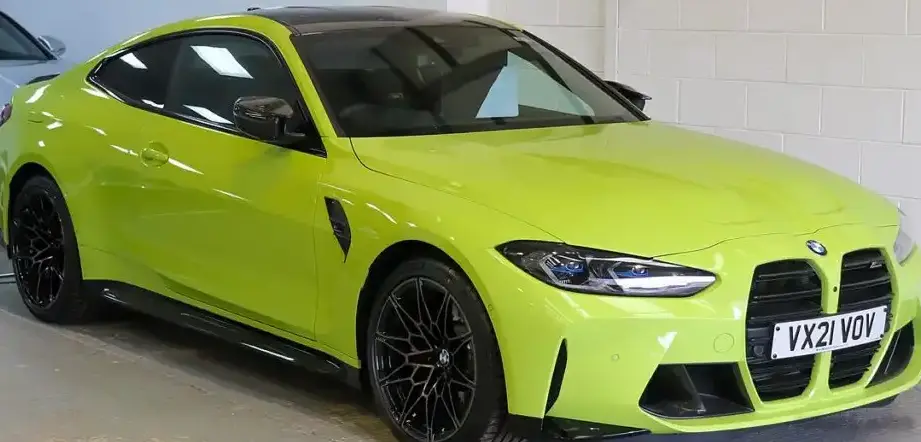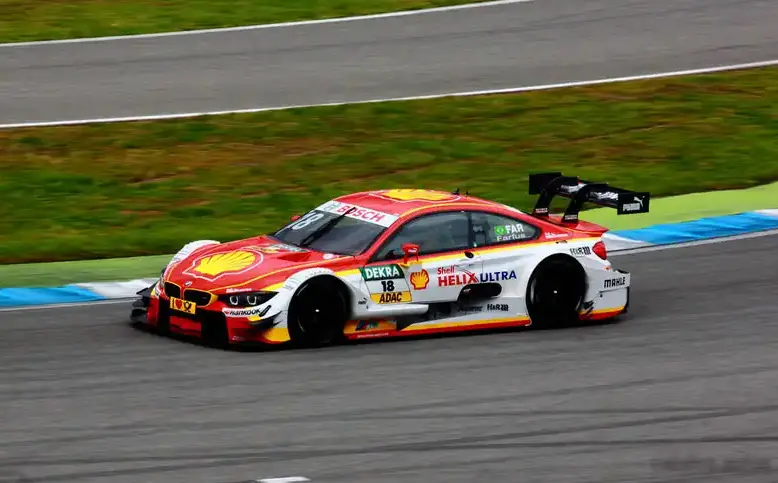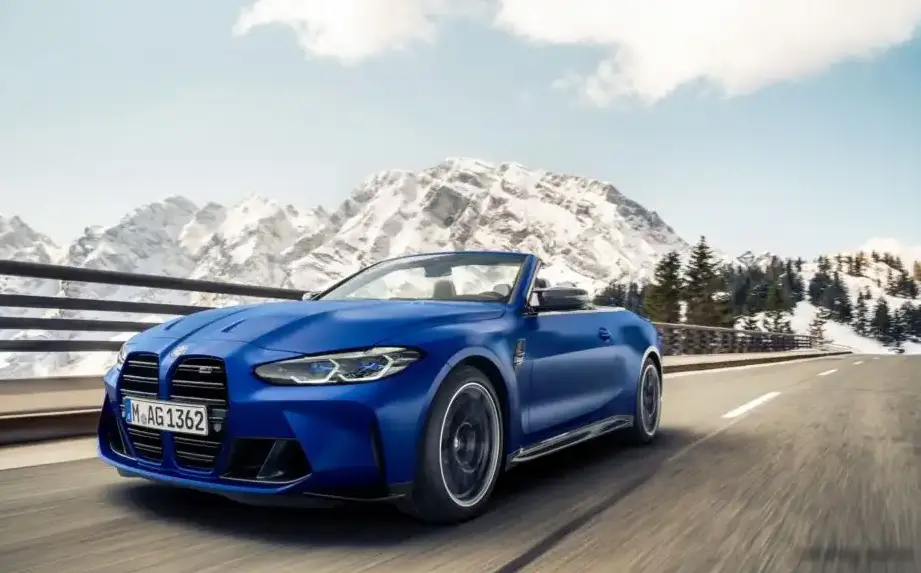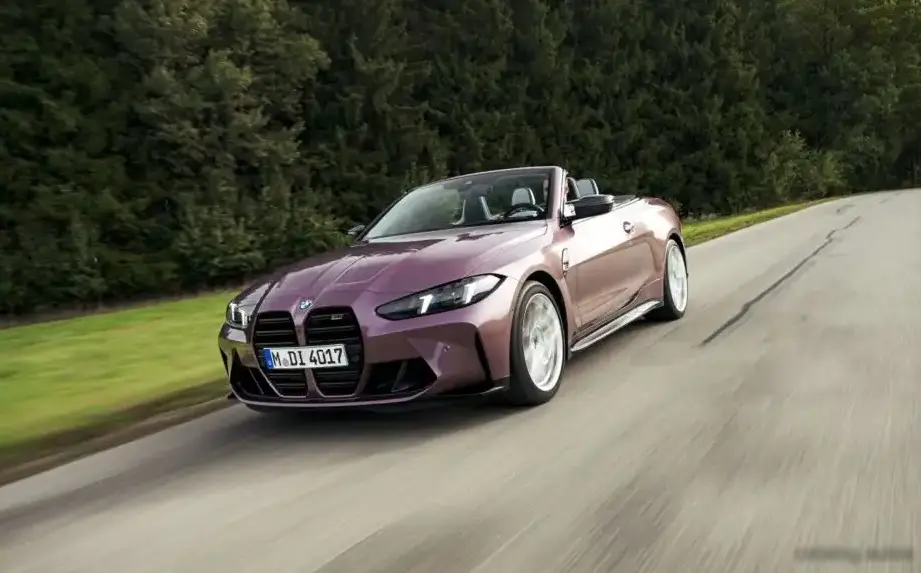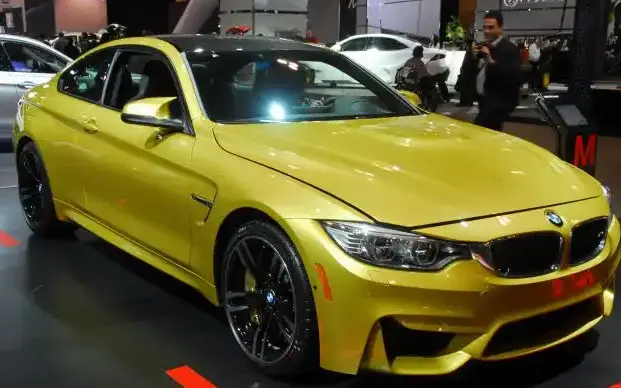
The BMW M4 Competition (F82), produced from 2016 to 2020, represents a significant evolution of the F82 M4 platform. Positioned as the higher-performance variant within the fourth generation of the M4, it offered a substantial power increase over the standard M4 and served as a direct competitor to models like the Porsche 911 Carrera and the Mercedes-AMG C63 Coupe. The Competition package focused on enhancing both the engine’s output and the overall driving experience, appealing to enthusiasts seeking a more track-focused and engaging coupe.
Technical Specifications
| Brand | BMW |
| Model | M4 |
| Generation | M4 (F82) |
| Type (Engine) | Competition 3.0 (450 Hp) |
| Start of production | 2016 |
| End of production | 2020 |
| Powertrain Architecture | Internal Combustion engine |
| Body type | Coupe |
| Seats | 4 |
| Doors | 2 |
| Fuel consumption (economy) – urban | 12 l/100 km (19.6 US mpg, 23.5 UK mpg, 8.3 km/l) |
| Fuel consumption (economy) – extra urban | 6.9 l/100 km (34.1 US mpg, 40.9 UK mpg, 14.5 km/l) |
| Fuel consumption (economy) – combined | 8.8 l/100 km (26.7 US mpg, 32.1 UK mpg, 11.4 km/l) |
| CO2 emissions | 204 g/km |
| Fuel Type | Petrol (Gasoline) |
| Acceleration 0 – 100 km/h | 4.2 sec |
| Acceleration 0 – 62 mph | 4.2 sec |
| Acceleration 0 – 60 mph | 4 sec |
| Maximum speed | 250 km/h (155.34 mph) |
| Emission standard | Euro 6 |
| Weight-to-power ratio | 3.4 kg/Hp, 297 Hp/tonne |
| Weight-to-torque ratio | 2.8 kg/Nm, 363 Nm/tonne |
| Power | 450 Hp @ 7000 rpm |
| Power per litre | 151.1 Hp/l |
| Torque | 550 Nm @ 1850-5500 rpm (405.66 lb.-ft. @ 1850-5500 rpm) |
| Engine layout | Front, Longitudinal |
| Engine Model/Code | S55B30A |
| Engine displacement | 2979 cm3 (181.79 cu. in.) |
| Number of cylinders | 6 |
| Engine configuration | Inline |
| Cylinder Bore | 84 mm (3.31 in.) |
| Piston Stroke | 89.6 mm (3.53 in.) |
| Compression ratio | 10.2:1 |
| Number of valves per cylinder | 4 |
| Fuel injection system | Direct injection |
| Engine aspiration | Twin-power turbo, Intercooler |
| Engine oil capacity | 6.5 l (6.87 US qt | 5.72 UK qt) |
| Coolant | 13.9 l (14.69 US qt | 12.23 UK qt) |
| Kerb Weight | 1515 kg (3340 lbs.) |
| Max. weight | 2040 kg (4497.43 lbs.) |
| Max load | 525 kg (1157.43 lbs.) |
| Trunk (boot) space – minimum | 445 l (15.72 cu. ft.) |
| Fuel tank capacity | 60 l (15.85 US gal | 13.2 UK gal) |
| Max. roof load | 75 kg (165.35 lbs.) |
| Length | 4671 mm (183.9 in.) |
| Width | 1870 mm (73.62 in.) |
| Height | 1392 mm (54.8 in.) |
| Wheelbase | 2812 mm (110.71 in.) |
| Front track | 1579 mm (62.17 in.) |
| Rear (Back) track | 1604 mm (63.15 in.) |
| Ride height (ground clearance) | 121 mm (4.76 in.) |
| Drag coefficient (Cd) | 0.34 |
| Minimum turning circle (turning diameter) | 12.2 m (40.03 ft.) |
| Drivetrain Architecture | The Internal combustion engine (ICE) drives the rear wheels of the vehicle. |
| Drive wheel | Rear wheel drive |
| Number of gears and type of gearbox | 6 gears, manual transmission |
| Front suspension | Independent coil spring |
| Rear suspension | Independent multi-link suspension |
| Front brakes | Ventilated discs |
| Rear brakes | Ventilated discs |
| Assisting systems | ABS (Anti-lock braking system) |
| Steering type | Steering rack and pinion |
| Power steering | Electric Steering |
| Tires size | 265/30 ZR20 94Y; 285/30 ZR20 99Y |
| Wheel rims size | 9.0J x 20; 10.0J x 20 |
INTRODUCTION
The BMW M4 Competition, launched in 2016, built upon the foundation of the F82 M4, which itself was the successor to the highly regarded E92 M3. The F82 generation marked a shift for BMW’s high-performance coupe, adopting a turbocharged inline-six engine and a more aggressive design language. The Competition variant specifically aimed to bridge the gap between the standard M4 and the track-focused M4 GTS, offering increased power and refined handling characteristics. It was sold throughout the 2016-2020 model years, serving as a key offering in BMW’s performance lineup.
Powertrain & Engine Architecture
At the heart of the M4 Competition lies the S55B30A 3.0-liter inline-six engine. This engine, a derivative of the N55, features a closed-deck block for increased strength, forged crankshaft, and reinforced connecting rods. The key upgrade over the standard M4 was a power increase to 450 horsepower at 7,000 rpm and 405 lb-ft of torque available from 1,850 to 5,500 rpm. This was achieved through revised engine mapping and increased turbocharger boost. The S55 utilizes direct fuel injection and a twin-scroll turbocharger system, contributing to its responsive power delivery. The engine’s valvetrain employs double-VANOS (variable valve timing) and double-VANOS (variable valve lift) for optimized performance across the rev range. The M4 Competition was exclusively offered with a six-speed manual transmission, providing a more engaging driving experience compared to the optional seven-speed dual-clutch transmission available on the standard M4.
Driving Characteristics
The M4 Competition’s driving experience is defined by its potent power delivery and precise handling. The increased horsepower and torque, combined with the six-speed manual, result in a noticeably quicker acceleration than the standard M4. The 0-60 mph sprint is achieved in approximately 4 seconds. The manual transmission provides a direct connection to the engine, allowing for precise gear changes and greater driver control. The suspension, tuned for performance, offers a firm but controlled ride. While comfortable enough for daily driving, it truly shines on winding roads and track days. The steering is precise and communicative, providing ample feedback to the driver. Compared to the standard M4, the Competition model feels more eager to rev and offers a more visceral driving experience.
Equipment & Trim Levels
The M4 Competition came standard with a comprehensive list of features, including leather upholstery, power-adjustable sport seats, a premium sound system, and a navigation system. Interior trim options included carbon fiber accents, adding a sporty and luxurious touch. Standard exterior features included an aggressive aerodynamic package, including a front splitter, rear diffuser, and quad exhaust outlets. Optional extras included adaptive M suspension, carbon ceramic brakes, and a variety of interior customization options. The Competition package also included unique badging and styling cues to differentiate it from the standard M4.
Chassis & Braking
The M4 Competition utilizes a reinforced chassis and suspension components to handle the increased power output. The front suspension features an independent coil spring setup with aluminum components to reduce weight. The rear suspension employs an independent multi-link design, optimized for handling and stability. Braking duties are handled by ventilated discs at all four corners, providing ample stopping power. The standard ABS (Anti-lock braking system) and stability control systems enhance safety and control. The M4 Competition’s chassis is designed to minimize body roll and maximize grip, resulting in a confident and planted feel in corners.
Market Reception & Comparison
The M4 Competition was generally well-received by automotive critics, who praised its increased power, improved handling, and engaging driving experience. It was often lauded as a more focused and rewarding alternative to the standard M4. Compared to the standard M4, the Competition model offered a significant performance upgrade, but at a higher price point. Fuel economy, while not a primary concern for M4 buyers, was rated at around 26.7 US mpg combined. Reliability was generally good, although some owners reported minor issues with the cooling system and electronic components. Compared to rivals like the Porsche 911 Carrera, the M4 Competition offered a more practical and spacious interior, while the Mercedes-AMG C63 Coupe provided a more luxurious and comfortable ride.
Legacy
The M4 Competition (F82) has established itself as a desirable and collectible performance coupe. The S55 engine, while known for its complexity, has proven to be relatively reliable when properly maintained. On the used car market, well-maintained examples of the M4 Competition command a premium price. The car’s combination of performance, handling, and exclusivity has made it a favorite among enthusiasts. The F82 M4 Competition represents a high point in BMW’s M car lineage, offering a thrilling and engaging driving experience that continues to appeal to performance car enthusiasts today.