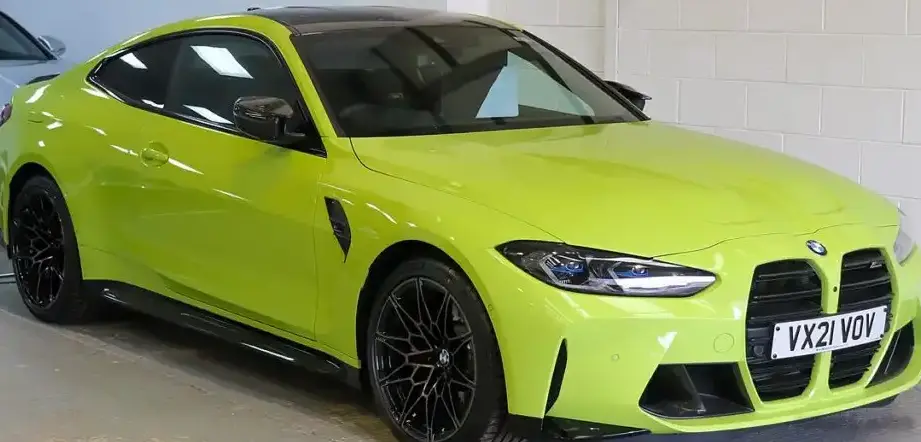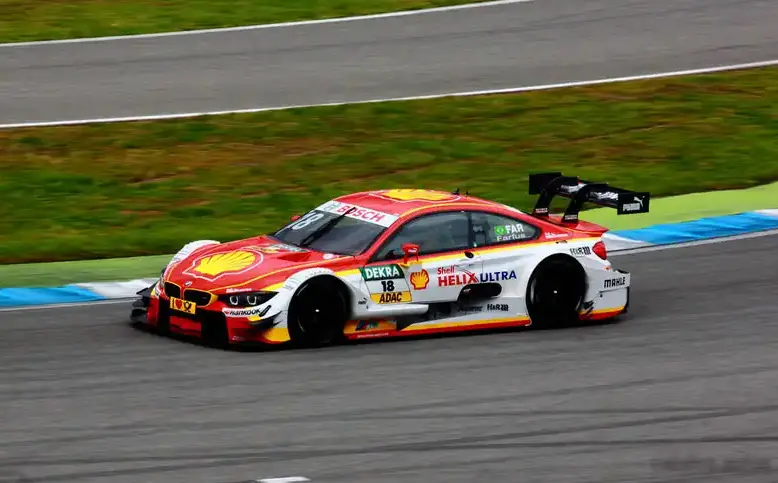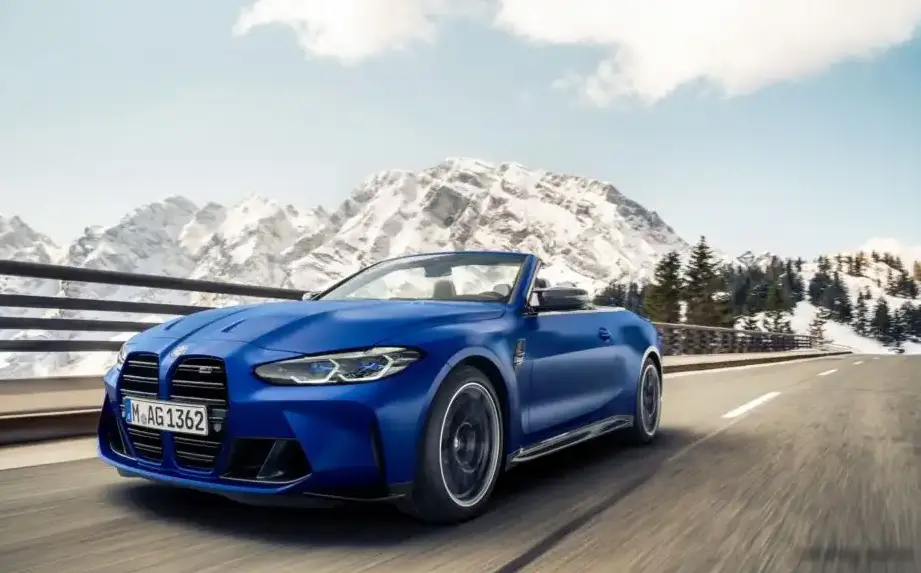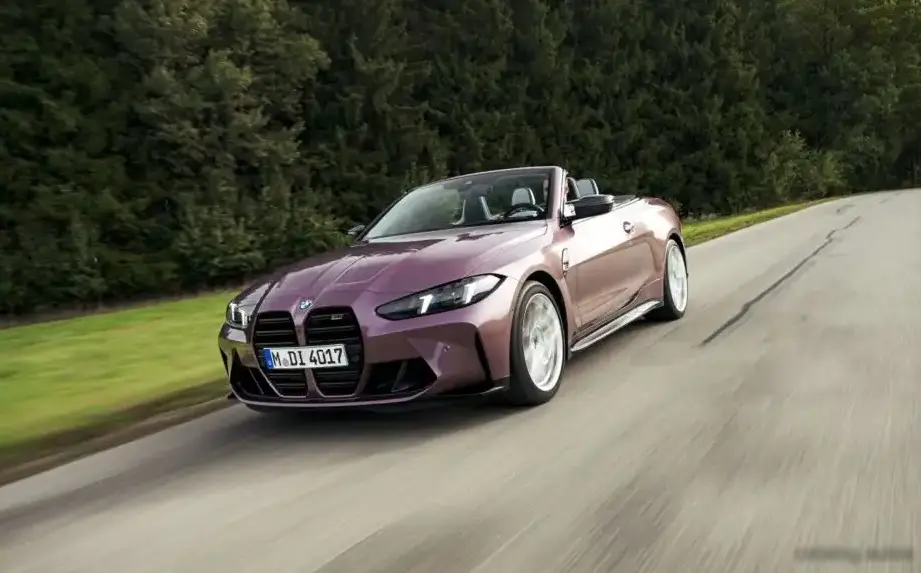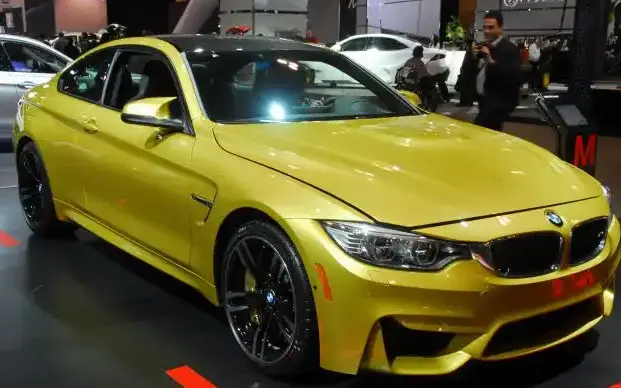
The BMW M4 Competition (F82), produced from 2016 to 2020, represented a significant evolution of the F82 M4 platform. Positioned as the higher-performance variant within the M4 lineup, it offered increased power and enhanced track capabilities compared to the standard M4. This model year marked a mid-cycle refresh, introducing several key upgrades to the engine and suspension. The Competition package aimed to bridge the gap between the standard M4 and the more focused, track-oriented M4 Competition Sport models that followed.
Technical Specifications
| Brand | BMW |
| Model | M4 |
| Generation | M4 (F82) |
| Type (Engine) | Competition 3.0 (450 Hp) DCT |
| Start of production | 2016 |
| End of production | 2020 |
| Powertrain Architecture | Internal Combustion engine |
| Body type | Coupe |
| Seats | 4 |
| Doors | 2 |
| Fuel consumption (economy) – urban | 11.1 l/100 km (21.2 US mpg) |
| Fuel consumption (economy) – extra urban | 6.7 l/100 km (35.1 US mpg) |
| Fuel consumption (economy) – combined | 8.3 l/100 km (28.3 US mpg) |
| CO2 emissions | 194 g/km |
| Fuel Type | Petrol (Gasoline) |
| Acceleration 0 – 100 km/h | 4 sec |
| Acceleration 0 – 62 mph | 4 sec |
| Acceleration 0 – 60 mph | 3.8 sec |
| Maximum speed | 250 km/h (155.34 mph) |
| Emission standard | Euro 6 |
| Weight-to-power ratio | 3.4 kg/Hp |
| Weight-to-torque ratio | 2.8 kg/Nm |
| Power | 450 Hp @ 7000 rpm |
| Power per litre | 151.1 Hp/l |
| Torque | 550 Nm @ 1850-5500 rpm (405.66 lb.-ft. @ 1850-5500 rpm) |
| Engine layout | Front, Longitudinal |
| Engine Model/Code | S55B30A |
| Engine displacement | 2979 cm3 (181.79 cu. in.) |
| Number of cylinders | 6 |
| Engine configuration | Inline |
| Cylinder Bore | 84 mm (3.31 in.) |
| Piston Stroke | 89.6 mm (3.53 in.) |
| Compression ratio | 10.2:1 |
| Number of valves per cylinder | 4 |
| Fuel injection system | Direct injection |
| Engine aspiration | Twin-power turbo, Intercooler |
| Engine oil capacity | 6.5 l (6.87 US qt | 5.72 UK qt) |
| Coolant | 13.9 l (14.69 US qt | 12.23 UK qt) |
| Kerb Weight | 1540 kg (3395.12 lbs.) |
| Max. weight | 2040 kg (4497.43 lbs.) |
| Max load | 500 kg (1102.31 lbs.) |
| Trunk (boot) space – minimum | 445 l (15.72 cu. ft.) |
| Fuel tank capacity | 60 l (15.85 US gal | 13.2 UK gal) |
| Max. roof load | 75 kg (165.35 lbs.) |
| Length | 4671 mm (183.9 in.) |
| Width | 1870 mm (73.62 in.) |
| Height | 1392 mm (54.8 in.) |
| Wheelbase | 2812 mm (110.71 in.) |
| Front track | 1579 mm (62.17 in.) |
| Rear (Back) track | 1604 mm (63.15 in.) |
| Ride height (ground clearance) | 121 mm (4.76 in.) |
| Drag coefficient (Cd) | 0.34 |
| Minimum turning circle (turning diameter) | 12.2 m (40.03 ft.) |
| Drivetrain Architecture | Rear wheel drive |
| Number of gears and type of gearbox | 7 gears, automatic transmission DCT |
| Front suspension | Independent coil spring |
| Rear suspension | Independent multi-link suspension |
| Front brakes | Ventilated discs |
| Rear brakes | Ventilated discs |
| Assisting systems | ABS (Anti-lock braking system) |
| Steering type | Steering rack and pinion |
| Power steering | Electric Steering |
| Tires size | 265/30 ZR20 94Y; 285/30 ZR20 99Y |
| Wheel rims size | 9.0J x 20; 10.0J x 20 |
Powertrain & Engine Architecture
At the heart of the M4 Competition lies the S55B30A, a 3.0-liter inline-six engine. This engine is a derivative of the powerplant found in the previous-generation M3 and M4, but with significant enhancements. The key upgrade was an increase in peak power to 450 horsepower at 7,000 rpm and 406 lb-ft of torque available from 1,850 to 5,500 rpm. This was achieved through revised turbocharger tuning, cooling system improvements, and optimized engine management software. The S55 utilizes direct fuel injection and a twin-scroll turbocharger, contributing to its responsive power delivery. The engine’s longitudinal layout and front-engine placement are typical of BMW’s performance vehicles.
The M4 Competition exclusively paired with BMW’s 7-speed M Double Clutch Transmission (DCT). This dual-clutch transmission offers incredibly fast and precise gear changes, enhancing both acceleration and driving engagement. The DCT features a sophisticated control system with multiple shift programs, including a launch control function for optimal standing-start acceleration. The transmission’s gear ratios are tuned to maximize performance across a wide range of driving conditions.
Driving Characteristics
The M4 Competition delivers a noticeably more aggressive driving experience than the standard M4. The increased power and torque, combined with the quick-shifting DCT, result in blistering acceleration. Zero to 60 mph is achievable in around 3.8 seconds. The engine feels strong throughout the rev range, with minimal turbo lag. The DCT provides both smooth and rapid shifts, allowing the driver to maintain optimal engine speed during spirited driving. While the standard M4 offered a more balanced ride, the Competition model’s suspension tuning is firmer, prioritizing handling and stability. This can result in a slightly less comfortable ride on rough road surfaces.
Equipment & Trim Levels
The M4 Competition came standard with a comprehensive list of features, including leather upholstery, power-adjustable sport seats, a premium sound system, and BMW’s iDrive infotainment system with navigation. Standard exterior features included an aggressive aerodynamic package, quad exhaust outlets, and M-specific alloy wheels. Optional extras included carbon fiber trim, upgraded interior materials, and advanced driver-assistance systems such as lane departure warning and blind-spot monitoring. The Competition package also included M Sport brakes with larger rotors and calipers.
Chassis & Braking
The M4 Competition features a robust chassis designed for high-performance driving. The front suspension utilizes independent coil springs, while the rear employs an independent multi-link setup. Adaptive dampers are standard, allowing the driver to adjust the suspension stiffness to suit their preferences. The braking system consists of ventilated discs at all four corners, providing ample stopping power. The M Sport brakes, included with the Competition package, offer even greater thermal capacity and fade resistance.
Market Reception & Comparison
The M4 Competition was generally well-received by automotive critics, who praised its powerful engine, precise handling, and engaging driving experience. Compared to the standard M4, the Competition model offered a more focused and aggressive driving experience, appealing to enthusiasts who prioritize performance. However, some critics noted that the firmer suspension could compromise ride comfort. Compared to the M4 with a manual transmission, the DCT offered faster shift times but lacked the direct connection and engagement preferred by some drivers. Fuel economy was reasonable for a high-performance coupe, averaging around 28.3 US mpg in combined driving.
Legacy
The BMW M4 Competition (F82) remains a highly sought-after performance car in the used market. Its powerful engine, engaging driving dynamics, and relatively high build quality have contributed to its enduring appeal. While maintenance costs can be higher than those of more mainstream vehicles, the S55 engine has proven to be reasonably reliable when properly maintained. The M4 Competition represents a sweet spot in the F82 M4 lineup, offering a significant performance upgrade over the standard model without the extreme focus of the later M4 Competition Sport variants.