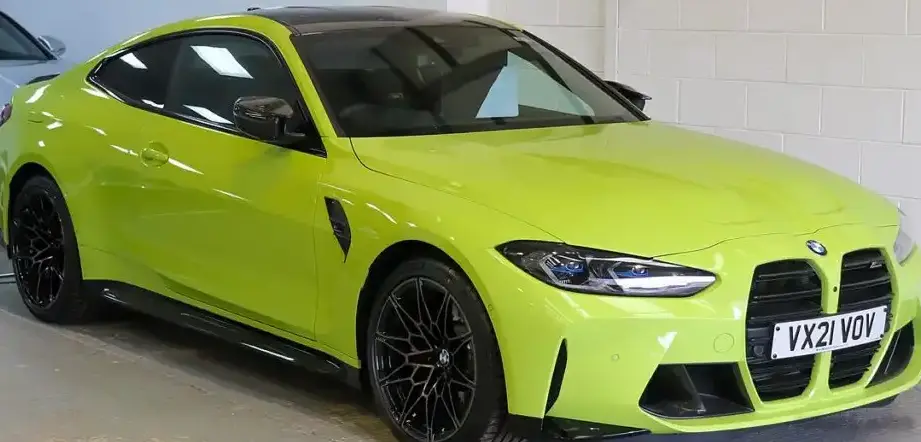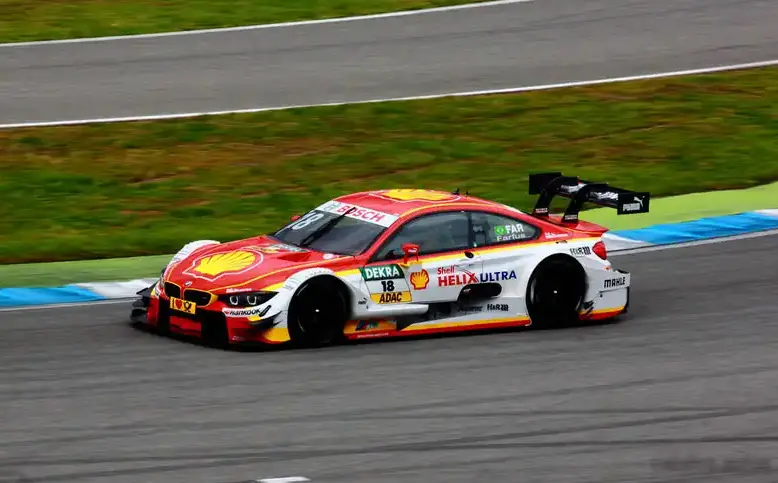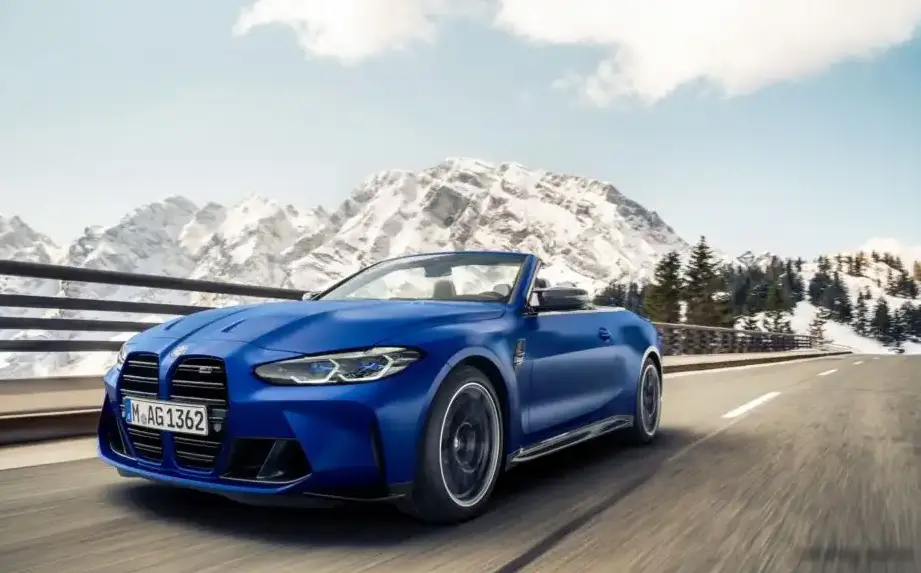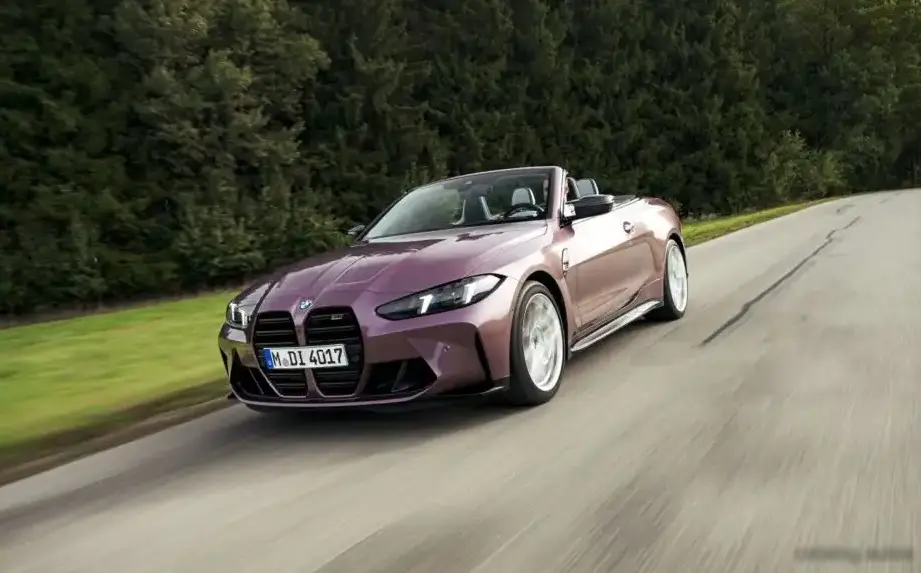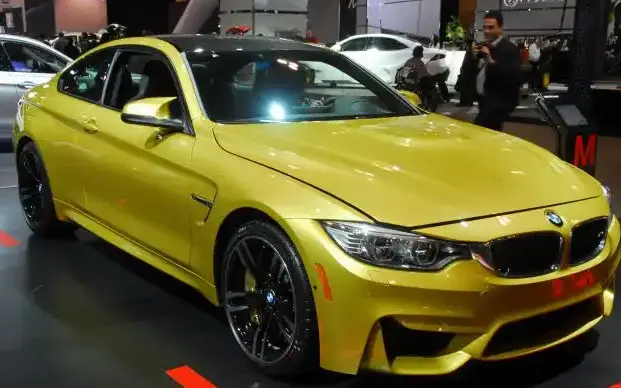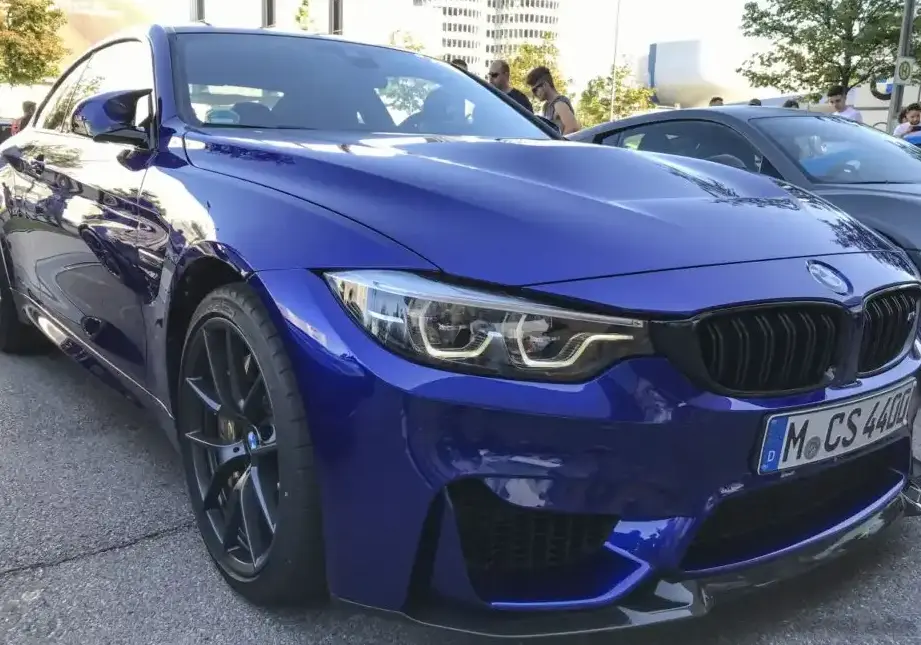
The BMW M4 CS (F82) 3.0, produced from 2017 to 2018, represents a focused, high-performance variant within the F82 M4 generation. Positioned above the standard M4 and below the even more extreme M4 GTS, the CS aimed to deliver a more engaging driving experience through weight reduction, increased power, and enhanced track capability. It served as a bridge between the daily-drivable M4 and the limited-production, track-focused GTS, appealing to enthusiasts seeking a more visceral connection to the car. The “CS” designation, historically standing for “Competition Sport,” signified BMW’s commitment to performance-oriented models.
Technical Specifications
| Brand | BMW |
| Model | M4 |
| Generation | M4 (F82) |
| Type (Engine) | CS 3.0 (460 Hp) DCT |
| Start of production | 2017 |
| End of production | 2018 |
| Powertrain Architecture | Internal Combustion engine |
| Body type | Coupe |
| Seats | 4 |
| Doors | 2 |
| Fuel consumption (economy) – urban | 11.2 l/100 km (21 US mpg, 25.2 UK mpg, 8.9 km/l) |
| Fuel consumption (economy) – extra urban | 6.8 l/100 km (34.6 US mpg, 41.5 UK mpg, 14.7 km/l) |
| Fuel consumption (economy) – combined | 8.4 l/100 km (28 US mpg, 33.6 UK mpg, 11.9 km/l) |
| CO2 emissions | 197 g/km |
| Fuel Type | Petrol (Gasoline) |
| Acceleration 0 – 100 km/h | 3.9 sec |
| Acceleration 0 – 62 mph | 3.9 sec |
| Acceleration 0 – 60 mph | 3.7 sec |
| Maximum speed | 280 km/h (173.98 mph) |
| Emission standard | Euro 6 |
| Weight-to-power ratio | 3.4 kg/Hp, 291.1 Hp/tonne |
| Weight-to-torque ratio | 2.6 kg/Nm, 379.7 Nm/tonne |
| Power | 460 Hp @ 6250 rpm |
| Power per litre | 154.4 Hp/l |
| Torque | 600 Nm @ 4000-5380 rpm (442.54 lb.-ft. @ 4000-5380 rpm) |
| Engine layout | Front, Longitudinal |
| Engine Model/Code | S55B30A |
| Engine displacement | 2979 cm3 (181.79 cu. in.) |
| Number of cylinders | 6 |
| Engine configuration | Inline |
| Cylinder Bore | 84 mm (3.31 in.) |
| Piston Stroke | 89.6 mm (3.53 in.) |
| Compression ratio | 10.2:1 |
| Number of valves per cylinder | 4 |
| Fuel injection system | Direct injection |
| Engine aspiration | Twin-power turbo, Intercooler |
| Engine oil capacity | 6.5 l (6.87 US qt | 5.72 UK qt) |
| Coolant | 13.9 l (14.69 US qt | 12.23 UK qt) |
| Kerb Weight | 1580 kg (3483.3 lbs.) |
| Max. weight | 2040 kg (4497.43 lbs.) |
| Max load | 460 kg (1014.13 lbs.) |
| Trunk (boot) space – minimum | 445 l (15.72 cu. ft.) |
| Fuel tank capacity | 60 l (15.85 US gal | 13.2 UK gal) |
| Max. roof load | 75 kg (165.35 lbs.) |
| Length | 4672 mm (183.94 in.) |
| Width | 1870 mm (73.62 in.) |
| Height | 1392 mm (54.8 in.) |
| Wheelbase | 2812 mm (110.71 in.) |
| Front track | 1579 mm (62.17 in.) |
| Rear (Back) track | 1604 mm (63.15 in.) |
| Ride height (ground clearance) | 121 mm (4.76 in.) |
| Drag coefficient (Cd) | 0.36 |
| Minimum turning circle (turning diameter) | 12.2 m (40.03 ft.) |
| Drivetrain Architecture | Rear wheel drive |
| Drive wheel | Rear wheel drive |
| Number of gears and type of gearbox | 7 gears, automatic transmission M DCT |
| Front suspension | Double wishbone |
| Rear suspension | Independent multi-link suspension |
| Front brakes | Ventilated discs |
| Rear brakes | Ventilated discs |
| Assisting systems | ABS (Anti-lock braking system) |
| Steering type | Steering rack and pinion |
| Power steering | Electric Steering |
| Tires size | 265/35 ZR 19 98Y; 285/30 ZR 20 99Y |
| Wheel rims size | 9J x 19; 10 J x 20 |
Powertrain & Engine Architecture
The heart of the M4 CS is the S55B30A 3.0-liter inline-six engine, a derivative of the powerplant found in the standard M4 but with significant enhancements. The S55 engine utilizes direct injection, a twin-scroll twin-turbocharger setup, and BMW’s Valvetronic variable valve timing and VANOS variable camshaft timing systems. The CS variant received an increase in boost pressure, resulting in a power output of 460 horsepower at 6,250 rpm and 600 Nm (442.5 lb-ft) of torque between 4,000 and 5,380 rpm. This represented a 30 hp increase over the standard M4. The engine’s block is constructed from aluminum alloy, contributing to weight savings. The M DCT (M Double Clutch Transmission) seven-speed dual-clutch transmission was standard, offering rapid and precise gear changes. The transmission was specifically tuned for the CS to provide quicker shifts and improved responsiveness.
Driving Characteristics
The M4 CS delivers a noticeably more focused driving experience than the standard M4. The weight reduction, achieved through the use of carbon fiber reinforced plastic (CFRP) in the roof, hood, and other components, contributes to a more agile feel. The increased power and torque, combined with the optimized transmission tuning, result in quicker acceleration and improved responsiveness. The M DCT transmission’s programming prioritizes performance, with quicker shifts and more aggressive downshifts. While still capable of comfortable daily driving, the CS’s suspension is firmer and more track-oriented, providing greater stability during spirited driving. The steering is precise and communicative, offering excellent feedback to the driver. The gear ratios are optimized for both acceleration and high-speed cruising.
Equipment & Trim Levels
The M4 CS came standard with a comprehensive list of features, including adaptive M suspension, M compound brakes, and a lightweight exhaust system. Interior appointments included M sports seats upholstered in Alcantara and leather, a CFRP center console, and unique CS badging. Standard interior features included a navigation system, a premium sound system, and automatic climate control. Optional extras included a head-up display, lane departure warning, and blind spot monitoring. The interior trim was designed to emphasize the car’s performance-oriented character, with a minimalist and driver-focused layout.
Chassis & Braking
The M4 CS features a chassis optimized for performance. The suspension utilizes adaptive dampers, allowing the driver to adjust the ride quality to suit their preferences. The front suspension employs a double-wishbone design, while the rear suspension utilizes an independent multi-link setup. Braking duties are handled by M compound brakes, featuring large ventilated discs and multi-piston calipers. The braking system provides excellent stopping power and fade resistance, even under demanding conditions. The car’s electronic stability control system is also tuned for performance, allowing for a degree of wheel slip while maintaining stability.
Market Reception & Comparison
The M4 CS was generally well-received by automotive critics, who praised its performance, handling, and overall driving experience. It was often lauded as a more engaging and rewarding alternative to the standard M4. Compared to the standard M4, the CS offered a noticeable improvement in performance and handling, thanks to its weight reduction and increased power. Compared to the M4 GTS, the CS was considered more practical and comfortable for daily driving, while still offering a significant performance upgrade. Fuel economy, while not a primary focus, was comparable to other high-performance coupes in its class. Reliability was generally good, although the increased stress on the engine and transmission due to the higher power output required diligent maintenance.
Legacy
The M4 CS has become a sought-after model among BMW enthusiasts and collectors. Its limited production run and focused performance have contributed to its increasing value in the used car market. The S55 engine, while known for its performance potential, requires regular maintenance, including oil changes and valve adjustments. The M DCT transmission is generally reliable, but proper fluid changes are essential to ensure its longevity. The M4 CS represents a high point in BMW’s F82 M4 lineup, offering a compelling blend of performance, handling, and exclusivity.