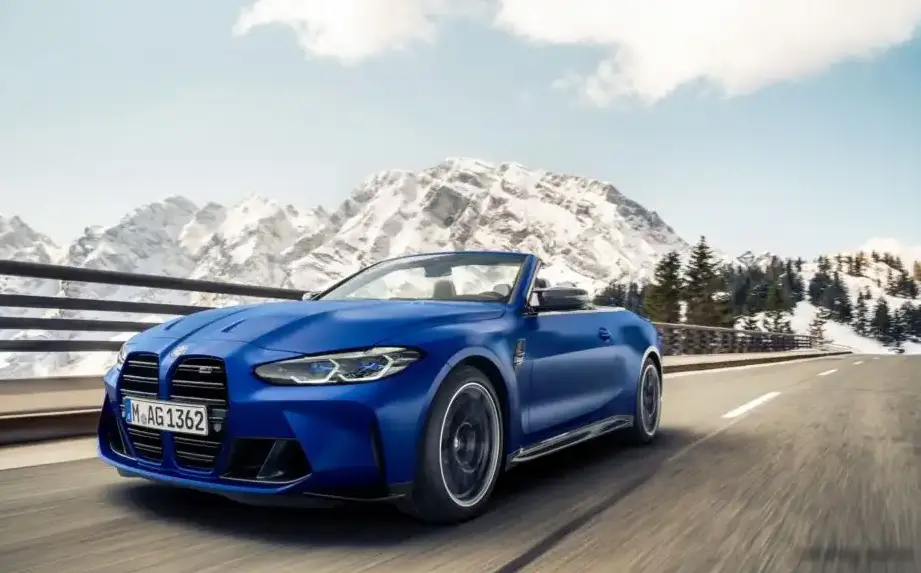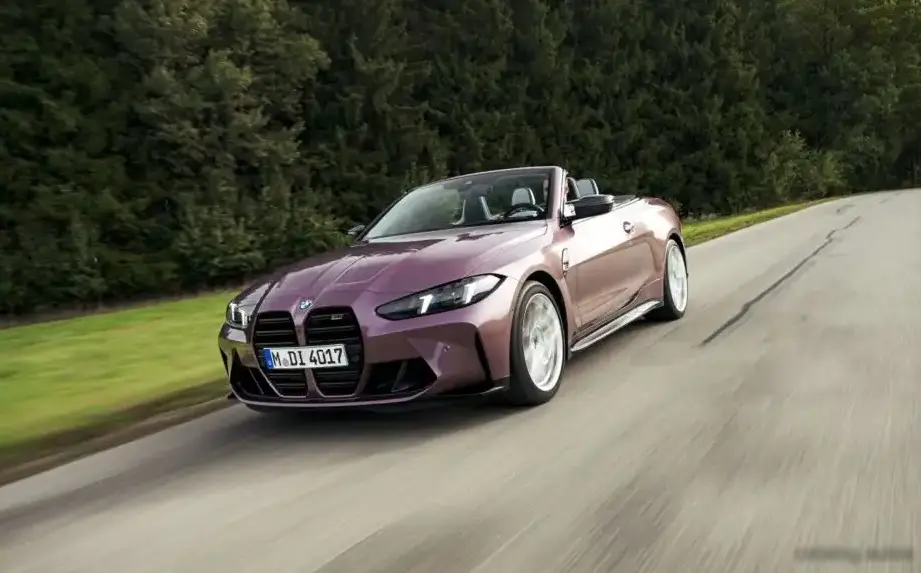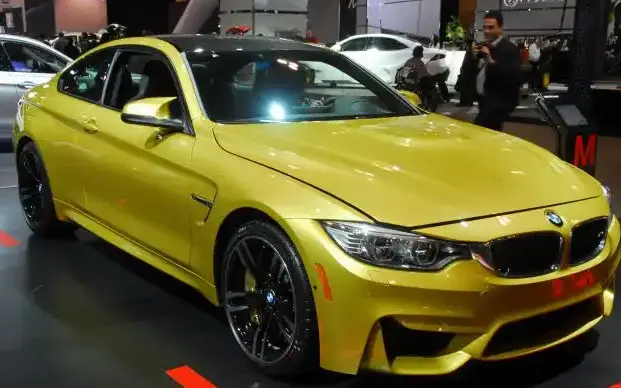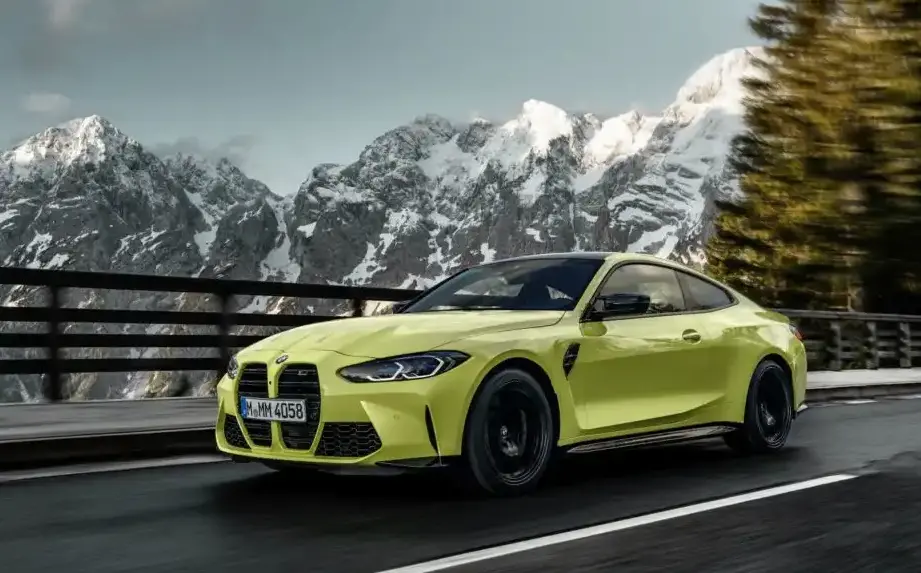
The BMW M4 (G82) 3.0, producing 480 horsepower, represents the latest iteration of BMW’s high-performance coupe, entering production in 2020 and continuing through January 2024. This model is a key component of the G82 generation, succeeding the F82 M4 and built upon a refined version of the BMW Cluster Architecture (CLAR) platform. Positioned as the core performance offering within the M4 lineup, it serves as a stepping stone between the base M4 variants and the more track-focused Competition models. The G82 marked a significant departure in styling with its large, vertically oriented kidney grille, a design choice that proved controversial but ultimately defined the generation.
Technical Specifications
| Brand | BMW |
| Model | M4 |
| Generation | M4 (G82) |
| Type (Engine) | 3.0 (480 Hp) |
| Start of production | 2020 |
| End of production | January, 2024 |
| Powertrain Architecture | Internal Combustion engine |
| Body type | Coupe |
| Seats | 4 |
| Doors | 2 |
| Combined fuel consumption (WLTP) | 10.3-10.5 l/100 km (22.8 – 22.4 US mpg, 27.4 – 26.9 UK mpg, 9.7 – 9.5 km/l) |
| CO2 emissions (WLTP) | 235-240 g/km |
| Fuel consumption (economy) – urban (NEDC) | 16 l/100 km (14.7 US mpg, 17.7 UK mpg, 6.3 km/l) |
| Fuel consumption (economy) – extra urban (NEDC) | 7.8 l/100 km (30.2 US mpg, 36.2 UK mpg, 12.8 km/l) |
| Fuel consumption (economy) – combined (NEDC) | 10.8 l/100 km (21.8 US mpg, 26.2 UK mpg, 9.3 km/l) |
| CO2 emissions (NEDC) | 248 g/km |
| Fuel Type | Petrol (Gasoline) |
| Acceleration 0 – 100 km/h | 4.2 sec |
| Acceleration 0 – 62 mph | 4.2 sec |
| Acceleration 0 – 60 mph | 4 sec |
| Maximum speed | 250 km/h (155.34 mph), Electronically limited |
| Emission standard | Euro 6d |
| Weight-to-power ratio | 3.5 kg/Hp, 282.4 Hp/tonne |
| Weight-to-torque ratio | 3.1 kg/Nm, 323.5 Nm/tonne |
| Power | 480 Hp @ 6250 rpm |
| Power per litre | 160.4 Hp/l |
| Torque | 550 Nm @ 2650-6130 rpm (405.66 lb.-ft. @ 2650-6130 rpm) |
| Engine layout | Front, Longitudinal |
| Engine Model/Code | S58B30B |
| Engine displacement | 2993 cm3 (182.64 cu. in.) |
| Number of cylinders | 6 |
| Engine configuration | Inline |
| Cylinder Bore | 84 mm (3.31 in.) |
| Piston Stroke | 90 mm (3.54 in.) |
| Compression ratio | 9.3:1 |
| Number of valves per cylinder | 4 |
| Fuel injection system | Direct injection |
| Engine aspiration | Twin-power turbo, Intercooler |
| Valvetrain | DOHC |
| Engine oil capacity | 7 l (7.4 US qt | 6.16 UK qt) |
| Coolant | 11 l (11.62 US qt | 9.68 UK qt) |
| Kerb Weight | 1700 kg (3747.86 lbs.) |
| Max. weight | 2155 kg (4750.96 lbs.) |
| Max load | 455 kg (1003.1 lbs.) |
| Trunk (boot) space – minimum | 440 l (15.54 cu. ft.) |
| Fuel tank capacity | 59 l (15.59 US gal | 12.98 UK gal) |
| Max. roof load | 75 kg (165.35 lbs.) |
| Length | 4794 mm (188.74 in.) |
| Width | 1887 mm (74.29 in.) |
| Width including mirrors | 2081 mm (81.93 in.) |
| Height | 1393 mm (54.84 in.) |
| Wheelbase | 2857 mm (112.48 in.) |
| Front track | 1617 mm (63.66 in.) |
| Rear (Back) track | 1605 mm (63.19 in.) |
| Front overhang | 860 mm (33.86 in.) |
| Rear overhang | 1077 mm (42.4 in.) |
| Ride height (ground clearance) | 120 mm (4.72 in.) |
| Drag coefficient (Cd) | 0.34 |
| Minimum turning circle (turning diameter) | 12.2 m (40.03 ft.) |
| Drivetrain Architecture | The Internal combustion engine (ICE) drives the rear wheels of the vehicle. |
| Drive wheel | Rear wheel drive |
| Number of gears and type of gearbox | 6 gears, manual transmission |
| Front suspension | Coil spring, Double wishbone |
| Rear suspension | Independent multi-link suspension |
| Front brakes | Ventilated discs |
| Rear brakes | Ventilated discs |
| Assisting systems | ABS (Anti-lock braking system) |
| Steering type | Steering rack and pinion |
| Power steering | Electric Steering |
| Tires size | Front wheel tires: 275/40 ZR18 103Y XL Rear wheel tires: 285/35 ZR19 103Y XL |
| Wheel rims size | Front wheel rims: 9.5J x 18 Rear wheel rims: 10.5J x 19 |
INTRODUCTION
The BMW M4 (G82) 3.0, with its 480 horsepower output, debuted in 2020 as a significant evolution of BMW’s performance coupe lineage. Built on the G82 platform, it represents the third generation of the M4, succeeding the highly regarded F82. This generation saw a shift in design philosophy, most notably with the controversial but distinctive large kidney grille. The 3.0-liter variant served as the standard M4 offering, providing a potent blend of performance and everyday usability. It aimed to deliver a more accessible entry point into the M4 range compared to the higher-spec Competition models.
Powertrain & Engine Architecture
At the heart of the M4 (G82) 3.0 lies the S58B30B, a 3.0-liter inline-six engine. This engine is a masterpiece of modern engineering, featuring a closed-deck block for enhanced rigidity, forged crankshaft, and lightweight connecting rods. It utilizes direct fuel injection operating at 350 bar, ensuring precise fuel delivery and optimal combustion. The engine is equipped with twin-scroll turbochargers, one for each bank of three cylinders, maximizing responsiveness and minimizing turbo lag. The valvetrain employs BMW’s VANOS variable valve timing and Valvetronic variable valve lift technologies, optimizing engine performance across the rev range. The engine produces 480 hp at 6250 rpm and 550 Nm (405.66 lb-ft) of torque between 2650 and 6130 rpm. The standard transmission for this variant is a 6-speed manual, providing a traditional and engaging driving experience.
Driving Characteristics
The M4 (G82) 3.0 with the manual transmission delivers a raw and engaging driving experience. The 6-speed gearbox, while offering a satisfying mechanical feel, has relatively long gear ratios, prioritizing acceleration over fuel efficiency. This results in a noticeable drop in engine speed between shifts, requiring more frequent gear changes to maintain optimal power delivery. Compared to the M4 Competition, which features an 8-speed automatic and a more aggressively tuned engine, the 3.0 feels slightly less urgent in its acceleration. However, the manual transmission provides a greater sense of control and driver involvement. The rear-wheel-drive configuration contributes to a balanced chassis, allowing for precise cornering and controlled oversteer.
Equipment & Trim Levels
The standard M4 (G82) 3.0 came well-equipped, featuring a leather interior, power-adjustable M Sport seats, a 12.3-inch digital instrument cluster, and a 10.25-inch central infotainment display with BMW’s iDrive 7 operating system. Standard safety features included automatic emergency braking, lane departure warning, and parking sensors. Optional extras included a carbon fiber roof, M Sport brakes, adaptive suspension, and a premium sound system. Interior upholstery options included various leather colors and trims, while exterior colors ranged from classic BMW shades to more vibrant options.
Chassis & Braking
The M4 (G82) 3.0 utilizes a sophisticated chassis design, featuring a double-wishbone front suspension and a multi-link rear suspension. The suspension components are specifically tuned for performance, providing precise handling and minimal body roll. The car is equipped with ventilated disc brakes on all four wheels, providing ample stopping power. The standard braking system is robust, but optional M Sport brakes with larger rotors and calipers are available for track use. The steering system is an electric power steering rack, offering precise and responsive steering feel.
Market Reception & Comparison
The M4 (G82) 3.0 received generally positive reviews from automotive critics, who praised its powerful engine, engaging driving dynamics, and well-appointed interior. However, the controversial exterior styling, particularly the large kidney grille, drew significant criticism. Compared to the M4 Competition, the 3.0 offered a more affordable entry point into the M4 range, appealing to drivers who prioritized a traditional manual transmission and a more raw driving experience. Fuel economy, while not a primary concern for M4 buyers, was reasonable for a high-performance coupe, averaging around 22.8-22.4 US mpg. Reliability has been generally good, with few widespread issues reported.
Legacy
The BMW M4 (G82) 3.0 represents a significant chapter in the M4’s evolution. While the styling may have been divisive, the underlying engineering and performance capabilities are undeniable. The S58 engine is widely regarded as one of the best inline-six engines ever produced, and the combination of a manual transmission and rear-wheel drive provides a uniquely engaging driving experience. On the used car market, the G82 M4 3.0 holds its value well, appealing to enthusiasts who appreciate its performance potential and distinctive character. The powertrain is expected to remain reliable for many years with proper maintenance, solidifying its place as a modern classic.