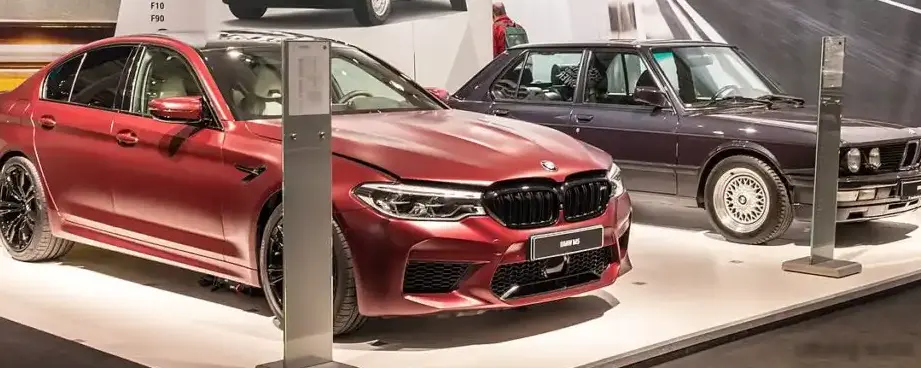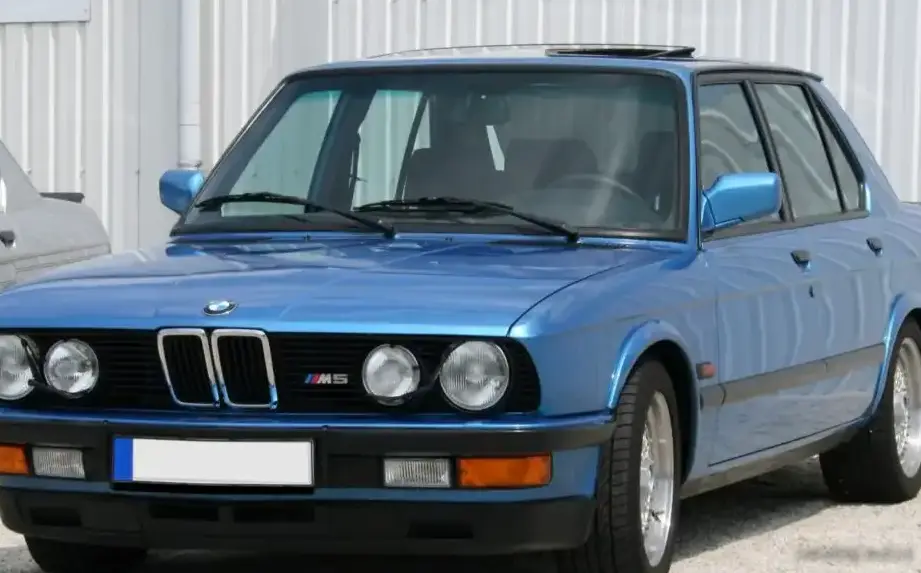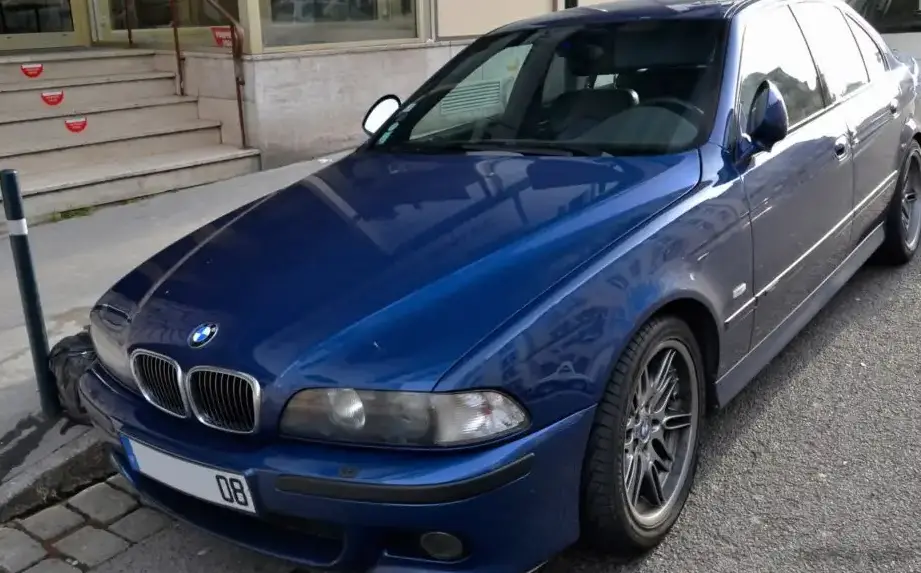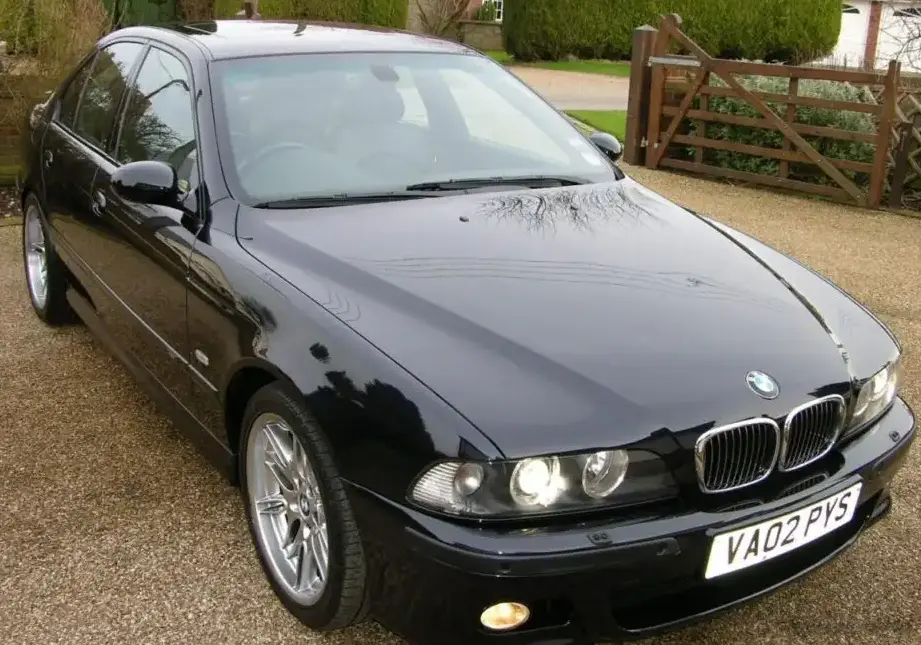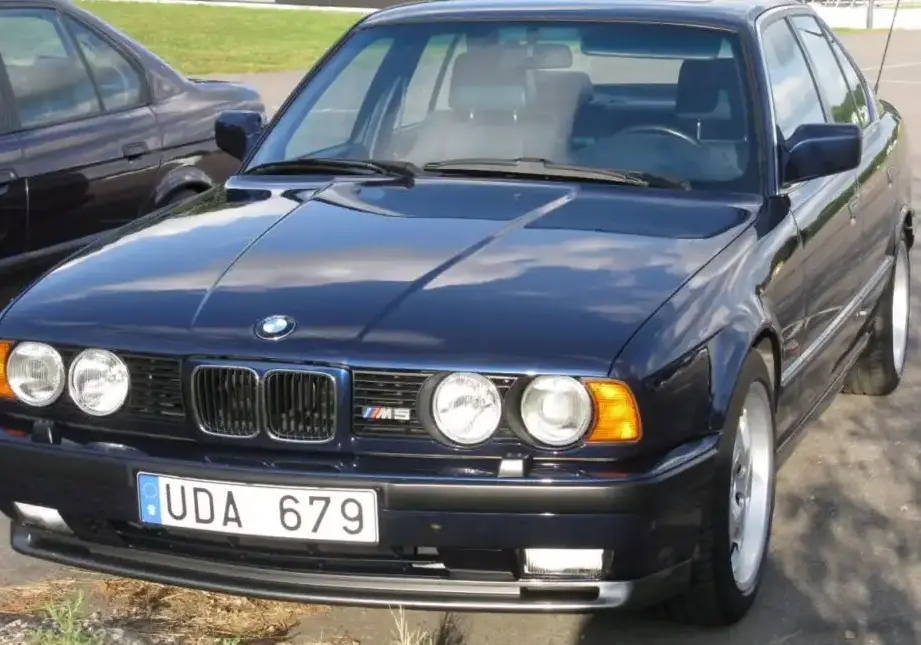
The BMW M5 (E34) 3.5, produced between 1988 and 1991, represents a pivotal moment in the evolution of the high-performance executive sedan. As the second generation of the M5, the E34 built upon the success of the E28, offering a more refined yet aggressively capable package. The 3.5-liter variant, producing 315 horsepower, was the flagship model of the E34 M5 range, establishing a new benchmark for performance and handling in its class. It was primarily sold in Europe and limited numbers were imported to the United States, becoming a highly sought-after vehicle among enthusiasts.
Technical Specifications
| Brand | BMW |
| Model | M5 |
| Generation | M5 (E34) |
| Type (Engine) | 3.5 (315 Hp) |
| Start of production | 1988 |
| End of production | 1991 |
| Powertrain Architecture | Internal Combustion engine |
| Body type | Sedan |
| Seats | 5 |
| Doors | 4 |
| Fuel consumption (economy) – urban | 18.1 l/100 km (13 US mpg, 15.6 UK mpg, 5.5 km/l) |
| Fuel consumption (economy) – extra urban | 8.2 l/100 km (28.7 US mpg, 34.4 UK mpg, 12.2 km/l) |
| Fuel consumption (economy) – combined | 9.4 l/100 km (25 US mpg, 30.1 UK mpg, 10.6 km/l) |
| Fuel Type | Petrol (Gasoline) |
| Acceleration 0 – 100 km/h | 6.3 sec |
| Acceleration 0 – 62 mph | 6.3 sec |
| Acceleration 0 – 60 mph | 6 sec |
| Maximum speed | 250 km/h (155.34 mph) |
| Weight-to-power ratio | 5.3 kg/Hp, 188.6 Hp/tonne |
| Weight-to-torque ratio | 4.6 kg/Nm, 215.6 Nm/tonne |
| Power | 315 Hp @ 6900 rpm |
| Power per litre | 89.1 Hp/l |
| Torque | 360 Nm @ 4750 rpm (265.52 lb.-ft. @ 4750 rpm) |
| Engine layout | Front, Longitudinal |
| Engine Model/Code | S38B36 |
| Engine displacement | 3535 cm3 (215.72 cu. in.) |
| Number of cylinders | 6 |
| Engine configuration | Inline |
| Cylinder Bore | 93.4 mm (3.68 in.) |
| Piston Stroke | 86 mm (3.39 in.) |
| Compression ratio | 10:1 |
| Number of valves per cylinder | 4 |
| Fuel injection system | Multi-port manifold injection |
| Engine aspiration | Naturally aspirated engine |
| Engine oil capacity | 5.8 l (6.13 US qt | 5.1 UK qt) |
| Coolant | 13.3 l (14.05 US qt | 11.7 UK qt) |
| Kerb Weight | 1670 kg (3681.72 lbs.) |
| Max. weight | 2100 kg (4629.71 lbs.) |
| Max load | 430 kg (947.99 lbs.) |
| Trunk (boot) space – minimum | 460 l (16.24 cu. ft.) |
| Fuel tank capacity | 90 l (23.78 US gal | 19.8 UK gal) |
| Max. roof load | 100 kg (220.46 lbs.) |
| Length | 4720 mm (185.83 in.) |
| Width | 1751 mm (68.94 in.) |
| Height | 1392 mm (54.8 in.) |
| Wheelbase | 2761 mm (108.7 in.) |
| Front track | 1473 mm (57.99 in.) |
| Rear (Back) track | 1495 mm (58.86 in.) |
| Drag coefficient (Cd) | 0.32 |
| Drivetrain Architecture | The Internal combustion engine (ICE) drives the rear wheels of the vehicle. |
| Drive wheel | Rear wheel drive |
| Number of gears and type of gearbox | 5 gears, manual transmission |
| Front suspension | Wishbone |
| Rear suspension | Coil spring |
| Front brakes | Ventilated discs |
| Rear brakes | Ventilated discs |
| Assisting systems | ABS (Anti-lock braking system) |
| Steering type | Steering rack and pinion |
| Power steering | Hydraulic Steering |
| Tires size | 235/45 R17 |
| Wheel rims size | 8J x 17 |
Powertrain & Engine Architecture
The heart of the E34 M5 3.5 is the S38B36 engine, a 3.5-liter inline-six cylinder powerplant. This engine is a direct descendant of the M88/M88/3 engine used in the M1 supercar, but extensively modified and upgraded for the E34. It features a cast iron block, an aluminum cylinder head with four valves per cylinder, and a dual overhead camshaft design. The S38B36 utilizes Bosch Motronic fuel injection and ignition control, delivering precise fuel metering and optimized spark timing. The engine’s high compression ratio of 10:1 contributes to its impressive power output. The engine’s design prioritized low-end torque and a broad powerband, making it responsive and engaging to drive. All E34 M5s were equipped with a Getrag 285 five-speed manual transmission, known for its robust construction and precise shift feel.
Driving Characteristics
The E34 M5 3.5 delivers a driving experience that is both exhilarating and rewarding. The 315 horsepower engine provides strong acceleration, with a 0-60 mph time of around 6 seconds and a top speed limited to 155 mph. The manual transmission allows for complete driver control, and the close-ratio gear spacing keeps the engine within its optimal powerband. The chassis is well-balanced, providing excellent handling and stability. The suspension, featuring wishbone front suspension and coil springs in the rear, offers a comfortable ride without sacrificing performance. The steering is precise and communicative, providing the driver with a clear sense of the road. Compared to later, more technologically advanced performance cars, the E34 M5 feels raw and engaging, demanding driver skill and attention.
Equipment & Trim Levels
The E34 M5 was relatively well-equipped, even by 1980s standards. Standard features included power windows, power locks, a sunroof, and leather upholstery. The interior was characterized by its sporty yet refined design, with supportive seats and a well-laid-out dashboard. Optional extras included a premium sound system, heated front seats, and metallic paint finishes. The M5 did not offer a wide range of trim levels; it was largely standardized, with options being the primary means of personalization. The focus was on performance, and luxury appointments were secondary.
Chassis & Braking
The E34 M5’s chassis was based on the standard 5-Series sedan, but significantly reinforced and modified for improved handling and rigidity. The suspension was lowered and stiffened, and thicker stabilizer bars were fitted. The braking system consisted of ventilated disc brakes on all four wheels, providing ample stopping power. An Anti-lock Braking System (ABS) was standard, enhancing safety and control. The rear suspension utilized a semi-trailing arm design, which contributed to the car’s neutral handling characteristics.
Market Reception & Comparison
The E34 M5 was widely praised by automotive critics for its performance, handling, and overall driving experience. It was often compared to other high-performance sedans of the era, such as the Porsche 911 and the Lotus Esprit, and consistently ranked among the best. The M5’s combination of luxury, performance, and practicality made it a popular choice among discerning buyers. Compared to the earlier E28 M5, the E34 offered a more refined and comfortable ride, as well as a more powerful engine. Fuel economy, while not a primary concern for M5 buyers, was reasonable for a car of its performance capabilities, averaging around 25 mpg combined.
Legacy
The E34 M5 remains a highly respected and sought-after classic car. Its robust powertrain and relatively simple mechanical design contribute to its long-term reliability. Well-maintained examples are becoming increasingly valuable, attracting collectors and enthusiasts alike. The S38B36 engine is known for its durability and ability to withstand significant power upgrades. The E34 M5 established the M5 as a benchmark for high-performance sedans, and its legacy continues to influence BMW’s performance car development today. In the used car market, prices for E34 M5s vary widely depending on condition, mileage, and originality, but well-preserved examples can command significant premiums.