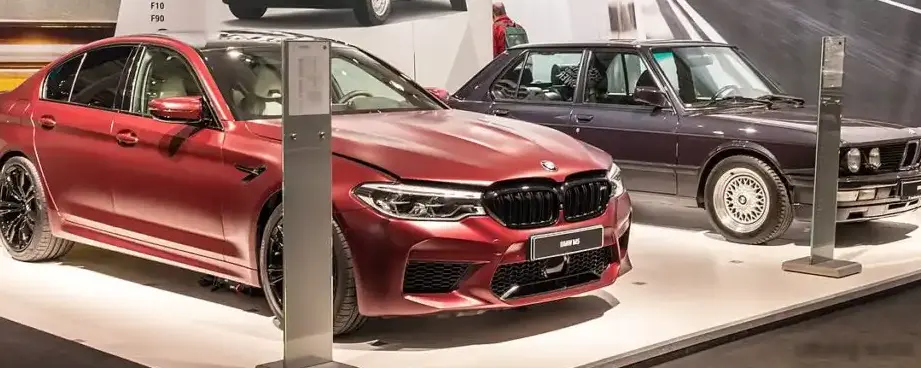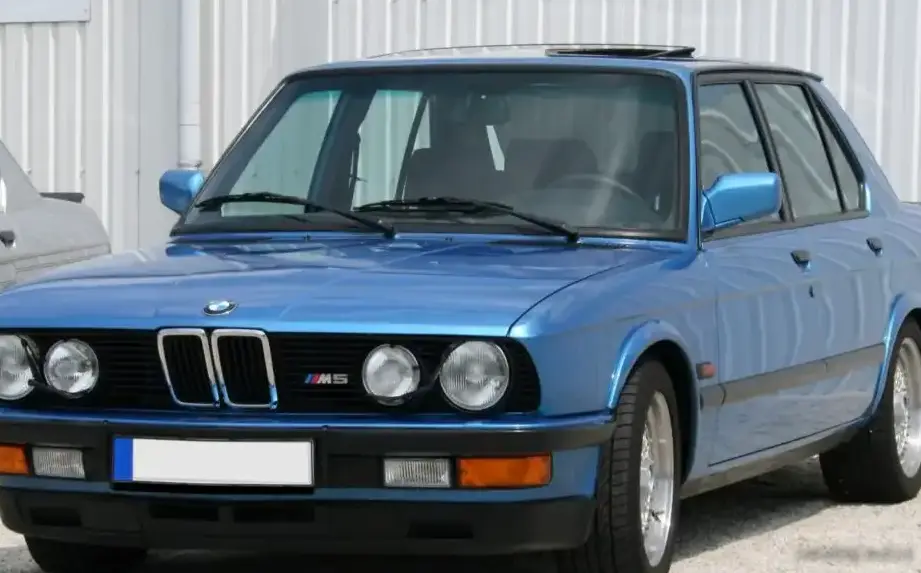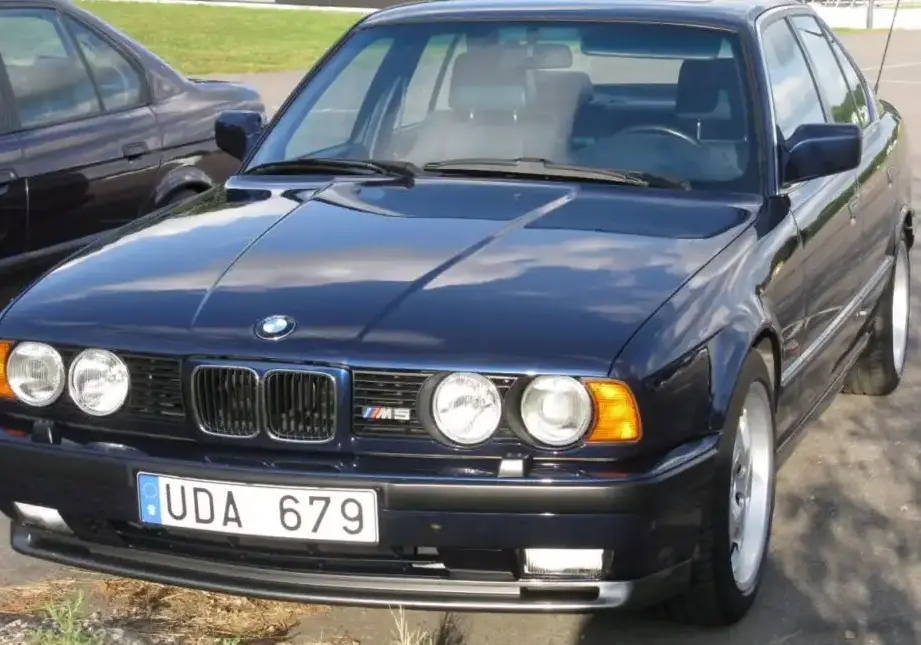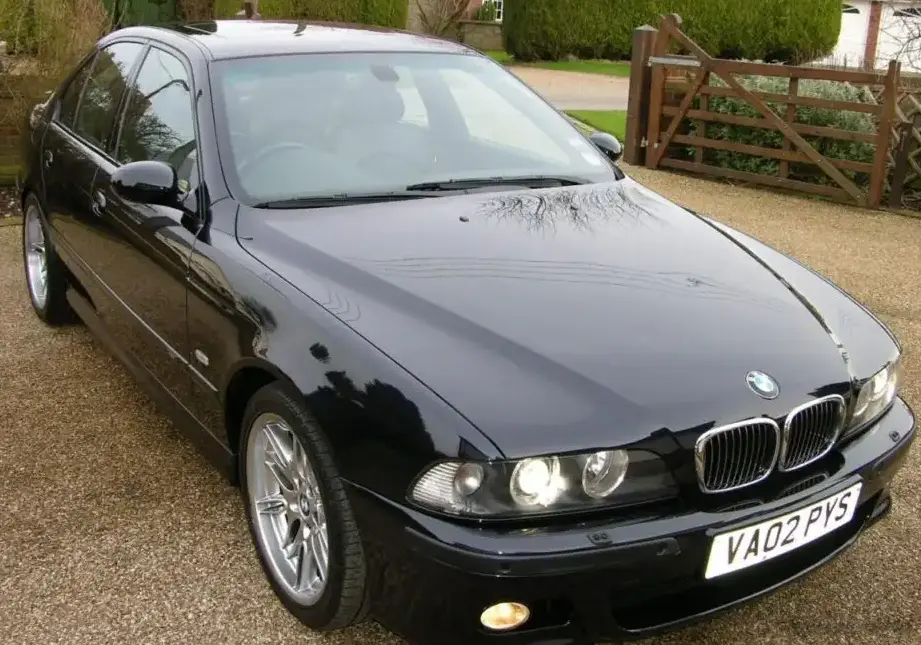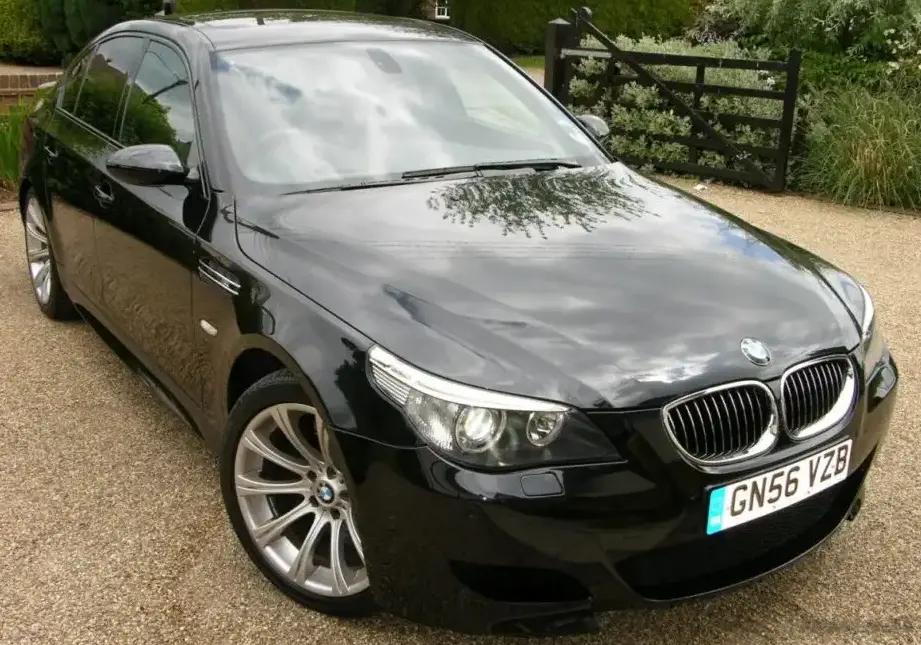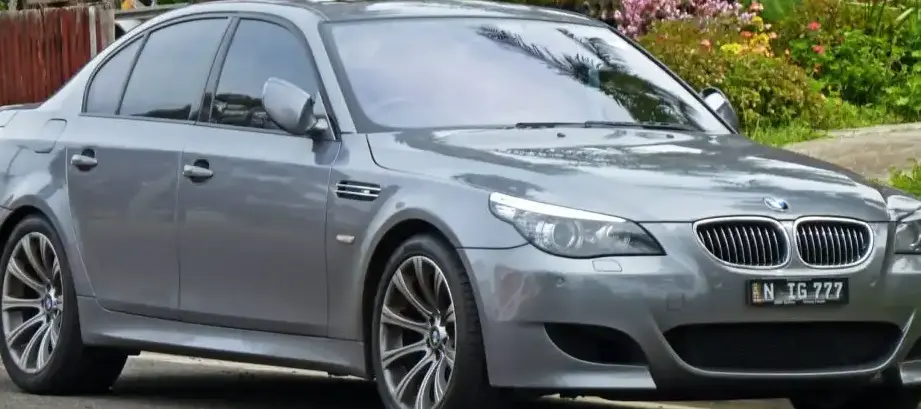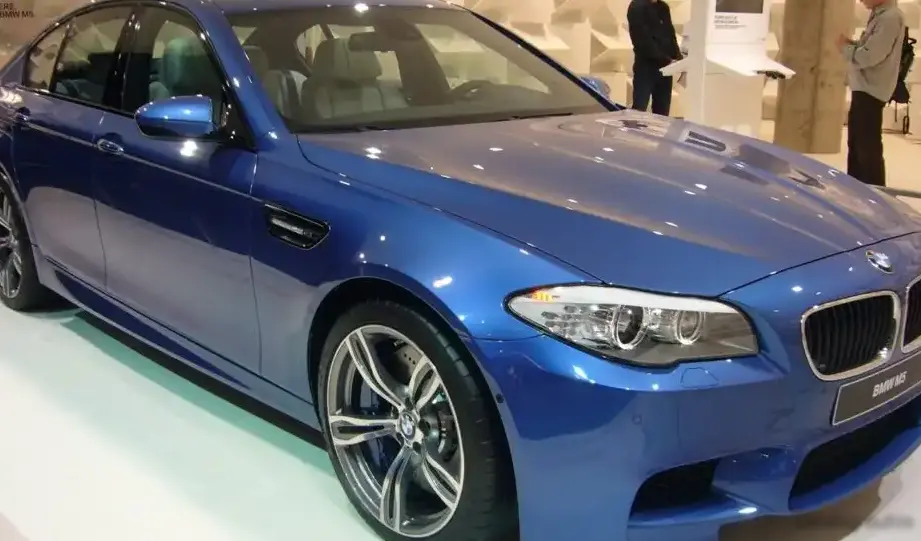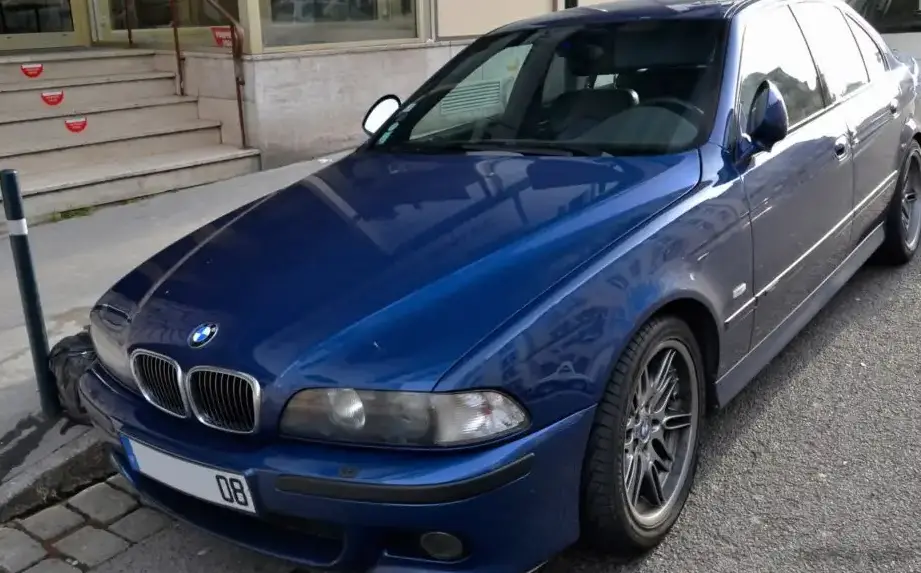
The BMW M5 (E39) 4.9 V8, produced from October 1998 to August 2000, represents a pivotal generation for BMW’s high-performance sedan. Positioned as the flagship of the E39 5 Series, the M5 blended luxury, performance, and technology in a way that set a new benchmark for the sports sedan segment. It was the successor to the E34 M5 and paved the way for the more technologically advanced E60 M5. The E39 M5 was exclusively offered as a four-door sedan, catering to drivers who demanded exhilarating performance without sacrificing practicality.
Technical Specifications
| Brand | BMW |
| Model | M5 |
| Generation | M5 (E39) |
| Type (Engine) | 4.9 V8 (400 Hp) |
| Start of production | October, 1998 |
| End of production | August, 2000 |
| Powertrain Architecture | Internal Combustion engine |
| Body type | Sedan |
| Seats | 5 |
| Doors | 4 |
| Fuel consumption (economy) – urban (NEDC) | 21.1 l/100 km (11.1 US mpg, 13.4 UK mpg, 4.7 km/l) |
| Fuel consumption (economy) – extra urban (NEDC) | 9.8 l/100 km (24 US mpg, 28.8 UK mpg, 10.2 km/l) |
| Fuel consumption (economy) – combined (NEDC) | 13.9 l/100 km (16.9 US mpg, 20.3 UK mpg, 7.2 km/l) |
| CO2 emissions (NEDC) | 336 g/km |
| Fuel Type | Petrol (Gasoline) |
| Acceleration 0 – 100 km/h | 5.3 sec |
| Acceleration 0 – 62 mph | 5.3 sec |
| Acceleration 0 – 60 mph | 5 sec |
| Maximum speed | 250 km/h (155.34 mph), Electronically limited |
| Weight-to-power ratio | 4.3 kg/Hp, 232.6 Hp/tonne |
| Weight-to-torque ratio | 3.4 kg/Nm, 290.7 Nm/tonne |
| Power | 400 Hp @ 6600 rpm |
| Power per litre | 81 Hp/l |
| Torque | 500 Nm @ 3800 rpm (368.78 lb.-ft. @ 3800 rpm) |
| Engine layout | Front, Longitudinal |
| Engine Model/Code | S62B50 |
| Engine displacement | 4941 cm3 (301.52 cu. in.) |
| Number of cylinders | 8 |
| Engine configuration | V-engine |
| Cylinder Bore | 94 mm (3.7 in.) |
| Piston Stroke | 89 mm (3.5 in.) |
| Compression ratio | 11:1 |
| Number of valves per cylinder | 4 |
| Fuel injection system | Multi-port manifold injection |
| Engine aspiration | Naturally aspirated engine |
| Valvetrain | DOHC, Double-VANOS |
| Engine oil capacity | 6.5 l (6.87 US qt | 5.72 UK qt) |
| Coolant | 12 l (12.68 US qt | 10.56 UK qt) |
| Kerb Weight | 1720 kg (3791.95 lbs.) |
| Max. weight | 2290 kg (5048.59 lbs.) |
| Max load | 570 kg (1256.63 lbs.) |
| Trunk (boot) space – minimum | 460 l (16.24 cu. ft.) |
| Fuel tank capacity | 70 l (18.49 US gal | 15.4 UK gal) |
| Max. roof load | 100 kg (220.46 lbs.) |
| Permitted trailer load with brakes (8%) | 1800 kg (3968.32 lbs.) |
| Permitted trailer load with brakes (12%) | 1800 kg (3968.32 lbs.) |
| Permitted trailer load without brakes | 750 kg (1653.47 lbs.) |
| Permitted towbar download | 90 kg (198.42 lbs.) |
| Length | 4784 mm (188.35 in.) |
| Width | 1800 mm (70.87 in.) |
| Width including mirrors | 1990 mm (78.35 in.) |
| Height | 1437 mm (56.57 in.) |
| Wheelbase | 2830 mm (111.42 in.) |
| Front track | 1515 mm (59.65 in.) |
| Rear (Back) track | 1527 mm (60.12 in.) |
| Drag coefficient (Cd) | 0.31 |
| Minimum turning circle (turning diameter) | 11.6 m (38.06 ft.) |
| Drivetrain Architecture | The Internal combustion engine (ICE) drives the rear wheels of the vehicle. |
| Drive wheel | Rear wheel drive |
| Number of gears and type of gearbox | 6 gears, manual transmission |
| Front suspension | Independent type McPherson, Transverse stabilizer |
| Rear suspension | Independent multi-link suspension, Transverse stabilizer |
| Front brakes | Ventilated discs, 345 mm |
| Rear brakes | Ventilated discs, 328 mm |
| Assisting systems | ABS (Anti-lock braking system) |
| Steering type | Cone worm with recirculation balls |
| Power steering | Hydraulic Steering |
| Tires size | Front wheel tires: 245/40 R18 Rear wheel tires: 275/35 R18 |
| Wheel rims size | Front wheel rims: 8J x 18 Rear wheel rims: 9.5J x 18 |
Powertrain & Engine Architecture
The heart of the E39 M5 is the S62B50, a 4.9-liter naturally aspirated V8 engine. This engine is a significant departure from the inline-six engines traditionally used in previous M5 models. The S62B50 produces 400 horsepower at 6600 rpm and 368 lb-ft of torque at 3800 rpm. It features individual throttle bodies, a high compression ratio of 11:1, and BMW’s Double-VANOS variable valve timing system on both intake and exhaust camshafts. The Double-VANOS system optimizes valve timing for improved performance and efficiency across the rev range. Fuel is delivered via a multi-port fuel injection system. The engine’s architecture is a 90-degree V8, providing a balanced and smooth power delivery. The E39 M5 was exclusively offered with a six-speed manual transmission, designed to handle the engine’s substantial power output.
Driving Characteristics
The E39 M5 delivers a driving experience that is both exhilarating and refined. The 4.9-liter V8 provides a linear power delivery, with strong acceleration throughout the rev range. The six-speed manual transmission offers precise shifts and allows the driver to fully engage with the car’s performance. The car’s 0-60 mph time is around 5 seconds, and it’s electronically limited to a top speed of 155 mph. The suspension, featuring McPherson struts in the front and a multi-link setup in the rear, provides excellent handling and stability. The steering is precise and communicative, offering a direct connection to the road. Compared to later M5 generations, the E39 M5 feels more raw and analog, offering a more visceral driving experience.
Equipment & Trim Levels
The E39 M5 came generously equipped, reflecting its status as BMW’s flagship performance sedan. Standard features included leather upholstery, power-adjustable heated front seats, automatic climate control, a premium sound system, and xenon headlights. Optional extras included a sunroof, navigation system, and upgraded interior trim. The interior design was focused on providing a comfortable and luxurious environment for both the driver and passengers. The M5 also featured unique exterior styling cues, such as a more aggressive front bumper, side skirts, and a rear spoiler, differentiating it from the standard 5 Series models.
Chassis & Braking
The E39 M5’s chassis was specifically tuned to enhance its handling and performance. It features a stiffer suspension setup compared to the standard 5 Series, along with larger stabilizer bars. The braking system consists of ventilated discs on all four wheels, providing ample stopping power. ABS (Anti-lock Braking System) is standard. The car’s suspension geometry was optimized to minimize body roll and maximize grip. The E39 M5’s chassis design contributed significantly to its balanced and responsive handling characteristics.
Market Reception & Comparison
The E39 M5 was widely praised by automotive critics for its exceptional performance, handling, and overall refinement. It was often lauded as the benchmark for sports sedans. Compared to its predecessor, the E34 M5, the E39 M5 offered a significant increase in power and performance, along with a more modern and luxurious interior. While fuel economy was not a primary concern for M5 buyers, the E39 M5’s combined fuel consumption of around 16.9 US mpg was reasonable for a high-performance V8 sedan. Reliability was generally good, although maintenance costs could be higher than those of the standard 5 Series due to the more complex engine and performance-oriented components.
Legacy
The E39 M5 has become a highly sought-after classic among BMW enthusiasts. Its combination of performance, luxury, and driving dynamics has cemented its place as one of the greatest sports sedans of all time. The S62B50 engine is known for its durability and responsiveness, and well-maintained examples continue to provide exhilarating performance. In the used car market, the E39 M5 commands a premium price, reflecting its desirability and collectibility. It remains a benchmark against which other performance sedans are often judged, and its influence can be seen in subsequent generations of the M5.