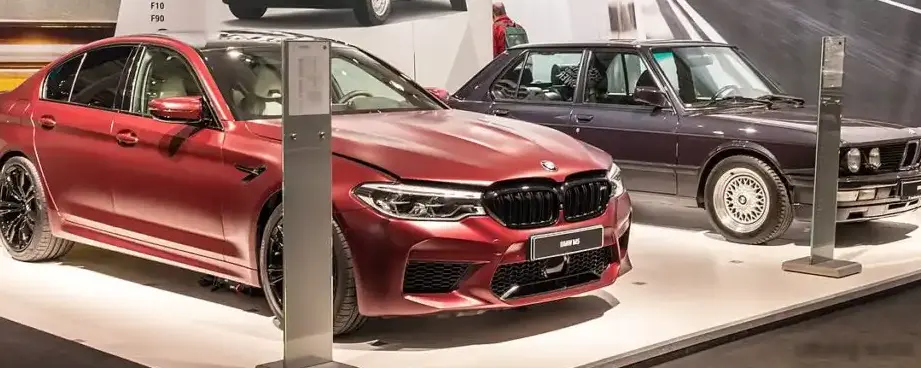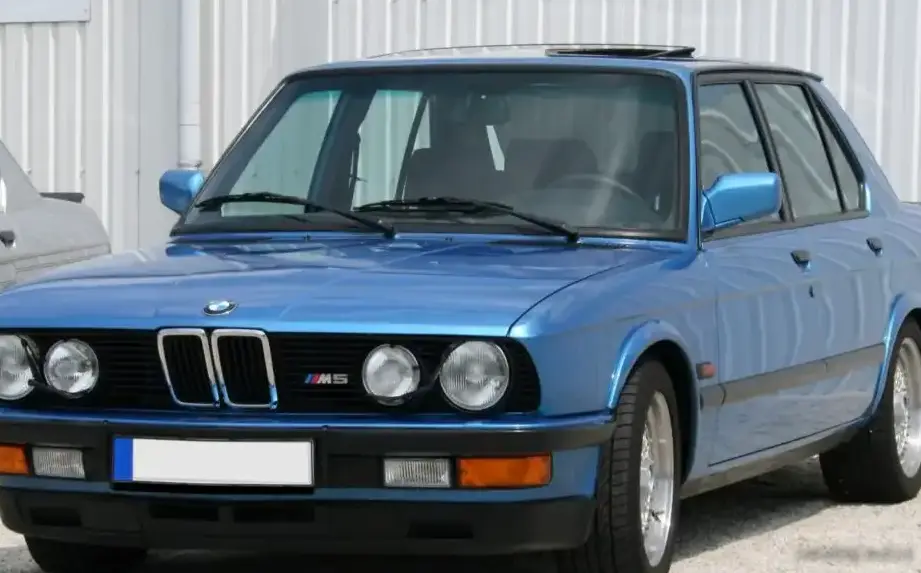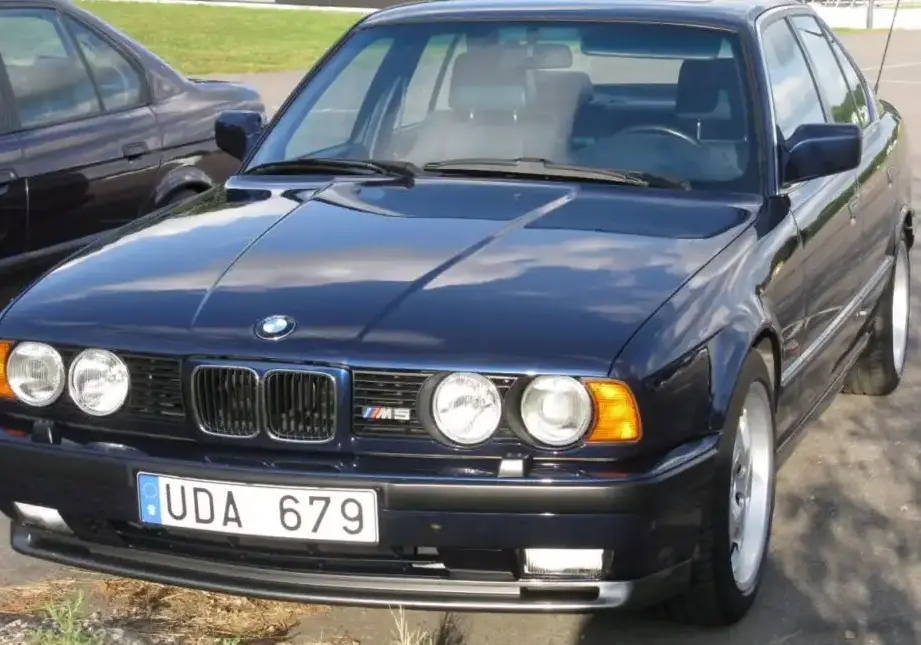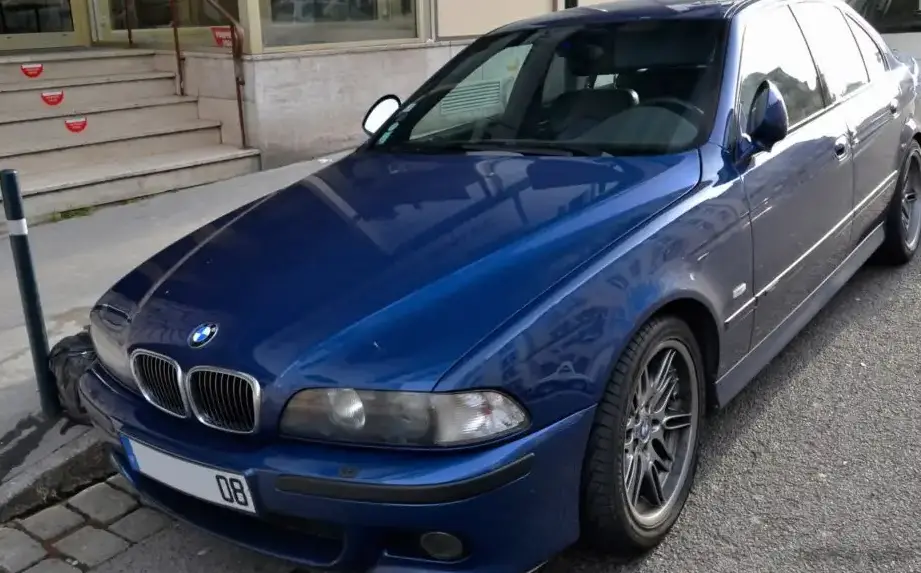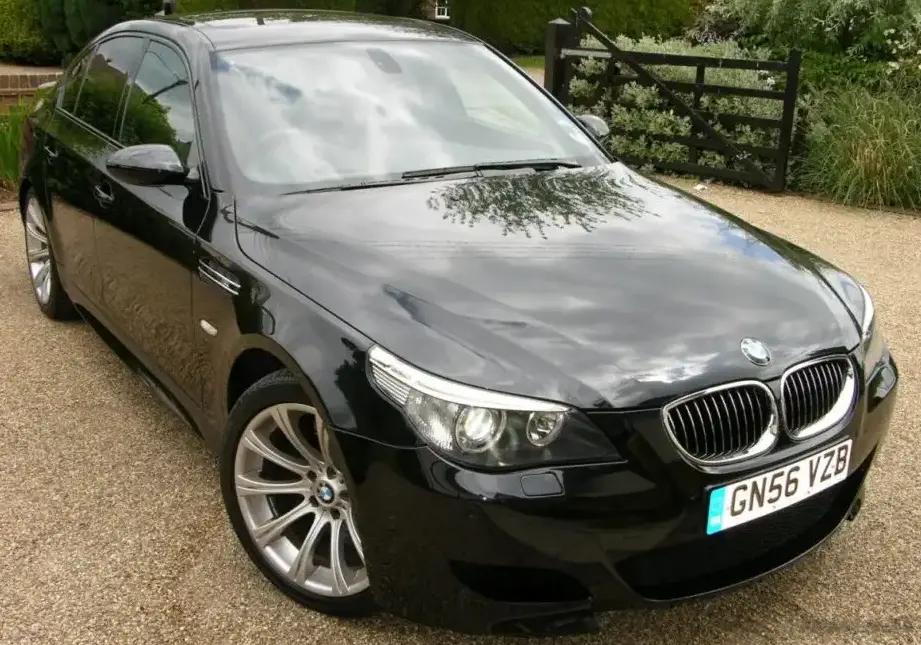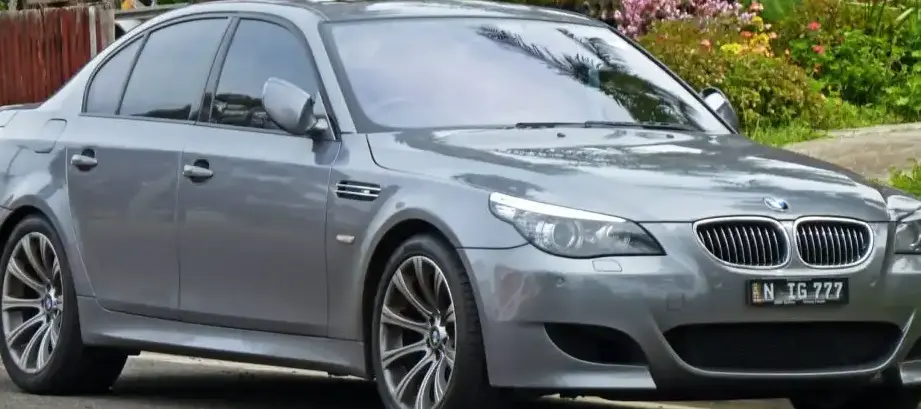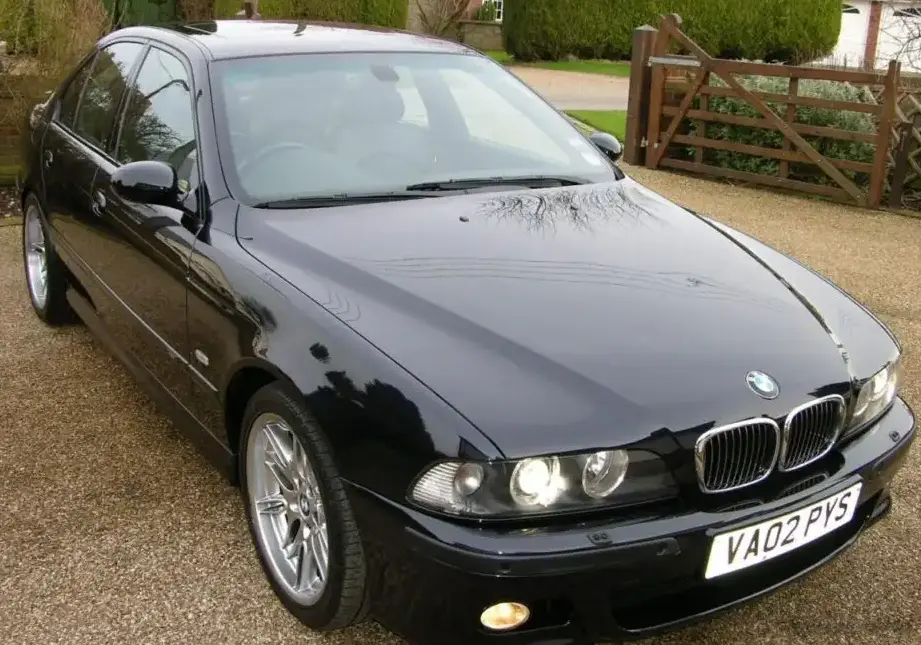
The BMW M5 (E39 LCI), representing the facelifted version of the E39 generation, was produced from September 2000 to June 2003. This iteration of the M5, powered by the 4.9-liter S62B50 V8 engine producing 400 horsepower, solidified the car’s reputation as a high-performance executive sedan. The LCI (Life Cycle Impulse) brought subtle but significant cosmetic and mechanical updates to the already highly regarded E39 M5, enhancing its appeal to discerning drivers. It remains a benchmark for driver-focused performance and luxury.
Technical Specifications
| Brand | BMW |
| Model | M5 |
| Generation | M5 (E39 LCI, facelift 2000) |
| Type (Engine) | 4.9 V8 (400 Hp) |
| Start of production | September, 2000 |
| End of production | June, 2003 |
| Powertrain Architecture | Internal Combustion engine |
| Body type | Sedan |
| Seats | 5 |
| Doors | 4 |
| Fuel consumption (economy) – urban (NEDC) | 21.1 l/100 km (11.1 US mpg, 13.4 UK mpg, 4.7 km/l) |
| Fuel consumption (economy) – extra urban (NEDC) | 9.8 l/100 km (24 US mpg, 28.8 UK mpg, 10.2 km/l) |
| Fuel consumption (economy) – combined (NEDC) | 13.9 l/100 km (16.9 US mpg, 20.3 UK mpg, 7.2 km/l) |
| CO2 emissions (NEDC) | 336 g/km |
| Fuel Type | Petrol (Gasoline) |
| Acceleration 0 – 100 km/h | 5.3 sec |
| Acceleration 0 – 62 mph | 5.3 sec |
| Acceleration 0 – 60 mph | 4.8 sec |
| Maximum speed | 250 km/h (155.34 mph), Electronically limited |
| Emission standard | Euro 3 |
| Weight-to-power ratio | 4.3 kg/Hp, 232.6 Hp/tonne |
| Weight-to-torque ratio | 3.4 kg/Nm, 290.7 Nm/tonne |
| Power | 400 Hp @ 6600 rpm |
| Power per litre | 81 Hp/l |
| Torque | 500 Nm @ 3800 rpm (368.78 lb.-ft. @ 3800 rpm) |
| Engine layout | Front, Longitudinal |
| Engine Model/Code | S62B50 |
| Engine displacement | 4941 cm3 (301.52 cu. in.) |
| Number of cylinders | 8 |
| Engine configuration | V-engine |
| Cylinder Bore | 94 mm (3.7 in.) |
| Piston Stroke | 89 mm (3.5 in.) |
| Compression ratio | 11:1 |
| Number of valves per cylinder | 4 |
| Fuel injection system | Multi-port manifold injection |
| Engine aspiration | Naturally aspirated engine |
| Valvetrain | DOHC, Double-VANOS |
| Engine oil capacity | 6.5 l (6.87 US qt | 5.72 UK qt) |
| Coolant | 12 l (12.68 US qt | 10.56 UK qt) |
| Kerb Weight | 1720 kg (3791.95 lbs.) |
| Max. weight | 2290 kg (5048.59 lbs.) |
| Max load | 570 kg (1256.63 lbs.) |
| Trunk (boot) space – minimum | 460 l (16.24 cu. ft.) |
| Fuel tank capacity | 70 l (18.49 US gal | 15.4 UK gal) |
| Max. roof load | 100 kg (220.46 lbs.) |
| Permitted trailer load with brakes (8%) | 1800 kg (3968.32 lbs.) |
| Permitted trailer load with brakes (12%) | 1800 kg (3968.32 lbs.) |
| Permitted trailer load without brakes | 750 kg (1653.47 lbs.) |
| Permitted towbar download | 90 kg (198.42 lbs.) |
| Length | 4784 mm (188.35 in.) |
| Width | 1800 mm (70.87 in.) |
| Width including mirrors | 1990 mm (78.35 in.) |
| Height | 1437 mm (56.57 in.) |
| Wheelbase | 2830 mm (111.42 in.) |
| Front track | 1515 mm (59.65 in.) |
| Rear (Back) track | 1527 mm (60.12 in.) |
| Drag coefficient (Cd) | 0.31 |
| Minimum turning circle (turning diameter) | 11.6 m (38.06 ft.) |
| Drivetrain Architecture | The Internal combustion engine (ICE) drives the rear wheels of the vehicle. |
| Drive wheel | Rear wheel drive |
| Number of gears and type of gearbox | 6 gears, manual transmission |
| Front suspension | Independent type McPherson, Transverse stabilizer |
| Rear suspension | Independent multi-link suspension, Transverse stabilizer |
| Front brakes | Ventilated discs, 345 mm |
| Rear brakes | Ventilated discs, 328 mm |
| Assisting systems | ABS (Anti-lock braking system) |
| Steering type | Cone worm with recirculation balls |
| Power steering | Hydraulic Steering |
| Tires size | Front wheel tires: 245/40 R18 Rear wheel tires: 275/35 R18 |
| Wheel rims size | Front wheel rims: 8J x 18 Rear wheel rims: 9.5J x 18 |
Powertrain & Engine Architecture
The heart of the E39 LCI M5 is the S62B50, a 4.9-liter naturally aspirated V8 engine. This engine is a direct descendant of the S62 engine used in the McLaren F1, albeit detuned for road use. It features individual throttle bodies, a double-VANOS variable valve timing system, and a high compression ratio of 11:1. The engine utilizes multi-port fuel injection, delivering a potent 400 horsepower at 6600 rpm and 500 Nm (368.78 lb-ft) of torque at 3800 rpm. The engine is longitudinally mounted at the front of the vehicle, driving the rear wheels. The standard transmission for the E39 LCI M5 is a Getrag 6-speed manual gearbox, known for its precise shifts and robust construction. An optional SMG II (Sequential Manual Gearbox) was available, offering automated shifting capabilities, but the manual transmission remained the preferred choice for enthusiasts.
Driving Characteristics
The E39 LCI M5 delivers a driving experience that is both exhilarating and refined. The 400 horsepower engine provides ample power for swift acceleration, with 0-60 mph times consistently around 4.8 seconds. The engine’s torque curve is broad and flat, providing strong pull throughout the rev range. The manual transmission’s gear ratios are well-matched to the engine’s power delivery, allowing for precise control and engaging driving. While the SMG II offered quicker shifts, it lacked the direct connection and feel of the manual gearbox. The chassis is well-balanced, providing confident handling and stability. The suspension, featuring independent McPherson struts at the front and a multi-link setup at the rear, offers a comfortable ride without sacrificing handling performance.
Equipment & Trim Levels
The E39 LCI M5 came generously equipped as standard. Interior features included leather upholstery, power-adjustable heated front seats, automatic climate control, and a premium sound system. Exterior features included a unique aerodynamic body kit, shadowline trim, and 18-inch alloy wheels. Optional extras included a sunroof, navigation system, and upgraded leather upholstery. The interior trim was typically finished in dark wood or carbon fiber, adding to the car’s luxurious feel. The M5’s instrument cluster featured unique M-specific graphics and gauges, providing the driver with essential performance information.
Chassis & Braking
The E39 LCI M5’s chassis was specifically tuned to handle the increased power and performance. The suspension featured stiffer springs and dampers compared to the standard 5 Series, providing improved handling and reduced body roll. The braking system consisted of ventilated discs at all four corners, with larger front discs (345mm) and rear discs (328mm) compared to the standard 5 Series. ABS (Anti-lock braking system) was standard, providing enhanced braking performance and stability. The steering system was a cone worm with recirculation balls, offering precise and responsive steering feel.
Market Reception & Comparison
The E39 LCI M5 was widely praised by automotive critics for its exceptional performance, handling, and refinement. It was often compared favorably to its rivals, such as the Mercedes-Benz E55 AMG and the Audi RS6. The M5’s naturally aspirated V8 engine was lauded for its responsiveness and sound, while its manual transmission was praised for its precision and engagement. Fuel economy was, unsurprisingly, not a strong point, with combined fuel consumption averaging around 13.9 l/100 km (16.9 US mpg). However, most owners were willing to accept this trade-off for the car’s exceptional performance.
Legacy
The E39 LCI M5 is now considered a modern classic, and remains highly sought after by enthusiasts. The S62B50 engine is known for its durability and reliability, provided it is properly maintained. Regular oil changes and valve adjustments are essential to ensure long-term reliability. While maintenance costs can be higher than those of a standard 5 Series, the M5’s exceptional performance and driving experience make it a worthwhile investment for many. Today, well-maintained examples command high prices in the used car market, reflecting the car’s enduring appeal and status as a benchmark for high-performance sedans.