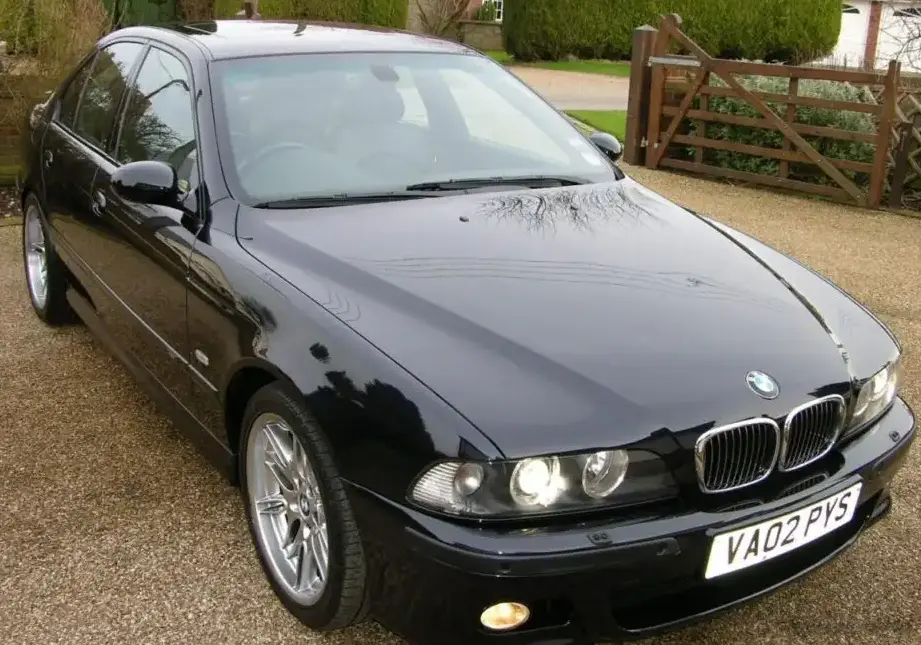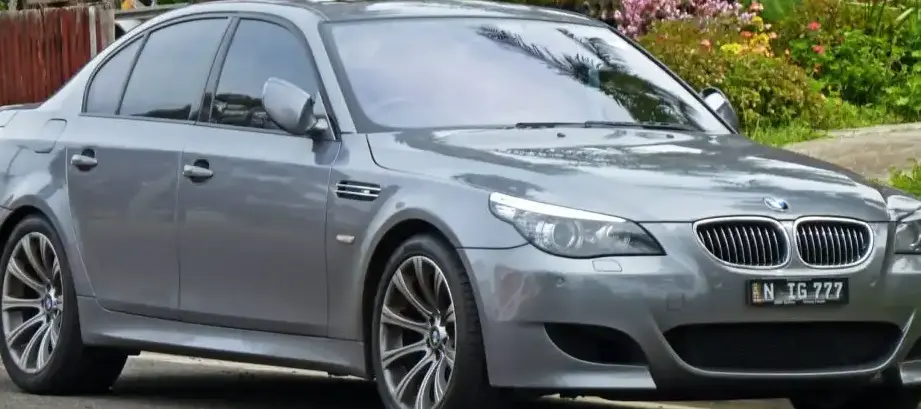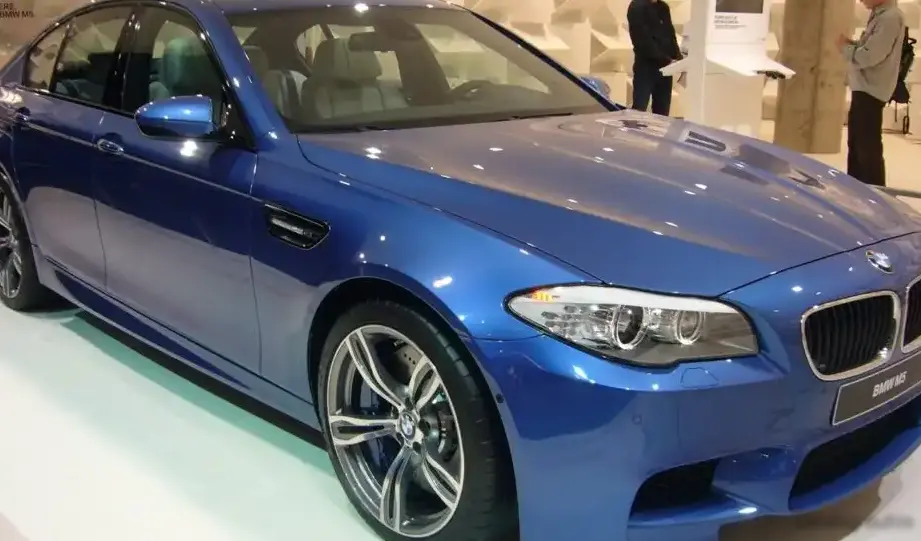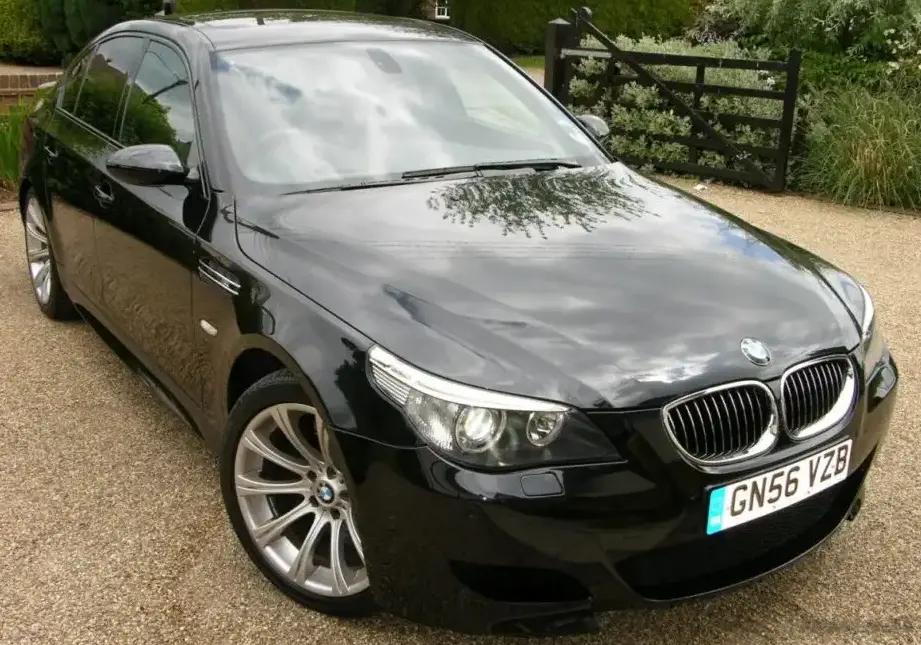
The BMW M5 (E60) 5.0 V10, produced from 2005 to March 2007, represents a significant departure for the iconic M5 lineage. This generation, based on the E60 5 Series platform, was the first to abandon traditional manual transmissions in favor of a single-clutch automated manual transmission – the Sequential M Gearbox (SMG). The 5.0-liter V10 engine, derived from BMW’s Formula One program, delivered a substantial 507 horsepower, positioning the E60 M5 as a high-performance luxury sedan aimed at enthusiasts seeking both exhilarating speed and everyday usability. It was the flagship performance model of the E60 series, sitting above the 550i and other inline-six variants.
Technical Specifications
| Brand | BMW |
| Model | M5 |
| Generation | M5 (E60) |
| Type (Engine) | 5.0 V10 (507 Hp) SMG |
| Start of production | 2005 |
| End of production | March, 2007 |
| Powertrain Architecture | Internal Combustion engine |
| Body type | Sedan |
| Seats | 5 |
| Doors | 4 |
| Fuel consumption (urban) | 22.7 l/100 km (10.4 US mpg, 12.4 UK mpg, 4.4 km/l) |
| Fuel consumption (extra urban) | 10.2 l/100 km (23.1 US mpg, 27.7 UK mpg, 9.8 km/l) |
| Fuel consumption (combined) | 14.8 l/100 km (15.9 US mpg, 19.1 UK mpg, 6.8 km/l) |
| CO2 emissions | 357 g/km |
| Fuel Type | Petrol (Gasoline) |
| Acceleration 0 – 100 km/h | 4.7 sec |
| Acceleration 0 – 62 mph | 4.7 sec |
| Acceleration 0 – 60 mph | 4.5 sec |
| Maximum speed | 250 km/h (155.34 mph), Electronically limited |
| Emission standard | Euro 4 |
| Weight-to-power ratio | 3.5 kg/Hp, 284.8 Hp/tonne |
| Weight-to-torque ratio | 3.4 kg/Nm, 292.1 Nm/tonne |
| Power | 507 Hp @ 7750 rpm |
| Power per litre | 101.4 Hp/l |
| Torque | 520 Nm @ 6100 rpm (383.53 lb.-ft. @ 6100 rpm) |
| Maximum engine speed | 8250 rpm |
| Engine layout | Front, Longitudinal |
| Engine Model/Code | S85B50A |
| Engine displacement | 4999 cm3 (305.06 cu. in.) |
| Number of cylinders | 10 |
| Engine configuration | V-engine |
| Cylinder Bore | 92 mm (3.62 in.) |
| Piston Stroke | 75.2 mm (2.96 in.) |
| Compression ratio | 12:1 |
| Number of valves per cylinder | 4 |
| Fuel injection system | Multi-port manifold injection |
| Engine aspiration | Naturally aspirated engine |
| Valvetrain | DOHC, Double VANOS |
| Engine oil capacity | 9.3 l (9.83 US qt | 8.18 UK qt) |
| Coolant | 15 l (15.85 US qt | 13.2 UK qt) |
| Kerb Weight | 1780 kg (3924.23 lbs.) |
| Max. weight | 2300 kg (5070.63 lbs.) |
| Max load | 520 kg (1146.4 lbs.) |
| Trunk (boot) space – minimum | 500 l (17.66 cu. ft.) |
| Fuel tank capacity | 70 l (18.49 US gal | 15.4 UK gal) |
| Max. roof load | 100 kg (220.46 lbs.) |
| Permitted trailer load with brakes (12%) | 1900 kg (4188.78 lbs.) |
| Permitted trailer load without brakes | 750 kg (1653.47 lbs.) |
| Permitted towbar download | 90 kg (198.42 lbs.) |
| Length | 4855 mm (191.14 in.) |
| Width | 1846 mm (72.68 in.) |
| Height | 1469 mm (57.83 in.) |
| Wheelbase | 2889 mm (113.74 in.) |
| Front track | 1580 mm (62.2 in.) |
| Rear (Back) track | 1566 mm (61.65 in.) |
| Drag coefficient (Cd) | 0.31 |
| Minimum turning circle (turning diameter) | 12.4 m (40.68 ft.) |
| Drivetrain Architecture | The Internal combustion engine (ICE) drives the rear wheels of the vehicle. |
| Drive wheel | Rear wheel drive |
| Number of gears and type of gearbox | 7 gears, automatic transmission SMG |
| Front suspension | Spring Strut, Transverse stabilizer |
| Rear suspension | Independent multi-link suspension, Transverse stabilizer |
| Front brakes | Ventilated discs |
| Rear brakes | Ventilated discs |
| Assisting systems | ABS (Anti-lock braking system) |
| Steering type | Steering rack and pinion |
| Power steering | Hydraulic Steering |
| Tires size | Front wheel tires: 255/40 R19Rear wheel tires: 285/35 R19 |
| Wheel rims size | Front wheel rims: 8.5J x 19Rear wheel rims: 9.5J x 19 |
Powertrain & Engine Architecture
The heart of the E60 M5 is the S85B50A 5.0-liter naturally aspirated V10 engine. This engine, heavily influenced by BMW’s Formula One experience, features a 90-degree V-angle and utilizes individual throttle bodies for each cylinder, contributing to its sharp throttle response. The engine employs Double VANOS (variable valve timing) on both intake and exhaust camshafts, optimizing performance across the rev range. Fuel is delivered via multi-port fuel injection. The engine’s high-revving nature (redlining at 8250 rpm) and relatively compact size were engineering achievements. Paired with the engine is the 7-speed SMG transmission. This transmission isn’t a traditional automatic; it’s an automated manual, meaning it uses a conventional manual gearbox but shifts are performed by actuators controlled by the car’s computer. Drivers could choose between fully automatic mode, a sequential manual mode via steering wheel-mounted paddles, or a dedicated track mode for faster shifts.
Driving Characteristics
The E60 M5 with the SMG transmission delivers a unique driving experience. While the SMG offers incredibly fast shifts, particularly in the sportiest settings, it can be jerky at low speeds and less refined than a conventional automatic. The 7-speed gearbox provides a wide range of ratios, allowing for strong acceleration in any gear. The engine’s power delivery is linear and predictable, with a significant surge of power above 5000 rpm. Compared to the standard E60 models, the M5 offers significantly sharper steering, a more communicative chassis, and substantially more powerful brakes. Compared to a hypothetical manual version (which was never officially offered), the SMG provides quicker shifts but sacrifices some driver engagement.
Equipment & Trim Levels
The E60 M5 came generously equipped as standard. Interior features included sport seats upholstered in Merino leather, carbon fiber trim, a premium sound system, and automatic climate control. Optional extras included a head-up display, active suspension, and a variety of interior customization options. The M5 didn’t offer a wide range of trim levels; it was largely a single, well-equipped specification with options available to personalize the vehicle. The focus was on performance and driver experience rather than luxurious appointments.
Chassis & Braking
The E60 M5 features a reinforced chassis and suspension compared to the standard 5 Series. The front suspension utilizes a spring strut design with a transverse stabilizer, while the rear employs an independent multi-link setup, also with a stabilizer bar. Braking duties are handled by large, ventilated discs at all four corners, providing exceptional stopping power. The M5 also incorporates an advanced ABS system and dynamic stability control (DSC) to enhance safety and handling.
Market Reception & Comparison
The E60 M5 received mixed reviews upon its release. While the engine and performance were universally praised, the SMG transmission proved controversial. Some critics found it too jerky and unpredictable for everyday driving, while others appreciated its speed and responsiveness. Fuel economy was predictably poor, averaging around 16 mpg in combined driving. Compared to its rivals, such as the Mercedes-Benz E55 AMG and the Cadillac CTS-V, the M5 offered a more sophisticated driving experience and a more technologically advanced engine, but the SMG transmission was a point of contention.
Legacy
The E60 M5 remains a highly sought-after performance sedan. Despite the initial criticism of the SMG transmission, it has gained a following among enthusiasts who appreciate its unique character and raw performance. The S85 V10 engine is considered a masterpiece of engineering, and the E60 M5 is often regarded as one of the last truly analog high-performance cars. Maintenance costs can be significant due to the complexity of the engine and transmission, but well-maintained examples command high prices in the used car market. The E60 M5 represents a bold and innovative chapter in the M5’s history, and its legacy continues to endure.