Technical Specifications
| Brand | BMW |
| Model | M5 |
| Generation | M5 (E60 LCI, facelift 2007) |
| Type (Engine) | 5.0 V10 (500 Hp) |
| Start of production | 2007 |
| End of production | 2010 |
| Powertrain Architecture | Internal Combustion engine |
| Body type | Sedan |
| Seats | 5 |
| Doors | 4 |
| Fuel consumption (economy) – urban | 21.4 l/100 km (11 US mpg, 13.2 UK mpg, 4.7 km/l) |
| Fuel consumption (economy) – extra urban | 13.8 l/100 km (17 US mpg, 20.5 UK mpg, 7.2 km/l) |
| Fuel consumption (economy) – combined | 18.1 l/100 km (13 US mpg, 15.6 UK mpg, 5.5 km/l) |
| Fuel Type | Petrol (Gasoline) |
| Acceleration 0 – 100 km/h | 4.7 sec |
| Acceleration 0 – 62 mph | 4.7 sec |
| Acceleration 0 – 60 mph | 4.5 sec |
| Maximum speed | 250 km/h (155.34 mph), Electronically limited |
| Weight-to-power ratio | 3.6 kg/Hp, 274.7 Hp/tonne |
| Weight-to-torque ratio | 3.5 kg/Nm, 285.7 Nm/tonne |
| Power | 500 Hp @ 7750 rpm |
| Power per litre | 100 Hp/l |
| Torque | 520 Nm @ 6100 rpm (383.53 lb.-ft. @ 6100 rpm) |
| Maximum engine speed | 8250 rpm |
| Engine layout | Front, Longitudinal |
| Engine Model/Code | S85B50A |
| Engine displacement | 4999 cm3 (305.06 cu. in.) |
| Number of cylinders | 10 |
| Engine configuration | V-engine |
| Cylinder Bore | 92 mm (3.62 in.) |
| Piston Stroke | 75.2 mm (2.96 in.) |
| Compression ratio | 12:1 |
| Number of valves per cylinder | 4 |
| Fuel injection system | Multi-port manifold injection |
| Engine aspiration | Naturally aspirated engine |
| Valvetrain | DOHC, Double VANOS |
| Engine oil capacity | 9.3 l (9.83 US qt | 8.18 UK qt) |
| Coolant | 15 l (15.85 US qt | 13.2 UK qt) |
| Kerb Weight | 1820 kg (4012.41 lbs.) |
| Max. weight | 2300 kg (5070.63 lbs.) |
| Max load | 480 kg (1058.22 lbs.) |
| Trunk (boot) space – minimum | 396 l (13.98 cu. ft.) |
| Fuel tank capacity | 70 l (18.49 US gal | 15.4 UK gal) |
| Length | 4863 mm (191.46 in.) |
| Width | 1846 mm (72.68 in.) |
| Width including mirrors | 2037 mm (80.2 in.) |
| Height | 1469 mm (57.83 in.) |
| Wheelbase | 2889 mm (113.74 in.) |
| Front track | 1580 mm (62.2 in.) |
| Rear (Back) track | 1566 mm (61.65 in.) |
| Drag coefficient (Cd) | 0.31 |
| Minimum turning circle (turning diameter) | 12.4 m (40.68 ft.) |
| Drivetrain Architecture | The Internal combustion engine (ICE) drives the rear wheels of the vehicle. |
| Drive wheel | Rear wheel drive |
| Number of gears and type of gearbox | 6 gears, manual transmission |
| Front suspension | Spring Strut, Transverse stabilizer |
| Rear suspension | Independent multi-link suspension, Transverse stabilizer |
| Front brakes | Ventilated discs, 374 mm |
| Rear brakes | Ventilated discs, 370 mm |
| Assisting systems | ABS (Anti-lock braking system) |
| Steering type | Steering rack and pinion |
| Power steering | Hydraulic Steering |
| Tires size | Front wheel tires: 255/40 R19 Rear wheel tires: 285/35 R19 |
| Wheel rims size | Front wheel rims: 8.5J x 19 Rear wheel rims: 9.5J x 19 |
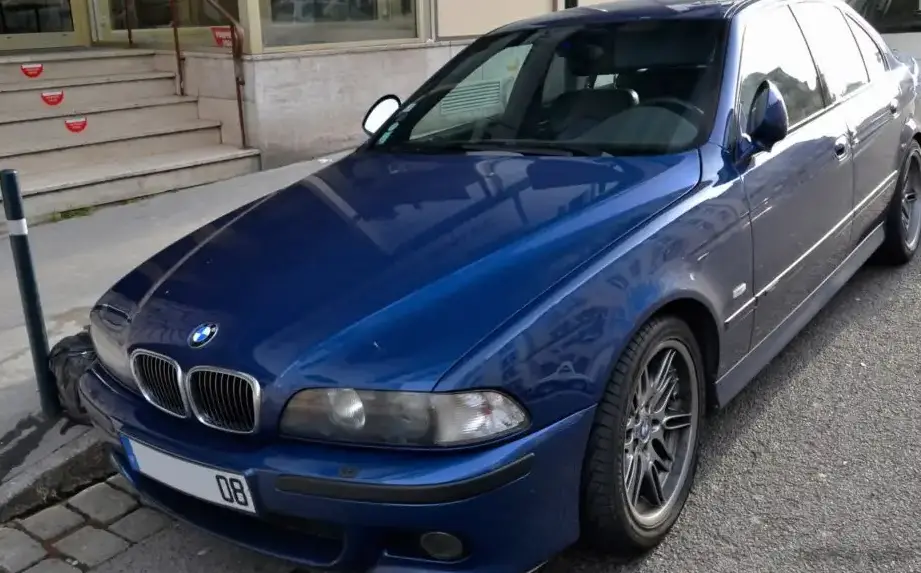
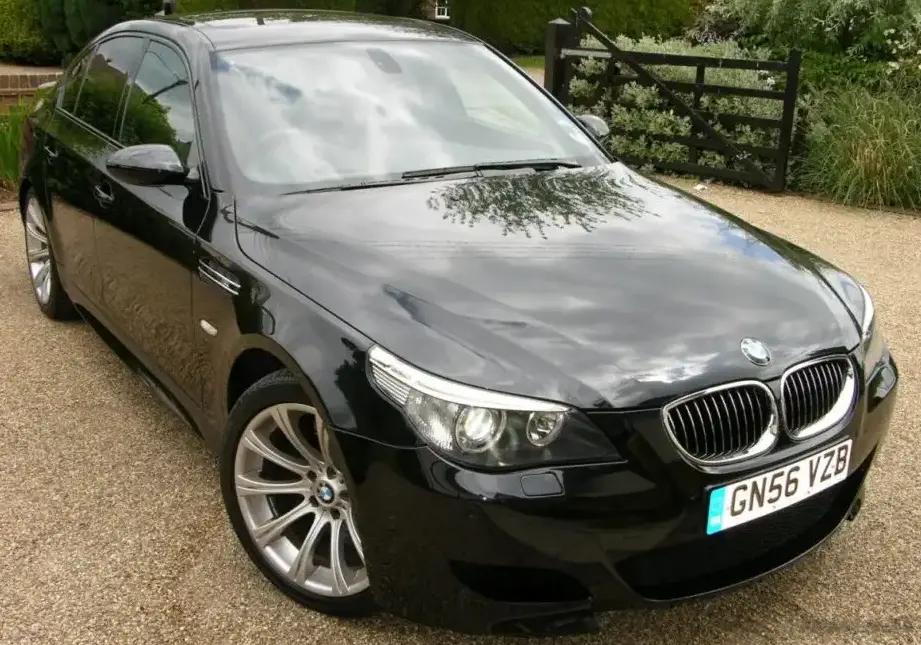
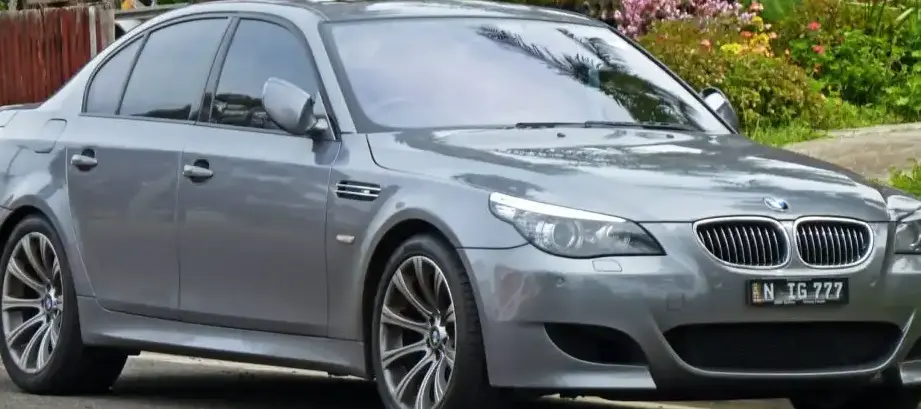
The E60 M5 LCI, powered by the S85B50A 5.0-liter V10 engine, represented a significant departure for BMW’s M division. While previous M5s had relied on inline-six and V8 engines, the V10 was inspired by BMW’s Formula One program, offering a high-revving, naturally aspirated experience. The LCI facelift, introduced in 2007, brought subtle cosmetic changes – revised headlights and taillights, updated front and rear bumpers – along with improvements to the engine management system and other refinements. This model occupied the top echelon of the E60 M5 lineup, offering the highest performance and most exclusive driving experience.
Powertrain & Engine Architecture
The heart of the E60 M5 LCI is the S85B50A V10 engine. This 4999cc engine boasts a 90-degree V-angle and utilizes individual throttle bodies for each cylinder, contributing to its sharp throttle response. The engine features double VANOS (variable valve timing) on both intake and exhaust camshafts, optimizing performance across the rev range. Fuel is delivered via a multi-port fuel injection system. The engine’s architecture is notable for its high-revving nature, with a redline of 8250 rpm. The standard transmission for this variant was a 6-speed manual, although a 7-speed SMG (Sequential Manual Gearbox) was also available. The SMG, while offering faster shifts, was often criticized for its jerky low-speed behavior. The engine’s block is constructed from aluminum alloy, contributing to weight savings.
Driving Characteristics
The 500 hp V10 engine delivers a truly exhilarating driving experience. Acceleration is brutal, with 0-60 mph arriving in around 4.5 seconds. The engine’s powerband is broad, but it truly comes alive above 5000 rpm, surging towards its 8250 rpm redline. The manual transmission provides precise and engaging shifts, while the SMG, when functioning optimally, offers lightning-fast gear changes. The E60 M5 LCI’s handling is precise and balanced, thanks to its sophisticated suspension and rear-wheel drive layout. However, its considerable weight (around 4012 lbs) is noticeable, particularly during hard cornering. Compared to lower-powered E60 variants, the M5 offers a significantly more visceral and engaging driving experience, prioritizing performance over outright comfort.
Equipment & Trim Levels
The M5 LCI came generously equipped, even by BMW standards. Standard features included leather upholstery, power-adjustable heated front seats, a premium sound system, automatic climate control, and xenon headlights. Optional extras included carbon fiber interior trim, a head-up display, active suspension, and a variety of exterior styling enhancements. The M5’s interior was focused on providing a sporty yet luxurious environment, with supportive seats and a driver-centric dashboard layout. The LCI facelift brought minor updates to the interior trim and materials, enhancing the overall sense of quality.
Chassis & Braking
The E60 M5 LCI features a robust chassis designed to handle the engine’s immense power. The front suspension utilizes a spring strut design with a transverse stabilizer, while the rear suspension employs an independent multi-link setup, also with a transverse stabilizer. Braking duties are handled by large, ventilated discs at all four corners (374mm front, 370mm rear), providing exceptional stopping power. The ABS (Anti-lock braking system) is standard, enhancing safety and control. The suspension was tuned to provide a balance between comfort and performance, offering a firm but not overly harsh ride.
Market Reception & Comparison
The E60 M5 LCI was widely praised by automotive critics for its performance, handling, and overall driving experience. However, its high price tag and relatively poor fuel economy (around 13 mpg combined) were often cited as drawbacks. Compared to other high-performance sedans of the era, such as the Mercedes-Benz E63 AMG and the Porsche Panamera, the M5 offered a unique combination of power, handling, and driver engagement. The SMG transmission, while innovative, proved to be a point of contention for some reviewers and owners. The manual transmission version was generally preferred for its more traditional and predictable driving experience.
Legacy
The E60 M5 LCI remains a highly sought-after performance sedan among enthusiasts. The S85B50A V10 engine is considered a masterpiece of engineering, and the car’s overall driving experience is still highly regarded today. While maintenance costs can be significant, particularly for the SMG transmission, the E60 M5 LCI offers a unique and rewarding ownership experience. The car’s value has remained relatively stable in the used car market, reflecting its enduring appeal and collectibility. It represents a pivotal moment in BMW M history, showcasing the brand’s commitment to pushing the boundaries of performance and innovation.