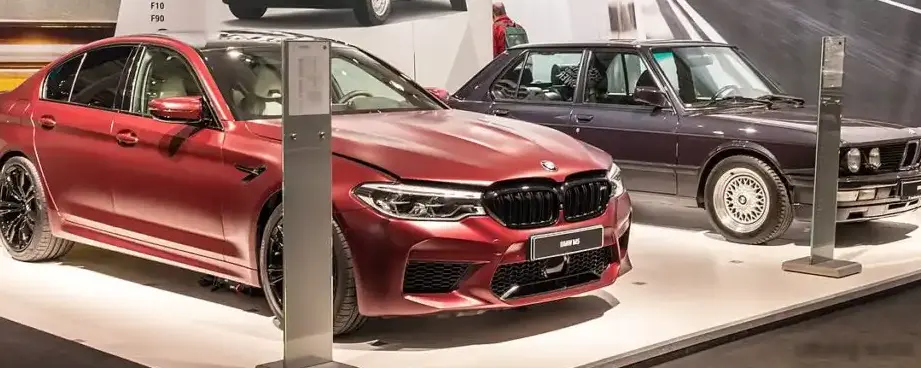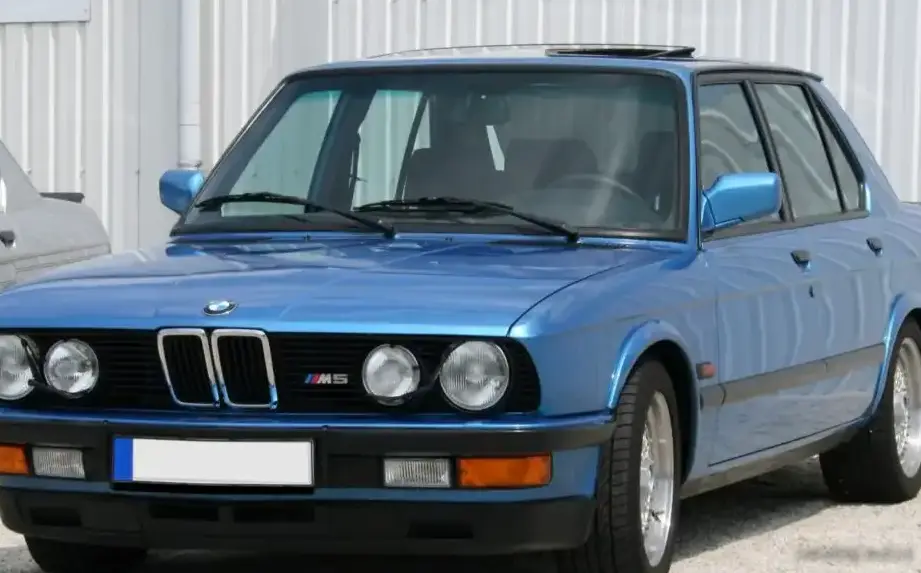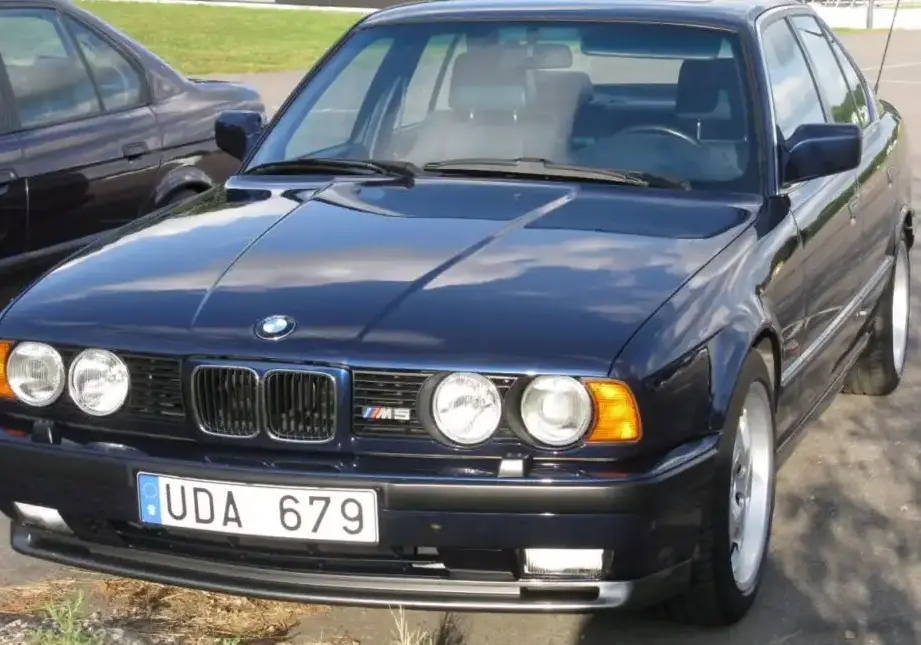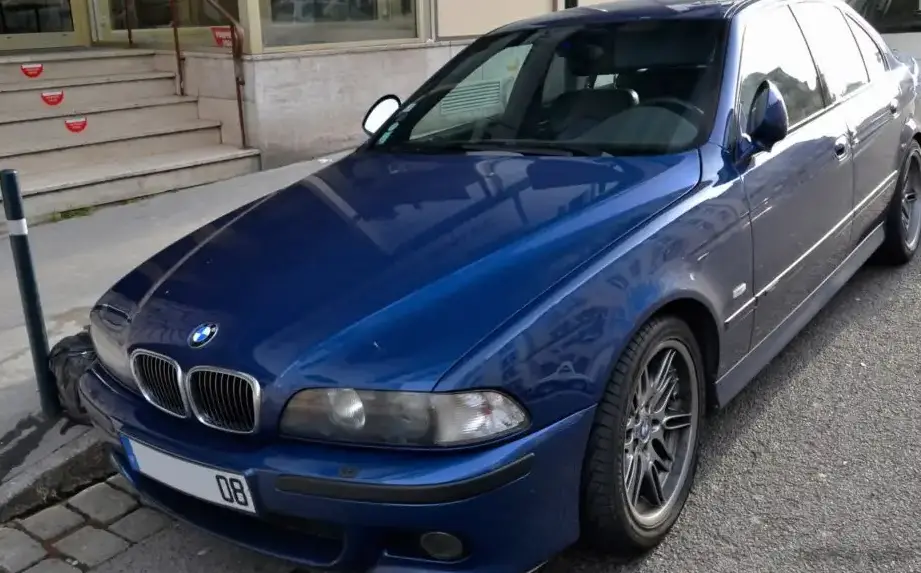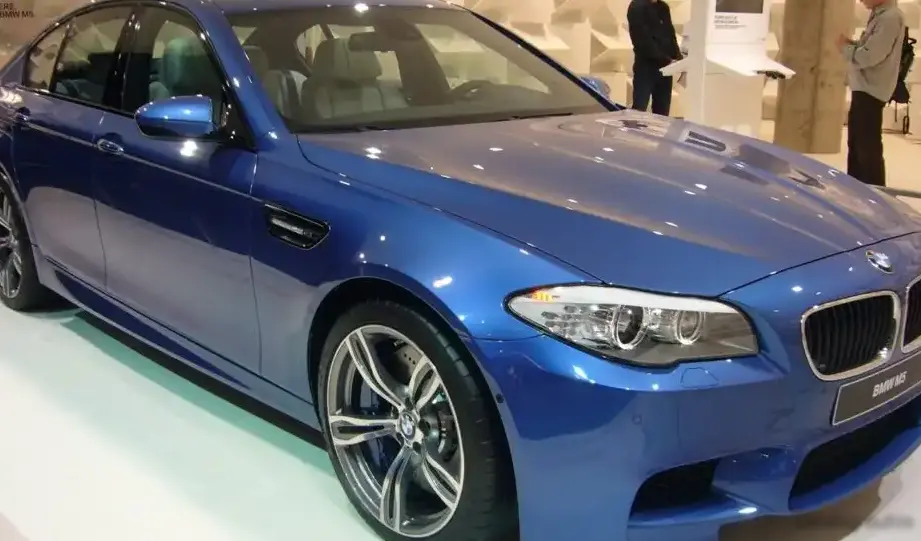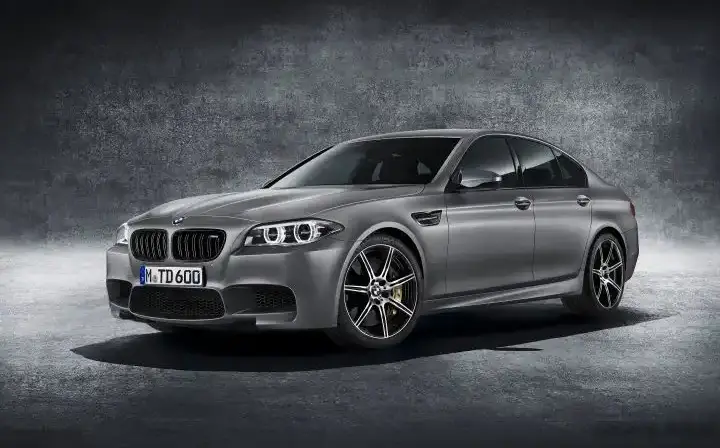
The BMW M5 (F10M LCI), specifically the Competition Package variant with the 4.4-liter V8 engine producing 575 horsepower and paired with the M DCT 7-speed dual-clutch transmission, represents a significant evolution of the high-performance executive sedan. Introduced in July 2013 as part of a facelift for the F10 M5 generation, and continuing through October 2016, this model aimed to bridge the gap between the standard M5 and the more track-focused, limited-production M5 Pure Metal Edition. It occupied a premium position within the F10 M5 lineup, offering enhanced performance and a more aggressive character without sacrificing the daily drivability expected of the M5 nameplate.
Technical Specifications
| Brand | BMW |
| Model | M5 |
| Generation | M5 (F10M LCI, facelift 2013) |
| Type (Engine) | Competition Package 4.4 V8 (575 Hp) M DCT |
| Start of production | July, 2013 |
| End of production | October, 2016 |
| Powertrain Architecture | Internal Combustion engine |
| Body type | Sedan |
| Seats | 5 |
| Doors | 4 |
| Fuel consumption (economy) – urban (NEDC) | 13.9 l/100 km (16.9 US mpg, 20.3 UK mpg, 7.2 km/l) |
| Fuel consumption (economy) – extra urban (NEDC) | 7.6 l/100 km (30.9 US mpg, 37.2 UK mpg, 13.2 km/l) |
| Fuel consumption (economy) – combined (NEDC) | 9.9 l/100 km (23.8 US mpg, 28.5 UK mpg, 10.1 km/l) |
| CO2 emissions (NEDC) | 231 g/km |
| Fuel Type | Petrol (Gasoline) |
| Acceleration 0 – 100 km/h | 4.2 sec |
| Acceleration 0 – 62 mph | 4.2 sec |
| Acceleration 0 – 60 mph | 4.1 sec |
| Acceleration 0 – 200 km/h | 12.7 sec |
| Maximum speed | 250 km/h (155.34 mph), Electronically limited |
| Emission standard | Euro 6 |
| Weight-to-power ratio | 3.3 kg/Hp, 307.5 Hp/tonne |
| Weight-to-torque ratio | 2.8 kg/Nm, 363.6 Nm/tonne |
| Power | 575 Hp @ 6000-7000 rpm |
| Power per litre | 130.8 Hp/l |
| Torque | 680 Nm @ 1500-5750 rpm (501.54 lb.-ft. @ 1500-5750 rpm) |
| Maximum engine speed | 7200 rpm |
| Engine layout | Front, Longitudinal |
| Engine Model/Code | S63B44B |
| Engine displacement | 4395 cm3 (268.2 cu. in.) |
| Number of cylinders | 8 |
| Engine configuration | V-engine |
| Cylinder Bore | 89 mm (3.5 in.) |
| Piston Stroke | 88.3 mm (3.48 in.) |
| Compression ratio | 10:1 |
| Number of valves per cylinder | 4 |
| Fuel injection system | Direct injection |
| Engine aspiration | Twin-power turbo, Intercooler |
| Valvetrain | Double-VANOS, VALVETRONIC |
| Engine oil capacity | 8.4 l (8.88 US qt | 7.39 UK qt) |
| Coolant | 18.5 l (19.55 US qt | 16.28 UK qt) |
| Kerb Weight | 1870 kg (4122.64 lbs.) |
| Max. weight | 2410 kg (5313.14 lbs.) |
| Max load | 540 kg (1190.5 lbs.) |
| Trunk (boot) space – minimum | 520 l (18.36 cu. ft.) |
| Fuel tank capacity | 80 l (21.13 US gal | 17.6 UK gal) |
| Max. roof load | 100 kg (220.46 lbs.) |
| Permitted trailer load with brakes (12%) | 2000 kg (4409.25 lbs.) |
| Permitted trailer load without brakes | 750 kg (1653.47 lbs.) |
| Permitted towbar download | 90 kg (198.42 lbs.) |
| Length | 4910 mm (193.31 in.) |
| Width | 1891 mm (74.45 in.) |
| Width including mirrors | 2119 mm (83.43 in.) |
| Height | 1457 mm (57.36 in.) |
| Wheelbase | 2964 mm (116.69 in.) |
| Front track | 1627 mm (64.06 in.) |
| Rear (Back) track | 1582 mm (62.28 in.) |
| Front overhang | 836 mm (32.91 in.) |
| Rear overhang | 1110 mm (43.7 in.) |
| Ride height (ground clearance) | 117 mm (4.61 in.) |
| Drag coefficient (Cd) | 0.33 |
| Minimum turning circle (turning diameter) | 12.6 m (41.34 ft.) |
| Drivetrain Architecture | The Internal combustion engine (ICE) drives the rear wheels of the vehicle. |
| Drive wheel | Rear wheel drive |
| Number of gears and type of gearbox | 7 gears, automatic transmission M DCT |
| Front suspension | Coil spring, Double wishbone, Transverse stabilizer |
| Rear suspension | Independent multi-link spring suspension with stabilizer |
| Front brakes | Ventilated discs, 400×36 mm |
| Rear brakes | Ventilated discs, 396×24 mm |
| Assisting systems | ABS (Anti-lock braking system) |
| Steering type | Steering rack and pinion |
| Power steering | Hydraulic Steering |
| Tires size | Front wheel tires: 265/40 R19; 265/35 R20 Rear wheel tires: 295/35 R19; 295/30 R20 |
| Wheel rims size | Front wheel rims: 9J x 19; 9J x 20 Rear wheel rims: 10J x 19; 10J x 20 |
INTRODUCTION
The F10 M5, launched in 2011, represented a departure from its predecessors with its naturally aspirated V8 engine. The 2013 LCI (Life Cycle Impulse) facelift brought subtle styling updates and, more importantly, the introduction of the Competition Package. This package was designed to sharpen the M5’s focus, offering increased power, revised suspension tuning, and more aggressive aesthetics. The 575-horsepower Competition Package model aimed to deliver a more engaging driving experience while retaining the M5’s reputation for luxury and refinement. It served as a compelling alternative to the standard M5 and a stepping stone to the even more hardcore M5 Pure Metal Edition.
Powertrain & Engine Architecture
At the heart of the M5 Competition Package lies the S63B44B engine, a 4.4-liter twin-turbocharged V8. This engine builds upon the foundation of the standard F10 M5 engine but benefits from revised engine mapping and increased boost pressure, resulting in the 575 horsepower output. The engine utilizes direct fuel injection and BMW’s Valvetronic and Double-VANOS technologies for precise control over valve timing and lift, optimizing both power and efficiency. The M DCT 7-speed dual-clutch transmission is integral to the car’s performance, offering incredibly fast and precise gear changes. The transmission features a dedicated oil cooler to manage the increased thermal demands of the higher output engine. The engine’s longitudinal layout and rear-wheel-drive configuration contribute to the M5’s balanced handling characteristics.
Driving Characteristics
The M5 Competition Package delivers a noticeably more urgent driving experience compared to the standard M5. The increased power and torque are readily available throughout the rev range, providing strong acceleration in any gear. The M DCT transmission’s quick shifts and the revised suspension tuning contribute to a more connected and responsive feel. While the standard M5 is already a capable performer, the Competition Package’s stiffer springs, dampers, and anti-roll bars reduce body roll and improve cornering stability. The power delivery is linear and predictable, making it relatively easy to modulate the throttle and maintain control. However, the increased performance does come with a slight trade-off in ride comfort, although the M5 remains remarkably comfortable for a high-performance sedan.
Equipment & Trim Levels
The Competition Package added several distinct features to the M5. Standard equipment included unique 20-inch alloy wheels, black kidney grilles, and a revised exhaust system with black tailpipes. Inside, the Competition Package featured unique trim accents, sport seats with increased bolstering, and an M-specific steering wheel. Optional extras included carbon fiber interior trim, upgraded leather upholstery, and a head-up display. The Competition Package was not a standalone trim level but rather an option package that could be added to the standard M5, allowing buyers to customize their vehicle to their preferences.
Chassis & Braking
The chassis of the M5 Competition Package benefits from subtle but effective revisions. The suspension features stiffer springs and dampers, along with thicker anti-roll bars, to reduce body roll and improve handling. The steering system is also recalibrated for more direct and precise feedback. The braking system consists of ventilated discs at all four corners, with larger front rotors (400x36mm) compared to the standard M5. The ABS system is optimized for the increased performance, providing confident stopping power even under demanding conditions.
Market Reception & Comparison
The M5 Competition Package was generally well-received by automotive critics. Reviewers praised the increased performance, improved handling, and more aggressive character. Compared to the standard M5, the Competition Package offered a more engaging and rewarding driving experience. It also provided a compelling alternative to other high-performance sedans, such as the Porsche Panamera Turbo and the Mercedes-Benz E63 AMG. Fuel economy, while not a primary concern for M5 buyers, was reasonable for a vehicle of this performance level, averaging around 23.8 US mpg in combined driving. Reliability was generally good, although the complex twin-turbocharged engine and M DCT transmission required diligent maintenance.
Legacy
The M5 Competition Package (F10M LCI) remains a highly sought-after model in the used car market. Its combination of performance, luxury, and relative reliability has made it a favorite among enthusiasts. The S63B44B engine, while complex, has proven to be reasonably durable with proper maintenance. Common issues include oil leaks, cooling system failures, and occasional problems with the M DCT transmission. However, these issues are typically addressable with preventative maintenance and timely repairs. The F10M LCI Competition Package represents a sweet spot in the M5 lineage, offering a compelling blend of performance and practicality that continues to appeal to drivers today.