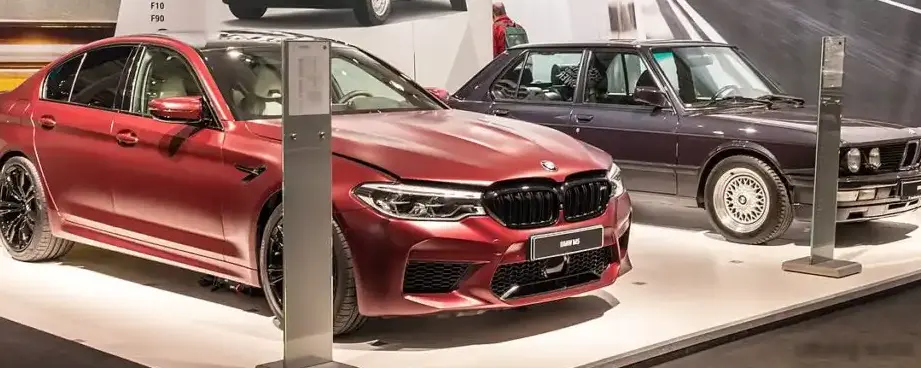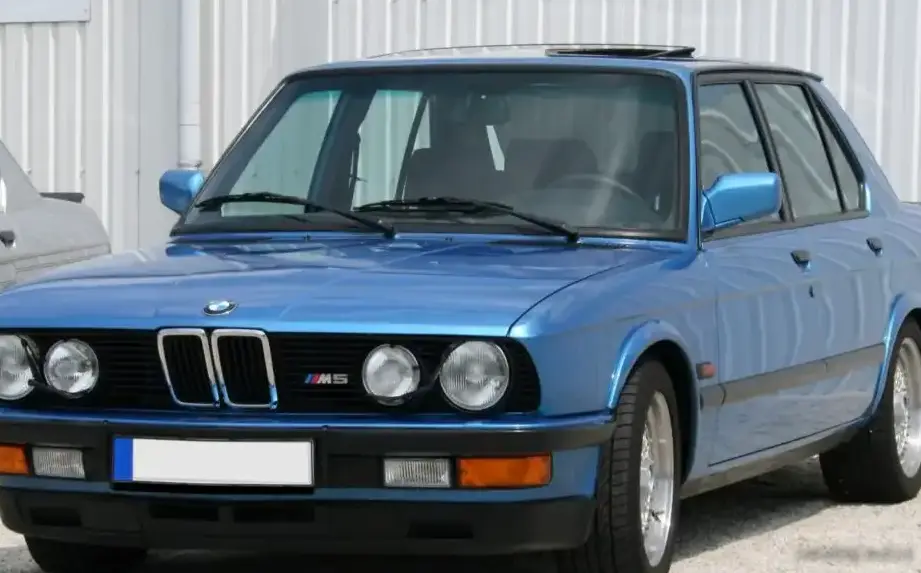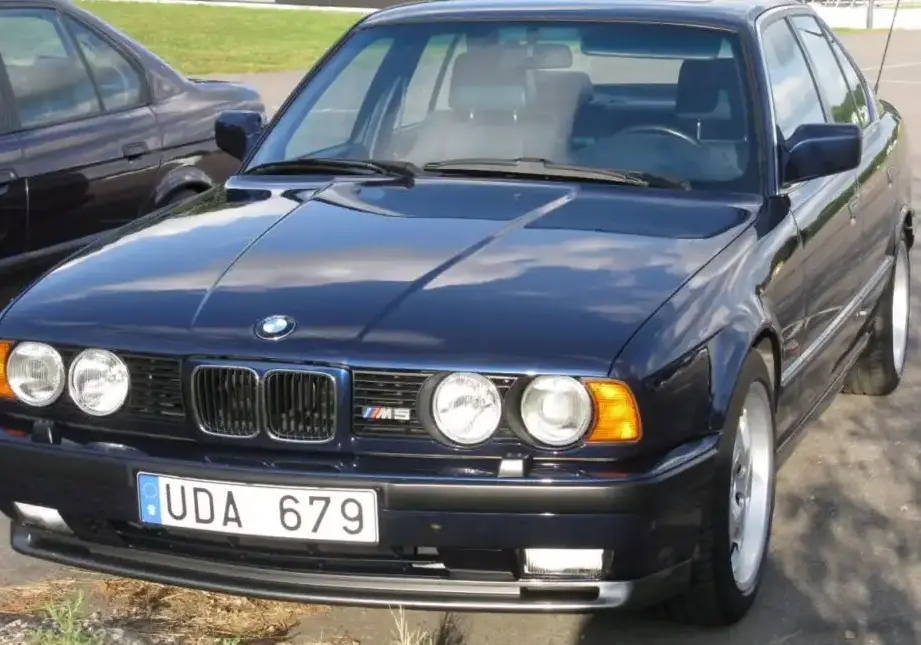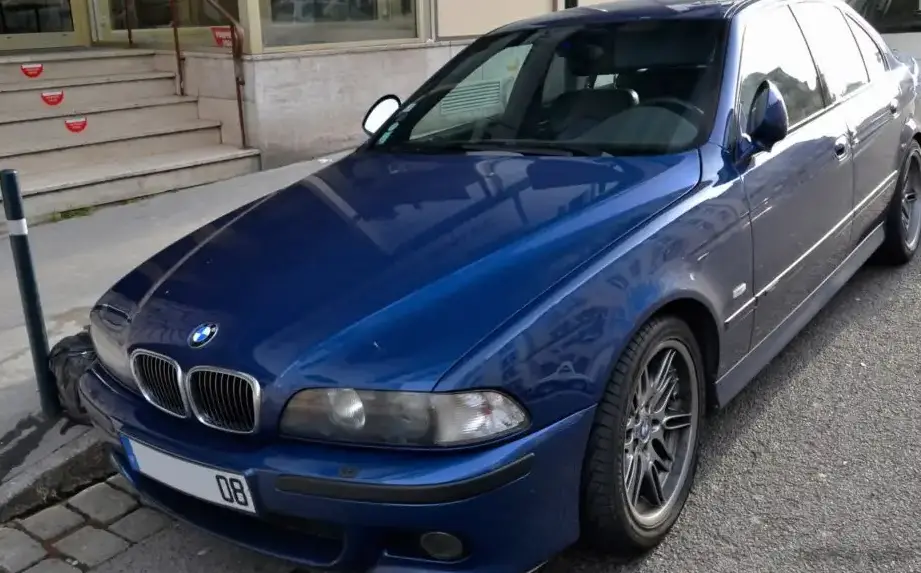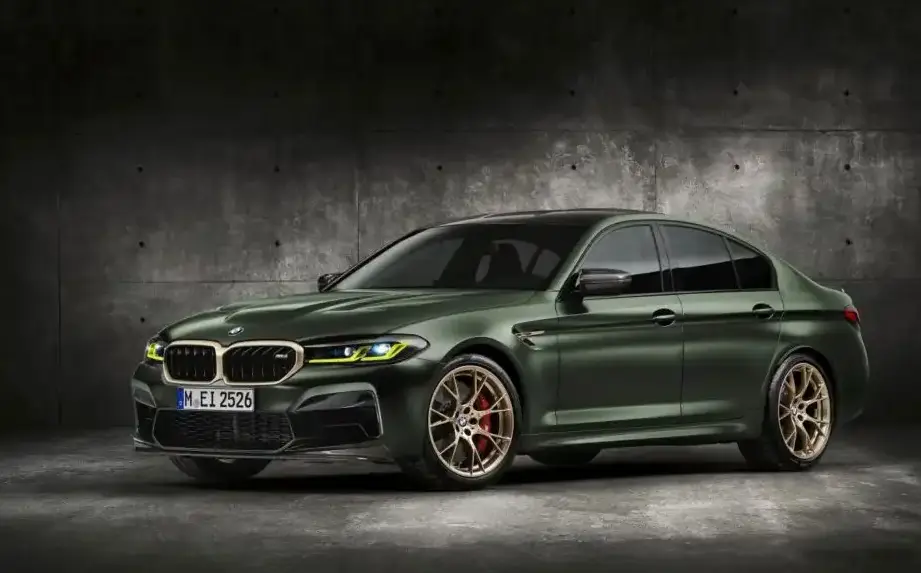
The BMW M5 CS (Competition Sport) represents the highest-performance iteration of the F90 LCI (Life Cycle Impulse, or facelift) M5 generation, produced from January 2021 through 2022. Positioned as a limited-edition, track-focused variant, the M5 CS aimed to bridge the gap between the standard M5 Competition and dedicated track machines. It distinguished itself through significant weight reduction, increased power output, and enhanced aerodynamic elements. Built on the F90 platform, the M5 CS continued BMW’s tradition of blending luxury and high performance in a four-door sedan package.
Technical Specifications
| Brand | BMW |
| Model | M5 |
| Generation | M5 (F90 LCI, facelift 2020) |
| Type | CS 4.4 V8 (635 Hp) xDrive Steptronic |
| Start of production | January, 2021 |
| End of production | 2022 |
| Powertrain Architecture | Internal Combustion engine |
| Body type | Sedan |
| Seats | 4 |
| Doors | 4 |
| Combined fuel consumption (WLTP) | 10.9-11.3 l/100 km (21.6 – 20.8 US mpg, 25.9 – 25 UK mpg, 9.2 – 8.8 km/l) |
| CO2 emissions (WLTP) | 248-257 g/km |
| Fuel consumption (urban) | 16.6-16.9 l/100 km (14.2 – 13.9 US mpg, 17 – 16.7 UK mpg, 6 – 5.9 km/l) |
| Fuel consumption (extra urban) | 7.7-8.1 l/100 km (30.5 – 29 US mpg, 36.7 – 34.9 UK mpg, 13 – 12.3 km/l) |
| Fuel consumption (combined) | 11.1-11.3 l/100 km (21.2 – 20.8 US mpg, 25.4 – 25 UK mpg, 9 – 8.8 km/l) |
| CO2 emissions (NEDC) | 253-258 g/km |
| Fuel Type | Petrol (Gasoline) |
| Acceleration 0 – 100 km/h | 3.0 sec |
| Acceleration 0 – 62 mph | 3.0 sec |
| Acceleration 0 – 60 mph | 2.9 sec |
| Acceleration 0 – 200 km/h | 10.3 sec |
| Maximum speed | 305 km/h (189.52 mph), Electronically limited |
| Emission standard | Euro 6d |
| Weight-to-power ratio | 2.9 kg/Hp, 347.9 Hp/tonne |
| Weight-to-torque ratio | 2.4 kg/Nm, 411 Nm/tonne |
| Power | 635 Hp @ 6000 rpm |
| Power per litre | 144.5 Hp/l |
| Torque | 750 Nm @ 1800-5950 rpm (553.17 lb.-ft. @ 1800-5950 rpm) |
| Engine layout | Front, Longitudinal |
| Engine Model/Code | S63B44B |
| Engine displacement | 4395 cm3 (268.2 cu. in.) |
| Number of cylinders | 8 |
| Engine configuration | V-engine |
| Cylinder Bore | 89 mm (3.5 in.) |
| Piston Stroke | 88.3 mm (3.48 in.) |
| Compression ratio | 10:1 |
| Number of valves per cylinder | 4 |
| Fuel injection system | Direct injection |
| Engine aspiration | Twin-power turbo, Intercooler |
| Valvetrain | VALVETRONIC |
| Engine oil capacity | 10 l (10.57 US qt | 8.8 UK qt) |
| Kerb Weight | 1825 kg (4023.44 lbs.) |
| Max. weight | 2290 kg (5048.59 lbs.) |
| Max load | 465 kg (1025.15 lbs.) |
| Trunk (boot) space – minimum | 530 l (18.72 cu. ft.) |
| Fuel tank capacity | 68 l (17.96 US gal | 14.96 UK gal) |
| Max. roof load | 100 kg (220.46 lbs.) |
| Permitted towbar download | 90 kg (198.42 lbs.) |
| Length | 5001 mm (196.89 in.) |
| Width | 1903 mm (74.92 in.) |
| Height | 1468 mm (57.8 in.) |
| Wheelbase | 2982 mm (117.4 in.) |
| Front track | 1625 mm (63.98 in.) |
| Rear track | 1594 mm (62.76 in.) |
| Ride height (ground clearance) | 119 mm (4.69 in.) |
| Minimum turning circle | 12.6 m (41.34 ft.) |
| Drivetrain Architecture | All wheel drive (4×4). ICE drives rear wheels, front wheels engaged via clutch. |
| Number of gears | 8 |
| Gearbox type | Automatic transmission Steptronic |
| Front suspension | Double wishbone |
| Rear suspension | Independent multi-link suspension |
| Front brakes | Ventilated discs |
| Rear brakes | Ventilated discs |
| Assisting systems | ABS (Anti-lock braking system) |
| Steering type | Steering rack and pinion |
| Power steering | Electric Steering |
| Front tires | 275/35 ZR20 102Y XL |
| Rear tires | 285/35 ZR20 104Y XL |
| Front wheel rims | 9.5J x 20 |
| Rear wheel rims | 10.5J x 20 |
INTRODUCTION
The BMW M5 CS, launched in 2021, represented the pinnacle of the F90 M5 lifecycle. Building upon the already potent M5 Competition, the CS variant was engineered for enhanced performance and a more focused driving experience. Production was limited, adding to its exclusivity. The “CS” designation, historically used by BMW to denote “Competition Sport” models, signified a commitment to weight reduction and track capability. The F90 M5 generation, overall, aimed to deliver a compelling blend of luxury, technology, and high-performance driving dynamics, and the CS took that formula to its extreme.
Powertrain & Engine Architecture
At the heart of the M5 CS lies the S63B44B, a 4.4-liter twin-turbocharged V8 engine. This engine, a derivative of the unit found in the M5 Competition, was tuned to produce 635 horsepower at 6000 rpm and 750 Nm (553 lb-ft) of torque between 1800 and 5950 rpm. The engine utilizes direct fuel injection and BMW’s VALVETRONIC variable valve timing system for optimized efficiency and responsiveness. The turbochargers are twin-scroll units, minimizing turbo lag and providing a broad torque curve. The engine’s longitudinal layout and front-mid engine placement contribute to balanced weight distribution. The M5 CS exclusively paired this engine with an 8-speed Steptronic automatic transmission, featuring quicker shift times and optimized programming for performance driving. This transmission incorporates Drivelogic, allowing the driver to select from various shift programs.
Driving Characteristics
The M5 CS delivers a noticeably more aggressive and engaging driving experience compared to the standard M5 and even the M5 Competition. The weight reduction, achieved through the use of carbon fiber reinforced plastic (CFRP) in the roof, hood, and other components, contributes to improved agility and responsiveness. The 8-speed Steptronic transmission provides rapid and precise gear changes, enhancing acceleration. The xDrive all-wheel-drive system, while standard, is tuned to allow for more rear-biased power delivery in Sport and Sport+ modes, enabling controlled oversteer. The suspension is stiffer and more track-focused, resulting in reduced body roll and improved cornering stability. The combination of increased power, reduced weight, and optimized drivetrain settings results in a 0-60 mph time of just 2.9 seconds and a top speed electronically limited to 189.52 mph (305 km/h).
Equipment & Trim Levels
The M5 CS came exceptionally well-equipped as standard. Interior appointments included M Carbon seats, providing significant weight savings and enhanced support. The interior featured exclusive trim elements, including carbon fiber accents and Alcantara upholstery. Standard features included a head-up display, BMW’s iDrive infotainment system with a 12.3-inch touchscreen, and a premium sound system. Optional extras were limited, reflecting the CS’s focus on performance. Available options included specific exterior paint colors and bespoke interior customization options. The overall interior design prioritized a driver-focused experience, with controls logically arranged and a minimalist aesthetic.
Chassis & Braking
The M5 CS benefits from a chassis tuned for optimal performance. The suspension utilizes adaptive dampers, allowing the driver to adjust the ride quality based on driving conditions. The front suspension employs a double-wishbone design, while the rear features an independent multi-link setup. Braking duties are handled by ventilated discs at all four corners, providing ample stopping power. The braking system incorporates BMW’s Dynamic Stability Control (DSC) and Anti-lock Braking System (ABS) for enhanced safety. The CS also featured a specifically tuned steering system for improved feedback and precision. The lightweight wheels and tires contribute to reduced unsprung weight, further enhancing handling.
Market Reception & Comparison
The M5 CS was widely praised by automotive critics for its exceptional performance and engaging driving dynamics. Reviewers highlighted the noticeable improvements in handling and responsiveness compared to the M5 Competition. The weight reduction was particularly lauded, as it significantly enhanced the car’s agility. While fuel economy remained relatively low (10.9-11.3 l/100 km), it was considered acceptable given the car’s performance capabilities. Compared to the M5 Competition, the CS offered a more focused and visceral driving experience, albeit at a higher price point. The CS also positioned itself as a compelling alternative to other high-performance sedans, such as the Mercedes-AMG E63 S and the Porsche Panamera Turbo S.
Legacy
The BMW M5 CS is already establishing itself as a highly sought-after collector’s item. Its limited production run and exceptional performance credentials ensure its long-term desirability. The S63B44B engine, while complex, has proven to be relatively reliable when properly maintained. The 8-speed Steptronic transmission is also known for its durability. However, as with any high-performance vehicle, regular maintenance and adherence to BMW’s recommended service intervals are crucial. On the used car market, M5 CS models command a significant premium over other F90 M5 variants, reflecting their exclusivity and performance potential. The M5 CS represents a high point in BMW M’s engineering prowess, showcasing their ability to create a truly exceptional performance sedan.