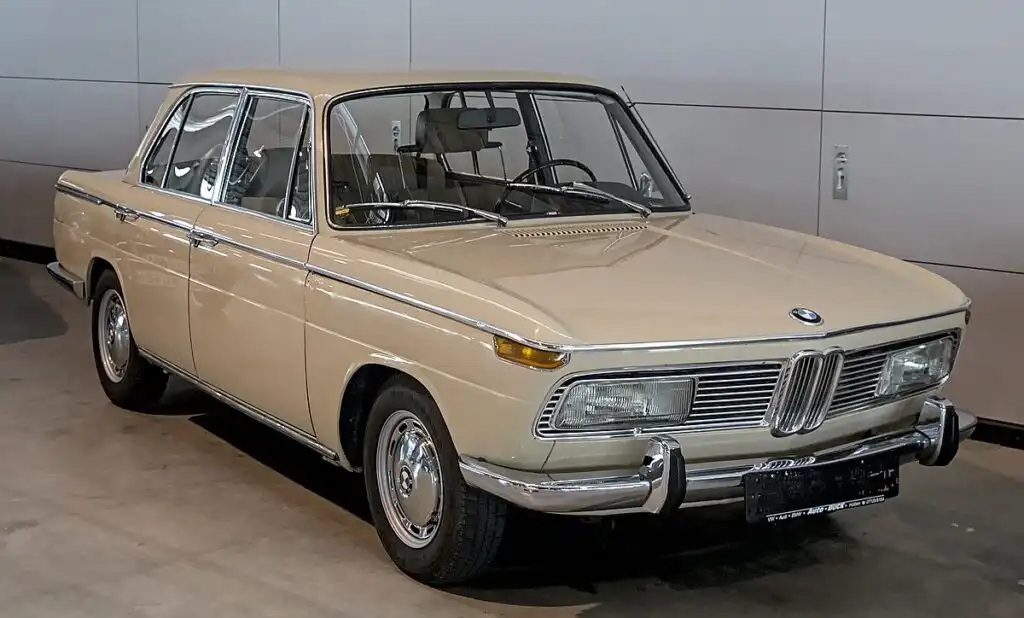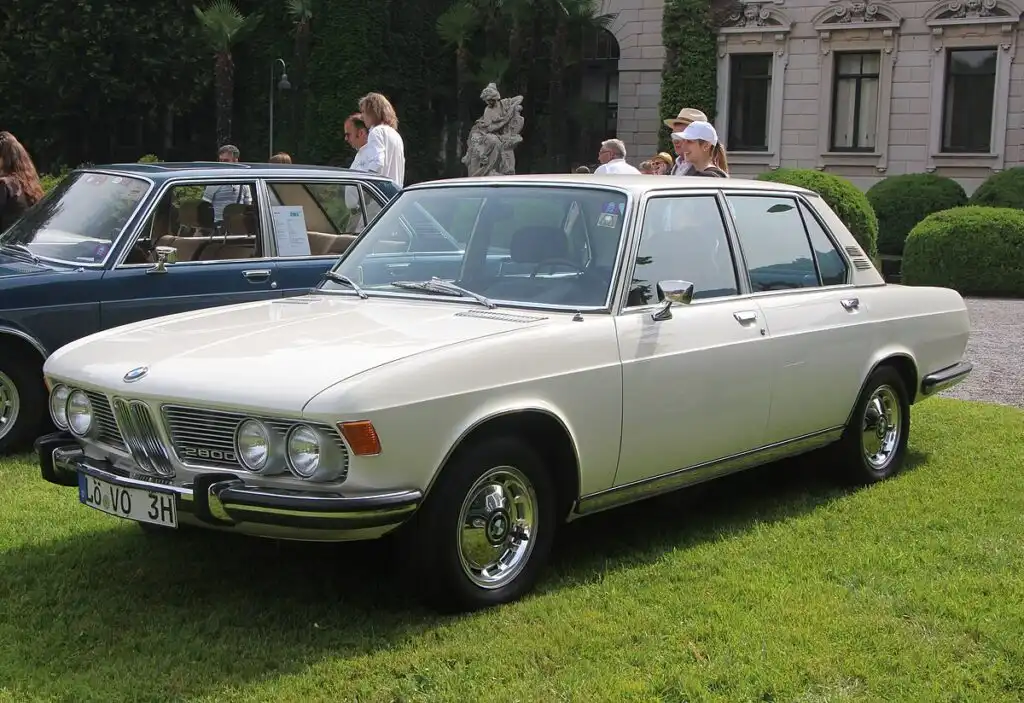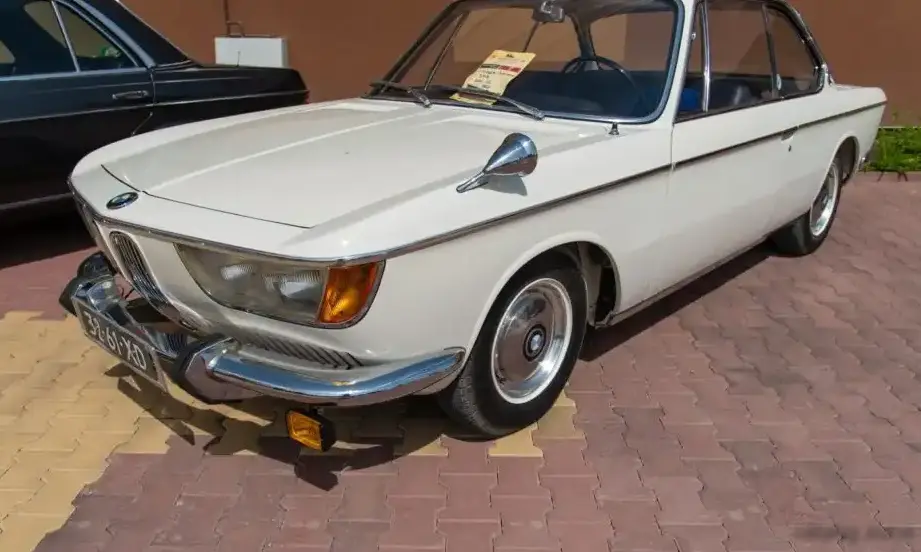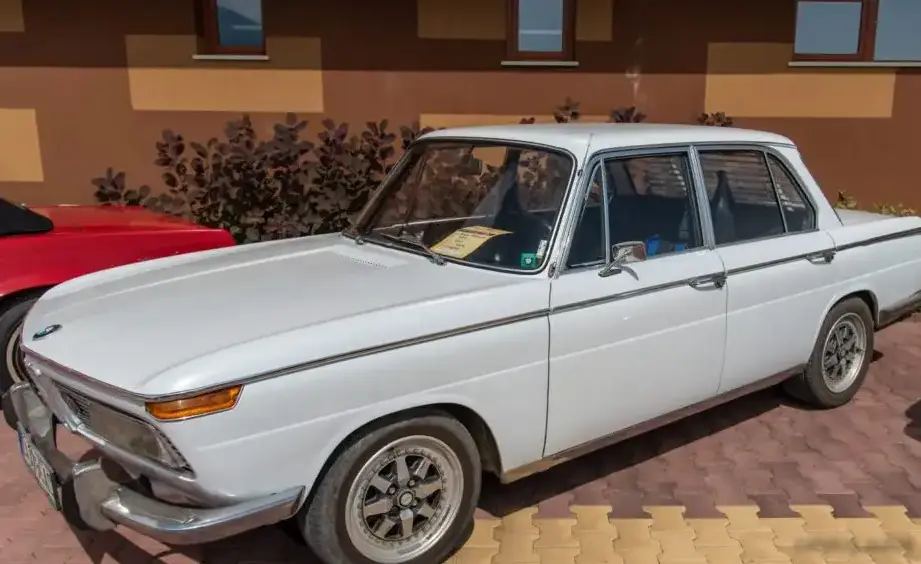
Technical Specifications
| Brand | BMW |
| Model | New Class |
| Generation | New Class |
| Type (Engine) | 2000 (100 Hp) Automatic |
| Start of production | January, 1966 |
| End of production | June, 1972 |
| Powertrain Architecture | Internal Combustion engine |
| Body type | Sedan |
| Seats | 5 |
| Doors | 4 |
| Fuel consumption (combined) | 10.7 l/100 km (22 US mpg, 26.4 UK mpg, 9.3 km/l) |
| Fuel Type | Petrol (Gasoline) |
| Acceleration 0 – 100 km/h | 12.4 sec |
| Acceleration 0 – 62 mph | 12.4 sec |
| Acceleration 0 – 60 mph | 11.8 sec |
| Maximum speed | 168 km/h (104.39 mph) |
| Weight-to-power ratio | 11.5 kg/Hp, 87 Hp/tonne |
| Weight-to-torque ratio | 7.4 kg/Nm, 135.7 Nm/tonne |
| Power | 100 Hp @ 5500 rpm |
| Power per litre | 50.3 Hp/l |
| Torque | 156 Nm @ 3000 rpm (115.06 lb.-ft. @ 3000 rpm) |
| Engine layout | Front, Longitudinal |
| Engine Model/Code | M05 |
| Engine displacement | 1990 cm3 (121.44 cu. in.) |
| Number of cylinders | 4 |
| Engine configuration | Inline |
| Cylinder Bore | 89 mm (3.5 in.) |
| Piston Stroke | 80 mm (3.15 in.) |
| Compression ratio | 8.5:1 |
| Number of valves per cylinder | 2 |
| Fuel injection system | Carburettor |
| Engine aspiration | Naturally aspirated engine |
| Valvetrain | SOHC |
| Engine oil capacity | 4.25 l (4.49 US qt | 3.74 UK qt) |
| Coolant | 7 l (7.4 US qt | 6.16 UK qt) |
| Kerb Weight | 1150 kg (2535.32 lbs.) |
| Max. weight | 1550 kg (3417.17 lbs.) |
| Max load | 400 kg (881.85 lbs.) |
| Trunk (boot) space – minimum | 600 l (21.19 cu. ft.) |
| Fuel tank capacity | 55 l (14.53 US gal | 12.1 UK gal) |
| Permitted trailer load with brakes (12%) | 1200 kg (2645.55 lbs.) |
| Permitted trailer load without brakes | 500 kg (1102.31 lbs.) |
| Length | 4500 mm (177.17 in.) |
| Width | 1710 mm (67.32 in.) |
| Height | 1445 mm (56.89 in.) |
| Wheelbase | 2550 mm (100.39 in.) |
| Front track | 1330 mm (52.36 in.) |
| Rear (Back) track | 1376 mm (54.17 in.) |
| Drivetrain Architecture | The Internal combustion engine (ICE) drives the rear wheels of the vehicle. |
| Drive wheel | Rear wheel drive |
| Number of gears and type of gearbox | 3 gears, automatic transmission |
| Front suspension | Double wishbone |
| Rear suspension | Independent coil spring, Trailing arm |
| Front brakes | Disc, 272 mm |
| Rear brakes | Drum, 250 mm |
| Steering type | Worm-reduction unit |
| Wheel rims size | 5J x 14 |
The BMW New Class 2000 Automatic, produced from 1966 to 1972, was a significant evolution of BMW’s post-war lineup. Following the success of the initial New Class models (the 1500 and 1600), the 2000 offered increased displacement and power. The addition of an automatic transmission to the 2000 model broadened its appeal, targeting drivers who prioritized comfort and ease of use over outright sporting performance. This variant was positioned as a more luxurious and convenient alternative to the standard manual transmission 2000 and the more economical 1600 models. It represented BMW’s attempt to capture a larger share of the burgeoning mid-size executive car market.
Powertrain & Engine Architecture
The heart of the 2000 Automatic is the BMW M05 engine, a 1,990 cc (121.44 cubic inches) inline-four cylinder unit. This engine featured a single overhead camshaft (SOHC) valvetrain operating two valves per cylinder. Unlike later BMW engines, the M05 utilized a Solex 32 PHH carburetor for fuel delivery, a relatively simple system for the time. The engine produced 100 horsepower at 5,500 rpm and 156 Nm (115.06 lb-ft) of torque at 3,000 rpm. The engine’s longitudinal front-engine layout and rear-wheel drive configuration were typical for BMW sedans of the era. The automatic transmission was a three-speed unit, providing smooth but not particularly rapid gear changes. It was designed to complement the engine’s torque curve, offering comfortable cruising and adequate acceleration for everyday driving.
Driving Characteristics
The 2000 Automatic offered a noticeably different driving experience compared to its manual counterparts. The three-speed automatic transmission, while providing convenience, resulted in slower acceleration. The 0-60 mph time of around 11.8 seconds was considerably slower than the manual 2000. The automatic’s gear ratios were optimized for cruising, making it a comfortable highway car, but less engaging on winding roads. Power delivery was smooth and predictable, but the lack of driver control over gear selection diminished the sporty feel associated with the New Class range. The car’s weight of approximately 1,150 kg (2,535 lbs) further contributed to the less dynamic performance.
Equipment & Trim Levels
The 2000 Automatic typically came well-equipped for its time, though options allowed for further customization. Standard features included comfortable cloth upholstery, a wood-trimmed dashboard, and basic instrumentation. The interior was relatively spacious for a car of its size, offering ample room for five passengers. Optional extras included a sunroof, upgraded audio systems, and leather upholstery. The automatic transmission itself was considered a luxury feature, and often came bundled with other comfort-oriented options. The exterior trim was generally understated, reflecting BMW’s design philosophy of functional elegance.
Chassis & Braking
The 2000 Automatic utilized a robust chassis featuring independent front suspension with double wishbones and a rear suspension with trailing arms and coil springs. This suspension setup provided a good balance of ride comfort and handling. Braking was accomplished via disc brakes on the front wheels and drum brakes on the rear. The front discs measured 272 mm in diameter, providing adequate stopping power for the car’s weight and performance. Steering was via a worm-reduction unit, which offered precise control but required a reasonable amount of effort. The car rode on 5J x 14 inch wheels.
Market Reception & Comparison
The 2000 Automatic was generally well-received by automotive critics, who praised its comfort, refinement, and build quality. However, the automatic transmission was often criticized for detracting from the sporty character of the New Class range. Compared to the manual 2000, the automatic version offered less engaging driving dynamics and slightly lower fuel economy (around 10.7 l/100 km or 22 US mpg). The 1600 models, being lighter and more economical, appealed to a different segment of the market. The 2000 Automatic positioned itself as a premium offering, attracting buyers who valued comfort and convenience over outright performance.
Legacy
The BMW New Class 2000 Automatic, while not the most iconic variant of the New Class range, played a crucial role in establishing BMW’s reputation for building high-quality, well-engineered automobiles. The M05 engine proved to be relatively durable, and many examples are still on the road today. The automatic transmission, while not known for its longevity compared to the manual gearbox, can be rebuilt and maintained with proper care. In the used car market, the 2000 Automatic commands a premium over the standard 2000 due to its rarity and appeal to collectors seeking a comfortable and classic BMW experience. The New Class as a whole is considered a landmark model in BMW’s history, paving the way for the company’s future success.