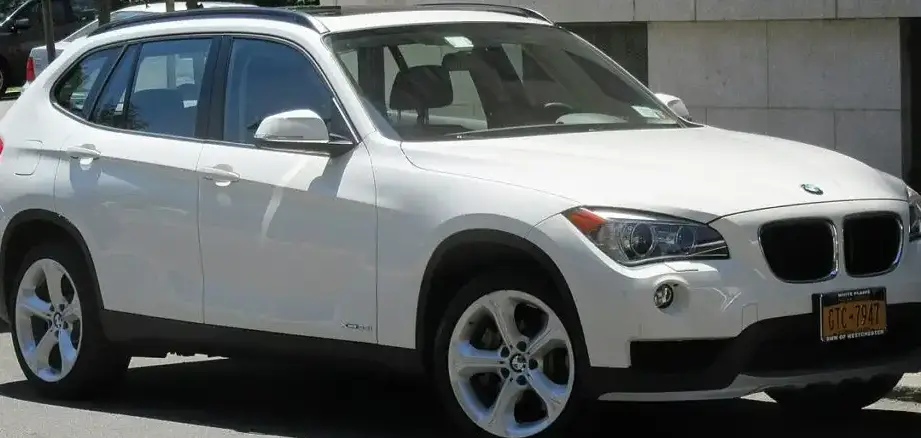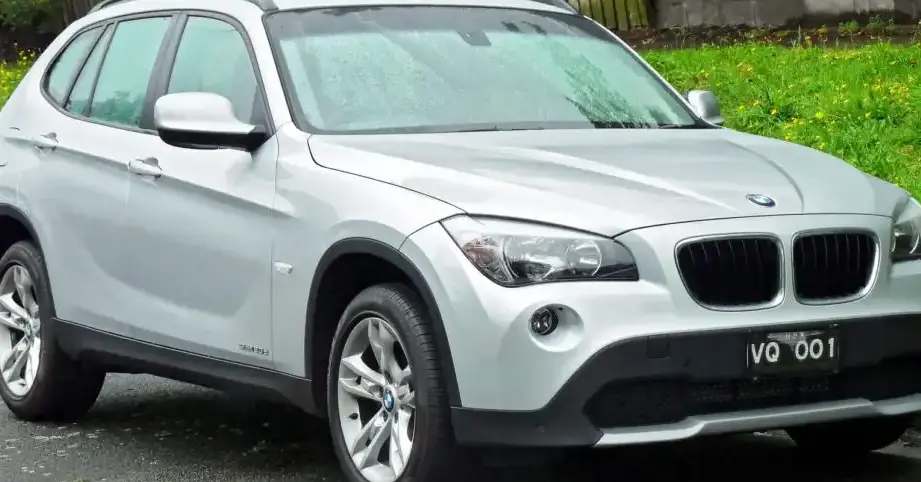
The BMW X1 (E84) 18d xDrive, produced from 2010 to 2012, represented BMW’s entry into the burgeoning compact luxury crossover segment. Positioned as the base diesel model within the E84 X1 range, it aimed to offer a blend of practicality, fuel efficiency, and the BMW driving experience to a wider audience. The X1 E84, built on the UKL1 platform (shared with the first generation MINI Countryman), was BMW’s first front-wheel-drive based crossover, though the 18d xDrive featured BMW’s xDrive all-wheel-drive system. This variant served as a crucial stepping stone for BMW, expanding their model portfolio and attracting customers seeking a smaller, more economical alternative to the larger X3 and X5.
Technical Specifications
| Brand | BMW |
| Model | X1 |
| Generation | X1 (E84) |
| Type (Engine) | 18d (143 Hp) xDrive |
| Start of production | 2010 |
| End of production | 2012 |
| Powertrain Architecture | Internal Combustion engine |
| Body type | SUV |
| Seats | 5 |
| Doors | 5 |
| Fuel consumption (urban) | 6.7 l/100 km (35.1 US mpg, 42.2 UK mpg, 14.9 km/l) |
| Fuel consumption (extra urban) | 5.1 l/100 km (46.1 US mpg, 55.4 UK mpg, 19.6 km/l) |
| Fuel consumption (combined) | 5.7 l/100 km (41.3 US mpg, 49.6 UK mpg, 17.5 km/l) |
| Fuel Type | Diesel |
| Acceleration 0 – 100 km/h | 10.1 sec |
| Acceleration 0 – 62 mph | 10.1 sec |
| Acceleration 0 – 60 mph | 9.6 sec |
| Maximum speed | 195 km/h (121.17 mph) |
| Weight-to-power ratio | 11.3 kg/Hp, 88.5 Hp/tonne |
| Weight-to-torque ratio | 5 kg/Nm, 198.1 Nm/tonne |
| Power | 143 Hp @ 4000 rpm |
| Power per litre | 71.7 Hp/l |
| Torque | 320 Nm @ 1750-2500 rpm (236.02 lb.-ft. @ 1750-2500 rpm) |
| Engine layout | Front, Longitudinal |
| Engine Model/Code | N47D20C |
| Engine displacement | 1995 cm3 (121.74 cu. in.) |
| Number of cylinders | 4 |
| Engine configuration | Inline |
| Cylinder Bore | 84 mm (3.31 in.) |
| Piston Stroke | 90 mm (3.54 in.) |
| Number of valves per cylinder | 4 |
| Fuel injection system | Diesel Commonrail |
| Engine aspiration | Turbocharger, Intercooler |
| Engine oil capacity | 5.2 l (5.49 US qt | 4.58 UK qt) |
| Coolant | 7.5 l (7.93 US qt | 6.6 UK qt) |
| Kerb Weight | 1615 kg (3560.47 lbs.) |
| Max. weight | 2120 kg (4673.8 lbs.) |
| Max load | 505 kg (1113.33 lbs.) |
| Fuel tank capacity | 61 l (16.11 US gal | 13.42 UK gal) |
| Length | 4454 mm (175.35 in.) |
| Width | 1798 mm (70.79 in.) |
| Height | 1545 mm (60.83 in.) |
| Wheelbase | 2760 mm (108.66 in.) |
| Front track | 1500 mm (59.06 in.) |
| Rear track | 1529 mm (60.2 in.) |
| Drive wheel | All wheel drive (4×4) |
| Number of gears | 6 |
| Gearbox type | Manual transmission |
| Front brakes | Ventilated discs |
| Assisting systems | ABS (Anti-lock braking system) |
| Steering type | Steering rack and pinion |
| Tires size | 225/50 R17 H |
| Wheel rims size | 7.5J x 17 |
Powertrain & Engine Architecture
The heart of the X1 18d xDrive is the BMW N47D20C 2.0-liter inline-four diesel engine. This engine, a member of BMW’s highly regarded N47 family, utilizes a second-generation common rail direct injection system operating at pressures up to 1,800 bar. This high-pressure injection contributes to efficient combustion and reduced emissions. The N47D20C also features a variable geometry turbocharger (VGT) with an intercooler, enhancing low-end torque and overall responsiveness. The engine’s valvetrain employs double overhead camshafts (DOHC) and four valves per cylinder. The xDrive system, a BMW-developed all-wheel-drive system, is typically a torque-on-demand system, primarily driving the front wheels but seamlessly engaging the rear axle when traction is needed. The 6-speed manual transmission was standard, offering precise shifts and contributing to the vehicle’s overall efficiency.
Driving Characteristics
The 18d xDrive, with its 143 horsepower and 320 Nm (236 lb-ft) of torque, provided adequate, though not exhilarating, performance. Acceleration from 0-60 mph took around 9.6 seconds, and top speed was limited to 195 km/h (121 mph). The engine’s peak torque, available from 1750-2500 rpm, meant that the X1 felt reasonably punchy in everyday driving situations, particularly for overtaking. Compared to the more powerful X1 20d or the petrol-powered xDrive20i, the 18d felt noticeably slower. However, the manual transmission allowed for greater driver engagement and control. The xDrive system provided enhanced stability and traction, especially in inclement weather, making it a more confident vehicle than its front-wheel-drive counterparts. The gear ratios were tuned for fuel efficiency, resulting in a slightly less sporty feel than higher-performance X1 models.
Equipment & Trim Levels
The X1 18d xDrive typically came with a respectable level of standard equipment. This included features like air conditioning, a CD/radio system with auxiliary input, power windows, power mirrors, and a multi-function steering wheel. Safety features such as ABS, traction control, and multiple airbags were also standard. Interior upholstery was typically cloth, with options for leather upgrades. Optional extras included a sunroof, navigation system, parking sensors, upgraded audio systems, and sport seats. Trim levels were relatively simple, with most customization occurring through individual option selection. The interior design was functional and modern, reflecting BMW’s design language at the time.
Chassis & Braking
The E84 X1 utilized a MacPherson strut front suspension and a multi-link rear suspension. The suspension setup was tuned to provide a balance between comfort and handling. The 18d xDrive models generally featured smaller brake discs compared to the higher-performance variants, with rear drum brakes being common on base models. ABS (Anti-lock Braking System) was standard, along with electronic brake-force distribution (EBD). Stabilizer bars were fitted front and rear to reduce body roll during cornering. The chassis was designed to be relatively lightweight, contributing to the vehicle’s overall efficiency and agility.
Market Reception & Comparison
The X1 18d xDrive was generally well-received by automotive critics as a practical and fuel-efficient entry-level luxury crossover. Its fuel economy, averaging around 41.3 US mpg combined, was a significant selling point. However, some reviewers criticized its relatively modest performance compared to other X1 models and competitors. Compared to the X1 20d, the 18d offered lower running costs but sacrificed some performance. Against competitors like the Audi Q3 and Mercedes-Benz GLA (which arrived later), the X1 18d xDrive offered a competitive package in terms of price, fuel efficiency, and practicality. Reliability was generally good, although some N47 engines were known for potential timing chain issues, a concern that affected several BMW models from this era.
Legacy
The BMW X1 (E84) 18d xDrive played a significant role in establishing BMW’s presence in the compact crossover market. While the N47 engine’s timing chain issue is a known potential problem, regular maintenance and preventative checks can mitigate this risk. Today, the E84 X1 18d xDrive represents an affordable entry point into BMW ownership. Its fuel efficiency and practicality continue to appeal to used car buyers. The E84 X1 paved the way for the second-generation X1 (F48), which adopted a front-wheel-drive based platform as standard, solidifying BMW’s commitment to this segment.