Technical Specifications
| Brand | BMW |
| Model | X1 |
| Generation | X1 (F48) |
| Type (Engine) | 16d (116 Hp) sDrive |
| Start of production | 2015 |
| End of production | 2018 |
| Powertrain Architecture | Internal Combustion engine |
| Body type | SUV |
| Seats | 5 |
| Doors | 5 |
| Fuel consumption (urban) | 4.6-4.9 l/100 km (51.1 – 48 US mpg) |
| Fuel consumption (extra urban) | 3.6-3.7 l/100 km (65.3 – 63.6 US mpg) |
| Fuel consumption (combined) | 3.9-4.1 l/100 km (60.3 – 57.4 US mpg) |
| CO2 emissions | 104-109 g/km |
| Fuel Type | Diesel |
| Acceleration 0 – 100 km/h | 11.1 sec |
| Acceleration 0 – 62 mph | 11.1 sec |
| Acceleration 0 – 60 mph | 10.5 sec |
| Maximum speed | 190 km/h (118.06 mph) |
| Emission standard | Euro 6 |
| Weight-to-power ratio | 12.3 kg/Hp |
| Weight-to-torque ratio | 5.3 kg/Nm |
| Power | 116 Hp @ 4000 rpm |
| Torque | 270 Nm @ 1750 rpm (199.14 lb.-ft. @ 1750 rpm) |
| Engine layout | Front, Transverse |
| Engine Model/Code | B37C15U0 |
| Engine displacement | 1496 cm3 (91.29 cu. in.) |
| Number of cylinders | 3 |
| Engine configuration | Inline |
| Cylinder Bore | 84 mm (3.31 in.) |
| Piston Stroke | 90 mm (3.54 in.) |
| Compression ratio | 16.5:1 |
| Number of valves per cylinder | 4 |
| Fuel injection system | Diesel Commonrail |
| Engine aspiration | Twin-power turbo, Intercooler |
| Engine oil capacity | 4.4 l (4.65 US qt | 3.87 UK qt) |
| Coolant | 6 l (6.34 US qt | 5.28 UK qt) |
| Kerb Weight | 1425 kg (3141.59 lbs.) |
| Max. weight | 2020 kg (4453.34 lbs.) |
| Max load | 595 kg (1311.75 lbs.) |
| Trunk (boot) space – minimum | 505 l (17.83 cu. ft.) |
| Trunk (boot) space – maximum | 1550 l (54.74 cu. ft.) |
| Fuel tank capacity | 51 l (13.47 US gal | 11.22 UK gal) |
| Max. roof load | 75 kg (165.35 lbs.) |
| Permitted trailer load with brakes (12%) | 1700 kg (3747.86 lbs.) |
| Permitted trailer load without brakes | 750 kg (1653.47 lbs.) |
| Permitted towbar download | 80 kg (176.37 lbs.) |
| Length | 4439 mm (174.76 in.) |
| Width | 1821 mm (71.69 in.) |
| Height | 1598 mm (62.91 in.) |
| Wheelbase | 2670 mm (105.12 in.) |
| Front track | 1561 mm (61.46 in.) |
| Rear (Back) track | 1562 mm (61.5 in.) |
| Ride height (ground clearance) | 183 mm (7.2 in.) |
| Drag coefficient (Cd) | 0.28 |
| Minimum turning circle (turning diameter) | 11.4 m (37.4 ft.) |
| Drivetrain Architecture | Front wheel drive |
| Number of gears and type of gearbox | 6 gears, manual transmission |
| Front suspension | Independent coil spring |
| Rear suspension | Independent multi-link suspension |
| Front brakes | Ventilated discs |
| Rear brakes | Ventilated discs |
| Assisting systems | ABS (Anti-lock braking system) |
| Steering type | Steering rack and pinion |
| Tires size | 225/55 R17 97W; 225/45 R19 |
| Wheel rims size | 7.5J x 17; 8J x 19 |
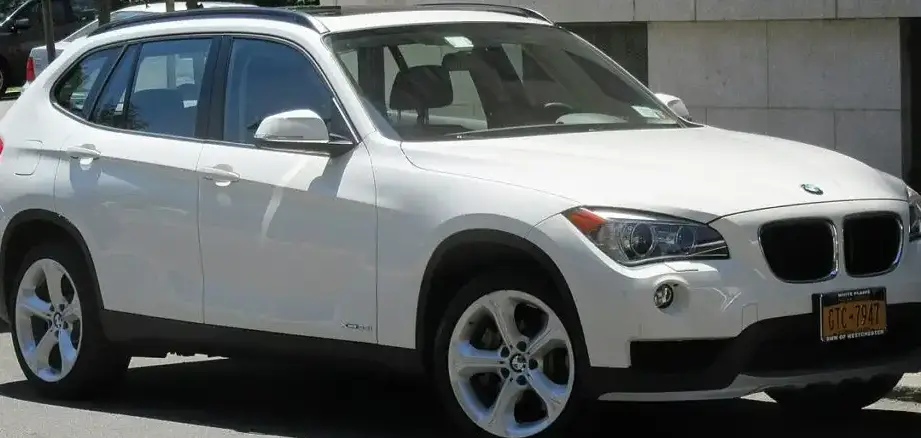
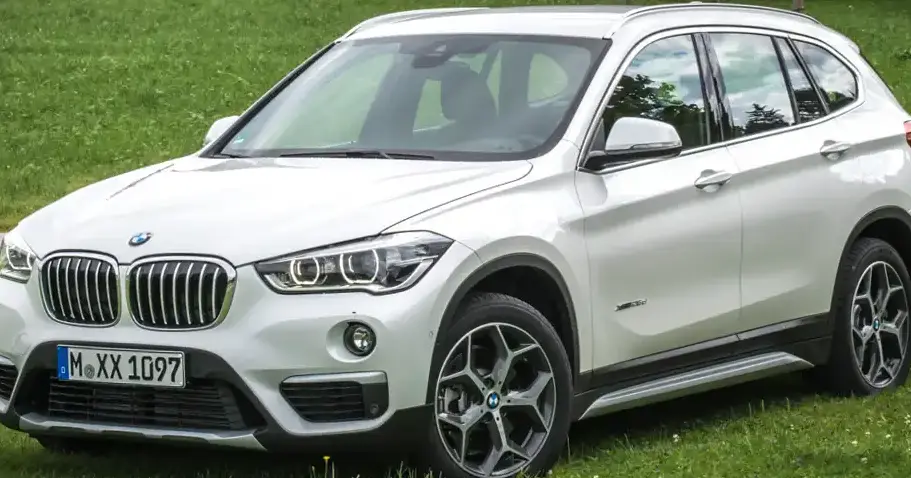
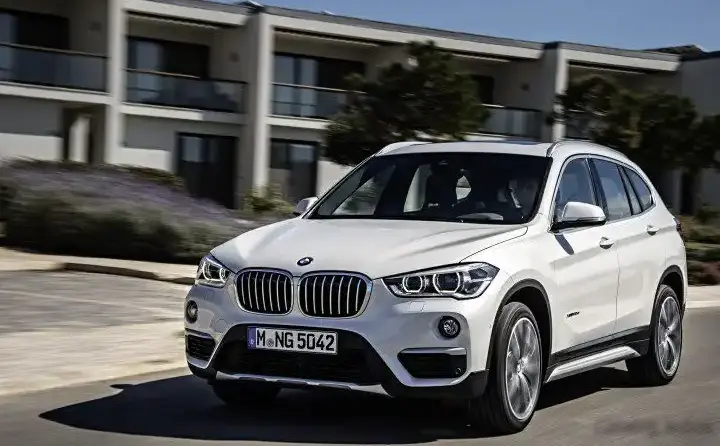
The BMW X1 (F48) 16d sDrive, launched in 2015, represented a significant shift for the X1 model line. Moving from a rear-wheel-drive based platform to a front-wheel-drive (FWD) UKL2 architecture, it aimed to increase interior space and improve fuel efficiency. The 16d variant, powered by a 1.5-liter three-cylinder diesel engine, was a key component of this strategy. It was designed to appeal to buyers seeking a practical, economical, and compact SUV. Production of this specific configuration continued until 2018, when BMW introduced further refinements to the X1 range.
Powertrain & Engine Architecture
The heart of the X1 16d is the BMW B37C15U0 engine, a 1.5-liter inline three-cylinder diesel. This engine is part of BMW’s modular engine family, designed for efficiency and scalability. It features a single turbocharger, direct common-rail fuel injection, and four valves per cylinder. The engine produces 116 horsepower at 4000 rpm and 270 Nm (199 lb-ft) of torque at 1750 rpm. The turbocharger utilizes BMW’s TwinPower technology, employing variable turbine geometry to optimize boost across the rev range. The engine’s high compression ratio of 16.5:1 contributes to its thermal efficiency. The 16d was typically paired with a six-speed manual transmission, although a six-speed automatic was also available as an option. The automatic transmission, while offering convenience, slightly impacted fuel economy and acceleration compared to the manual.
Driving Characteristics
The X1 16d sDrive, with its relatively modest power output, prioritized fuel economy and ease of driving over sporty performance. Acceleration from 0-62 mph takes around 11.1 seconds. The engine delivers usable torque from low revs, making it suitable for everyday driving and urban environments. However, overtaking maneuvers require careful planning. Compared to the more powerful X1 variants, such as the xDrive20d or xDrive25d, the 16d feels noticeably slower. The front-wheel-drive configuration provides predictable handling, but lacks the all-weather capability of the xDrive all-wheel-drive system. The six-speed manual transmission offers a precise shift feel, while the automatic provides smooth gear changes but can sometimes feel hesitant during kickdown.
Equipment & Trim Levels
The X1 16d sDrive typically came equipped with a reasonable level of standard features. These included air conditioning, a BMW Radio Professional infotainment system with a 6.5-inch display, Bluetooth connectivity, and power windows. Safety features such as ABS, stability control, and multiple airbags were standard. Higher trim levels, such as Sport and Luxury, added features like larger alloy wheels, upgraded interior trim, a panoramic sunroof, and a more advanced infotainment system with navigation. Optional extras included parking sensors, a rear-view camera, and a premium sound system. Interior upholstery was typically cloth, with leather options available on higher trims.
Chassis & Braking
The F48 X1 16d utilizes a MacPherson strut front suspension and a multi-link rear suspension. This setup provides a comfortable ride quality, absorbing bumps and imperfections in the road effectively. The front brakes are ventilated discs, while the rear brakes are also ventilated discs. The steering is a rack-and-pinion system with electric power assistance. The suspension tuning is geared towards comfort rather than sporty handling. The relatively low weight of the 16d variant, at around 1425 kg (3141.59 lbs), contributes to its agility and fuel efficiency.
Market Reception & Comparison
The X1 16d sDrive was generally well-received by automotive critics for its fuel efficiency and practicality. However, some reviewers criticized its relatively slow acceleration and the lack of all-wheel drive. Compared to the higher-output X1 variants, the 16d offered a more affordable entry point into the X1 range, but at the expense of performance. Its fuel economy, averaging around 3.9-4.1 l/100 km (60.3 – 57.4 US mpg), was a key selling point, particularly in Europe where diesel fuel was often cheaper than gasoline. The 16d’s reliability was generally good, with few reported issues related to the engine or transmission.
Legacy
The BMW X1 (F48) 16d sDrive remains a popular choice in the used car market, particularly for buyers seeking a fuel-efficient and practical compact SUV. The B37 engine, while not known for being particularly exciting, has proven to be relatively reliable with proper maintenance. Common issues, if any, typically relate to the diesel particulate filter (DPF) requiring regeneration, especially with frequent short journeys. The FWD configuration and three-cylinder engine make it a more economical option than the higher-spec X1 models, and its compact size makes it easy to maneuver in urban environments. As a first BMW or a practical family vehicle, the X1 16d sDrive continues to offer good value for money.