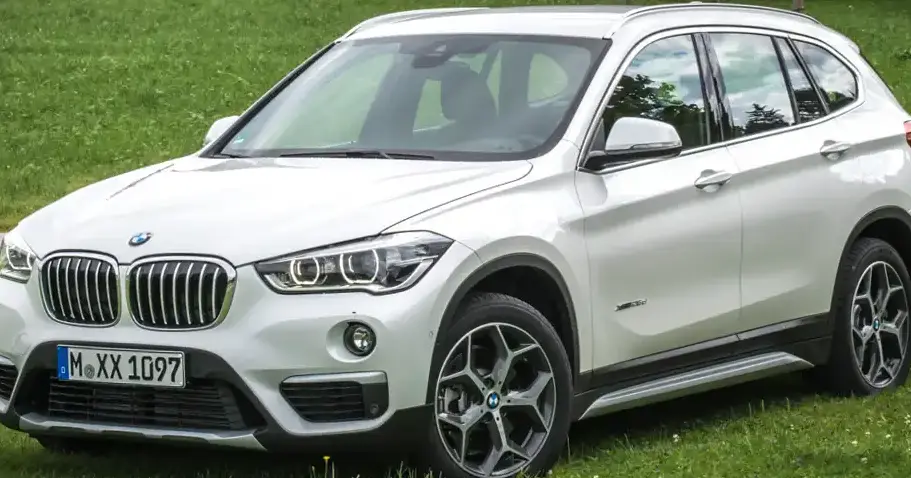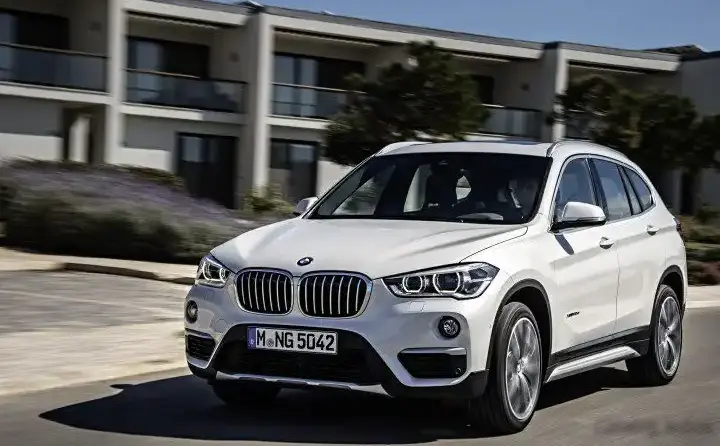
The BMW X1 (F48) 18d xDrive, produced from 2015 to 2018, represents BMW’s entry point into the compact luxury crossover segment. Positioned as a more accessible option within the F48 X1 range, the 18d utilized a 2.0-liter turbocharged diesel engine producing 150 horsepower, paired with an all-wheel-drive (xDrive) system. This variant aimed to balance fuel efficiency, practicality, and BMW’s signature driving experience for a broader customer base, particularly in European markets where diesel engines were highly prevalent. It served as a stepping stone to the more powerful X1 models like the xDrive20d and xDrive25d.
Technical Specifications
| Brand | BMW |
| Model | X1 |
| Generation | X1 (F48) |
| Type (Engine) | 18d (150 Hp) xDrive |
| Start of production | 2015 |
| End of production | 2018 |
| Powertrain Architecture | Internal Combustion engine |
| Body type | SUV |
| Seats | 5 |
| Doors | 5 |
| Fuel consumption (urban) | 5.5-5.7 l/100 km (42.8 – 41.3 US mpg) |
| Fuel consumption (extra urban) | 4.3-4.5 l/100 km (54.7 – 52.3 US mpg) |
| Fuel consumption (combined) | 4.7-4.9 l/100 km (50 – 48 US mpg) |
| CO2 emissions | 124-129 g/km |
| Fuel Type | Diesel |
| Acceleration 0 – 100 km/h | 9.2 sec |
| Acceleration 0 – 62 mph | 9.2 sec |
| Acceleration 0 – 60 mph | 8.7 sec |
| Maximum speed | 204 km/h (126.76 mph) |
| Emission standard | Euro 6 |
| Weight-to-power ratio | 10.2 kg/Hp |
| Weight-to-torque ratio | 4.6 kg/Nm |
| Power | 150 Hp @ 4000 rpm |
| Torque | 330 Nm @ 1750-2750 rpm (243.4 lb.-ft. @ 1750-2750 rpm) |
| Engine layout | Front, Transverse |
| Engine Model/Code | B47C20B |
| Engine displacement | 1995 cm3 (121.74 cu. in.) |
| Number of cylinders | 4 |
| Engine configuration | Inline |
| Cylinder Bore | 84 mm (3.31 in.) |
| Piston Stroke | 90 mm (3.54 in.) |
| Compression ratio | 16.5:1 |
| Number of valves per cylinder | 4 |
| Fuel injection system | Diesel Commonrail |
| Engine aspiration | Twin-power turbo, Intercooler |
| Engine oil capacity | 5 l (5.28 US qt | 4.4 UK qt) |
| Coolant | 6.7 l (7.08 US qt | 5.9 UK qt) |
| Kerb Weight | 1530 kg (3373.07 lbs.) |
| Max. weight | 2120 kg (4673.8 lbs.) |
| Max load | 590 kg (1300.73 lbs.) |
| Trunk (boot) space – minimum | 505 l (17.83 cu. ft.) |
| Trunk (boot) space – maximum | 1550 l (54.74 cu. ft.) |
| Fuel tank capacity | 51 l (13.47 US gal | 11.22 UK gal) |
| Max. roof load | 75 kg (165.35 lbs.) |
| Permitted trailer load with brakes (12%) | 1800 kg (3968.32 lbs.) |
| Permitted trailer load without brakes | 750 kg (1653.47 lbs.) |
| Permitted towbar download | 80 kg (176.37 lbs.) |
| Length | 4439 mm (174.76 in.) |
| Width | 1821 mm (71.69 in.) |
| Height | 1598 mm (62.91 in.) |
| Wheelbase | 2670 mm (105.12 in.) |
| Front track | 1561 mm (61.46 in.) |
| Rear (Back) track | 1562 mm (61.5 in.) |
| Ride height (ground clearance) | 183 mm (7.2 in.) |
| Drag coefficient (Cd) | 0.29 |
| Minimum turning circle (turning diameter) | 11.4 m (37.4 ft.) |
| Drive wheel | All wheel drive (4×4) |
| Number of gears and type of gearbox | 6 gears, manual transmission |
| Front suspension | Independent coil spring |
| Rear suspension | Independent multi-link suspension |
| Front brakes | Ventilated discs |
| Rear brakes | Ventilated discs |
| Assisting systems | ABS (Anti-lock braking system) |
| Steering type | Steering rack and pinion |
| Tires size | 225/55 R17 97W; 225/45 R19 |
| Wheel rims size | 7.5J x 17; 8J x 19 |
INTRODUCTION
The F48 BMW X1, launched in 2015, marked a significant shift for the model, moving from a rear-wheel-drive based platform to a front-wheel-drive based UKL1 platform shared with the MINI. The 18d xDrive variant was a key component of the initial lineup, offering a diesel-powered, all-wheel-drive option aimed at maximizing fuel economy and providing all-weather capability. It was positioned as the entry-level diesel offering, below the more powerful 20d and 25d models. Production of this specific configuration ran from 2015 until 2018, before being superseded by updated versions within the F48 lifecycle.
Powertrain & Engine Architecture
The heart of the X1 18d xDrive is the BMW B47C20B, a 2.0-liter inline-four cylinder diesel engine. This engine is part of BMW’s modular engine family, known for its efficiency and refinement. It utilizes a common rail direct injection system, delivering fuel at extremely high pressure for optimized combustion. The B47 engine features a single twin-scroll turbocharger with intercooling, enhancing both power and torque delivery. The engine produces 150 horsepower at 4000 rpm and 330 Nm (243 lb-ft) of torque between 1750 and 2750 rpm. The xDrive system is a BMW-developed all-wheel-drive system that typically operates in a front-wheel-drive mode under normal conditions, seamlessly engaging the rear wheels when traction is lost. The transmission is a 6-speed manual gearbox, contributing to the vehicle’s fuel efficiency.
Driving Characteristics
The X1 18d xDrive, with its 150 hp and manual transmission, offers a practical and reasonably efficient driving experience. Acceleration from 0-60 mph takes approximately 8.7 seconds, and top speed is rated at 126.76 mph. While not a performance-oriented variant, the engine provides adequate power for everyday driving and highway cruising. The manual gearbox allows for driver engagement, but the gear ratios are tuned for fuel economy rather than outright acceleration. Compared to the higher-output X1 20d, the 18d feels noticeably less powerful, particularly when fully loaded or tackling steep inclines. The xDrive system provides enhanced stability and traction in adverse weather conditions, making it a capable all-season vehicle.
Equipment & Trim Levels
The X1 18d xDrive typically came equipped with a respectable level of standard features. These included automatic climate control, a BMW Radio Professional infotainment system with a 6.5-inch display, Bluetooth connectivity, and power windows. Safety features such as ABS, stability control, and multiple airbags were standard. Interior upholstery was typically cloth, with options for leather upgrades. Common optional extras included a larger infotainment screen with navigation, parking sensors, a panoramic sunroof, and upgraded audio systems. Trim levels varied by market, but generally offered packages that bundled popular options together.
Chassis & Braking
The F48 X1 utilizes a MacPherson strut front suspension and a multi-link rear suspension, providing a comfortable ride and decent handling characteristics. The suspension is tuned to prioritize comfort over sporty handling. Brakes consist of ventilated discs on all four wheels, providing adequate stopping power for the vehicle’s weight and performance. The steering is electrically assisted, offering a light and precise feel. The X1 18d xDrive’s curb weight of 1530 kg (3373.07 lbs) is relatively moderate for its class, contributing to its manageable handling and fuel efficiency.
Market Reception & Comparison
The X1 18d xDrive was generally well-received by automotive critics as a practical and fuel-efficient option within the compact crossover segment. Reviewers praised its comfortable ride, spacious interior, and the capability of the xDrive all-wheel-drive system. However, some criticized its relatively modest performance compared to its more powerful siblings. Compared to the X1 20d, the 18d offered lower running costs but sacrificed some performance. Against competitors like the Audi Q3 and Mercedes-Benz GLA, the X1 18d offered a competitive blend of features, fuel economy, and driving dynamics.
Legacy
The BMW X1 (F48) 18d xDrive has proven to be a relatively reliable vehicle in the used car market. The B47 diesel engine, while known for potential issues with timing chain wear in some earlier iterations, has generally proven durable with regular maintenance. The xDrive system is also generally reliable. Today, these vehicles represent a relatively affordable entry point into BMW ownership, offering a practical and fuel-efficient crossover with the BMW badge. However, potential buyers should be aware of the importance of maintaining the diesel particulate filter (DPF) and ensuring regular servicing to prevent potential issues.