Technical Specifications
| Brand | BMW |
| Model | X1 |
| Generation | X1 (F48, facelift 2019) |
| Type (Engine) | 16d (116 Hp) |
| Start of production | 2019 |
| End of production | 2022 |
| Powertrain Architecture | Internal Combustion engine |
| Body type | SUV |
| Seats | 5 |
| Doors | 5 |
| Fuel consumption (urban) | 4.7-5.4 l/100 km (50 – 43.6 US mpg, 60.1 – 52.3 UK mpg, 21.3 – 18.5 km/l) |
| Fuel consumption (extra urban) | 3.8-4.1 l/100 km (61.9 – 57.4 US mpg, 74.3 – 68.9 UK mpg, 26.3 – 24.4 km/l) |
| Fuel consumption (combined) | 4.1-4.4 l/100 km (57.4 – 53.5 US mpg, 68.9 – 64.2 UK mpg, 24.4 – 22.7 km/l) |
| CO2 emissions | 107-116 g/km |
| Fuel Type | Diesel |
| Acceleration 0 – 100 km/h | 11.5 sec |
| Acceleration 0 – 62 mph | 11.5 sec |
| Acceleration 0 – 60 mph | 10.9 sec |
| Maximum speed | 190 km/h (118.06 mph) |
| Emission standard | Euro 6d ISC |
| Weight-to-power ratio | 12.8 kg/Hp, 78.4 Hp/tonne |
| Weight-to-torque ratio | 5.5 kg/Nm, 182.4 Nm/tonne |
| Power | 116 Hp @ 4000 rpm |
| Power per litre | 77.5 Hp/l |
| Torque | 270 Nm @ 1750-2250 rpm (199.14 lb.-ft. @ 1750-2250 rpm) |
| Engine layout | Front, Transverse |
| Engine Model/Code | B37C15U0 |
| Engine displacement | 1496 cm3 (91.29 cu. in.) |
| Number of cylinders | 3 |
| Engine configuration | Inline |
| Cylinder Bore | 84 mm (3.31 in.) |
| Piston Stroke | 90 mm (3.54 in.) |
| Compression ratio | 16.5:1 |
| Number of valves per cylinder | 4 |
| Fuel injection system | Diesel Commonrail |
| Engine aspiration | Twin-power turbo, Intercooler |
| Engine oil capacity | 4.8 l (5.07 US qt | 4.22 UK qt) |
| Coolant | 6 l (6.34 US qt | 5.28 UK qt) |
| Kerb Weight | 1480 kg (3262.84 lbs.) |
| Max. weight | 2040 kg (4497.43 lbs.) |
| Max load | 560 kg (1234.59 lbs.) |
| Trunk (boot) space – minimum | 505 l (17.83 cu. ft.) |
| Trunk (boot) space – maximum | 1550 l (54.74 cu. ft.) |
| Fuel tank capacity | 51 l (13.47 US gal | 11.22 UK gal) |
| Max. roof load | 75 kg (165.35 lbs.) |
| Permitted trailer load with brakes (12%) | 1700 kg (3747.86 lbs.) |
| Permitted trailer load without brakes | 750 kg (1653.47 lbs.) |
| Permitted towbar download | 80 kg (176.37 lbs.) |
| Length | 4447 mm (175.08 in.) |
| Width | 1821 mm (71.69 in.) |
| Width including mirrors | 2060 mm (81.1 in.) |
| Height | 1598 mm (62.91 in.) |
| Wheelbase | 2670 mm (105.12 in.) |
| Front track | 1561 mm (61.46 in.) |
| Rear (Back) track | 1562 mm (61.5 in.) |
| Front overhang | 848 mm (33.39 in.) |
| Rear overhang | 929 mm (36.57 in.) |
| Ride height (ground clearance) | 183 mm (7.2 in.) |
| Drag coefficient (Cd) | 0.28-0.32 |
| Minimum turning circle (turning diameter) | 11.4 m (37.4 ft.) |
| Drivetrain Architecture | The Internal combustion engine (ICE) drives the front wheels of the vehicle. |
| Drive wheel | Front wheel drive |
| Number of gears and type of gearbox | 6 gears, manual transmission |
| Front suspension | Independent coil spring |
| Rear suspension | Independent multi-link suspension |
| Front brakes | Ventilated discs |
| Rear brakes | Ventilated discs |
| Assisting systems | ABS (Anti-lock braking system) |
| Steering type | Steering rack and pinion |
| Power steering | Electric Steering |
| Tires size | 225/55 R17 97W |
| Wheel rims size | 7.5J x 17 |
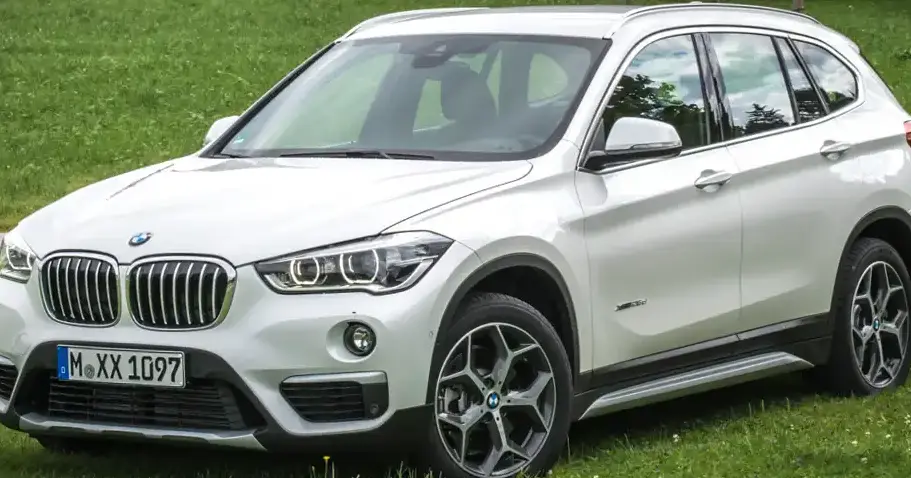
The BMW X1 (F48) 16d, introduced with the 2019 facelift, was a front-wheel-drive compact SUV powered by a 1.5-liter three-cylinder diesel engine. This variant was a key component of BMW’s strategy to offer a wider range of X1 models, appealing to a broader customer base. Built on the UKL2 platform (shared with the MINI range), the F48 X1 represented a shift towards a more practical and space-efficient design compared to its predecessor. The 16d trim specifically targeted buyers seeking low running costs and acceptable performance for daily commuting and family use. It sat at the base of the X1 range, below the 18d and xDrive20d models, offering a more affordable entry point into the BMW SUV lineup.
Powertrain & Engine Architecture
The heart of the X1 16d is the BMW B37C15U0 engine, a 1.5-liter inline three-cylinder diesel. This engine utilizes a single turbocharger with variable geometry turbine (VGT) technology, along with direct common-rail fuel injection, to deliver a balance of power and efficiency. The engine’s architecture incorporates four valves per cylinder and an intercooler to enhance performance. The B37 engine family is known for its compact design and relatively lightweight construction. The 16d was typically paired with a six-speed manual transmission, although an eight-speed automatic transmission was also available as an option. The automatic transmission offered smoother gear changes and enhanced convenience, but at the expense of slightly reduced fuel economy. The engine’s control unit (ECU) manages fuel injection, turbocharger boost, and other parameters to optimize performance and emissions.
Driving Characteristics
The X1 16d, with its 116 horsepower and 270 Nm (199 lb-ft) of torque, provided adequate, though not exhilarating, performance. Acceleration from 0-60 mph took around 10.9 seconds, making it suitable for urban and highway driving, but less ideal for spirited driving. The engine’s torque peak, available from 1750-2250 rpm, provided good low-end responsiveness, making it easy to navigate city traffic. The six-speed manual transmission offered precise shifts, while the optional eight-speed automatic provided seamless gear changes. Compared to the more powerful X1 variants, such as the xDrive20d, the 16d felt noticeably slower, particularly during overtaking maneuvers. However, its lighter weight and efficient engine contributed to better fuel economy.
Equipment & Trim Levels
The X1 16d typically came standard with features such as air conditioning, a 6.5-inch infotainment system with iDrive controller, Bluetooth connectivity, and a suite of safety features including ABS, stability control, and multiple airbags. Upholstery was typically cloth, with options for leatherette or full leather available at an extra cost. Higher trim levels added features like a larger infotainment screen, navigation system, parking sensors, and automatic climate control. Optional extras included a panoramic sunroof, heated seats, and a premium sound system. The interior design was functional and modern, with a focus on ergonomics and practicality.
Chassis & Braking
The X1 16d featured a front-wheel-drive layout with independent suspension on all four wheels. The front suspension utilized MacPherson struts, while the rear employed a multi-link setup. This configuration provided a comfortable ride and decent handling characteristics. Brakes consisted of ventilated discs on all four wheels, providing adequate stopping power. The X1 16d’s chassis was tuned for comfort and stability, rather than outright sportiness. The relatively lightweight engine and front-wheel-drive configuration contributed to balanced handling, although it lacked the all-weather capability of the xDrive all-wheel-drive models.
Market Reception & Comparison
The X1 16d was generally well-received by critics for its fuel efficiency and practicality. It was praised for its comfortable ride and spacious interior, but some reviewers noted its lack of outright performance. Compared to the X1 18d, the 16d offered lower running costs but sacrificed some power and acceleration. The 18d, with its more powerful engine, was considered a better choice for drivers who frequently traveled long distances or required more performance. In terms of reliability, the B37 engine family has proven to be generally robust, although some owners have reported issues with the diesel particulate filter (DPF) system, particularly on vehicles used primarily for short trips.
Legacy
The BMW X1 (F48) 16d remains a popular choice in the used car market, particularly for buyers seeking an affordable and fuel-efficient compact SUV. Its relatively simple engine and robust construction contribute to good long-term reliability, provided it has been properly maintained. The 16d’s fuel economy and low running costs make it an attractive option for commuters and families on a budget. While it may not offer the same level of performance as some of its rivals, its practicality, comfort, and brand reputation ensure its continued appeal in the used car market.