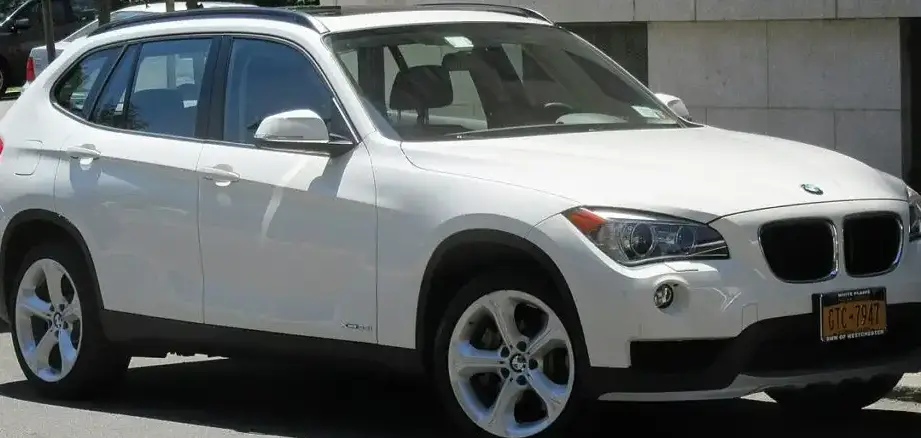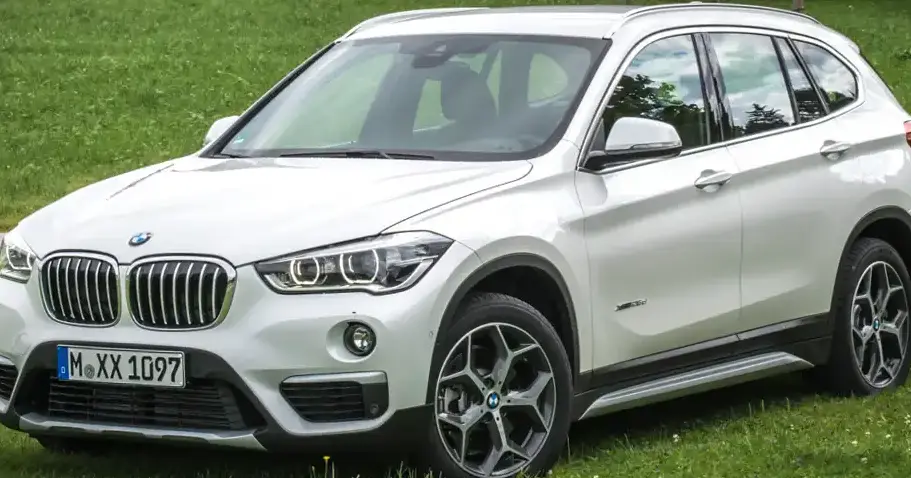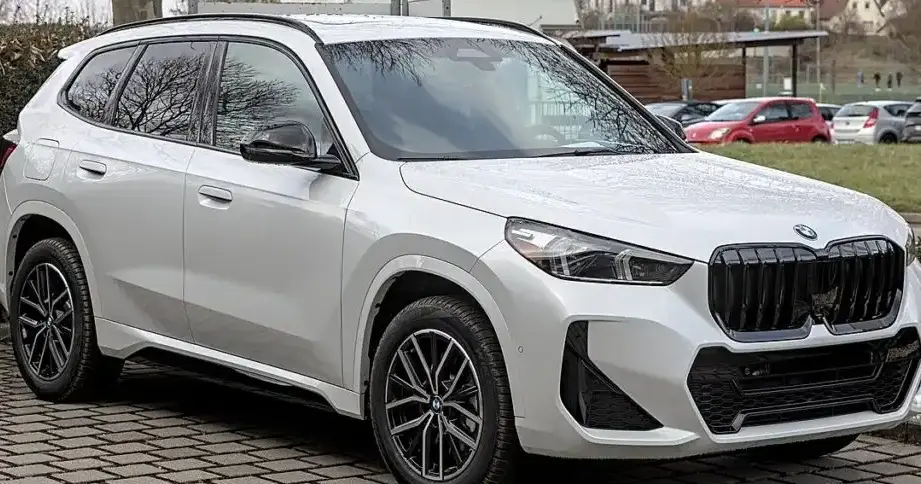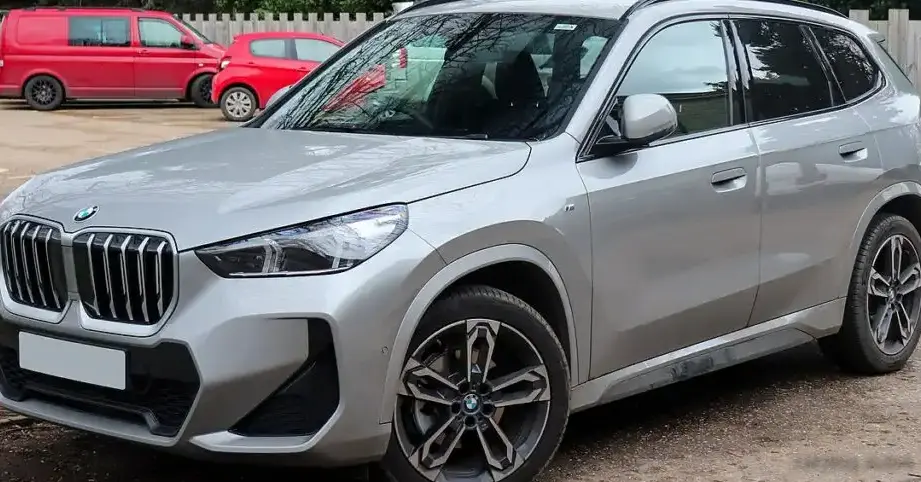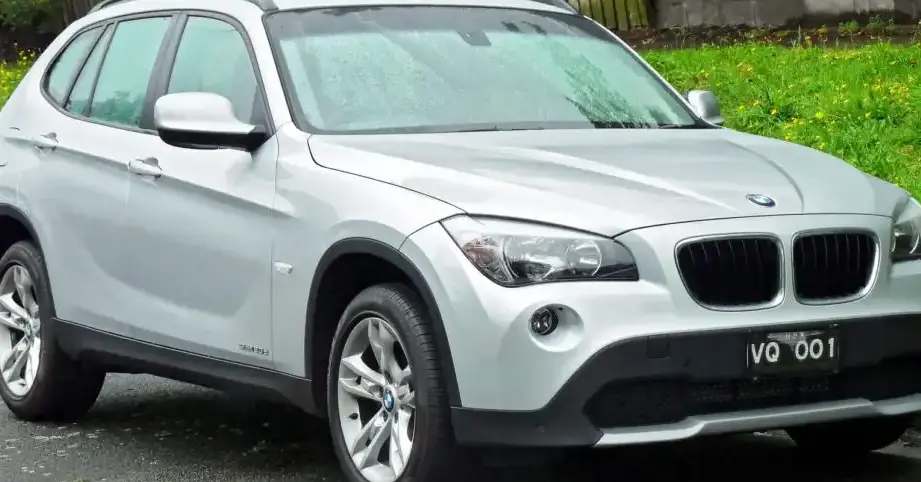
The BMW X1 (F48, facelift 2019) 18i, producing 140 horsepower, represents a key entry point into the second generation of BMW’s compact SUV. Introduced with the facelift in 2019 and continuing through 2020, this variant was primarily aimed at the European market, offering a balance of efficiency and practicality within the X1 lineup. It sits on the UKL2 platform, shared with other front-wheel-drive BMW models like the 2 Series Active Tourer. This version of the X1 aimed to provide a more accessible price point while still delivering the core BMW driving experience.
Technical Specifications
| Brand | BMW |
| Model | X1 |
| Generation | X1 (F48, facelift 2019) |
| Type (Engine) | 18i (140 Hp) |
| Start of production | 2019 |
| End of production | 2020 |
| Powertrain Architecture | Internal Combustion engine |
| Body type | SUV |
| Seats | 5 |
| Doors | 5 |
| Fuel consumption (urban) | 6.9-7.3 l/100 km (34.1 – 32.2 US mpg, 40.9 – 38.7 UK mpg, 14.5 – 13.7 km/l) |
| Fuel consumption (extra urban) | 4.7-5.1 l/100 km (50 – 46.1 US mpg, 60.1 – 55.4 UK mpg, 21.3 – 19.6 km/l) |
| Fuel consumption (combined) | 5.5-5.9 l/100 km (42.8 – 39.9 US mpg, 51.4 – 47.9 UK mpg, 18.2 – 16.9 km/l) |
| CO2 emissions | 125-134 g/km |
| Fuel Type | Petrol (Gasoline) |
| Acceleration 0 – 100 km/h | 9.7 sec |
| Acceleration 0 – 62 mph | 9.7 sec |
| Acceleration 0 – 60 mph | 9.2 sec |
| Maximum speed | 205 km/h (127.38 mph) |
| Emission standard | Euro 6d-TEMP |
| Weight-to-power ratio | 10 kg/Hp, 100 Hp/tonne |
| Weight-to-torque ratio | 6.4 kg/Nm, 157.1 Nm/tonne |
| Power | 140 Hp @ 4500-6500 rpm |
| Power per litre | 93.4 Hp/l |
| Torque | 220 Nm @ 1480-4200 rpm (162.26 lb.-ft. @ 1480-4200 rpm) |
| Engine layout | Front, Transverse |
| Engine Model/Code | B38A15A |
| Engine displacement | 1499 cm3 (91.47 cu. in.) |
| Number of cylinders | 3 |
| Engine configuration | Inline |
| Cylinder Bore | 82 mm (3.23 in.) |
| Piston Stroke | 94.6 mm (3.72 in.) |
| Compression ratio | 11:1 |
| Number of valves per cylinder | 4 |
| Fuel injection system | Direct injection |
| Engine aspiration | Twin-power turbo, Intercooler |
| Engine oil capacity | 4.5 l (4.76 US qt | 3.96 UK qt) |
| Coolant | 6.4 l (6.76 US qt | 5.63 UK qt) |
| Kerb Weight | 1400 kg (3086.47 lbs.) |
| Max. weight | 2000 kg (4409.25 lbs.) |
| Max load | 600 kg (1322.77 lbs.) |
| Trunk (boot) space – minimum | 505 l (17.83 cu. ft.) |
| Trunk (boot) space – maximum | 1550 l (54.74 cu. ft.) |
| Fuel tank capacity | 51 l (13.47 US gal | 11.22 UK gal) |
| Max. roof load | 80 kg (176.37 lbs.) |
| Permitted trailer load with brakes (8%) | 1700 kg (3747.86 lbs.) |
| Permitted trailer load with brakes (12%) | 1700 kg (3747.86 lbs.) |
| Permitted trailer load without brakes | 735 kg (1620.4 lbs.) |
| Length | 4447 mm (175.08 in.) |
| Width | 1821 mm (71.69 in.) |
| Width including mirrors | 2060 mm (81.1 in.) |
| Height | 1598 mm (62.91 in.) |
| Wheelbase | 2670 mm (105.12 in.) |
| Front track | 1561 mm (61.46 in.) |
| Rear (Back) track | 1562 mm (61.5 in.) |
| Front overhang | 848 mm (33.39 in.) |
| Rear overhang | 929 mm (36.57 in.) |
| Minimum turning circle | 11.4 m (37.4 ft.) |
| Drivetrain Architecture | The Internal combustion engine (ICE) drives the front wheels of the vehicle. |
| Drive wheel | Front wheel drive |
| Number of gears and type of gearbox | 6 gears, manual transmission |
| Front suspension | Independent coil spring |
| Rear suspension | Independent multi-link suspension |
| Front brakes | Ventilated discs |
| Rear brakes | Ventilated discs |
| Assisting systems | ABS (Anti-lock braking system) |
| Steering type | Steering rack and pinion |
| Power steering | Electric Steering |
| Tires size | 225/55 R17 97W |
| Wheel rims size | 7.5J x 17 |
INTRODUCTION
The BMW X1 (F48) facelift 18i, launched in 2019, is a front-wheel-drive compact SUV powered by a 1.5-liter turbocharged three-cylinder engine. This variant was a significant part of BMW’s strategy to broaden the appeal of the X1, offering a more affordable and fuel-efficient option alongside higher-powered, all-wheel-drive models. The facelift brought styling updates and revised technology, enhancing the X1’s competitiveness in the premium compact SUV segment. It’s built on the UKL2 platform, which also underpins the 2 Series Active Tourer, signifying a shift towards a more modular and efficient vehicle architecture for BMW.
Powertrain & Engine Architecture
At the heart of the X1 18i lies the BMW B38A15A engine, a 1.5-liter turbocharged inline-three cylinder petrol engine. This engine utilizes direct fuel injection and a single twin-scroll turbocharger, delivering 140 horsepower at 4500-6500 rpm and 220 Nm (162 lb-ft) of torque between 1480-4200 rpm. The engine features an aluminum block and head, contributing to its relatively lightweight design. The B38 engine is known for its responsiveness and efficiency, thanks to its turbocharging and direct injection technology. The 18i is paired with a 6-speed manual transmission as standard, sending power to the front wheels. This transmission is chosen for its efficiency and relatively simple construction.
Driving Characteristics
The X1 18i offers a comfortable and composed driving experience, prioritizing fuel efficiency and ease of use over outright performance. While not as quick as the higher-powered X1 variants, the 18i provides adequate acceleration for everyday driving, achieving 0-60 mph in approximately 9.2 seconds. The 6-speed manual transmission allows for precise gear selection, but the relatively narrow powerband of the three-cylinder engine requires frequent shifting to maintain optimal performance. The front-wheel-drive configuration provides good traction in most conditions, but can exhibit some torque steer under hard acceleration. The steering is light and precise, offering a good balance between responsiveness and comfort.
Equipment & Trim Levels
The X1 18i typically came equipped with a respectable level of standard features, including automatic climate control, a 6.5-inch infotainment system with iDrive controller, and a suite of safety features such as ABS, stability control, and multiple airbags. Interior upholstery was typically cloth, with options for leather upgrades. Common optional extras included a larger infotainment screen, navigation system, parking sensors, and a panoramic sunroof. Trim levels varied by market, but generally offered packages that added features like upgraded interior trim, alloy wheels, and advanced driver-assistance systems.
Chassis & Braking
The X1 18i utilizes a MacPherson strut front suspension and a multi-link rear suspension, providing a comfortable ride and good handling characteristics. The suspension is tuned for a balance between comfort and control, absorbing bumps and imperfections in the road while maintaining stability in corners. Braking duties are handled by ventilated disc brakes on all four wheels, providing adequate stopping power. The ABS system helps to prevent wheel lockup during hard braking, enhancing safety and control. The X1 18i’s chassis is designed to be relatively lightweight, contributing to its fuel efficiency and agility.
Market Reception & Comparison
The X1 18i was generally well-received by critics as a practical and efficient entry-level option in the premium compact SUV segment. It was praised for its fuel economy, comfortable ride, and spacious interior. However, some reviewers noted that the three-cylinder engine could feel underpowered, especially when fully loaded or driving uphill. Compared to the X1 20i (with a more powerful four-cylinder engine), the 18i offered lower running costs but sacrificed some performance. Against competitors like the Audi Q3 and Mercedes-Benz GLA, the X1 18i offered a competitive combination of price, features, and fuel efficiency.
Legacy
The BMW X1 (F48) 18i, while not the most powerful or prestigious variant, has proven to be a reliable and economical choice in the used car market. The B38 engine has generally demonstrated good long-term durability, with proper maintenance. Common issues are relatively minor, often related to the turbocharger or fuel injection system. The X1 18i remains a popular choice for buyers seeking a practical and affordable premium SUV, offering a good balance of comfort, efficiency, and BMW brand appeal. Its front-wheel-drive configuration and relatively simple mechanicals contribute to lower maintenance costs compared to more complex, all-wheel-drive models.